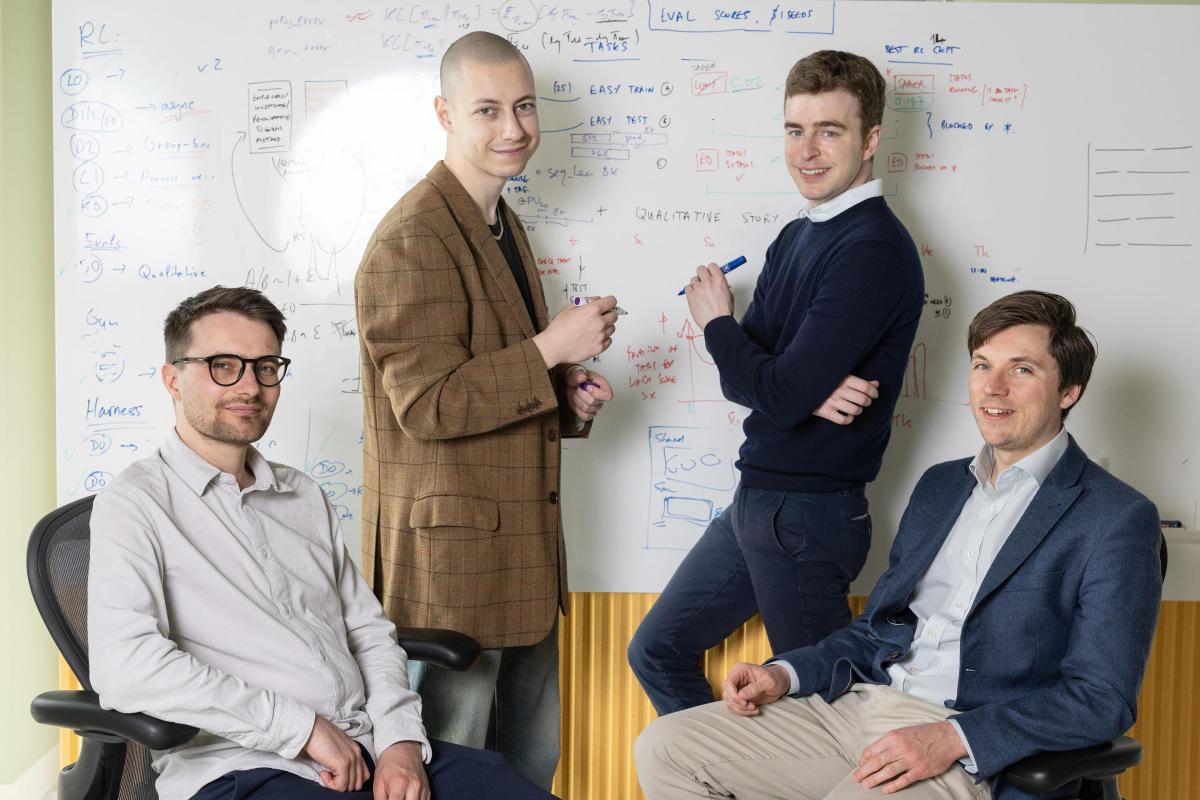
Лондон хотод төвтэй тус стартап нь Faraday хэмээх AI агентаараа дамжуулан шинжлэх ухааны бүтээлүүдийн үр дүнг хөндлөнгийн тусламжгүйгээр дахин гаргаж авах шинэ боломжийг нээж байна.
Google DeepMind-ийн хуучин ажилтнуудын үүсгэн байгуулсан Inherent стартап 50 сая ам.долларын анхны шатны санхүүжилтээ авснаас хойш удалгүй Faraday нэртэй AI агентаа танилцууллаа. Энэхүү агент нь Anthropic болон OpenAI-ийн томоохон загваруудаас харьцангуй жижиг буюу 27 тэрбум параметртэй Qwen 3.6 загвар дээр суурилсан хэдий ч шинжлэх ухааны судалгааны үр дүнг бие даан хуулбарлах даалгавраар тэдгээрээс илүү гарсан байна.
Тус компанийн үүсгэн байгуулагч бөгөөд ахлах эрдэмтэн Эдвард Хьюзийн тайлбарласнаар, Faraday-ийн гол онцлог нь зөвхөн үр дүн гаргах бус, харин судалгааны туршилтыг хэрхэн зөв төлөвлөх, аль туршилтыг явуулах нь үнэ цэнтэйг ялгах буюу “судалгааны мэдрэмж”-ийг эзэмшүүлэхэд чиглэжээ. Үүний тулд тэд бэлэн дүрэм заахын оронд хүчитгэсэн сургалтын аргыг ашигласан байна.
Inherent компани нь бүх зүйлийг өөрсдөө бүтээхээс илүүтэйгээр, шаардлагатай тохиолдолд OpenAI-ийн GPT-5.5 Codex зэрэг бэлэн хэрэгслүүдийг ашиглан үр ашигтай ажиллахыг зорьж байна. Одоогоор 12 хүний бүрэлдэхүүнтэй ажиллаж буй тус стартап нь оны эцэс гэхэд багийн гишүүдийн тоог 20-25 болгон нэмэгдүүлэхээр төлөвлөж байгаа юм.
Эдвард Хьюз Их Британид түгээмэл байдаг ажилчдыг өрсөлдөгч компанид орохыг хэдэн сараар хориглодог “garden leave” нөхцөл нь авьяаслаг боловсон хүчнийг татахад саад болж буйг онцолсон байна. Хэдийгээр ийм хүндрэлүүд байгаа ч тус баг Лондон хотыг AI технологийн хөгжлийн гол төв гэж үзэн үйл ажиллагаагаа үргэлжлүүлж байна.
Дэлгэрэнгүйг эх сурвалжаас харах
↓Эх сурвалжийг нээх ↓
Inherent, a London AI lab founded by Google DeepMind alumni, says its AI agent just outperformed much larger models from Anthropic and OpenAI using a fraction of the size.
Of all the startups launched by Google DeepMind alumni, Inherent has gotten relatively little attention. But while better-funded rivals have yet to show the world anything concrete, the London-based team is starting to share what it’s been building.
Just weeks after emerging from stealth with a $50 million seed round, the British startup says its newly released AI agent, Faraday, has outperformed larger, better-known models at a specific task: independently reproducing the findings of published scientific papers without being told the answer in advance.
That may sound like a mere party trick given Inherent’s much loftier goal — building AI that can discover new scientific knowledge and not just verify old results. But paper replication is a standard training exercise for human scientists, too, cofounder and chief scientist Edward Hughes said. “Many PhD students actually start by doing this.”
Beating other AI systems at the task wasn’t the point, Hughes told TechCrunch; how they got there was. “What was most interesting to us about this was not so much the result of beating those frontier agents — which of course we liked — but was actually the way we went about building this.”
Here’s the part that should catch an investor’s eye: measured against Anthropic’s Claude Opus 4.8 and OpenAI’s GPT-5.5 — both much larger, frontier-scale systems — Faraday runs on a comparatively tiny model called Qwen 3.6 that has just 27 billion parameters. (Roughly speaking, “parameters” is a proxy for a model’s size and, typically, its training costs, as well.) Inherent’s bar for success was also higher than simply accuracy. Beyond replicating results, it wanted Faraday to demonstrate “research taste” — an instinct for what experiments are worth running and how to design them well.
Teaching something as intangible as taste is hard, which is where reinforcement learning comes in. It’s a training method that rewards an AI system for good outcomes rather than spelling out rules for it to follow. Rather than training its agents primarily on the study of how science itself is conducted, Inherent leans on this reward-based approach, betting it will generalize better to its longer-term goal of agents capable of contributing across many scientific fields.
“We’re always guided by that north star of building an AI scientist agent and imbuing our agents with taste,” Hughes said. That focus has also shaped what Inherent chooses not to build. Rather than developing its own coding tool, it had Faraday use OpenAI’s GPT-5.5 Codex instead, much the way human scientists lean on existing software rather than building everything themselves, according to the company.
Inherent is also trying to avoid building agents that simply tell users what they want to hear. Instead, Hughes said, the goal is modeled on his favorite kind of teammate — the kind who comes back and says: “I got curious about this, and I went off and I did these experiments. What do you think of these results?”
That collaborative instinct extends to how Inherent operates as a company. Its dozen employees all work in person out of an office in King’s Cross — the once-rundown London neighborhood that Google DeepMind’s presence helped turn into one of the world’s top AI hubs. “We believe that London is the place to be,” Hughes said.
Hughes is bullish on London’s density of AI talent, but he has also added his voice to calls to end “garden leave” — the practice, common in the U.K., of barring departing employees from joining or starting a rival company for months after they resign. It’s a restriction American researchers generally don’t face, giving U.S. startups a head start on hiring talent who’ve left a prior role. “This is a personal view rather than a company view, but I was affected by the garden leave problem,” he told TechCrunch.
Hughes eventually got around that constraint and started Inherent alongside two other DeepMind alumni and a fourth cofounder. The startup isn’t slowing down either. It plans to grow its headcount to “about 20 to 25” by the end of the year. Given its ambitions in world models as well, and with Demis Hassabis’s new role leaving some DeepMind staff unsettled, Inherent’s hiring push could make it an appealing landing spot for DeepMind employees weighing a move.
Pictured from left to right: Inherent co-founders Louis Kirsch, Kaloyan Aleksiev, Tantum Collins and Edward Hughes.
When you purchase through links in our articles, we may earn a small commission. This doesn’t affect our editorial independence.

