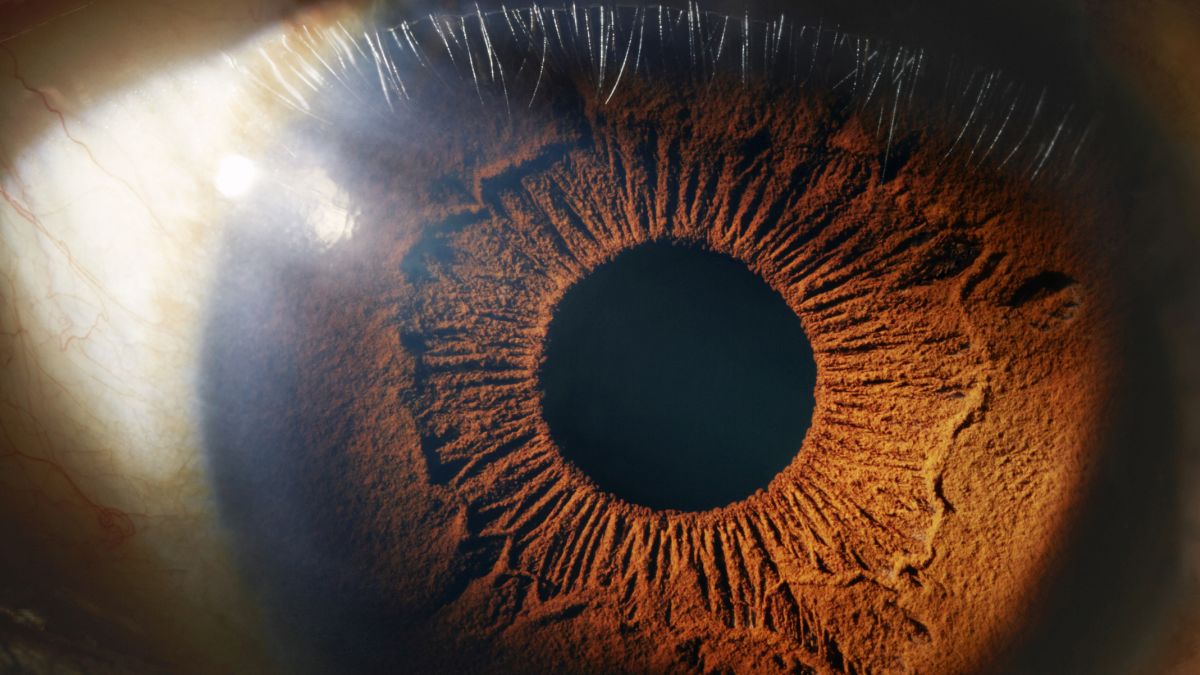
Эрдэмтэд нүдний гэмтсэн эсийг эрчим хүчээр хангахын тулд митохондри шилжүүлэн суулгах эмчилгээг хүний нүдэнд анх удаа туршиж үзлээ.
Icahn School of Medicine at Mount Sinai-ийн судлаач Дэвид Путрино болон түүний баг тархины цус харвалтын улмаас хараа нь муудсан 26 настай эмэгтэйд энэхүү эмчилгээг хийжээ. Тэд өвчтөний гуяны булчингаас митохондри буюу эсийн эрчим хүч үйлдвэрлэгч бичил бүтцийг ялган авч, нүдний шилэнцэр шингэн рүү шууд тарьсан байна. Уг үйл ажиллагаа нь аюулгүй байдлын хувьд эерэг үр дүн үзүүлж, өвчтөнд ямар нэгэн сөрөг нөлөө эсвэл дархлааны хариу урвал илрээгүй нь судалгааны урьдчилсан тайланд дурдагджээ.
Эмчилгээний дараах өдрүүдэд өвчтөний хүүхэн хараа гэрэлд хэвийн хариу үйлдэл үзүүлж эхэлсэн бөгөөд тархины бичлэгээр харааны бор гадаргын үйл ажиллагаанд өөрчлөлт ажиглагдсан байна. Гэсэн хэдий ч энэ нь харааг бүрэн сэргээгээгүй бөгөөд хүүхэн харааны хэвийн хариу үйлдэл нь түр зуурын шинжтэй байжээ. Судлаачид уг үр дүн нь митохондри шилжүүлэн суулгах эмчилгээний үр нөлөөг бүрэн нотлоход хангалтгүй гэдгийг онцолж, шалтгаан холбоог тогтоохын тулд илүү олон судалгаа шаардлагатайг тэмдэглэв.
Одоогийн байдлаар эрдэмтэд FDA-тай хамтран давтан тарилга хийх протокол боловсруулж байгаа аж. Хэрэв цаашдын судалгаагаар үр дүн нь батлагдвал гэмтсэн эсийг эрчим хүчээр хангах, нүдний эсийн үхлийг зогсоох шинэ арга зам нээгдэх боломжтой юм. Судалгааны дэлгэрэнгүй мэдээллийг Research Square цахим хуудсанд байршуулжээ.
Дэлгэрэнгүйг эх сурвалжаас харах
↓Эх сурвалжийг нээх ↓
When the batteries die in your TV remote, you might start rummaging around your desk clock for a replacement.
That doesn’t tend to be how we think about the human body. But scientists are beginning to explore whether, at the cellular level, perhaps it could be.
In animal studies, scientists have been experimenting with transplanting mitochondria – the microscopic structures that supply cells with energy – into damaged tissues as a means of giving flagging cells a new power supply.
Now, for the first time, they’ve tried injecting them into a human eye.
In a young woman with severe vision loss, doctors carefully extracted the mitochondria from cells collected in a leg biopsy and injected them directly into the vitreous fluid of both her eyes.
The good news is that nothing bad happened – an important first indication that the procedure itself may be safe enough to investigate further, according to a preprint case report led by neuroscientist David Putrino of the Icahn School of Medicine at Mount Sinai and posted to Research Square.
The more intriguing news is that – while the patient’s vision was not restored – something good may have happened, too.
Mitochondria are the tiny batteries that convert food and oxygen into energy each cell can use to power its functions.
Some cells rely heavily on mitochondrial energy, including retinal ganglion cells, neurons that transport visual information from the retina to the brain. According to Putrino and his colleagues, these cells have some of the highest energy demands in the central nervous system.
When blood and oxygen supply is interrupted, mitochondria can become damaged, which in turn can contribute to the cascade that kills the retinal ganglion cells.
The idea here isn’t that transplanted mitochondria can revive dead neurons. It’s that healthy mitochondria might restore energy production in retinal ganglion cells that are still alive enough to save.
Animal studies have shown that transplanted mitochondria can be taken up by retinal cells and can even help some retinal ganglion cells survive after an injury.
For one young woman, that possibility offered a ray of hope where other, more conventional options had yielded no results.
At 26 years old, she suffered a severe brain bleed and was not brought to hospital until an estimated 18 hours later. She survived after emergency surgery, but the prolonged period of blood and oxygen starvation to her optic nerves left her almost completely blind in both eyes.
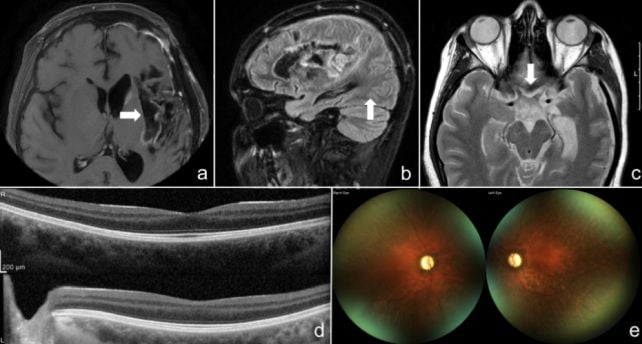
By eight weeks later, her optic nerves showed visible atrophy, and by the time of treatment at around three months, her profound visual impairment had shown no meaningful improvement.
But that didn’t mean all was lost. Imaging showed that, while the retinal nerve-fiber and ganglion-cell layers had thinned severely, they hadn’t completely disappeared – and measurements of brain activity suggested that some visual information was still reaching the visual cortex.
It was possible that a mitochondrial transplant might be able to re-energize the remaining cells.
When it comes to transplant surgery, to minimize the risk of an immune reaction, the safest biological material is usually the patient’s own. So the doctors took a biopsy sample from her thigh muscle and processed it to extract tens of millions of mitochondria from the cells.
Then, while they were still fresh, these mitochondria were injected into the jelly-like fluid in each of her eyes.
Then, within days, something changed.
In the 71 days before the treatment, the doctors had recorded 45 measurements of her pupils responding to light. Not one of those measurements recorded a normal response.
Just a few days after the injections, both pupils started showing some normal responses. In addition, in three separate brain recording sessions at 3, 44, and 45 days after treatment, the researchers saw an organized response in the visual cortex.
This did not mean her vision was restored; the patient’s visual acuity remained basically at the level of being able to perceive light and did not measurably change after the treatment.
Nor did the pupillary responses last. The left eye recorded its last normal response on day 11, while the right continued to produce sporadic normal responses until day 39.
Now, there are some heavy caveats here. This was just one patient, with no controls. There was no direct evidence that the transplanted mitochondria had entered her retinal ganglion cells. Finally, the authors note that the case is insufficient to establish causation.

What we do know, however, is that the procedure produced no serious adverse effects; nor did her body mount a dangerous immune response.
Related: First-of-Its-Kind Treatment Boosts Vision in Human Trial, Scientists Report
And the research lays out a clear pathway for future investigation. One possibility raised by the temporary nature of the changes is that damaged cells might need repeated doses of healthy mitochondria to sustain any benefit.
First, though, researchers need to clearly establish whether transplanted mitochondria were responsible for the changes.
If so, borrowing cellular batteries from other parts of the patient’s body could one day offer a new way to rescue damaged cells in the eye.
“Now that we’ve shown that we can do this safely,” Putrino told Nature, “we are working with the FDA to come up with a protocol for repeated serial mitochondrial injections.”
The findings are available on Research Square.


