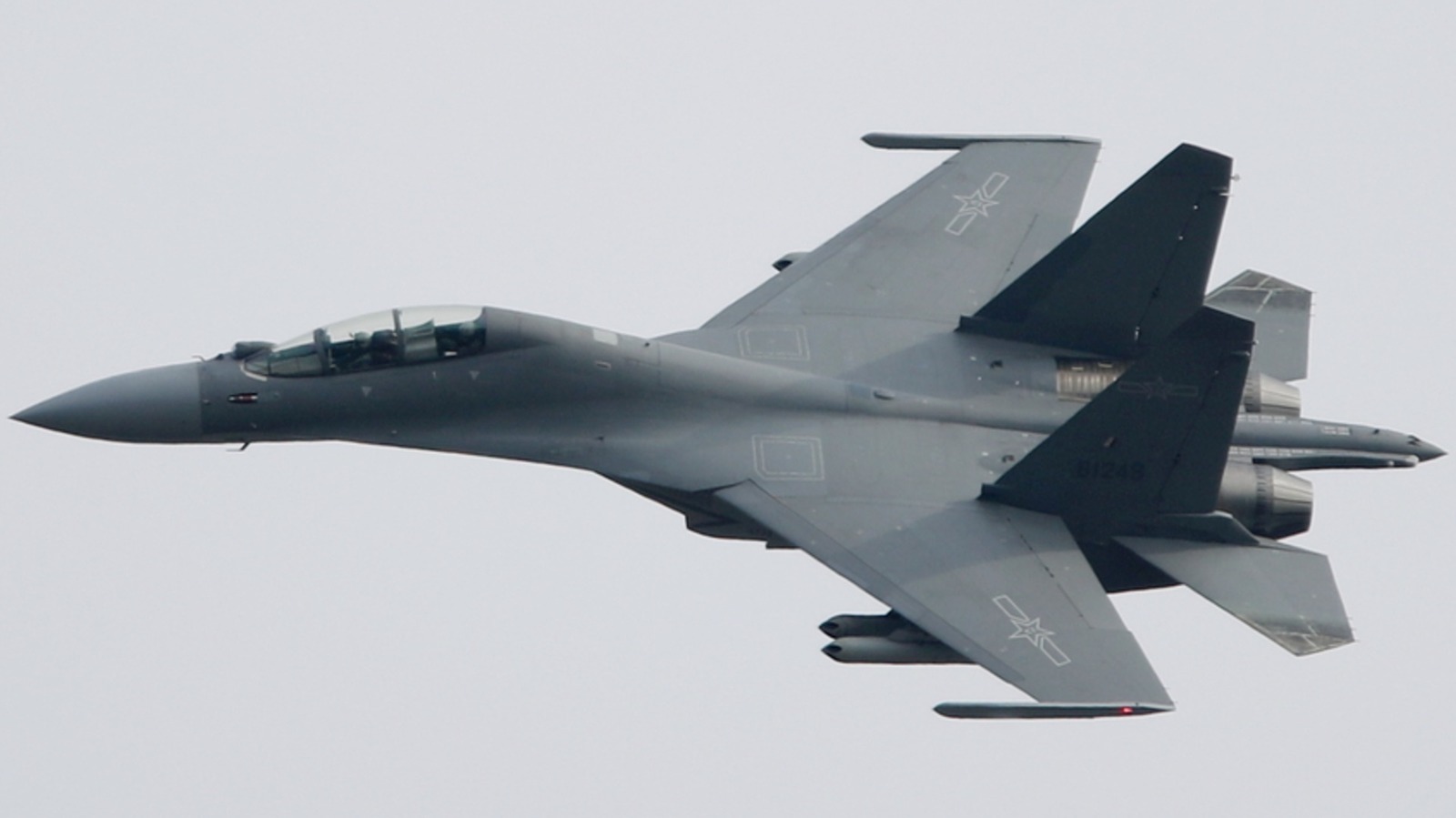
Хятад болон Египетийн агаарын цэргийн хүчин “Соёл иргэншлийн бүргэдүүд” хамтарсан сургуулилтын хүрээнд 4.5 дахь үеийн сөнөөгч онгоцуудын тулааны чадавхыг харьцуулан туршжээ.
2026 оны наймдугаар сарын 23-нд болсон уг сургуулилтаар Хятадын Ардын чөлөөлөх армийн агаарын цэргийн хүчин (PLAAF) болон Египетийн агаарын цэргийн хүчин (EAF) өөрсдийн голлох сөнөөгч онгоцуудыг ашиглан агаарын тулааны дадлага хийжээ. Энэ нь 2014 онд ашиглалтад орсон Хятадын J-16 болон 2001 оноос үүрэг гүйцэтгэж буй Францын Dassault Rafale сөнөөгч онгоцууд түүхэндээ анх удаа нэг нэгэнтэйгээ тулгарсан тохиолдол боллоо.
Техникийн үзүүлэлтийн хувьд Dassault Rafale нь олон төрлийн үүрэг гүйцэтгэх чадвартай, 10.5 тонн зэвсэглэл тээвэрлэх хүчин чадалтай. Агаарын тулаанд тус онгоц нь 62 миль хүртэлх зайд харвах чадалтай MBDA Meteor болон 37 миль хүртэлх зайд ажиллах MBDA MICA пуужингуудыг ашигладаг.
Харин Хятадын J-16 сөнөөгч онгоц нь Мах 2.4 хүртэлх хурдтай, 65,617 фут хүртэлх өндөрт ажиллах чадвартай нь хурд болон өндрийн хувьд давуу талтай юм. Тус онгоц нь 62 миль хүртэлх зайд харвах PL-12 болон 13.7 миль хүртэлх зайд ажиллах PL-9 пуужингаар зэвсэглэдэг.
Сургуулилтын явцад дунд болон ойрын зайн байлдааны хувилбаруудыг туршсан боловч тулааны үр дүнгийн талаарх дэлгэрэнгүй мэдээлэл тодорхойгүй байна. Одоогийн байдлаар Египет улс 55 ширхэг Rafale, Хятад улс 280 орчим J-16 сөнөөгч онгоцыг ашиглаж байна.
Дэлгэрэнгүйг эх сурвалжаас харах
Эх сурвалжийг нээх ↓
Between 4th- and 5th-generation fighters is an exclusive club of 4.5th-generation fighters, two of which are China’s Shenyang J-16 and the French-built Dassault Rafale. The two aircraft have flown for several years now, with the Rafale entering active service in 2001and the J-16 joining the fray in 2014.Despite having been around for decades, the two planes have never gone head-to-head… until now.
The People’s Liberation Army Air Force (PLAAF) and the Egyptian Air Force (EAF) participated in the China-Egypt “Eagles of Civilization” training exercise on August 23, 2026. The Rafale makes up a large portion of Egypt’s air power, while the PLAAF uses the J-16 heavily for deep-strike missions and air superiority. Both are multirole fighters with excellent capabilities, and the “Eagles of Civilization” exercise gave the world a first-hand glimpse at how each aircraft handles the other in one-on-one combat drills.
The EAF is one of the largest operators of the Rafale outside of France, with 55 in its fleet. According to the World Directory of Modern Military Aircraft, China maintains a fleet of 280 J-16s, and the exercise worked both ways by showing China how its 4.5th-generation fighter fared against France’s smaller and more versatile Rafale.
The Shenyang J-16 versus the Dassault Rafale
The exercise saw the two fighters engage in medium- and close-range maneuvers that the PLAAF considered combat-realistic. Unfortunately, we don’t know much about the nature of the engagements and how each fighter fared, but we can at least compare them on paper to see if one has a decisive advantage.
The Dassault Rafale is a twin-engine 4.5th-generation fighter capable of a variety of combat missions, from air superiority to reconnaissance and anti-ship operations. It has a maximum speed of Mach 1.8 (1,381 mph), a service ceiling of 50,000 feet, and can carry 10.5 tons of mixed ordnance. For air-to-air engagements, the Rafale can carry the long-range MBDA Meteor, which can strike targets beyond line of sight at an estimated distance of 62 miles, and the MBDA MICA, which has an estimated range of 37 miles.
The J-16 is a twin-engine 4.5th-generation fighter that has an estimated max speed of Mach 2.4 (1,841 mph). For air-to-air combat, the J-16 carries the PL-12, which has a range of up to 62 miles, and the PL-9, which can hit targets up to 13.7 miles away. It boasts a higher service ceiling of 65,617 feet, giving it the speed and altitude advantage over the Rafale. The Rafale’s air-to-air missiles, however, can potentially strike a J-16 before it gets in range, evening things out somewhat.

