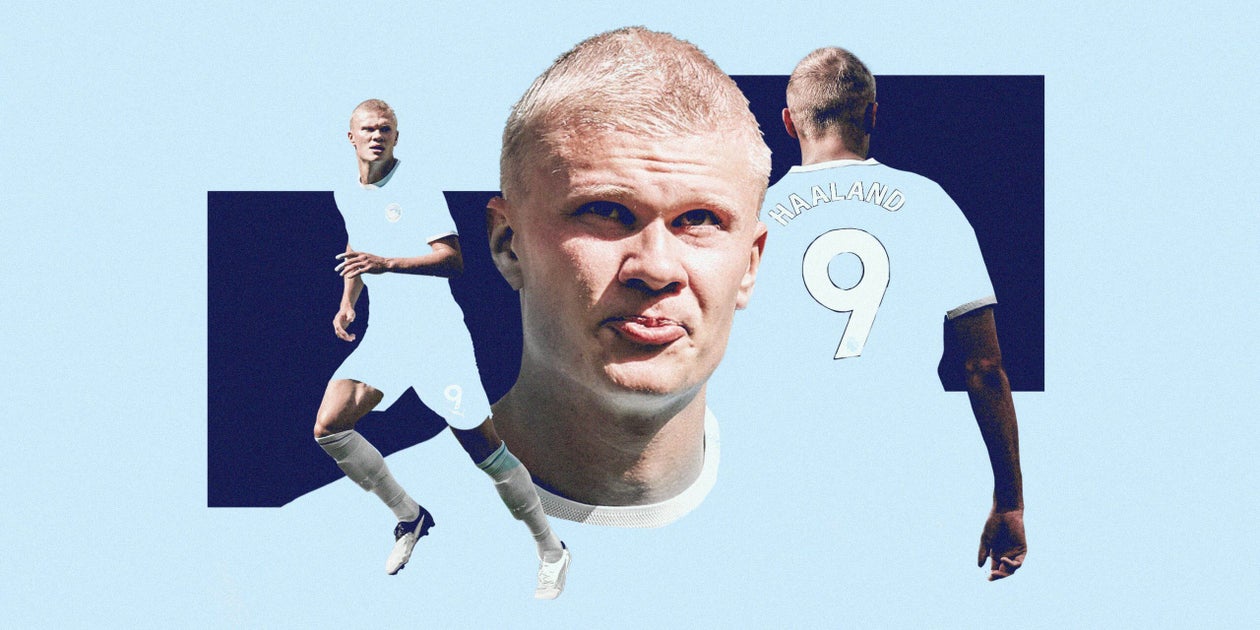
Норвегийн довтлогч Эрлинг Холанд талбай дээрх хичээл зүтгэл болон сэтгэл зүйн өвөрмөц бэлтгэлийнхээ ачаар дэлхийн шилдэг тоглогчдын нэг болжээ.
Хойд Америкт болсон 2026 оны Дэлхийн аваргад Эрлинг Холанд 5 тоглолтод оролцохдоо 7 гоол оруулсан амжилт үзүүлсэн юм. Тэрээр тоглолтын дараах сэргээн засалт, хооллолт, нойр болон бясалгалыг өдөр тутмын амьдралынхаа салшгүй хэсэг болгон хэвшүүлжээ. Түүний хуучин дасгалжуулагчдын тэмдэглэснээр, Холанд бага наснаасаа эхлэн бие бялдрын давуу талаас илүү сэтгэл зүйн бэлтгэл, тоглолтын уншилт, байрлал сонголтод онцгой анхаарч ирсэн байна.

Сэтгэл зүйч Марк Сагалын үзэж буйгаар, Холанд нь дотогшоо зан чанартай боловч өөрийн сэтгэл хөдлөлөө удирдах өндөр чадвартай тамирчин юм. Тэрээр тоглолтын үеэр сөрөг бодлуудаа орхиж, өмнөх алдаагаа мартан, зөвхөн дараагийн боломжид төвлөрөх зарчмыг баримталдаг. Энэхүү сэтгэл зүйн тэсвэр хатуужил нь түүнийг талбай дээр илүү үр дүнтэй тоглоход тусалдаг байна.

Холанд өөрийн цахим хуудсаараа дамжуулан амьдралын хэв маяг, бэлтгэл сургуулилтаа ил тод харуулдаг бөгөөд энэ нь түүний өөртөө итгэлтэй, аливаа зүйлийг хар цагаанаар ялгаж хардаггүй, бодит байдлыг хүлээн зөвшөөрдөг зан чанарыг илтгэдэг гэж мэргэжилтнүүд дүгнэжээ. Тэрээр 2024-2025 оны улиралд 21-22 гоол оруулсан нь өөрийнх нь өндөр хүлээлтэд хүрээгүй ч, үүнийг бодитойгоор хүлээн авч, дараагийн тоглолтуудад анхаарлаа хандуулдаг байна.
Дэлгэрэнгүйг эх сурвалжаас харах
↓Эх сурвалжийг нээх ↓
It is a summer evening in Sicily, at a glamorous private party one week after the recent World Cup. Jennifer Lopez is just finishing her set as Erling Haaland turns to the camera, his face filling the screen.
Usually, when his face is this close to the lens, the Norwegian is bellowing in celebration, hands shaking the tripod. Here, though still shouting to be heard over Lopez, Haaland is displaying more of a vulnerable side.
“As an introvert, I’m a little overstimulated,” he yells. “But it’s still nice. I’m still happy.”
Over the past year, despite that introversion, football’s top striker has invited the world into his life through a succession of vlogs on YouTube — a transformative period in which, alongside Kylian Mbappe, he was the star of the 2026 World Cup in North America.
There, a new audience discovered his trademark celebration — he scored seven goals in five appearances — eyes closed, arms out, sitting in the lotus pose. Meditation is just one aspect of Haaland’s exhaustive routine. Mentality is key to his success.
Haaland celebrates after scoring against Iraq at the World Cup (Buda Mendes/Getty Images)
“If you tell yourself you’re tired, you’re going to be tired,” he says in another video, exercising on a crosstrainer in a hypoxic chamber. “But if you tell yourself you’re not that tired, you’re not that tired. It’s simple. Our bodies can handle so much more than we think. It’s all psychological. A lot is in the mind.”
And so what is in that mind of his — powering the routine habits that, as a collective, form the remarkable? The Athletic spoke to several of Haaland’s former coaches, some speaking anonymously so they could discuss his development candidly, and psychologists to find out.
Haaland spies that Manchester City’s gym is empty. “That’s good,” he says.
Introverts are not unusual in elite sport — NBA star Kawhi Leonard and tennis player Iga Swiatek are two high-profile examples — but they are unexpected, especially given the alpha mentality nominally associated with the Premier League’s most prolific goalscorer.
“There’s a stereotype of the striker; this George Best-type character who’s outgoing and social and has that swagger,” says Marc Sagal, a sports psychologist who has worked with City, Liverpool and the England men’s football team.
“That’s true some of the time, but introversion is more common than we might think among elite athletes, and certainly among footballers. One of the things that pulls players away from a certain level of professionalism is socialisation, right? The desire to be out with people. But great footballers are made by honing their craft, and there’s a certain amount of discipline that it takes to be able to do that.”
This is not to say Haaland only likes to be alone — he is a key social member of small groups, with his friendship with international team-mate Sander Berge a major dimension of this summer’s vlogs.
(Xu Zijian/Xinhua via Getty Images)
“He was never an introvert in the group, but maybe in a new environment,” says Alf Ingve Berntsen, who coached Haaland from the age of eight to 16. “But remember, Bryne (the town of 13,000 people in southern Norway where Haaland grew up) is a small place. When you’ve been training, you’re seeing the same kids you see at school. It’s just familiar faces.”
“He was much more comfortable with a smaller group of friends than a bigger one,” adds another former coach. “So he’d never come in and be the big alpha. But it probably also has to do with how he gets his energy — he now seems to have learned to be in the limelight, because he has to, but his nature is not to be the centre of attention.”
For Sagal, introversion and extroversion do not exist in separate dimensions; rather, he thinks of the two as different energies which can be present in the same individual.
Haaland’s behaviour at the World Cup is a perfect example, flitting from highly sociable moments, such as dragging his Norway team-mates to a Dallas store to buy cowboy hats — “They complain when I order this, but when I score the goals, then they zip it up” — to quieter moments of introspection.
“Football is a very sociable life,” says Sagal. “You’re around team-mates, coaches, and travelling all the time. It can be difficult. But the advantage of introversion is that you do not need to rely on others to refuel, there’s an element that you retain control of your own restoration — especially at the level Haaland is at.”
That recovery is visible throughout Haaland’s life. His videos are a journey through stretches, supplements, raw milk and infrared lights. Kyle Walker, a former team-mate at City, joked on his own podcast that Haaland was “high maintenance”.
“Because I play so many games, I need to do the stretching,” Haaland says in one video of his routine, performed alone in City’s gym after training. “I don’t have to. But I know my body — that I should do it. You don’t have to do it, you don’t have to eat healthy, I could eat unhealthy every day if I want to, but that doesn’t mean I will.
“Do I want to do this?” he adds of these extras. “No. I don’t. Will I do it? Yeah. It’s good for my body. It’s good for my mind.”
His father, Alf-Inge Haaland, was a player for City, Leeds United and Norway, while his mother, Gry Marita Braut, was an elite heptathlete. These were learned behaviours, but also impressed on him at Bryne’s football club.
“From eight to 11, we focused on street football, ball mastery, just playing. But after that it became a bit more serious,” says Berntsen. “As he became a teenager, we would talk about nutrition, his sleep habits, and skills such as scanning — it was all quite early.”
Haaland was skinny as a child. Playing a year above his own age group meant he was dwarfed in size — and had to learn to use mental gifts before physical ones. To develop those abilities, he was asked to train against two older national youth team centre-backs — Tord Salte and Andreas Ueland — in order to learn movement in the box, discovering blind-sides.
For Berntsen, this is why he was so focused on his own self-development; he could never rely on innate advantages. There is a simplicity to his explanation which has been mirrored by Haaland: the striker looks after his body because it is what a professional does.

“It’s not that he’s obsessed with it, but in another way, we (Norway) have a lot of top athletes in running and cross-country skiing — Jakob Ingebritsen and Johannes Klaebo as examples — who are dedicated and do whatever it takes to be the best,” says Berntsen.
“So when it comes to sleep, it’s not like you can cut a deal. You have to do it if you want to get to that level. So many important things happen when sleeping, both cognitively and physically, and Haaland was interested in that really early. But it wasn’t just him, there were five players in his team who went on to play in the Norwegian youth teams; he was part of that big group and they learned from each other.”
Compared to many of his City team-mates, Haaland’s ‘academy experience’, if it truly was that at all, was rather different.
His age-group was a cohort of 40 players, boys and girls, who until their late teenage years were not ordered by ability. It was there, at Bryne’s football club, that he met his partner Isabel.
“We only had three rules,” says Berntsen. “Always be on time. Always try to do your best. Always behave.”
Unlike, for example, being in City’s academy from the age of eight, with football the all-encompassing reality, Haaland’s experience was the sport being an activity he did outside of school.
Watching his vlogs — and gauging by the near-universal reaction to them — the biggest surprise is how normal and polite Haaland appears, speaking in a hybrid Mancunian-Norwegian accent after three years in England, aware of every person’s name and quick to thank them.
At one point, there is quite a touching interest in the inner workings of a Cheshire cattle farm.
“You know players,” Oytsein Neerland, chief executive of Haaland’s second Norwegian club, Molde, told The Athletic in 2020. “They maybe say hello or give you a little wave, no more than that, but Erling wanted to speak to me. My reaction was, ‘What’s the matter? Is this about money? Does he want a new contract?’ — I thought it would be something like that.
“Instead, he started asking how I was and how my day was going. He wanted to know what it was like being the CEO of a football club. It was nothing to do with money. It was curiosity. An interest in people.”
“I am always particularly intrigued with athletes that are able to carry with them a really strong value system and have a really strong character,” says Sagal. “And Haaland seems to be that kind of person. If you’re going to be great at anything, there is a kind of ruthless focus and discipline that often is selfish — by necessity, you have to think about yourself and your craft first and foremost. But there’s something about the way that Holland interacts with others in the world that, despite his introversion, seems to be pretty caring and coming from a really good place.”
Another repeated feature is Haaland’s willingness to poke fun at himself.
“I look like Kevin from Home Alone,” he laughs during a recent video documenting his newly-shaved head.
“I can’t wait for fans to sing, ‘Who the f***ing hell is that?’” he adds moments later.
By documenting his own life so extensively, there is also a signal that Haaland possesses an inner contentment — a comfort in his own skin.
“He’s always been open and honest,” says one former coach. “And I think there is a natural side to him. He doesn’t pretend to be something that he isn’t. Often, people have an image they want to project, and then you create a bit of tension and seriousness or whatever you want to call it. And Erling is quite free from that.”

(Naomi Baker/Getty Images)
An hour after being knocked out of the World Cup in the quarter-finals by England last month, Haaland is recorded meeting the legendary Swedish striker Zlatan Ibrahimovic, humbly telling the outspoken 44-year-old that he was a much better footballer than himself. Ibrahimovic, for all his posturing, is evidently taken by the younger man.
“If you’re from Scandinavia and have personality, often they don’t accept it or (think) something is wrong,” Ibrahimovic says, as Haaland nods along. “If you have personality and character, you’ll reach that (top) level. But that’s not normal for Scandinavia.”
Sagal finds this aspect of Haaland’s personality particularly interesting.
“He has a pretty high level of self-awareness,” the psychologist explains. “And that’s an indication of both confidence and comfort in the sense that he’s comfortable in his own skin. And that does make a difference — it allows him to be focused, to pay attention to the right things at the right time, because they don’t have the trap or distraction of worry. He’s able to escape his own head. Haaland is an athlete in a fast-moving sport — if you start to think too much, you’ve got a problem.”
Haaland, when speaking to the Premier League’s record goalscorer Alan Shearer for The Athletic in 2022, agreed.
“As a striker, I think it’s really important that when you’re in the game, to not think too much,” he says. “If I’m going to go into my next game thinking about the chance I missed last game, it’s not good.
“You have to go into the game hungry. It doesn’t matter what happened before. If you scored three goals, if you scored zero goals, if you haven’t scored in a while. You have to go into the game with the same mentality. And so I think about not thinking too much about it! This is also something that helps me a lot; this meditation outside the pitch to just kind of let go of the negative thoughts.”

(Justin Setterfield/Getty Images)
But there is one interesting moment, as he’s rehydrating on a sofa, when one of Haaland’s vlogs appears to show that he can dwell on those things.
“The expectations are so high,” he admits. “If I score under 30 goals, it’s a decent season, under 25 goals, it’s a bad season. Last season (referring to 2024-25), I scored 21 or 22 goals, and it’s a bad season…” He pauses. “…but it’s good.”
It is not that the noise does not reverberate around Haaland’s head. It is that he accepts the reality of the situation — but recognises his own abilities have driven him to this exalted level.
“As common as it is for athletes to find these things a distraction from performance, there are others who thrive on the reality that the world is measuring them on outcome,” Sagal says.
“Acknowledging that the world might judge him one way, but the reality is still good, is a pretty sophisticated and mature way of operating. That’s the hallmark, often, of great performers. In the face of great external pressure, they are able to decide what their own independent definition of success is.”
One former coach puts it succinctly: “He doesn’t deny reality. He doesn’t deny who he is. A whole human being with good things or bad things. His strength is not seeing everything in black or white.”
Noise and silence. Light and shade. Introvert and extrovert. Haaland carries polarities.
In the balance between them lies his extreme.

