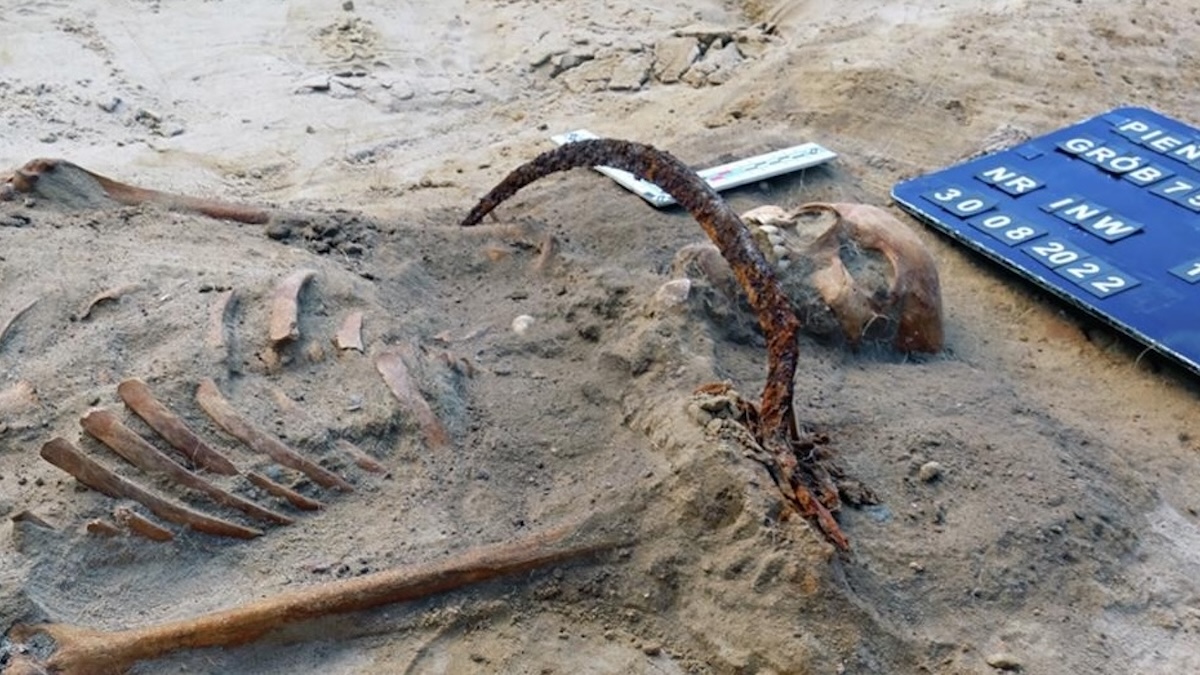
Польшийн Пень тосгоноос нас барсан хүнийг амилуулахгүй байх зорилгоор хэрэглэж байсан эртний зан үйлийн ул мөр бүхий булш олджээ.
Археологичид 2022 онд Польшийн Пень тосгоны орчмоос XVII зууны үед хамаарах, урьд өмнө бүртгэгдээгүй оршуулгын газрыг илрүүлжээ. Энэхүү газраас олдсон 75 дугаартай булшинд 17-19 орчим насны эмэгтэйг нууцлаг байдлаар оршуулсан байв. Түүнийг нас барсны дараа дахин амилж, амьд хүмүүст хор хөнөөл учруулахаас сэргийлж, хөлийнх нь эрхий хуруунд цоож зүүж, хүзүүн дээр нь хадуур хөндлөн тавьсан байжээ.
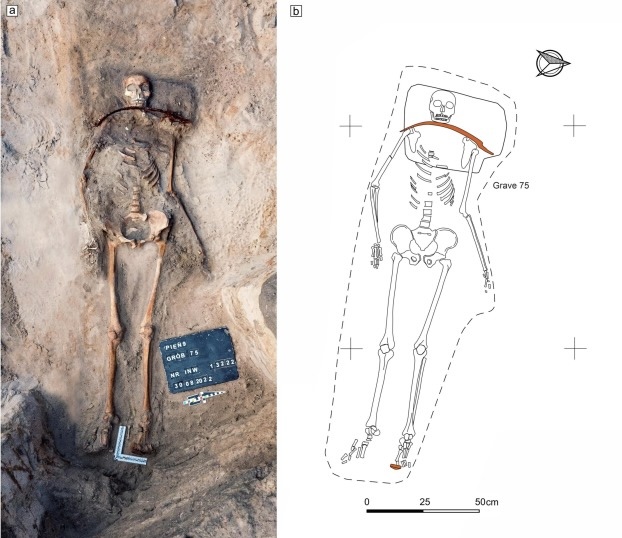
Судлаачдын үзэж буйгаар, тухайн үед нас барсан хүмүүсийг “чөтгөрөөс хамгаалах” зорилгоор ийнхүү зан үйл хийдэг байсан байна. Тус эмэгтэйг нас барсны дараа тосгоны иргэд түүнийг өвчин эмгэг, өлсгөлөн зэрэг тухайн үеийн гамшгийн шалтгаан гэж үзэн, ийнхүү хатуу арга хэмжээ авчээ. Тэрээр торгон малгай, алт, мөнгөн утсаар нэхсэн хувцас өмссөн байсан нь түүнийг нийгмийн дээд давхаргад хамаарч байсныг илтгэж байна.
ДНХ-ийн шинжилгээгээр тус эмэгтэй нь эхийн талаасаа Скандинавын гаралтай байж болзошгүй болохыг тогтоожээ. XVII зууны Польш-Литвийн хамтын нөхөрлөлийн үед нас барсан хүнийг дахин амилах вий гэхээс айх айдас түгээмэл байсан бөгөөд “Journal of Archaeological Science: Reports” сэтгүүлд нийтлэгдсэн энэхүү судалгаа нь тухайн үеийн нийгмийн итгэл үнэмшил, зан үйлийг ойлгоход чухал ач холбогдолтой юм.
Дэлгэрэнгүйг эх сурвалжаас харах
↓Эх сурвалжийг нээх ↓
Polish countryside, 17th century. A young woman from high society is buried in a remote cemetery away from the village, because of the manner of her death.
To keep her from returning from the dead, a padlock is clamped around her big toe.
But it doesn’t work. She soon rises from her grave and causes more misfortune for those around her.
So the townsfolk take more drastic measures: They return to her grave and place a sickle across her neck, blade facing down, ready to slit her throat if she tries to rise once more.
That’s the startling scene archaeologists stumbled upon in Pień, Poland, discovering first the graveyard and then this particular burial in 2022.
“These observed practices can be described as anti-demonic, protecting the living from dangerous deceased individuals,” the researchers write in a paper describing the find, published in the Journal of Archaeological Science: Reports.
“[This woman] would likely have been blamed for unspecified misfortunes (e.g., diseases, famine) that often plagued the 17th-century Polish-Lithuanian Commonwealth.”
As fascinating as it seems, this is far from the first evidence of this kind of belief. Sickles and padlocks have been discovered in dozens of graves across Poland, reflecting a widespread fear of the dead returning.
But it’s rare to find both of these ‘anti-demonic’ protective measures used on the same individual. Archaeologists have now analyzed this unique grave, uncovering a creepy, post-medieval horror story in the process.
The first clues that something was afoot came from the location of the cemetery itself. It does not appear in any known records from the time, and seems to be far from any church or chapel. In the belief system of the time and location, that makes it unconsecrated ground – reserved for individuals rejected by society.
“This mode of burial was applied to suicides, heretics, outsiders without municipal citizenship, vagrants, tragically deceased individuals, drowned persons, women who died in childbirth, as well as orphans and unbaptized children,” the researchers write.
In Romanian folklore, these people were most at risk of returning as strigoï – revenants, or what we might today call vampires. As such, several dozen of the burials in this undocumented cemetery were “non-normative”, containing evidence of practices that may have been designed to keep the undead at bay.
But among those few dozen, the townsfolk seemed to have been particularly terrified of the resident of ‘grave 75’.
Analysis of the bones revealed the individual here was female, aged between 17 and 19 years old at the time of death, but her cause of death remains unknown.
Genetic analysis revealed that she may have had some Scandinavian ancestry on her mother’s side, but she may have been born and raised in Poland.
She seemed to have enjoyed life in a higher social class, judging by the remains of a cap made of silk and gold and silver threads around her head.

Despite her status, something about her death seemed to stoke fears that she would return to haunt her family and village.
“While aspects of her ancestry could have contributed to perceptions of social difference or potential risk, numerous other factors, including age-at-death, possible violent or unusual circumstances surrounding her death, disease, social behavior or other situational factors not archaeologically visible may also explain her treatment,” the researchers write.
To assuage these fears, this young woman was originally buried with a triangular padlock clamped around the big toe of her left foot – a well-known anti-demonic custom for the time.
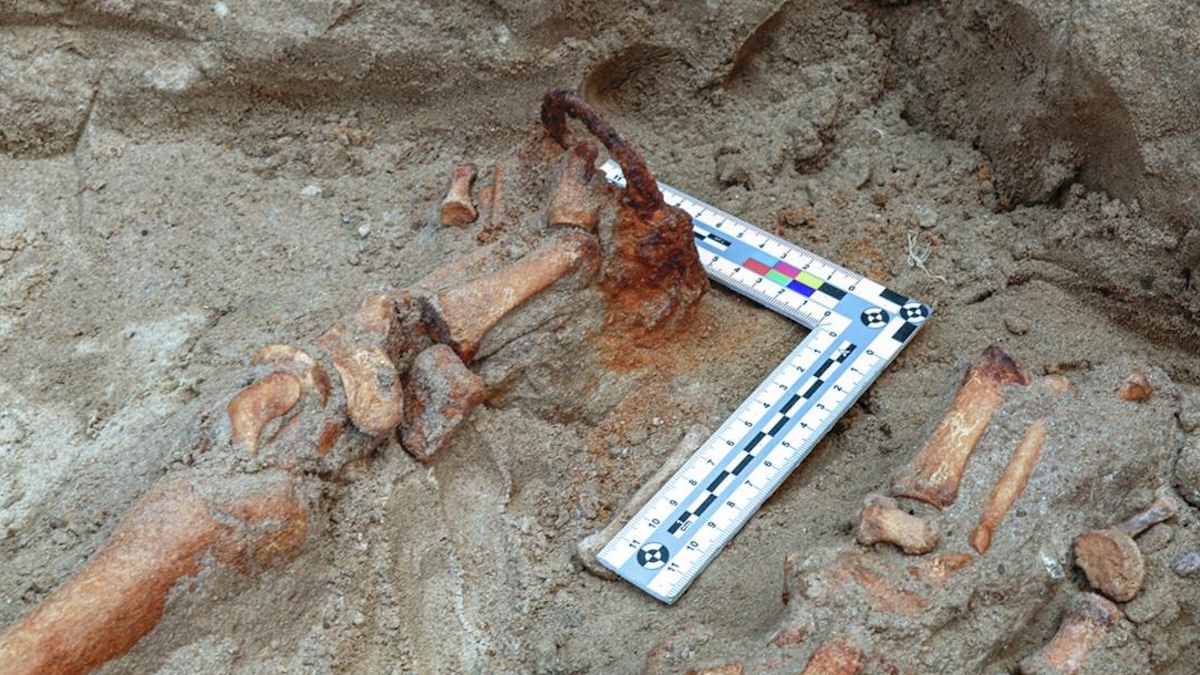
“This practice may be interpreted as an attempt to symbolically limit the deceased’s postmortem agency, symbolically constraining her potential return to the world of the living and interaction between the realms of the living and the dead,” the researchers write.
But for whatever reason, the townspeople didn’t seem satisfied that this was enough. Evidence shows that the grave was disturbed after the initial burial, and it seems that at this point they brought out the big guns, placing a sickle over her throat to deter her from climbing out of her grave again.
While many such stories involve people reporting seeing their loved ones skulking around after death, it’s more likely that some random misfortune later befell the town, confirming in their minds that the dead were getting up to mischief.
“The original burial secured with a padlock, her possible foreign origin (as a second- or later-generation migrant), and the probability that her death was perceived as a ‘bad’ one could together have been sufficient for the local population to blame this deceased woman for misfortunes,” the researchers write.
Related: Nearly 80 Headless Human Skeletons Discovered At A Spooky Stone Age Site
You could make the case that these precautions worked – after all, she then stayed put for more than 400 years.
And if movies have taught us anything, maybe we should leave the sickle there, just in case.
The research was published in the Journal of Archaeological Science: Reports.
This article was fact-checked by Clare Watson and edited by Clare Watson. While we pride ourselves on our process, we are only human. If you spot a mistake, please let us know.

