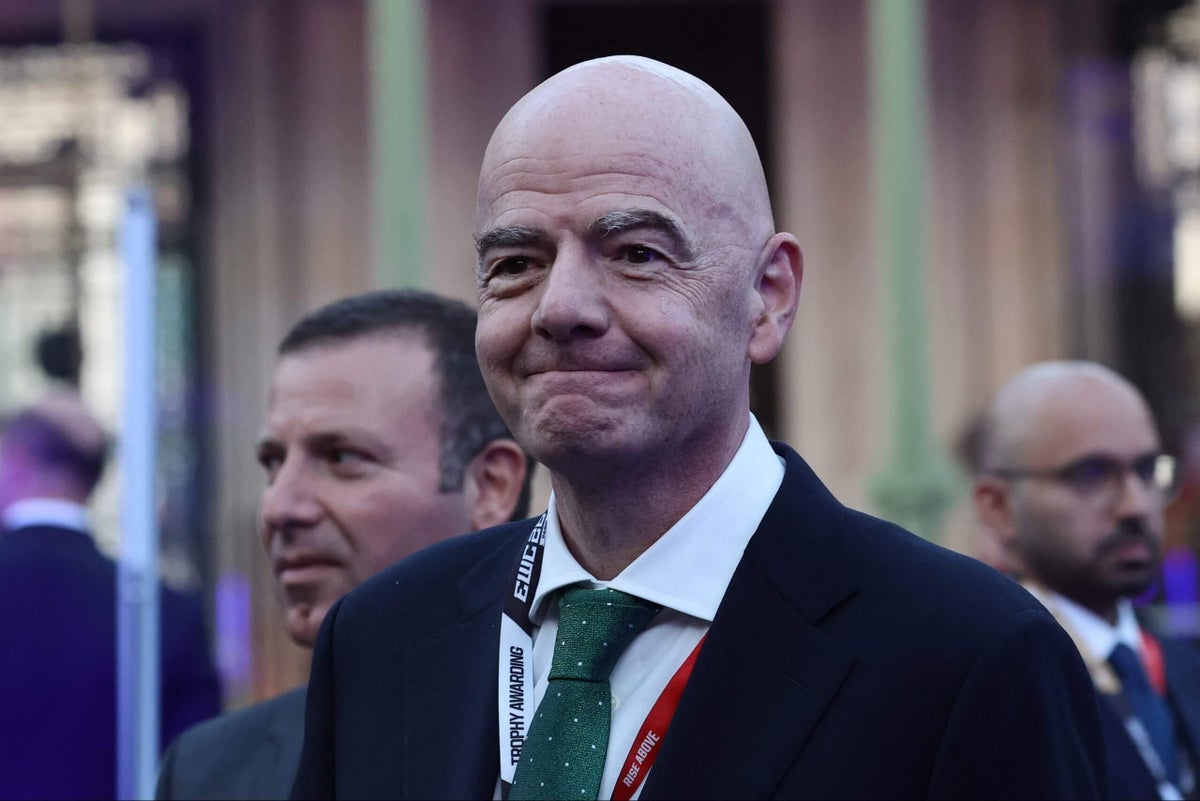
Европын хөлбөмбөгийн холбоо Дэлхийн хөлбөмбөгийн холбооны ерөнхийлөгчийн эсрэг хуулийн дагуу хатуу арга хэмжээ авахаар төлөвлөж байна.
Монакод болсон Аваргуудын лигийн сугалааны үеэр Европын хөлбөмбөгийн холбооны (УЕФА) удирдлагууд Жанни Инфантиог огцруулах чиглэлд томоохон алхам хийлээ. УЕФА Дэлхийн хөлбөмбөгийн холбооны (ФИФА) ерөнхийлөгчийг 4.2 тэрбум долларын өртөгтэй “FIFA Forward Enterprise” төслийн хүрээнд хууль бус үйлдэл хийсэн хэмээн буруутгаж, Швейцарын хуулийн байгууллагад эрүүгийн хэрэг үүсгэх хүсэлт гаргажээ.
УЕФА-гийн зүгээс ФИФА-гийн арилжааны үйл ажиллагаанд хувийн хөрөнгө оруулалт татах оролдлогыг эсэргүүцэж, boycott буюу тэмцээнүүдийг бойкотлох сануулга өгсөн ч ФИФА уг төслөө бүрмөсөн зогсоосноо мэдэгдсэн юм. Гэсэн хэдий ч Европын холбооны удирдлагууд Жанни Инфантиог албан тушаалаасаа огцрохыг шаардаж, дараагийн ээлжинд шинэ нэр дэвшигч тодруулах болон засаглалын шинэчлэл хийх гурван үе шаттай стратегийг баримталж байна.
Энэхүү асуудалд УЕФА-гийн дэд ерөнхийлөгч Лаура МакАллистер байр сууриа илэрхийлэхдээ, тэдний зорилго нь зөвхөн нэг тулаанд ялах бус, хөлбөмбөгийн дэлхийн засаглал болон соёлыг бүхэлд нь өөрчлөхөд чиглэж байгааг онцолжээ. Одоогоор УЕФА-гийн ерөнхийлөгч Александер Чеферин болон Английн хөлбөмбөгийн холбооны тэргүүн Дебби Хьюитт нар ФИФА-гийн дэд ерөнхийлөгчийн албан тушаалаа хадгалсаар байгаа бөгөөд Унгарын хөлбөмбөгийн холбооны ерөнхийлөгч Шандор Чаньи Жанни Инфантиог дэмжихээс татгалзсан байна.
Ирэх гуравдугаар сард болох ФИФА-гийн сонгууль хүртэлх энэхүү сөргөлдөөн хэрхэн өрнөх нь тодорхойгүй байгаа бөгөөд Жанни Инфантио өөрийн хүсэлтээр суудлаа өгөх эсэх нь анхаарлын төвд байна. Зарим албаны хүмүүс түүнийг амархан бууж өгөхгүй гэж үзэж байгаа бол УЕФА-гийн зүгээс хуулийн дагуу хариуцлага тооцох боломжийг эрэлхийлсээр байна.
Дэлгэрэнгүйг эх сурвалжаас харах
↓Эх сурвалжийг нээх ↓
As European football descended on Monaco for the Champions League draw, there was only one topic on the tip of their tongues: the future of Gianni Infantino.
On Thursday afternoon — just as a meeting between UEFA’s 55 member associations, as well as the European members of the FIFA council, got underway at the glitzy Le Meridien hotel — UEFA, the governing body for European football, raised the stakes.
In a significant escalation of its attempts to dethrone Infantino, UEFA made a request for the disclosure of documents before potentially launching “criminal proceedings” against the FIFA president in Switzerland.
This is in response to the abandoned FIFA Forward Enterprise (FFE) plan, which would have seen world soccer’s governing body make stakes in the World Cup available for private investment.
In a legal document filed in the United States District Court, seen by The Athletic, UEFA accused Infantino of “promoting” a “fraudulently off-market price for his own benefit” when seeking to sell a stake in FIFA’s commercial and event operations to Thrive Eternal — an American investment fund run by Joshua Kushner — for $4.2billion (£3.1bn).
Also in UEFA’s crosshairs, and subject to identical legal filings, were Thrive Eternal, JPMorgan, and Bann Ventures and its CEO, Greg Maffei. JPMorgan and Bann Ventures were due to work alongside FIFA on the FFE project and were named by the governing body in its July 28 release announcing the plans.
FIFA did not respond when approached by The Athletic after the legal filing was lodged, while Thrive Eternal declined to comment.
But on the French Riviera, Infantino — who used to take centre stage at these Champions League draws when he was UEFA secretary general — had very few, if any, supporters.
For the purposes of this article, The Athletic spoke to many people at the Champions League draw, who, unless otherwise noted, asked to remain anonymous to protect relationships. In those conversations, it was a struggle to find somebody who did not have an opinion on what is being perceived as the battle for the soul of football.
Football powerbrokers attended the Champions League draw on Thursday (Valery Hache/AFP via Getty Images)
The consensus among senior UEFA officials in Monaco is that Infantino, who many felt should be on a victory lap given the commercial success of the World Cup, foolishly self-imploded with the FFE plan.
But on Wednesday, as European football executives were flying into Monaco for the Champions League draw, UEFA appeared to be on the back foot, perhaps for the first time in the ongoing battle with Infantino.
UEFA backed down from itsthreat to boycott all FIFA competitions, saying it received a letter from FIFA that “confirmed in writing” the FFE plan has been “irrevocably and permanently withdrawn”.
The letter detailing the assurances was signed by Mattias Grafstrom, FIFA’s general secretary, three weeks before UEFA changed its position. A FIFA spokesperson told The Athletic: “The secretary general confirmed in a letter, dated August 6, that the FIFA Forward Enterprise project had been irrevocably and permanently withdrawn and will not reappear in any other shape, construction, name or form.”
The view from several football executives in Monaco was that, when making the threat, UEFA simply failed to countenance that the Under-20 Women’s World Cup, which is being hosted by Poland next month, was on the horizon.
One national association head made clear they would have been prepared to tell their women’s under-20s team that they could not play in the tournament had those assurances not been sent, irrespective of the perception that they would be denying those players a great opportunity.
But on Thursday, UEFA upped the stakes by raising the prospect of criminal action.
It could receive a result within days regarding its request to have access to the “communications and documents”. But the expectation is that FIFA and the other parties would fight back and not simply hand everything over.
Should that prove to be the case, UEFA may reasonably question why access would be blocked.
Why Premier League clubs still have betting sponsors on their shirts
Nnamdi Onyeagwara
Depending on who you spoke to, even on the back of the legal threat, European football executives and UEFA officials hold different views over whether it will prompt Infantino to stand down before the March election. Some believe he won’t make it to the spring, but others say it is not in his nature to go without a fight.
“I don’t think we ever thought one battle would win this war,” Laura McAllister, a UEFA vice president, told reporters, including The Athletic, on Friday. “I suspect this is going to be a series of battles, and we’ll know what the next ones are fairly shortly.
“We didn’t expect the FIFA president to go quietly because there was no real track record of that happening. But that doesn’t deter us from the strategy that we have to issue a regime change because this is a big moment in football.”
UEFA knows, according to a person with knowledge of the European governing body’s position, that pursuing legal action will be costly — but if it brings an end to Infantino’s tenure, the view is that it would have been worth the investment.
But if Infantino stands down in the face of potential criminal legal action, then that person says UEFA would reassess the situation and determine whether it is still worth pursuing.
Whether it is the threat of future boycotts or a potential criminal case, what became clear in Monaco is that the plan is to oust Infantino.
In unison with Concacaf — which governs North American, Central American and Caribbean soccer — and the Asian Football Confederation (AFC), UEFA has adopted a three-pronged strategy.
According to people with knowledge of UEFA’s outlook, the first task was to strike Infantino, which they feel it did with the boycott threat and subsequent legal pursuit. The next stage is to find a suitable candidate to stand against him and then push for governance reforms.
In stark contrast to last year, nobody from FIFA’s administration was at UEFA’s season kick-off event. Grafstrom and Kevin Lamour, FIFA’s former chief operating officer who left the organisation following the FFE proposal, attended in 2025.
Only occasionally, sources briefed on the matter said, is the kick-off event attended by representatives of FIFA and other confederations.
Along with Ceferin, Debbie Hewitt, president of the English Football Association (FA), and Sandor Csanyi, president of the Hungarian Football Federation, are also vice presidents at FIFA and were both in Monaco. Csayni has written to Infantino to withdraw his support.

Ceferin at the Champions League draw (Valery Hache/AFP via Getty Images)
In their roles as vice presidents of FIFA, Ceferin and Hewitt receive an annual salary of $300,000 (£220,000). UEFA and the FA have confirmed to The Athletic that they will continue to receive their salaries despite the ongoing battle.
“The UEFA president will continue to receive his compensation in accordance with applicable regulations and will continue to perform his duties on the FIFA council in the best interests of football,” a UEFA statement read.
As it is fundamentally a club event, where teams competing in UEFA’s competitions find out who they will play in the Champions League, Europa League and Conference League, senior executives from some of the biggest clubs were also in attendance.
The view from those senior figures is that they would likely fall in behind UEFA. At the same time, though, they praised the merits of the FIFA Club World Cup and the financial benefits it brought to those who competed in the tournament last summer.
This, if anything, is an example of the fine line the biggest clubs in Europe have to tread. They are well aware of the finances FIFA, which made $10bn from this summer’s World Cup, can put up.
Nasser Al-Khelaifi is a highly influential figure in football. He is the chairman of Qatar Sports Investments and Paris Saint-Germain, as well as the chairman of European Football Clubs (EFC) and a member of UEFA’s executive committee.
When asked by The Athletic in the mixed zone on Thursday whether Infantino retains his support to remain as FIFA president, he chose not to answer, instead responding to a different question about PSG and the Champions League.
The Qatar Football Association, however, has vehemently backed Infantino to continue in his role.
A key topic for the UEFA officials and national association heads in Monaco was the need for reform at FIFA.
And although Victor Montagliani, the Canadian president of Concacaf, is widely viewed as someone who could run against Infantino, with the deadline for nominations on November 18, McAllister says it would be wrong to focus purely on the potential runners and riders. Even with that in mind, however, there is a time consideration. The view from neutral observers in Monaco is that the longer it takes a candidate to come forward, the more itfavours Infantino.
“You can obsess over a candidate at the expense of the bigger issue,” McAllister adds, “which is that there is no point having a candidate to stand against Gianni Infantino unless that candidate is part of a reform agenda that can change the governance and the culture of football at a global level, and that’s what we’re working on.”
McAllister did not say what UEFA would do if Infantino is re-elected via the democratic process in March. This remains a possibility due to splintering in Concacaf and the fact that neither CONMEBOL, the governing body for football in South America, nor CAF, its equivalent in Africa, has said he should resign.
“Not everybody is on the same side,” McAllister says. “We have divisions in global football, not surprisingly.”
UEFA’s threat to pursue a criminal case against Infantino raises the stakes in the ongoing feud dominating global football, and how Infantino chooses to respond will lead to consequences either way.
The view in Monaco was clearly that his only response should be to stand down, but even if they are hopeful, UEFA’s most ardent officials are not convinced it is in Infantino’s make-up to roll over and concede the throne.
This battle seems to be heading either to the FIFA congress in March or a courtroom in Switzerland.

