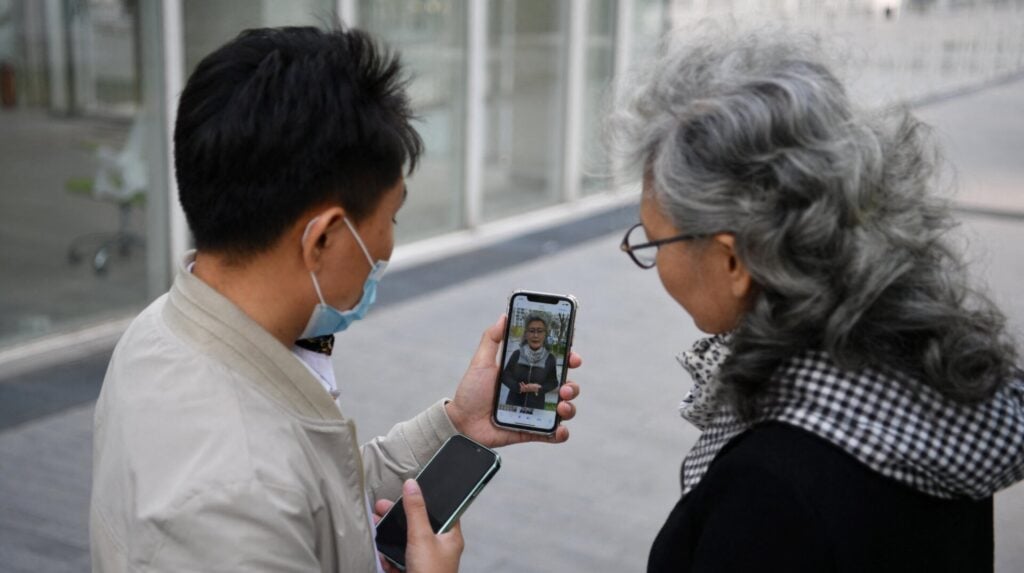
Хятадын сошиал сүлжээний богино хэмжээний цуврал контентуудын дийлэнх нь хиймэл оюун ухаанаар бүтээгдэх болсон нь салбарын эдийн засаг болон ажлын байранд томоохон өөрчлөлт авчирлаа.
Хятадын “Douyin” буюу TikTok платформын тавдугаар сарын шилдэг 100 анимэйшн контентын 89 нь хиймэл оюун ухаанаар бүтээгджээ. Мөн Хятадын Сүлжээний Үйлчилгээний Холбооны мэдээлснээр, 2026 оны эхний улиралд үйлдвэрлэгдсэн 128,000 орчим богино хэмжээний цуврал контентын 95 хувь нь хиймэл оюун ухааны технологи ашигласан байна. Энэхүү контентууд нь үзэгчдийн анхаарлыг татах зорилгоор хурц эргэлттэй үйл явдлуудыг агуулдаг бөгөөд төлбөртэй ангиудаар орлого олох загвараар ажилладаг.
Хятадын Ухань хотод байрлах “Manghe” компани хиймэл оюун ухаан ашиглан контент үйлдвэрлэх зардал нь уламжлалт аргаас гурав дахин хямд, харин бүтээх хугацаа нь тав дахин хурдан байгааг NHK агентлаг мэдээлжээ. “Zeelin” компани ч мөн адил зардлаа 90 хувиар бууруулж, зөвхөн тавдугаар сард 8,000 минутын контент үйлдвэрлэсэн байна. Ийм төрлийн үйлдвэрлэл нь график процессор (GPU) болон цөөн тооны ажилтны хүчээр хурдтай явагдаж байгаа нь салбарын зардлыг эрс багасгаж байна.
Гэвч энэхүү технологийн дэвшил нь Хятадын зураг авалтын салбарт ажилладаг хүмүүсийн ажлын байранд сөргөөр нөлөөлж эхэллээ. Зэжян мужийн Хэндиан дэлхийн кино студийн орчимд ажилладаг жүжигчид хиймэл оюун ухаанаас үүдэлтэй ажлын байрны хомсдол, орлогын бууралтад санаа зовниж буйгаа илэрхийлжээ. Түүнчлэн, зарим тохиолдолд бодит жүжигчдийн дүр төрхийг дижитал хэлбэрээр “нэрмэл” болгон авч, дахин ашиглах практик түгээмэл болж байгаа нь салбарын ёс зүй болон хүний эрхийн асуудлыг хөндөж байна.
Дэлгэрэнгүйг эх сурвалжаас харах
↓Эх сурвалжийг нээх ↓
Despite tech and economics commentator Tyler Cowen professing his undying love for it in the Free Press last year, the AI-generated gooning prop known as “Tilly Norwood” seems destined to collect dust in a curio cabinet marked “Notable Garbage From the 2020s AI Boom.” Unless there’s a large, secret fandom waiting with bated breath for the release of the Tilly Norwood movie, it would seem that improv comedian Eline Van Der Velden’s quest for fame as an AI provocateur is finally fizzling.
But make no mistake: the aesthetic cataclysm Tilly Norwood seemed to prophesy appears to have been real all along. You just have to look at China to see the warning lights flashing.
“AI video is taking over China!” is a genre of news story that started materializing at least a year ago, and which we now know to be at least somewhat debunked. Nonetheless, I’ve been seeing some signs of Chinese AI-generated micro-dramas achieving scary ubiquity over the past year. Just speaking anecdotally, I saw someone on a public bus in Los Angeles watching one after another after another about two months ago, but they were subtitled in Spanish. I wasn’t positive at the time if what I was seeing was even Chinese, or that it was 100% AI-generated. I thought it might be a hybrid of live action and AI.
But from the stats in a Friday report in the Financial Times, there’s a good chance what I was seeing was unadulterated AI slop, and it was being eagerly lapped up.
FT looked at the monthly top 100 rankings for Douyin (a.k.a. Chinese TikTok) during the month of May, as reported by an analytics company called DataEye. In the animation category, 89 out of 100 were AI-generated. The FT also quotes the China Netcasting Services Association, a trade organization, as reporting that 95% percent of the 128,000 microdramas produced in the first quarter of 2026 were AI.
Here’s what looks like a work sample by some guy on YouTube named Terrence Chang who uses ByteDance’s SeeDance video model to generate microdramas. Microdramas, if you’re not aware, are fictional video content distributed on social media, and designed to hook people with cliffhangers so they’ll eventually pay for paywalled episodes. Note that despite Chang’s video being made with ByteDance’s model, it isn’t optimized for TikTok—it’s not vertical video for one thing. Nonetheless, it’s a demonstration of what I personally would rate as the current state of the art.
About a month ago, Japan’s NHK reported on one company that makes these, Manghe, based in Wuhan, Hubei, China. Again, the numbers are frightening. I haven’t looked at Manghe’s ledger myself, but NHK says the total cost to produce a Manghe AI drama versus its filmed-and-acted equivalent is one third, and that AI videos take only one fifth as long to produce. NHK says the company has “seven to eight staff working as one team” and those words are overlaid on top of footage of six geeky desk workers all at one table, clicking away at desktop computers.
In the grand scheme, that’s arguably pretty expensive in terms of money and human effort. And it’s time-consuming when you consider that as far as Manghe is concerned, it’s just a few key-presses and mouse clicks leading to a bunch of red-hot GPUs in some distant data center. Unfortunately it also sounds horrifyingly profitable anyway.
FT looked at a different company, Zeelin, for its report, and was given even flashier stats: 10% of the production cost compared to a video with human actors, and 8,000 minutes of content produced in the month of May alone. Exactly how much money anyone is making off of this is still a mystery, but there are signs that this is taking a huge economic toll.
Vox pop interviews from the NHK report feature unnamed people on the streets near Hengdian World Studios in Zhejiang province professing to be background actors who used to work in the Chinese entertainment industry saying things like, “I lost almost all of my work in filming. It’s a serious situation,” and “Pay is low. It’s clearly a situation caused by AI.”
The concept behind Tilly Norwood was that there would be an AI generated persona so beloved, producers would pay to have it included in their projects. The FT report says a grotesque inversion of that dynamic is now common: real actors reportedly come in to have their essences “distilled”—captured for later digital use, with no actual human needed. An unnamed children’s TV host apparently told FT she “was pretty much pinned against a wall” and required to undergo such a process.
It’s hard to imagine you need need to pay extra for AI-generated Brad Pitt, nor do you need AI-generated Hu Ge—to say nothing of forking over money for someone else’s AI generated “performer.” You just need imagery that gets bored people to stop scrolling. And it pains me to report that a staff of six-to-eight people crammed into a tiny office can make that happen just fine.

