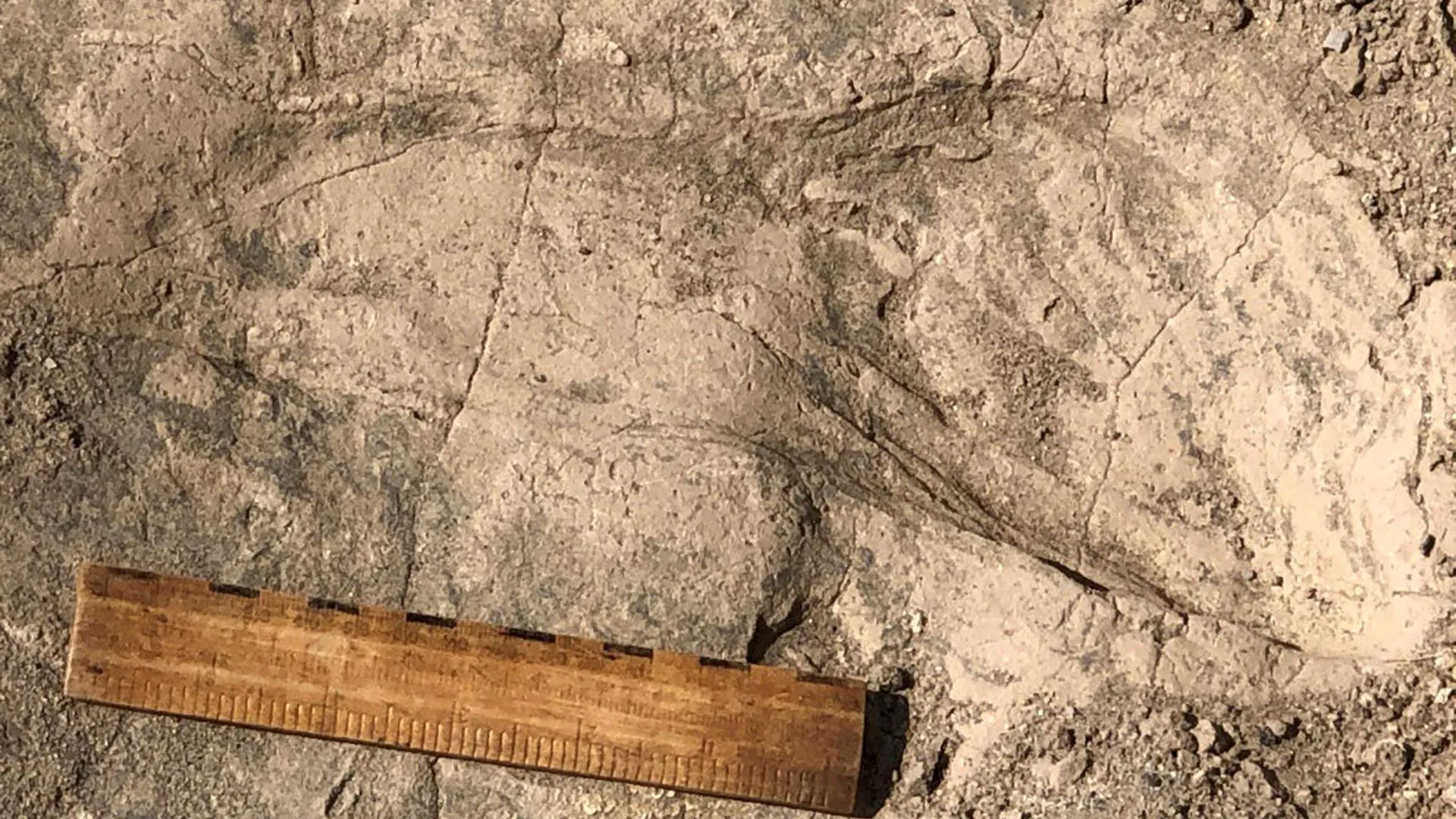
Кенийн Туркана нуурын эрэг орчмоос олдсон чулуужсан мөрүүд нь эртний гоминидуудын нийгмийн бүтэц болон биеийн хэмжээний талаарх шинэ ойлголтыг өгч байна.
Олон улсын судлаачдын баг Кенийн хойд хэсгээс 1.4 сая жилийн тэртээд холбогдох Paranthropus boisei зүйлийн найман бодгалийн гишгэсэн мөрүүдийг илрүүлжээ. Эрдэмтэд 2024 онд боловсруулсан шинэ шинжилгээний аргыг ашиглан хөлийн анатоми болон хөдөлгөөний хэв шинжийг судалж, эдгээр мөр нь насанд хүрсэн бодгалиудад хамаарахыг тогтоосон байна. Энэхүү олдвор нь ясан үлдэгдэлээс ялгаатай нь амьд ахуй цагийнх нь богино хугацааны үйл явдлыг харуулсан “чулуужсан зан үйлийн” баримт болж байна.
Судалгааны үр дүнгээр уг бодгалиудын биеийн өндөр 1.8 метр, жин нь 75 орчим килограмм байсан нь урьдчилсан таамаглалаас хамаагүй том биетэй байсныг харууллаа. Энэхүү нээлт нь Paranthropus boisei зүйлийг тухайн үед амьдарч байсан Homo erectus-аас хамаагүй жижиг биетэй байсан гэх өмнөх судалгаануудыг эргэлзээнд оруулж байна.
Судлаачдын үзэж буйгаар найман бодгалиас бүрдсэн бүлэгт эмэгчин болон зулзага байхгүй байсан нь тэдний нийгмийн бүтэц нарийн төвөгтэй байсныг илтгэж болзошгүй юм. Эрэгчин бодгалиуд аюултай орчинд аюулгүй байдлаа хангахын тулд хамтдаа нүүдэллэж, эмэгчний төлөө өрсөлддөг байсан байх магадлалтай гэж эрдэмтэд таамаглаж байна.
Туркана нуурын эрэг орчмын бүс нутгаас олон зуун гоминидын мөр илэрсэн нь эртний хүн төрөлхтний өвөг дээдэс энэхүү байгалийн нөхцөлийг удаан хугацааны турш ашиглаж байсныг баталж байна. Судлаачид геологийн ямар нөхцөл байдал мөрүүдийг 100 мянга гаруй жилийн турш хадгалан үлдээснийг тодруулах нь тухайн үеийн амьдралын хэв маягийг илүү гүнзгий ойлгоход тус дөхөм болно гэж үзжээ. Эрдэмтдийн баг энэ ондоо багтаан Кени улсад дахин очиж, малтлага судалгаагаа үргэлжлүүлэхээр төлөвлөж байна.
Дэлгэрэнгүйг эх сурвалжаас харах
↓Эх сурвалжийг нээх ↓
A remarkable set of fossil footprints from northern Kenya is offering scientists a rare glimpse of how an extinct human relative may have moved and interacted about 1.4 million years ago.
The tracks, preserved near an ancient lakeshore, appear to record eight Paranthropus boisei individuals occupying the same place at roughly the same time. Researchers describe the discovery as a snapshot of “fossil behavior” because, unlike bones that can accumulate over long periods, footprints can capture a brief moment in the lives of individuals.
The international team, made up of researchers from the US and Kenya, concluded that all eight trackmakers were likely adults. Several also appear to have been considerably larger than earlier estimates of Paranthropus boisei body size based on the limited skeletal remains available.
Ancient Footprints Reveal Unexpected Body Size
The researchers used analytical techniques first developed by their team in 2024 to identify the footprints as belonging to Paranthropus boisei. The classification was based on clues in foot anatomy as well as the way the individuals appear to have moved.
The size of the tracks came as a surprise.
“The sizes of the footprints indicate human-like body sizes – up to 1.8 meters tall and around 75 kilograms,” says lead author Kevin Hatala, of Chatham University and an associated researcher of the Department of Human Origins at the Max Planck Institute for Evolutionary Anthropology in Leipzig.
For decades, most known fossils of Paranthropus boisei consisted of skulls, including specimens with exceptionally large jaws and teeth. Much less has been known about what the species looked like below the neck because fossils from the rest of the skeleton are far rarer.
The new tracks now challenge earlier research suggesting that Paranthropus boisei was substantially smaller than Homo erectus, another hominin that lived during the same general period and is considered a possible direct ancestor of modern humans.
A Rare Glimpse of Ancient Social Behavior
Footprints can reveal more than anatomy. Because a walking surface may be formed and preserved over a very short span of time, fossil tracks can provide direct evidence about movement, group size, and possible social interactions.
In this case, the eight individuals appear to have been traveling together. Most were likely adult males, with no obvious evidence of females or children among them.
“The fact that eight, mostly adult male, Paranthropus boisei individuals seemingly traveled together as a group, without females or children, hints at a complex social structure in this species,” says co-author Neil Roach of Harvard University. “They may have lived in large groups, where males competed for mates, but also tolerated each other at times for safety in a dangerous environment.”
That possibility adds a new dimension to what scientists know about Paranthropus boisei. The species shared its world with early members of the genus Homo but followed a very different evolutionary path.
Why Ancient Hominins Returned to the Lakeshore
The new discovery is part of a much larger collection of hominin footprints found in ancient lakeshore environments around Lake Turkana.
That pattern suggests these areas were important habitats that offered resources valuable enough to draw extinct human relatives back repeatedly.
“To me, it is amazing that we have the same kind of lake margin deposits in two areas of East Turkana that are 40 kilometers apart, at about the same age,” says co-author Kay Behrensmeyer of the Smithsonian Institution.
Researchers have now documented hundreds of hominin footprints at more than a half-dozen sites across the region. Understanding why those tracks survived could also help explain why ancient hominins continued visiting the lakeshore over such a long span of time.
Behrensmeyer predicts that, “if we can understand what geological conditions allowed these tracks to be preserved, we should know more about why hominins continued to return to the lake shore environment over more than 100,000 years.”
Building a Record of Life 1.4 Million Years Ago
The research team plans to return to Kenya this year to continue investigating the fossil footprint sites.
Each newly documented surface can preserve a different moment from the distant past, giving researchers evidence about anatomy, walking behavior, social interactions, and environmental conditions that traditional fossils cannot always provide.
“Each site represents a snapshot of our past, and we are quickly building a photo album with several different windows to hominin anatomy, locomotion, behavior, and environments during the Early Pleistocene,” says Hatala.
The discoveries are also reinforcing the importance of the Lake Turkana region as one of the world’s richest areas for studying human evolution.
Co-author Purity Kiura of the National Museums of Kenya adds, “The discovery of these fossil footprints along the margins of Lake Turkana reinforces the region’s global importance in understanding human evolution, preserving remarkable evidence of how our ancient relatives lived 1.4 million years ago. It further strengthens Kenya’s position as one of the world’s leading paleoanthropological landscapes and highlights our responsibility to protect this irreplaceable heritage.”
By combining new analytical methods with unusually well-preserved footprint sites, researchers are gaining access to details that bones alone often cannot provide. These ancient tracks can reveal how extinct human relatives were built, how they moved, where they spent their time, and even how they may have interacted with one another.

