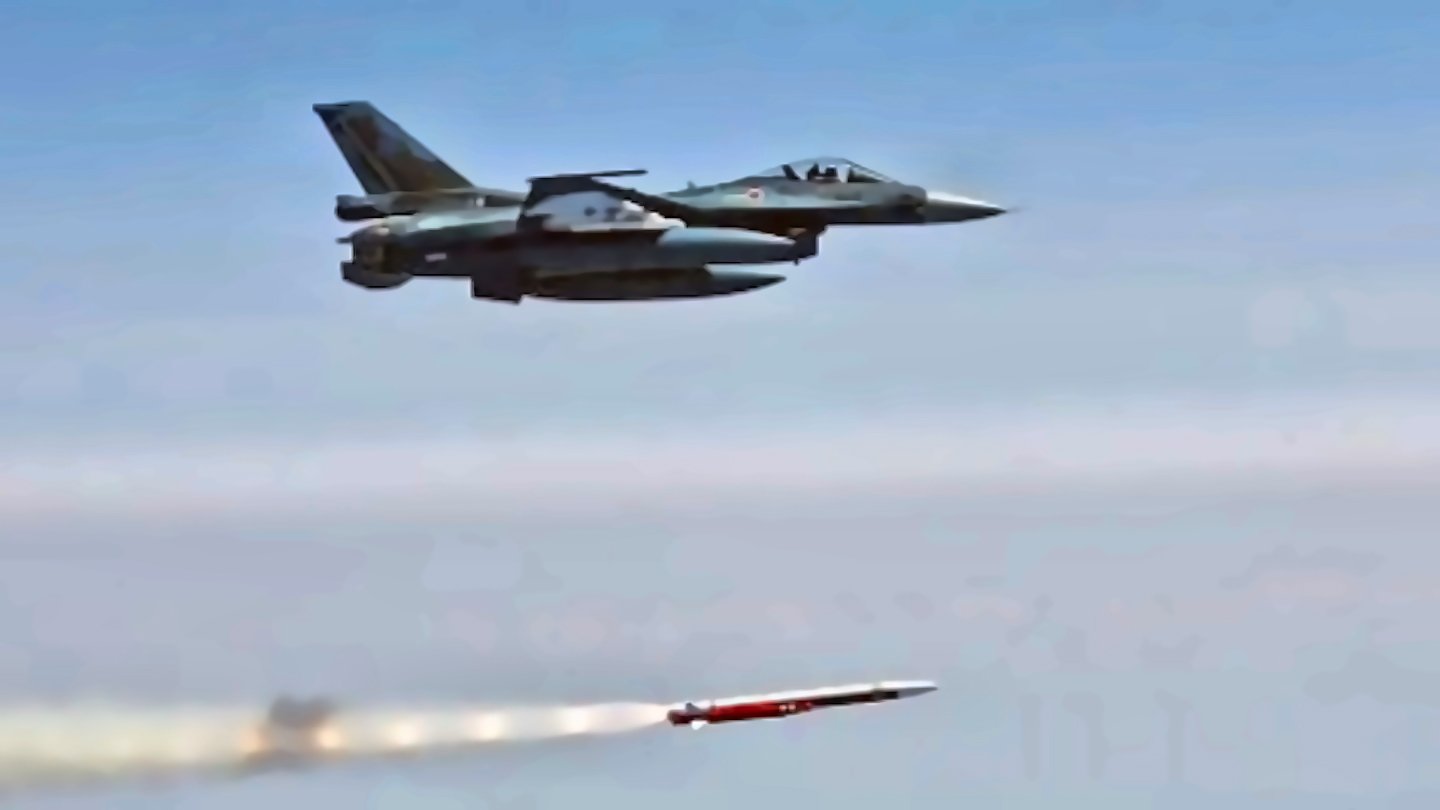
Японы Батлан хамгаалах яам 2027 оны төсвийн төсөлдөө ASM-3 Kai пуужинг “агаар-газар болон агаар-агаар” ангиллын зэвсэг хэмээн тодорхойлсон нь тус зэвсгийн шинэ үүргийг илтгэж байна.
Японы Батлан хамгаалах яам 2027 оны санхүүгийн жилд 8.89 их наяд иен буюу ойролцоогоор 56 тэрбум ам.долларын төсөв хүссэн нь түүхэн дэх хамгийн өндөр үзүүлэлт болж байна. Энэхүү төсвийн төсөлд тусгагдсан ASM-3 Kai пуужинг урьд өмнө нь зөвхөн хөлөг онгоцны эсрэг зориулалттай хэмээн үздэг байсан бол энэ удаад агаараас агаарт цохилт өгөх чадавхитай байж болзошгүйгээр тодорхойлжээ.
Mitsubishi Heavy Industries компанийн бүтээсэн ASM-3 Kai нь ramjet хөдөлгүүртэй, Мах 3-ын хурдтай, 400 гаруй километрийн тусгалтай байх боломжтой supersonic ангиллын пуужин юм. Тус пуужин нь идэвхтэй болон идэвхгүй радарын хайгчтай тул агаарын эртний сэрэмжлүүлэг, удирдлагын онгоц (AEW&C) зэрэг өндөр үнэ цэнтэй байг илрүүлж, устгах чадвартай байж болзошгүй хэмээн шинжээчид таамаглаж байна.
Энэхүү ангилал нь зөвхөн төсвийн баримт бичгийн ерөнхий тодорхойлолт уу, эсвэл пуужингийн гүйцэтгэх үүргийг бодитоор өргөтгөж буй эсэх нь одоогоор албан ёсоор тодорхойгүй байна. Хэрэв ASM-3 Kai нь агаар-агаар ангиллын үүрэг гүйцэтгэдэг бол энэ нь Японы зэвсэгт хүчний алсын тусгалын цохилт өгөх болон саатуулах чадавхийг эрс нэмэгдүүлэх ач холбогдолтой юм.
Мөн 2027 оны төсвийн хүсэлтэд AGM-88G AARGM-ER пуужинг худалдан авах болон F-2 сөнөөгч онгоцнуудыг сайжруулсан Type 12 хөлөг онгоцны эсрэг пуужингаар зэвсэглэх төлөвлөгөө багтжээ. Эдгээр алхам нь бүс нутаг дахь агаарын эсэргүүцэл болон нэвтрэхэд хүндрэлтэй бүсүүдэд цохилт өгөх Японы батлан хамгаалах стратегийн томоохон өөрчлөлтийг илэрхийлж байна.
Дэлгэрэнгүйг эх сурвалжаас харах
Эх сурвалжийг нээх ↓
Japan’s Ministry of Defense has included an intriguing description of the ASM-3 Kai missile in its record fiscal year 2027 defense budget request, referring to the weapon as an “air-to-surface/anti-air missile.” Until now, the ASM-3 family has been publicly associated with the air-launched anti-ship (anti-surface) mission, and the wording potentially hints at an additional capability or intended role for the upgraded weapon.
The reference appears in Japan’s FY2027 defense budget request, submitted today, which seeks a record ¥8.89 trillion (approximately $56 billion) for the fiscal year beginning in April 2027. The request is part of a broader push by Tokyo to expand standoff strike, air defense, uncrewed systems, and other advanced capabilities.
The reference appears under a sub-section entitled Durability and Resilience, which calls for funds to “secure ammunition and fuel, increase the number of operational units (by addressing parts shortages, etc.), enhance the resilience of facilities (through facility upgrades associated with the formation of new units and the introduction of new equipment, etc.), and strengthen the operational infrastructure (by enhancing manufacturing capabilities, etc.).”
In terms of securing ammunition, the document highlights the breadth of weapons systems involved, ranging from 5.56mm small arms ammunition and 30mm cannon rounds, via 155mm precision artillery rounds, up to advanced missiles including the Type 23 ship-launched air defense missile and the ASM-3 Kai.
The Mitsubishi Heavy Industries (MHI)ASM-3 is Japan’s domestically developed supersonic air-launched anti-ship missile, originally intended to arm the Mitsubishi F-2 fighter. The improved ASM-3 Kai (“Kai” meaning modified or revised) represents a significant evolution of the weapon, although the full nature of its capabilities and performance have not been officially revealed. The missile has already been observed undergoing testing on F-2s.
The ASM-3 program has also gone through a number of different configurations over its development history, with at least five distinct external configurations identified in previous reporting. The existence of multiple iterations leaves open the possibility that the newly identified “anti-air” designation could ultimately correspond to a dedicated air-to-air variant or derivative of the ASM-3 family, rather than simply a secondary capability of the baseline ASM-3 Kai.
Reportedly, the ASM-3 Kai is capable of flying more than 400 kilometers (about 250 miles), although the exact range of the operational weapon remains classified. It is powered by a ramjet engine, giving it sustained high-speed performance — reportedly around Mach 3. If it indeed has an air-to-air capability, this would be an advantages in some scenarios, compared to relying solely on a brief but very powerful rocket boost as many air-to-air missiles do.
The weapon is also understood to employ an active/passive radar seeker, providing it with both an active radar mode for detecting and engaging targets and a passive mode that can home in on their electromagnetic emissions. While an active radar seeker is common on long-range air-to-air missiles, the latter passive capability could also be of extreme value in an air-to-air application.
The ASM-3 is also a substantially larger missile than typical fighter-launched air-to-air weapons. While that imposes obvious carriage and aerodynamic penalties, it also allows for a larger propulsion system, seeker, and warhead than would be practical in a smaller missile.
A weapon capable of traveling hundreds of miles at high speed, while carrying an active/passive radar seeker, could potentially be especially useful against high-value airborne assets such as airborne early warning and control (AEW&C) aircraft. These platforms provide vital wide-area surveillance, battle management, and targeting capabilities. At the same time, their powerful radars are necessarily emitting, potentially making them detectable and trackable by a missile employing a passive seeker.
China’s rapidly expanding AEW&C fleet is an increasingly important part of its ability to generate situational awareness, coordinate fighters, and extend its sensor coverage well beyond its immediate borders. The force, which already numbers dozens of increasingly capable fixed-wing aircraft is a growing operational challenge for Japan and other regional air forces.
The ability to threaten such aircraft from well beyond the range of conventional air-to-air engagements could force an opponent to operate its AEW&C fleet even further from contested airspace, reducing the effectiveness of its sensors and command-and-control architecture. Although a passive seeker could also offer an avenue for homing on relevant radar emissions, exactly how the ASM-3 Kai’s seeker would operate against airborne targets is not publicly known. Equally, a different variant of the missile, optimized for anti-air missions, could incorporate both passive and active seekers specially adapted for that mission set, although it is very possible a single configuration can accomplish both missions. As well as AEW&C aircraft, such a missile would be just as relevant for other high-value, non-maneuvering targets at long ranges, including intelligence-gathering platforms, tankers, and other support aircraft.
The budget language by itself falls short of establishing whether the ASM-3 Kai has been tested or validated against aircraft. The designation could reflect a broader classification within the budget documents, or it could point toward a genuine expansion of the weapon’s intended target set.

XASM-3 Supersonic anti-ship missile test launch
Such a weapon would not necessarily be a replacement for Japan’s existing air-to-air missile arsenal. Instead, an “anti-air” ASM-3 Kai could occupy a specialized niche focused on high-value or otherwise particularly important airborne targets at extended ranges.
The possibility is consistent with Japan’s broader effort to expand the flexibility and reach of its air-launched weapons. Tokyo is pursuing a growing family of standoff weapons as part of a major expansion of its counterstrike and deterrence capabilities, including longer-range missiles capable of striking targets well beyond the immediate vicinity of Japan.
Other air-to-air missiles mentioned in the same section of the document comprise the U.S.-made AIM-120 Advanced Medium-Range Air-to-Air Missile (AMRAAM) and the domestically developed AAM-4B, another medium-range weapon, thought to be the first of its kind to be fitted with an active electronically scanned array (AESA) antenna.
The FY2027 defense budget request also mentions another apparently new air-launched weapon for Japan, the AGM-88GAdvanced Anti-Radiation Guided Missile-Extended Range(AARGM-ER). Japan has not previously been publicly documented as an international AARGM-ER customer, but the weapon would be an obvious candidate for integration with its F-35 fighters if it wishes to bolster their suppression/destruction of enemy air defenses (SEAD/DEAD) capabilities.
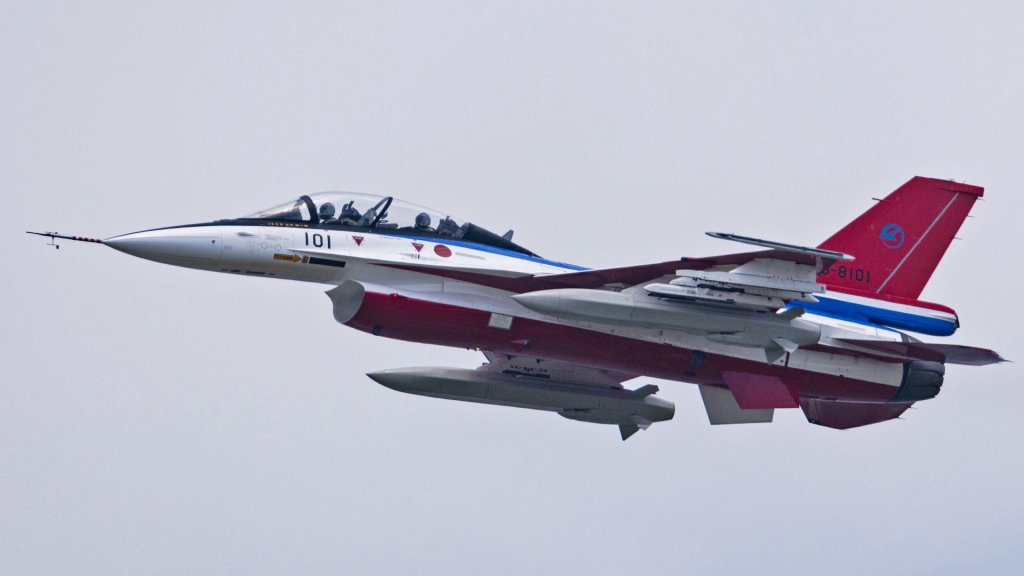
In terms of F-2-related developments, the document calls for the upgrade of an initial 10 of these aircraft to make them compatible with the air-launched version of the Upgraded Type 12 anti-ship guided missile, a significant new weapon that you can read more about here.
TWZ has contacted Japan’s Ministry of Defense seeking clarification on the “air-to-surface/anti-air” designation and what it means for the ASM-3 Kai’s intended capabilities and target set. It could also be the case that the description is an error in the budget document.
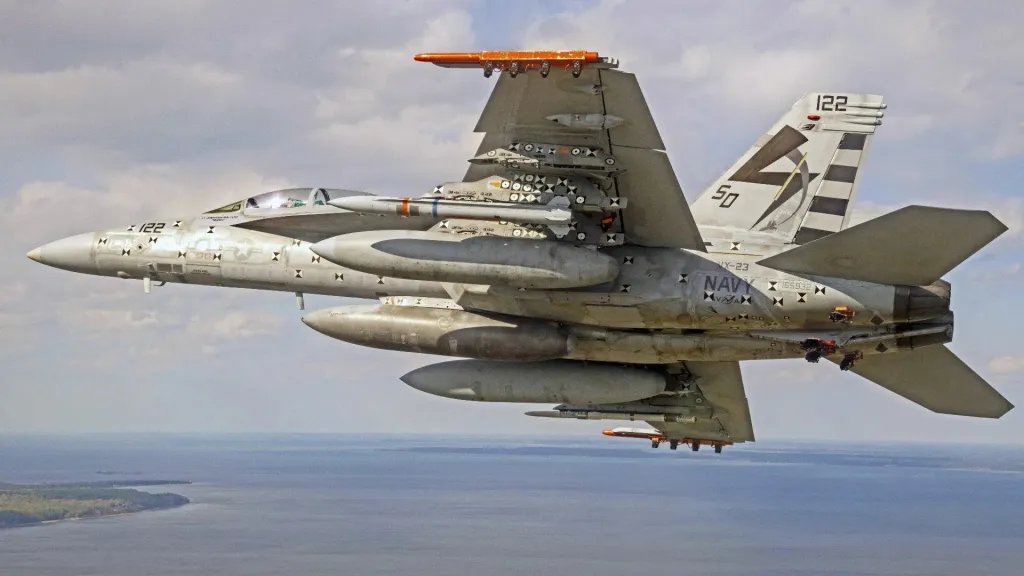
However, the emergence of such a capability would also come at a time when very-long-range air-to-air weapons are becoming increasingly important as anti-access/area-denial challenges make it harder for fighters to get close to enemy aircraft and the high-value assets supporting them. China has fielded weapons such as the PL-15 and the much larger PL-17, while the United States is developing the AIM-260 and has just revealed the AIM-424 Malice, a U.S. Navy missile reportedly capable of reaching more than 250 nautical miles. The U.S. Navy is also fielding the AIM-174B, a very-long-range weapon developed very much with the Chinese threat in mind, and which we discuss in the video below.

How The Navy’s New Very Long-Range AIM-174 Will Pierce China’s Anti-Access Bubble
For now, exactly what prompted the “air-to-surface/anti-air” designation for the missile is unclear, but if it reflects a genuine expansion of the ASM-3 Kai’s mission set, it would represent a particularly interesting development in Japan’s rapidly evolving air-launched weapons portfolio.
Hat-tip to Yoshihiro Inaba for bringing this development to our attention.
Contact the author: thomas@thewarzone.com

