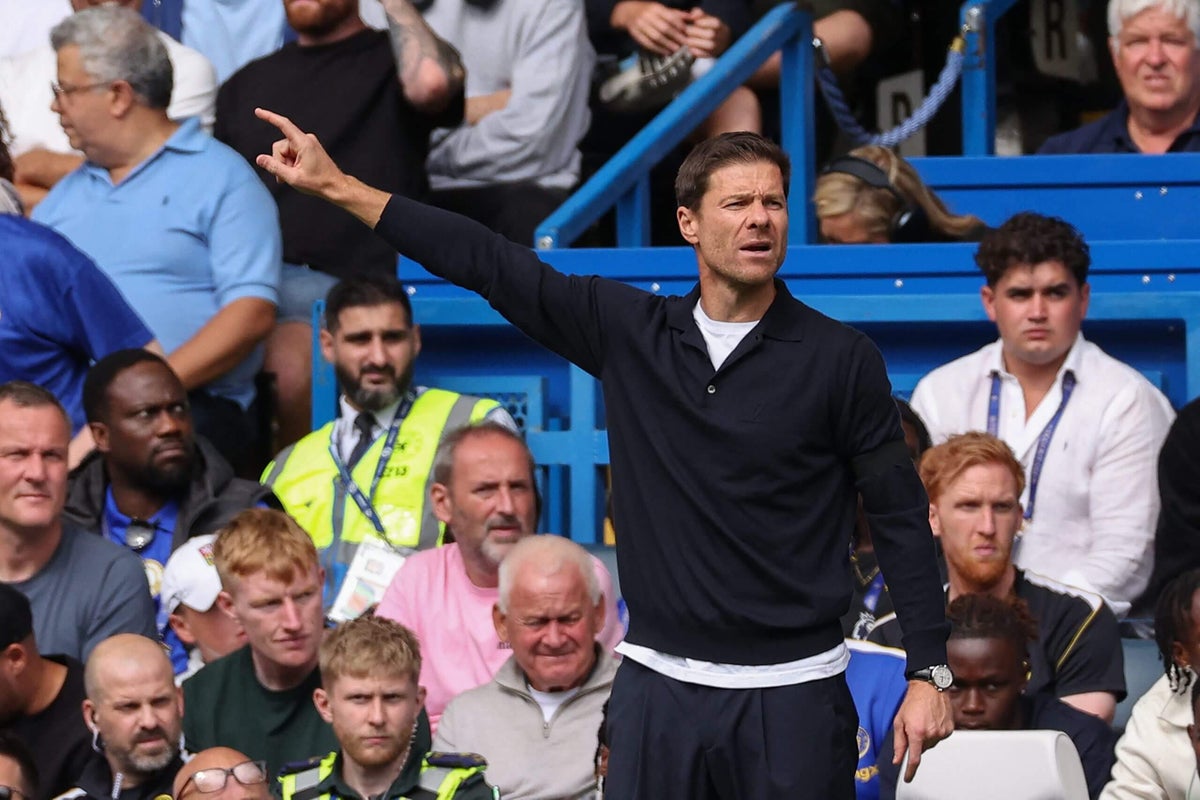
Хаби Алонсогийн удирдлагад Челси бөмбөг эзэмшилтийн хувиар түүхэн доод үзүүлэлт үзүүлсэн ч Брайтон энд Хоув Альбионыг 4-3-ын харьцаатай хожлоо.
Брайтон энд Хоув Альбионы эсрэг тоглолтод Челси ердөө 25.6 хувийн бөмбөг эзэмшилттэй тоглож, 2003 оны наймдугаар сараас хойшхи Премьер лигийн түүхэн дэх хамгийн бага үзүүлэлтийг бүртгүүлэв. Үүнээс өмнө Фулхэмийг 3-2-оор хожсон тоглолтод ч мөн бөмбөг эзэмшилтээр илт дутуу байсан нь Хаби Алонсогийн баг бөмбөг эзэмшилтээс илүүтэй сөрөг довтолгооны хэв маягийг эрхэмлэж байгааг илтгэж байна. Мойсес Кайседогийн гэмтэл болон дунд шугамын бүрэлдэхүүний өөрчлөлтөөс шалтгаалан Алонсо техникийн чадвартай тоглогчдыг түлхүү ашиглаж, хамгаалалтын нягт бүс үүсгэх тактикийг сонгожээ.
Хэдийгээр бөмбөг эзэмшилт бага байгаа нь сөрөг талтай ч Челсигийн довтолгооны гурвал болох Коул Палмер, Жоао Педро, Морган Рожерс нарын хурдтай тоглолт нь үр дүнгээ өгч байна. Хаби Алонсо бөмбөг эзэмшилтийн хувьд тодорхой хязгаар тавихгүйгээр багийн өрсөлдөх чадварыг нэмэгдүүлэхийг зорьж буйгаа илэрхийлсэн юм. Хэрэв Энцо Фернандес багаас явбал Челси дунд шугамын бүсэд илүү өргөн орон зайг хянах чадвартай шинэ тоглогч хайх төлөвтэй байна.
Премьер лигт бөмбөг эзэмшилт болон амжилтын хоорондох хамаарал сүүлийн жилүүдэд өөрчлөгдөж, бөмбөг эзэмшилт багатай багууд өндөр үр дүн үзүүлэх боломжтой болсон нь ажиглагдаж байна. Челсигийн хувьд энэхүү тактикийн шилжилт нь хэр тогтвортой байх нь ирэх тоглолтуудаар тодорхой болно. Одоогоор багийн бүрэлдэхүүн довтолгооны шугамын хүч чадлыг ашиглан, хамгаалалтын сул талыг нөхөх зарчмаар тоглолтоо үргэлжлүүлж байна.
Дэлгэрэнгүйг эх сурвалжаас харах
↓Эх сурвалжийг нээх ↓
If you didn’t notice it, don’t worry — Opta did. When they won 4-3 against Brighton & Hove Albion, Chelsea recorded their lowest possession percentage in the Premier League (25.6) since Opta started collecting detailed match data in August 2003. And given the tight correlation that exists, Chelsea’s tally of 146 completed passes was their lowest on record.
25.6% – Chelsea’s 25.6% possession and 146 successful passes v Brighton were both their lowest figures on record (from 2003-04) in a Premier League match, while their 67.0% pass accuracy was their lowest in a home league game since February 2004 v Charlton (65.9%).
Methodology. pic.twitter.com/GJanPdJxHQ
— OptaJoe (@OptaJoe) August 30, 2026
The instinctive response is, ‘Well it’s just game state!’ Chelsea were ahead in the fourth minute and three up after half an hour. But there are reasons this sort of performance goes beyond the game-state defence.
First, Chelsea came into this game off the back of a 3-2 win away to Fulham, where they put up a much lower possession total than their opponents (40 to 60). A two-game sample size is not statistically significant but two consecutive performances in which Chelsea gave up so much of the ball is worthy of pause for thought.
This brings us to a second reason. Twenty-five per cent possession is phenomenally low for a top-six Premier League side and goes beyond an eyebrow raise.
You see, the game-state defence hangs on the assumption that once you’re winning, you don’t really need the ball. Theoretically, that is true — once you’re ahead, you don’t need to score, so you don’t really need possession.
Given that football is a relative game — if you don’t have the ball, your opponents do — there is still value in possessing the ball as a defensive mechanism. This approach has been the received wisdom since Pep Guardiola made defending with the ball one of his fundamental pillars.
So with Xabi Alonso’s Chelsea seeming to turn this on its head, it seems fair to ask whether or not the tactical landscape has changed in the last couple of seasons. In other words: can Chelsea mount a title challenge in the Premier League with less of the ball than their opponents? (Something that hasn’t happened since Leicester City won the league in 2015-16, when they put up an average possession of 42.6 per cent.)
After the Brighton game, Alonso was pushed on the low possession number. “I don’t say we need to have 60 per cent or 20 per cent. It is about how to prepare; how to be more competitive.”
No manager would ever be prescriptive about possession numbers but in answering that way, he’s performing a rhetorical sleight of hand. A manager would never ask for 60 per cent possession, but might ask for their team to control the ball for a period. And if they did, a 60 per cent possession value might well be the outcome.
Had Chelsea controlled possession better, then they might not have let their opponents back into the game in their Premier League fixtures, going from two- or three-goal leads to one by full time.
So why might Chelsea have ceded possession to the extent that they did? Well, there are two potential answers here.
The first is by necessity. In both games, Alonso has opted for technical ability over physicality in midfield, starting Romeo Lavia and partnering him with Reece James against Fulham and Malo Gusto against Brighton.
This was prompted by Moises Caicedo’s fitness — deemed unable to appear against Fulham and coming on late against Brighton before hobbling off again soon after.
Without the capacity to cover large spaces in midfield when Brighton had the ball, Alonso opted for a more conservative approach, only committing his front three up against Albion’s deep buildup, supported by Pedro Neto, who stepped up out of the back line whenever Chelsea weren’t defending deep.
As you can see here, this meant that Chelsea were underloaded against Brighton’s first line of build-up, with four players coming up against five plus their goalkeeper, Bart Verbruggen.

Brighton could progress the ball into Chelsea’s third and then settle into possession, becoming comfortable enough to maintain it, with the Chelsea players settling into a block.
First, Verbruggen baits Joao Pedro, who abandons Olivier Boscagli.

Now it’s just a case of playing around the side to pull out Cole Palmer and Neto, opening a passing lane to Boscagli, who is now free in the middle.


Once Boscagli is accessed, it’s a case of finding the spare player on the far side, Mats Wieffer. This isn’t too difficult given how deep Chelsea’s midfielders are and how disconnected the first line of their press has become.

Boscagli finds Pascal Gross, who feeds the ball into the feet of Wieffer, who can then pass to Diego Gomez.

With the Chelsea players dropping to protect the box, Gomez plays the ball back to Gross, showing how Brighton have achieved settled possession and can control the game relatively comfortably.

From a Chelsea perspective, Alonso will be pleased that, although the first line of his press was broken, they still didn’t concede a chance in transition. His players fell back into a lower block and, in that sense, the defensive plan worked.
The three goals Chelsea conceded came from set-piece plays — the first being triggered by a home corner that Brighton successfully countered. Alonso could argue that the defensive approach held up relatively well in open play.
But by defending in this way, Chelsea are giving smart opponents the advantage in the battle for possession. By making it easy for their opposition to progress the ball down the field and achieve settled possession, they are simply making it harder to win the ball back for more possession of their own.
This may not be a problem that we see persisting, though. As we have reported, if Enzo Fernandez does leave before the end of the window, Chelsea will be looking for “a midfielder with a different profile, or a new attacker”. The approach appears to be adding a midfielder who can cover larger spaces in the middle of the pitch, enabling the team to be more proactive and aggressive in their press.
Why Chelsea ceded so much possession to Brighton is more complex — and an issue that has percolated beneath the surface for most of the BlueCo era.
In a recent interview with Jamie Carragher on Sky Sports, Liverpool manager Andoni Iraola talked about how every squad of players has a natural “tempo”. “Teams have different tempos with and without the ball,” he said. “It’s very difficult to change.”
Chelsea fans will be well aware of this, having seen Mauricio Pochettino and Enzo Maresca get the most out of Palmer by implementing a more direct style. This was exacerbated by Maresca’s eventual decision to implement a slower tempo in the second half of his first season, which had a noticeable effect on Palmer’s productivity.
The arrival of Alonso has brought with it a direct style that has brought out the best in Palmer (along with his partners in the front line, Joao Pedro and Morgan Rogers). But along with that has come difficulty in moderating the tempo Iraola talked of.
Here’s an example of this with Chelsea in a rare moment of settled possession. It is generated from a transition where Neto has the opportunity to play directly into the box from wide, but he decides against it and recycles the ball back to Wesley Fofana.

Chelsea work the ball across their back line until it reaches Jorrel Hato on the opposite side. In part, this shifting of possession is forced by Brighton, whose out-of-possession approach is much more aggressive.


When Chelsea try to shift the ball back across to the right, Brighton press man-to-man and force Fofana to the touchline, leaving him with little option other than to play a long ball into the channel in the direction of Neto.

In the end, however, Neto manages to round Ferdi Kadioglu, setting up Joao Pedro for a great chance.


And herein lies the problem for Chelsea: they appear to be much better when playing directly than when trying to control possession. How successful can they be relying on this direct approach? Can a title challenge be sustainable when ceding possession?
Raising this question at almost any point over the past decade or so, the answer would have been a resounding no. Across this period, there has been a strong correlation between higher average possession and points per game.
But there has been a curious shift in the past couple of seasons. As you can see in this visualisation, there has been a compression in average possession, so the ceiling for possession has become much closer to 60 per cent than 70, and the floor has risen to more than 40 per cent.

Arsenal won the league with the fourth-highest possession average (56.4 per cent), and some teams in the European spots recorded lower possession numbers than you might expect: Manchester United with 51.9, Bournemouth 50.1 and Sunderland’s 44.9.
The teams with the highest possession numbers — Manchester City (60.7 per cent), Liverpool (59.3) and Chelsea (57.7) — underperformed against their expectations.
The reality is that possession numbers seem much less indicative of success in the league than they have been for a while.
The league-wide drop-off is much less stark than Chelsea’s figures, and it’s unlikely that they will be able to continue to play with so little of the ball and not find themselves being stung by opponents who can translate possession into goals. This might not happen but the better approach is for Alonso to find a way of increasing Chelsea’s control without completely sacrificing their approach.
Alonso has a track record of evolving his teams. At Bayer Leverkusen, he took over from Gerardo Seoane when the club was flirting with relegation and guided them to sixth place, playing with a stolid style, before overhauling their approach in the second season, resulting in the invincible Bundesliga title-winning season of 2023-24.
Alonso is leaning into Chelsea’s strength — the transitional attacking power of his front three — and working on protecting the weakness, giving up too much space for his team to defend.
The balance is likely to shift. But for now, expect to see games where the low possession percentages continue.

