
Судлаачид далайн гүнд хөлөг онгоцны сэг хайх явцдаа байгалийн даралтаар үүссэн өвөрмөц тогтоц бүхий хар асфальтан байгууламжуудыг илрүүлжээ.
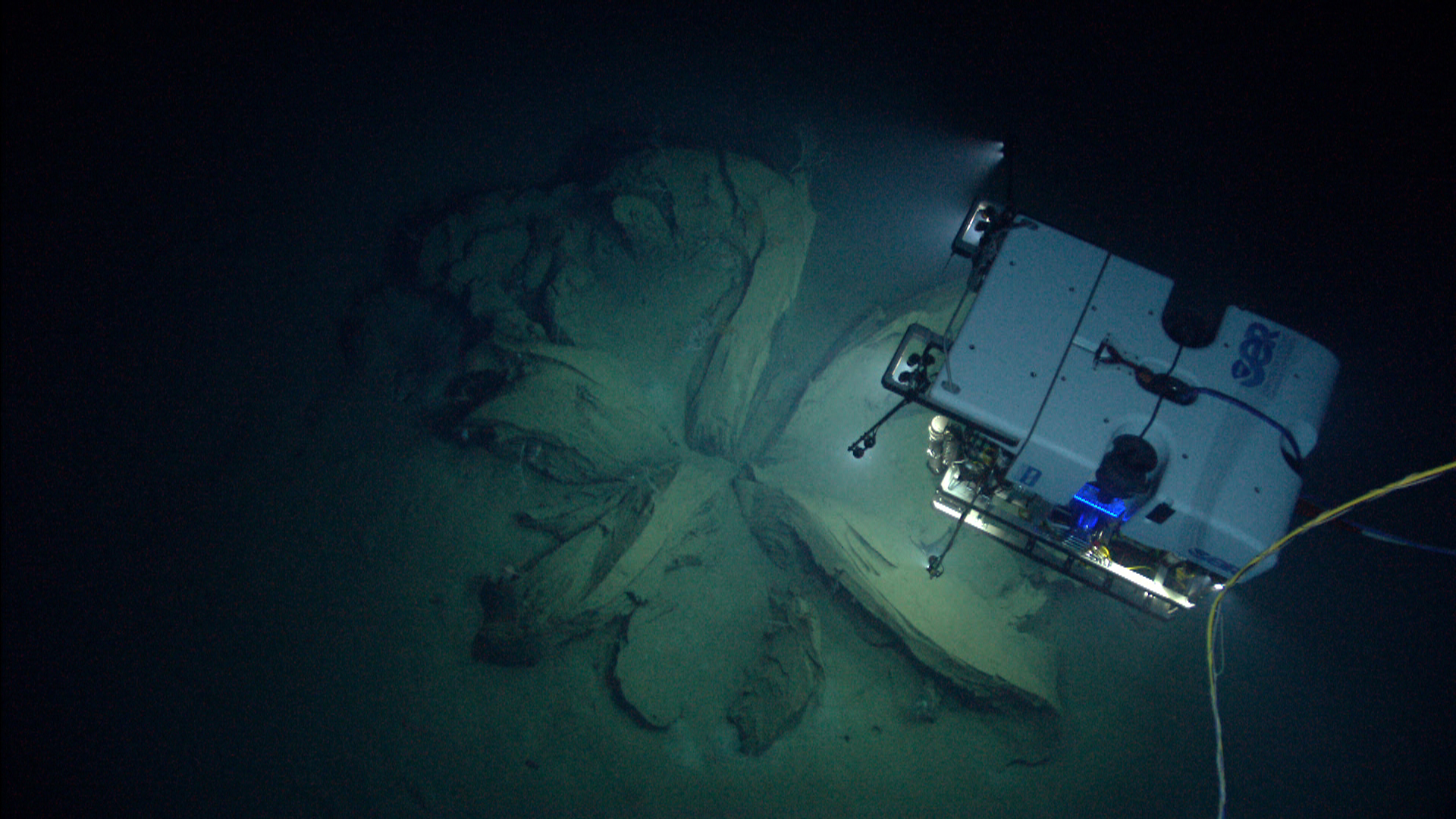
NOAA байгууллагын Okeanos Explorer хөлөг онгоц Мексикийн буланд 1900 орчим метрийн гүнд судалгаа хийх үеэрээ хөлөг онгоцны сэгтэй төстэй соронзон долгионы дохиог илрүүлсэн байна. Гэвч 2014 оны дөрөвдүгээр сард Deep Discoverer алсын удирдлагатай хөлөг онгоц (ROV) тухайн байршилд хүрэхэд уг объект нь хөлөг онгоц биш, харин хар асфальтан тогтоц болох нь тогтоогджээ. Эрдэмтэд эдгээр цэцгийн хэлбэртэй байгууламжийг “давирхай цэцэг” буюу tar lilies хэмээн нэрлэсэн байна.
Эдгээр тогтоц нь газрын гүнээс байгалийн даралтаар дээшлэн гарч ирсэн газрын тос далайн ёроолын хөлдүү хүйтэн усанд хүрч, хурдан хугацаанд хатууран агших явцад үүсдэг ажээ. Флорида мужийн их сургуулийн далайн судлаач Иан Макдоналд болон түүний баг эдгээр асфальтан урсгалыг геологийн тогтоцтой төстэй болохыг тэмдэглэжээ. Ийм төрлийн тогтоц нь тодорхой зуурамтгай чанар, температурын зөрүү, урсгалын хэмжээ зэрэг нарийн нөхцөл бүрдсэн үед л бий болдог байна.
Судалгааны явцад эдгээр асфальтан “цэцгүүд” дээр актиния болон гүний усны шүр, хөвөн, хавч зэрэг олон төрлийн амьд биет суурьшин амьдарч байгааг ажиглажээ. Мөн суурийн хэсэгт нь метан болон устөрөгчийн сульфидаас энерги авдаг химийн нийлэгжүүлэгч бичил биетүүд илэрсэн нь тухайн бүсэд нүүрсустөрөгчийн шүүрэл идэвхтэй үргэлжилж байгааг нотолж байна. Энэхүү нээлт нь далайн ёроолын нүүрсустөрөгчөөр баялаг сав газруудад амьдралын өвөрмөц бүлгэмдлүүд оршин байх боломжтойг харуулж байгаа юм.
Дэлгэрэнгүйг эх сурвалжаас харах
↓Эх сурвалжийг нээх ↓
During the initial scan, it appeared that the sonar reading resembled an object that could be a vessel; a group of large, solid objects were located about 1900 m beneath the surface of the Gulf of Mexico, and their shape was unlike most wrecks.
The ROV did not arrive until early April 2014. It traveled through a very dark (lightless), but cool body of water down to the bottom of the ocean floor when it arrived at the location. What it found wasn’t wreckage at all.
It was a flower made of tar.
The NOOA conducted a 59 day long research expedition on the Gulf of Mexico using its research vessel, the Okeanos Explorer. Part of the mission included documenting areas of the gulf that have never been documented. The area where the team discovered this anomaly was not previously identified as unique.
Asphalt That Grows Into Shapes
In the end, scientists had stumbled onto what are now called tar lilies: rare, flower-shaped formations of hardened natural asphalt that had erupted through cracks in the seafloor and solidified in the freezing deep water. Two of the structures were found the same day, sitting at roughly 6,200 feet down in an area where no one had documented this kind of feature before.
Almost immediately, Ian MacDonald, a marine scientist at Florida State University who has spent years mapping seafloor petroleum seeps, recognized them. A decade earlier, his team had published research on tar flows in a different section of the Gulf, describing the formations in the same vocabulary geologists use for Hawaiian lava: ropy pahoehoe, jagged aa. He had suspected more were out there.
Even so, finding tar lilies in this area, in this configuration, wasn’t something anyone had anticipated. The cruise had been billed as baseline characterization, the kind of open-ended survey work that fills in blanks on maps. The sonar target had been unusual enough to send the ROV down for a closer look.
On the seafloor, the structures are built from the same compound used to surface roads. They form entirely without human involvement. Thick petroleum forces up through the sediment under natural pressure, hits water near freezing, and hardens almost immediately. As it cools and contracts, the flow can split apart, producing petal-like ridges radiating outward from a central point. The name “tar lily” was coined on the spot during the expedition, and it stuck.
Why Petroleum Seeps Into the Sea
Below the ocean floor, petroleum reservoirs don’t always stay sealed underground. In some areas, natural pressure forces oil and gas up through the sediment and into the water column, a process called hydrocarbon seepage. The same basic mechanism produces the tar pits at Rancho La Brea in Los Angeles, which have been trapping and preserving animals for tens of thousands of years. The deep-sea version is less visible but no less active.
In shallow water, seeps tend to produce oily slicks or gas bubbles. At depth, where the pressure is enormous and the water is close to freezing, the chemistry shifts. Heavy petroleum compounds that would stay liquid near the surface instead congeal into solid or semi-solid masses on contact with seawater. Sometimes they pave the seafloor in flat sheets; under other conditions, they build shapes.

What makes the Gulf of Mexico particularly prone to this is the thickness and age of its sedimentary column. Hundreds of millions of years of organic material have been buried, compressed, and cooked into oil and gas beneath the basin floor. Some of that material finds pathways upward. Drillers have known about Gulf seeps for decades, using surface slicks as a prospecting tool long before satellite imaging made the job easier.
For a tar lily to form specifically, a narrow set of conditions has to line up: the right viscosity of petroleum, the right temperature gradient, and enough flow volume to build structure before it fully hardens. That combination apparently occurs, but not often enough for anyone to have catalogued it systematically before the Okeanos Explorer cruise.
Life Finds a Foothold on Hardened Tar
Here’s where it gets genuinely strange. The tar lilies weren’t dead geology. They were covered in animals.
In video footage from the expedition’s ROV Deep Discoverer, anemones and deep-sea corals could be seen growing directly on the asphalt petals. Sponges, barnacles, squat lobsters, and bamboo corals had colonized the hard surfaces, which provided something scarce in the surrounding soft-sediment environment: something to hold onto.
More telling were the chemosynthetic organisms clustered at the base of the structures. Tubeworms, microbial mats, and shrimp were all present, and their presence was diagnostic. These organisms don’t photosynthesize. They draw energy from chemical reactions involving hydrogen sulfide and methane, byproducts of the same hydrocarbon seepage that built the lilies in the first place. Finding them confirmed that the seepage wasn’t historical. It was still happening.
In a subsequent expedition summary, NOAA researchers noted that the anemone coverage on the petals suggested the lilies had first formed several decades earlier, though no one could say exactly when. The ecosystem built around them had had time to mature. Whether similar communities exist at other undocumented tar formations in the Gulf is an open question nobody can currently answer, partly because finding these structures depends almost entirely on luck.
An Unexpected Corner of a Known Basin
Despite being the subject of extensive commercial exploitation, as evidenced by massive amounts of seismic data, thousands of miles of pipelines and many years of fishing and military surveys, there continue to exist large areas of seafloor within the Gulf of Mexico which remain effectively unmapped. The fact that such a large area, so unlike other seafloor environments, could go undetected for over 100 years until 2014 illustrates how great the disconnect can be.
The discovery of the first documented examples of asphalt volcanoes in the Gulf in 2014 provided scientists with three confirmed sites of asphalt volcanism in the Gulf, plus several additional examples from offshore West Africa and coastal California. The resulting image of seafloor asphalt indicates that this phenomenon is likely widespread throughout all hydrocarbon-rich basins around the world; and, where ever it occurs, it will create unique and self-sustaining biomes (ecological communities) in isolation from the surrounding environment.
In addition, research into these examples found anemones and coral living in/on the solidified asphalt while chemosynthetic organisms inhabit the active seepages emanating beneath.
Although the Okeanos Explorer eventually located a real shipwreck, complete with a time-keeping device known as a chronometer, an item so rare on an early 19th century sailing vessel, it was sufficient in itself to constitute a major find; however, during their time documenting the basin, researchers continued to encounter even stranger discoveries: they found Paleodictyon burrows, hexagonal fossilized patterns in the sedimentary surface that have puzzled scientists for decades, and observed a dumbo octopus exhibiting a previously undocumented posture within its family.

