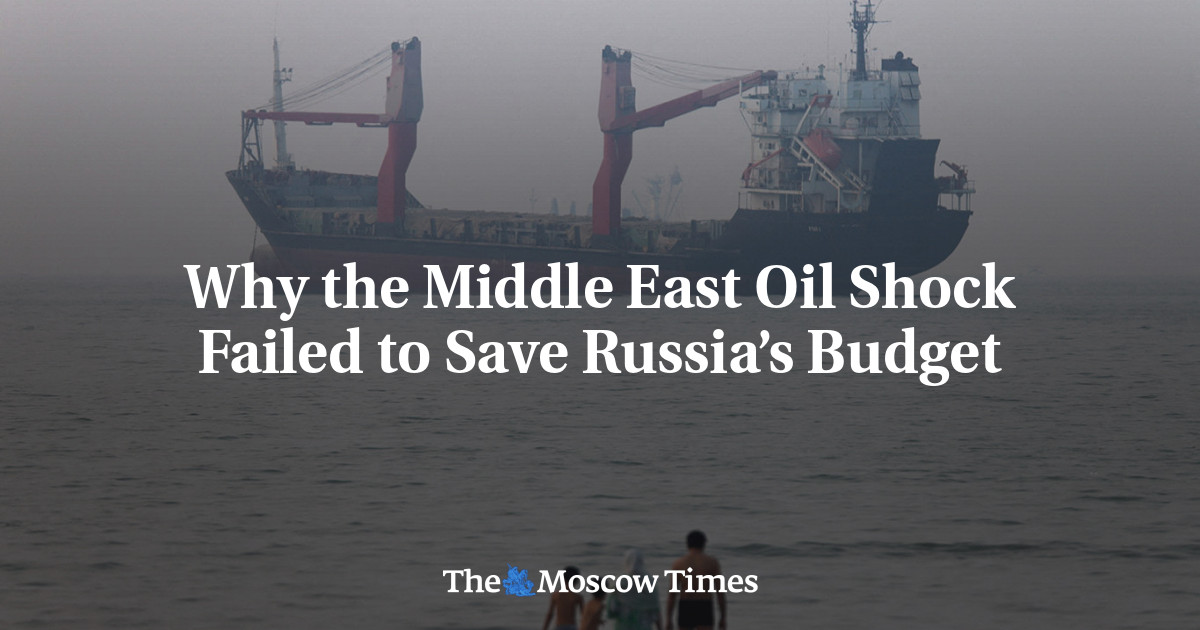
Ойрхи Дорнод дахь геополитикийн хурцадмал байдал ОХУ-ын эрчим хүчний орлогод төдийлөн нөлөө үзүүлээгүй бөгөөд тус улсын төсвийн алдагдал өндөр хэвээр байна.
АНУ болон Израйл улс Ираны эсрэг цэргийн ажиллагаа явуулж эхэлснээр Ормузын хоолойг хаах аюул нүүрлэж, дэлхийн газрын тосны нийлүүлэлтэд саатал гарсан нь ОХУ-д ашигтай байх болов уу гэсэн хүлээлтийг үүсгэсэн юм. Гэвч оны эхний долоон сарын байдлаар ОХУ-ын газрын тос, байгалийн хийн татварын орлого төсвийн төлөвлөгөөнөөс ердөө 127.6 тэрбум рублиэр (1.52 тэрбум ам.доллар) давсан үзүүлэлттэй байна. Энэ нь өнгөрсөн оны мөн үетэй харьцуулахад 20 хувиар, 2022 оны орлогоос 35 хувиар буурсан үзүүлэлт юм.
Дэлхийн эрчим хүчний зах зээл таамагласнаас хурдан тогтворжсон нь ОХУ-ын орлого өсөхөд саад болжээ. Тээвэрлэлтийн шинэ гарцууд нээгдэж, БНХАУ газрын тосны импортоо бууруулж, нөөцөө ашиглах болсон нь үнийн өсөлтийн хурдыг сааруулсан байна. Үүний зэрэгцээ рублийн ханш чангарсан нь гадаад валютаар орж ирэх орлогыг дотоодын мөнгөн тэмдэгтэд хөрвүүлэхэд сөрөг нөлөө үзүүлжээ.
Украйны зэвсэгт хүчний зүгээс ОХУ-ын газрын тос боловсруулах үйлдвэрүүд болон хангамжийн сүлжээнд хийсэн дроны довтолгоонууд эрчим хүчний бүтээгдэхүүний гарцыг бууруулсан гэж ОХУ-ын Төв банк мэдээлсэн байна. Шинжээчдийн үзэж буйгаар, газрын тосны үнэ хаврын оргил үеийнх шиг 110 ам.долларт хүрэх магадлал бага байгаа тул ОХУ-ын төсөв ирээдүйд эрчим хүчний салбараас илүүтэй дотоодын татварын орлогод түшиглэх шаардлагатай болж байна.
Дэлгэрэнгүйг эх сурвалжаас харах
↓Эх сурвалжийг нээх ↓
In the early weeks of the U.S.-Israeli war against Iran, observers were quick to declare Russia a major beneficiary of the conflict. After all,the effective closure of the Strait of Hormuz disrupted roughly a fifth of global oil supplies, forcing countries to scramble for alternative sources and turning attention toward Russian crude.
Six months into the war, however, Russia’s windfall looks surprisingly meager.
During the first seven months of the year, the federal budget collected 4.6 trillion rubles ($55.2 billion) in oil and gas taxes. While undoubtedly large, that figure represents only an extra 127.6 billion rubles ($1.52 billion) over original budget projections.
Compared to previous years, Russia still faces a shortfall. Energy revenues between January and July were down 20% compared to the same period last year, and down 35% compared to the 2022 windfall that preceded tighter Western sanctions.
Part of the reason revenues fell short of expectations is that global energy markets stabilized faster than predicted.
Iran’s initial closure of the Strait of Hormuz did boost the appeal of Russian crude, pushing the price of the flagship Urals blend from $56.60 a barrel in February up to $94.50 in March and $112.30 in April, according to the Center for Research on Energy and Clean Air.
However, the scramble for oil soon lost urgency. Energy suppliers found workarounds to route cargoes through the Strait of Hormuz despite the effective closure, while alternative transit networks through the Gulf of Oman, the Red Seaand the Suez Canal helped stabilize supply lines.
At the same time, China slashed its imports of crude oil and drew from its huge stockpiles, which removed an enormous amount of pressure from global markets.
Some countries also switched to using alternative energy sources like coal.
As market panic subsided, the price premium on Russian crude narrowed, with Urals dropping back to $63 per barrel in June and $60 in July.
A relatively strong ruble also played a role in Russia’s lackluster windfall.
Russia sells its oil in foreign currencies and assesses energy taxes based on dollar-denominated benchmarks. When the ruble strengthens alongside high global oil prices, each dollar earned converts into fewer rubles for the domestic treasury.
Russia’s 2026 budget was built on an assumed exchange rate of 92.2 rubles to the dollar. Instead, the actual average rate over the first seven months was much stronger, at 76.5 rubles to the dollar.
Because a stronger ruble yields fewer domestic rubles per foreign dollar earned, higher dollar sales still failed to generate the total ruble revenue the government had budgeted.
Ukrainian drone attacks on Russian oil refineries and supply lines this spring and summer are also likely to have made a dent in energy revenues.
As Russia’s Central Bank acknowledged in a recent report, damage to refineries and transportation infrastructure led to a drop in petroleum product output and reduced demand in raw crude.
Looking ahead, analysts expect Russia’s full-year energy profits to remain subdued. Moscow-based analyst Kirill Rodionov argues that even with ongoing attacks between Iran and the U.S., oil prices are unlikely to return to the spring peak of around $110 per barrel.
“At best, the budget’s oil and gas revenues will break even with last year,” Rodionov said. “Under the most likely scenario, they will fall below 2025 levels.”
Analyst Pavel Ryabov goes further, warning that 2026 energy revenues could sink to levels not seen since 2020. With war spending having already driven the government deficit to6.5 trillion rubles ($78 billion) — nearly double the full-year target — Moscow will have to lean far more aggressively on the non-energy domestic sector.
“The budget is becoming less dependent on oil and gas,” Ryabov said, “and increasingly dependent on the state’s ability to squeeze tax revenue out of the domestic economy.”
A Message from The Moscow Times:
Dear readers,
We are facing unprecedented challenges. Russia’s Prosecutor General’s Office has designated The Moscow Times as an “undesirable” organization, criminalizing our work and putting our staff at risk of prosecution. This follows our earlier unjust labeling as a “foreign agent.”
These actions are direct attempts to silence independent journalism in Russia. The authorities claim our work “discredits the decisions of the Russian leadership.” We see things differently: we strive to provide accurate, unbiased reporting on Russia.
We, the journalists of The Moscow Times, refuse to be silenced. But to continue our work, we need your help.
Your support, no matter how small, makes a world of difference. If you can, please support us monthly starting from just $2. It’s quick to set up, and every contribution makes a significant impact.
By supporting The Moscow Times, you’re defending open, independent journalism in the face of repression. Thank you for standing with us.
Continue

Not ready to support today?
Remind me later.
×
Remind me next month
Thank you! Your reminder is set.
We will send you one reminder email a month from now. For details on the personal data we collect and how it is used, please see our Privacy Policy.

