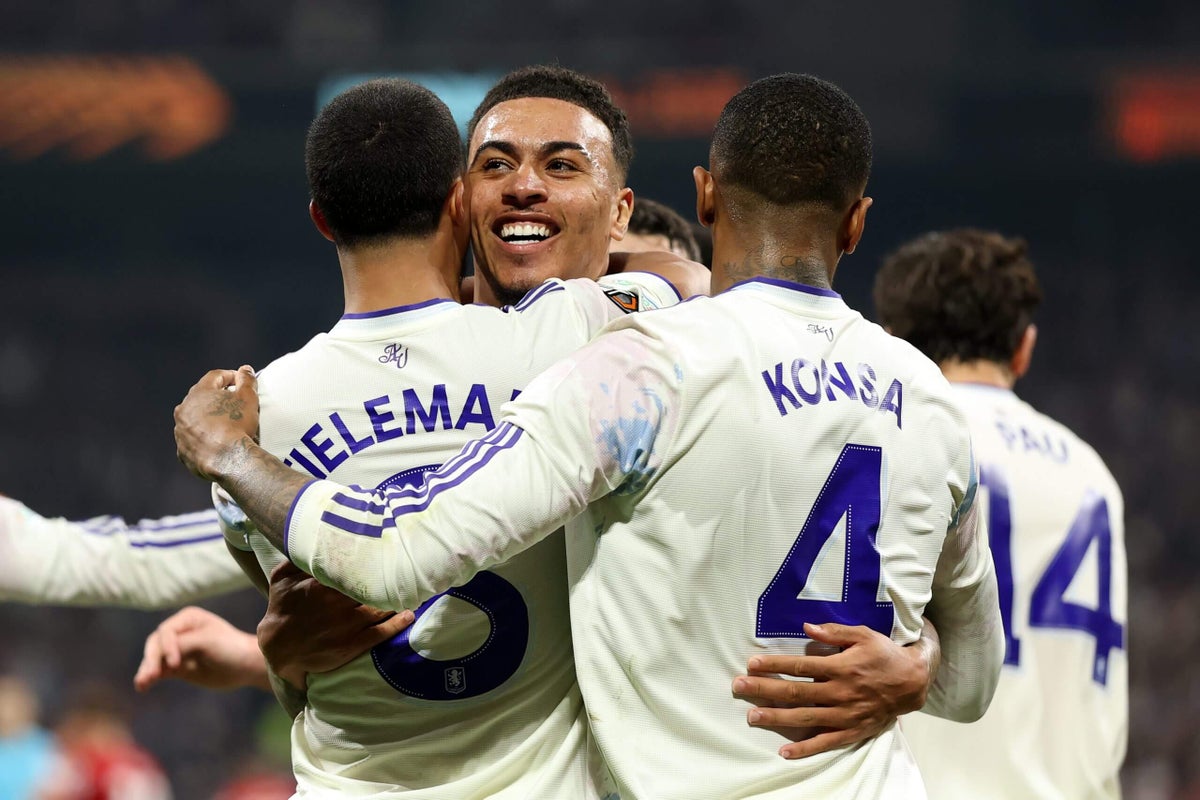
Европын лигт түрүүлсэн амжилтын дараа Астон Вилла бүрэлдэхүүнээ эрс шинэчилж, гол тоглогчдоо алдан, оронд нь олон шинэ тоглогчдыг эгнээндээ нэгтгэлээ.
Унаи Эмеригийн удирдлага дор Европын лигт түрүүлсэн Астон Вилла энэ зун багийн цөм болсон тоглогчдоо алдаж, бүрэлдэхүүнээ бүрэн өөрчлөх хүндхэн сорилттой тулгарлаа. Олли Уоткинс, Эмилиано Мартинес, Эзри Конса болон Юри Тилеманс нарын зэрэг гол тоглогчид багаа орхисон нь багийн хувьд гэнэтийн бөгөөд томоохон өөрчлөлт болов. Клуб санхүүгийн дүрэм журам болон зах зээлийн нөхцөл байдлаас шалтгаалан шийдвэрээ шуурхай өөрчлөх шаардлагатай болж, улмаар солилцооны цонхны сүүлийн өдрүүдэд идэвхтэй ажиллалаа.
Астон Вилла хаалгачийн байрлалд Парма багаас Зион Сүзүкиг 30 сая еврогийн гэрээгээр, довтолгооны шугамаа хүчирхэгжүүлэхээр Челсигээс Николя Жаксоныг 47.5 сая фунт стерлингийн үндсэн төлбөртэйгээр тус тус эгнээндээ нэгтгэв. Түүнчлэн багийн бүрэлдэхүүнд Ибраим Мбайе, Тейлор Харвуд-Беллис, Жоао Гомес болон Аарон Ван-Биссака нарын тоглогчид нэмэгдсэн байна. Морган Рожерсийг Челсид 117 сая фунт стерлингээр худалдсан нь клубын санхүүгийн чадавхийг сайжруулж, бусад шилжилтийг хийх гол хөшүүрэг болжээ.
Багийн удирдлага болон дасгалжуулагч Унаи Эмери нар шинэ үеийн тоглогчдыг бүрдүүлэх зорилготой байгаа бөгөөд солилцооны цонхны сүүлээр нийт арван шинэ тоглогчийг багтаа элсүүлэв. Энэхүү үйл явц нь клубын түүхэнд байгаагүй үймээнтэй шилжилтийн үе болсныг эх сурвалжууд онцолж байна. Одоо Астон Вилла шинэ бүрэлдэхүүнээрээ улирлын тоглолтуудад бэлтгэж, шинэ эринийг эхлүүлэхээр зэхэж байна.
Дэлгэрэнгүйг эх сурвалжаас харах
↓Эх сурвалжийг нээх ↓
The Europa League victory was the zenith of the first Unai Emery era, but also the end.
The mountain had been climbed in Istanbul. The peak staring back at them in the form of a trophy. For a core group of players, there was no point further past.
“A whole generation made us proud,” one senior figure — who, like all others in this article, spoke on the condition of anonymity to protect their positions — told The Athletic last month after another key player was sold. “We are ready with excitement (that) a new generation is coming.”
This was the end of one era and a hasty transition into the next. Having been the Premier League’s settled side, this was the summer of change. It was more than Villa and Emery expected, causing surprise among several sources every time a senior player — and coach — left.
This led to a typically volatile window for Villa, but this one was not quite like any other.
Emery and his Villa squad celebrate their Europa League win (Neville Williams/Aston Villa FC via Getty Images)
Financial regulations and limitations require a degree of shapeshifting, but Villa’s recruitment approach has long been unpredictable.
The club have processes, but Villa is a footballing organisation based on Emery’s decision-making. They can quickly pivot between targets, influenced by Emery’s thinking. Multiple agents speak of Villa’s manager-led, almost throwback, recruitment structure. Best-laid plans can change if market opportunities arise.
The job of Emery’s closest aides, director of football operations Damian Vidagany and sporting director Roberto Olabe are to facilitate his wishes. The pair were involved in each transfer, negotiating and updating Emery on matters.
An insight into this came at a training session on Tuesday, August 18. Villa had been aware of Al Hilal’s interest in Ollie Watkins for six weeks. He had returned to pre-season two days earlier after a summer when he and his representatives had been assessing their options.
Ezri Konsa was training for the last time. He would say his farewells the next day.
At this training session, Matteo Ruggeri had been welcomed after arriving from Atletico Madrid, as had Zion Suzuki, Emiliano Martinez’s goalkeeper replacement.
The hitch was Martinez still being at Villa. While Suzuki trained, Martinez was going through drills on his own.
This was a team in flux. When Watkins said his goodbyes on August 27, Nicolas Jackson soon arrived for his medical.
It was a combination of weariness with Martinez’s drama and an opportunity to strike for Suzuki, who they had tracked for two summers. Suzuki was Villa’s preferred option. They had heavily scouted Robin Risser at Lens and James Trafford, too.
Villa felt if they waited a year for Parma’s Suzuki, the goalkeeping options available would not be as appealing. Their haste was accelerated by negotiations between Suzuki and Paris Saint-Germain stalling.
On August 16, Villa agreed €30million fee plus €5m in add-ons. They insisted privately he would be No 1, regardless of Martinez.
This was pertinent considering Juventus had pulled out of signing the Argentinian. A day before, they had offered €7million plus €3m, below Villa’s valuation, but negotiations were moving closer. Juventus switched to Tottenham Hotspur’s Guglielmo Vicario. Sources from both clubssay the key reason was Martinez’s higher overall package, owing to his salary and fee.
Villa had gone into the weekend with Martinez as their goalkeeper, before deciding he could leave. They then signed his replacement, only for Martinez to be stuck. “Carnage,” another Premier League senior figure noted.
Contrary to reports, Tottenham were never interested in Martinez, giving Chelsea, who had been offered him by the Argentinian’s representative Gustavo Goni, a free run.
Villa knew they had to sell to buy this summer. It was going to be a back-ended window, especially with the World Cup delaying matters.
Selling Morgan Rogers could help. Many suspected another would leave, maybe Youri Tielemans or Konsa, but few imagined both, plus Martinez and Watkins. The team’s spine had been ripped out.
Watkins’ desire to leave cut Villa deeply. They were aware of Al Hilal’s interest, while Fenerbahce had reached out via a third-party intermediary to learn whether Villa would be receptive to a deal. If Watkins was open-minded about an exit, Villa were not.
Villa did not want to lose him. They viewed him as the player who could bridge the eras. A senior source said he remained of “crucial importance”.
Other close observers described Watkins as Villa’s biggest loss in years. But as July turned to August, they privately admitted his future was largely out of Villa’s hands.

Villa did not want Watkins to leave (Ozan Kose / AFP via Getty Images)
They rejected four offers from Al Hilal. Each time, they asked the Saudi Pro League club to stop pursuing the England international. Watkins and his representatives knew Al Hilal’s new leadership group, with Bournemouth sporting director Simon Francis joining and soon to be reunited with Richard Hughes, set to arrive from Liverpool once the summer deadline passed.
Villa senior figures spoke about having Watkins sign a lucrative two-year extension on top of his current deal until 2030, which would have put him among Europe’s top earners for strikers his age. They hoped he would re-focus once the window had passed, as Martinez had done last year.
On the morning of August 21, Watkins made clear to Emery he wanted to leave. He later did not take part in training or the season’s first game against Brighton & Hove Albion two days later. Emery faced the media a few hours later, admitting there was a “real issue”.
The situation had become frenzied. Minutes before kick-off at Brighton, stories were surfacing about Watkins not playing. It was a complete distraction. It bore resemblance to Alexander Isak’s situation last season, when the forward, convinced by moving to Liverpool, opted not to play in a bid to force a transfer from Newcastle United.
Al Hilal would not relent. Villa began to accept the direction of travel and step up contingency plans. Watkins returned to Bodymoor Heath on Monday, August 24, apologising to team-mates, Emery and senior figures for missing the match against Brighton. He felt guilty, even if it helped his wish to leave.
Watkins came to Bodymoor for the final time on August 26, saying goodbye to team-mates and Emery, who cried. He flew to Saudi Arabia at 10.30am the next day. As part of the agreement, Watkins’ former clubs were entitled to money, with Brentford receiving £3m-£3.5m and Exeter City awaiting the final figure of their payment.
Jackson was Emery’s priority from the outset. The pair had maintained an excellent relationship since working together at Villarreal. All parties knew he would cost between £60m-65m, breaking Villa’s transfer record. Sources close to Jackson expected it to materialise in the latter stages of the window.
Following Rogers’ move to Chelsea, eyes turned to a UEFA guideline which guards against two teams completing another transfer inside a 45-day timeframe. Rogers to Chelsea fell inside that window and only ended once the transfer deadline had passed.
It can be revealed Villa put a case to UEFA, arguing Jackson was a target they would want and not part of a separate transaction agreement with Chelsea. They received assurancesthey could pursue Jackson without being hindered by the guidelines.
But the key to igniting Villa’s market was Rogers.
Although senior figures asserted he would stay, other staff accepted that Rogers would depart. Villa’s sporting director Olabe was viewed among associates as a tough negotiator. He was steadfast in the price he wanted, and Villa saw Rogers within the top five Premier League footballers.
Villa used recent market examples, such as Florian Wirtz to Liverpool and Elliot Anderson to Manchester City — both £116m — as markers. The final say fell to co-owner Nassef Sawiris, who negotiated with Chelsea a record fee for a British player, worth £117m.
Other options to replace Watkins were explored. Monaco’s Folarin Balogun was discussed, along with Bayer Leverkusen’s Christian Kofane, who Villa had been tracking before his move to Germany. Leverkusen said they would not countenance a sale.
Villa looked at Club Brugge striker Nicolo Tresoldi. Rafael Leao was made available by Milan while Crystal Palace quoted a price for Jean-Philippe Mateta, distant from what Villa were willing to pay, having had an offer worth £25m rejected.
Multiple sources insisted Mateta was not the right profile fit for Villa, despite Emery pushing for him. To help with upfront payments, Villa agreed a fee worth an initial £47.5m for Jackson with another £17.5m in add-ons.

Emery pushed for Mateta (Lewis Storey/Getty Images)
Villa sources asserted Leao would only arrive alongside Jackson. The 27-year-old was viewed as a market opportunity. Leao’s representative situation was unclear, with several agents involved, but the overall matter was being handled by Jorge Mendes, who represents Emery and does a lot of business with Villa.
Villa felt Leao’s preference was to join them over Galatasaray, though Milan preferred a permanent sale and the Turkish club had a €45m offer accepted. Villa spoke about an informal proposal of a loan with an obligation. Villanever made a formal offer for the 27-year-old.
Heading into the summer, Villa’s priority had been a right-winger who made frequent runs beyond defences. In the days before Rogers’ sale, leading targets were West Ham United’s Crysencio Summerville and Ibrahim Mbaye from PSG.
By this stage, West Ham captain Jarrod Bowen was ruled out. Villa had sounded him out before Rogers’ departure. The 29-year-old had not decided whether he wanted to leave West Ham. It would cost a fee hard for Villa to achieve without outgoings. Emery wanted Bowen because he could play across the front three and had a goalscoring record that could compensate for Rogers.
Villa assessed several options for the wide attacker, including Harvey Barnes, Karim Adeyemi, Jonathan Rowe, and they retained an admiration for Gabriel Martinelli.
Mbaye was a target they kept circling back to. They had wanted him in January, similar to scouting Rayan prior to his Bournemouth move, but could not afford Mbaye.
They made contact again a few months later, believing he would cost between £40m-£50m. There was a feeling among those close to Mbaye that Villa may have missed their opportunity and negotiations remained complex.
Mbaye had family involved, along with his agency, Golden Gate, and then enlisted Mendes’ help.
Some club sources believed the Rogers money would be spent on Mbaye, but Villa shifted to Chelsea’s Alejandro Garnacho, another market opportunity. Emery was an advocate, having shown interest last summer.
Roma had expressed interest and some close observers thought Garnacho would end up there after Villa’s interest seemed to cool. Yet Emery pressed on.
Villa leaned on Mendes’ influence again. He is not Garnacho’s main agent, though he helped to broker the deal. Villa signed the winger on loan with a conditional obligation of around £42.5m based on appearances, which Chelsea sources stated are achievable.
Real Madrid’s Endrick was a player Villa had previously tracked, but any opportunity this time proved fleeting. Juventus’ Jonathan David was never a target despite speculation. A romantic return for Jack Grealish has long felt like an outside option. They sounded out Grealish’s camp this summer, but Emery had not shown much appetite for him. Villa could have only signed Grealish permanently, given they had used up their Premier League loan spots.

A return for Grealish has long been an outside option (Darren Staples / AFP via Getty Images)
Mbaye was still at PSG, despite interest from Liverpool and Europe. Villa wanted to reignite talks, with the breakthrough down to Sawiris’ relationship with PSG president Nasser Al-Khelaifi.
The Athletic broke the story on August 28 that an agreement in principle had been reached, worth €55m. Such was the privacy of the discussions that several at Villa were not aware this was back in the works. Their subsequent response was joyous. The 18-year-old travelled to England the next day to complete a medical.
Villa pursued centre-back targets simultaneously following Konsa’s move to Arsenal. Villa had hoped Konsa would sign a new contract, but Villa pressed ahead with building a list of contingency options.
For several weeks, a significant gap remained between Villa’s £60m valuation and Arsenal’s, which was closer to £40m. Having spoken to Mikel Arteta, it was inevitable that a compromise would be reached, with an agreement resulting in a £51m deal.
Villa had admired Club Brugge’s Joel Ordonez for some time, starting when Monchi was sporting director. Villa were quoted a high price back then. Chelsea’s Tosin was never an option. There was interest in Milan’s Fikayo Tomori and Southampton’s Taylor Harwood-Bellis.
With Konsa, Martinez and Watkins leaving, Villa were on the threshold of requiring at least eight homegrown players.
The budget to replace Konsa was essentially half his sale. Ordonez was €30m, with the club making progress on a loan with an obligation. Villa also had an offer of £18m plus add-ons rejected for Harwood-Bellis, as well as an improved follow-up offer, with Southampton quoting £30m. Their sporting director, Johannes Spors, is a strong negotiator, and the two sides remained apart on valuation.
As Ordonez nudged ahead, a major issue arose. Villa judged the broken metatarsal he sustained for Ecuador during the World Cup would keep him out for nearly two months and showed a risk of re-injury. They started to explore alternatives, including West Ham’s Jean-Clair Todibo.
However, the expectation was that Harwood-Bellis would get done. Emery wanted Harwood-Bellis, viewing him in a similar bracket to Pau Torres while in possession. He was homegrown, a threat from set plays and regarded as having scope to become a leader. Villa finalised an agreement worth £25m, rising to £30m.

Harwood-Bellis was signed from Southampton (Robin Jones/Getty Images)
The weekend of July 11 was when Villa’s window kicked into action.
As they took over a deal for Freiburg’s Johan Manzambi from Newcastle, regarded as Rogers’ direct replacement, they were alerted to Manchester United’s intention to activate the £35m release clause for Tielemans. Such was the secrecy that an important figure who worked on bringing Tielemans to Villa had no idea the clause existed.
Tielemans’ situation was replicated by Lucas Digne the next day. PSG triggered his £8m release clause, inserted after taking a wage reduction in Digne’s contract in 2025.
The swift exits were softened by Manzambi, who Villa were ecstatic to sign. Villa sources had wanted to keep their admiration quiet as speculation focused on Newcastle. Villa had no issues in putting some of the Rogers money on Manzambi, in excess of £50m. Freiburg club sources said the overall price was closer to £59m.
Villa had gone into the summer not wanting to recruit in midfield, yet were now needing two, with Tielemans gone and Amadou Onana suffering a long-term injury.
They signed Joao Gomes from Wolverhampton Wanderers, with Emery driving the signing. The deal was there to be done at £35m — although Wolves sources say closer to £40m — with his age and other market alternatives not as good or readily available.

Johan Manzambi impressed for Switzerland during the World Cup (Alex Grimm/Getty Images)
Bayern Munich’s Joao Palhinha had history with Villa, with his tackle causing a knee injury to Boubacar Kamara in January. Tension lingered following that tackle. Incidentally, Onana had surgery in Lyon by the same surgeon who operated on Kamara, knee specialist Bertrand Sonnery-Cottet.
Bayern wanted Palhinha gone, and Villa agreed to a loan with an option to buy, but the feeling was that he preferred to return to Portugal, and he eventually joined Benfica.
Villa pivoted to Leon Goretzka, who was a free agent after leaving Bayern. Emery spoke to the 31-year-old, and other suitors fell away.
Most Villa sources preferred Goretzka to Palhinha, citing his versatility, pedigree and capacity to set standards. Signing another midfielder on top of Gomes was important because it had not been ruled out that another midfielder would leave. Sunderland made multiple approaches for Lamare Bogarde. The midfielder was available to leave Villa at the right price and had interest from Premier League sides.
In the end, Bogarde stayed. Multiple sources with understanding of the deal say Sunderland made a proposal of a loan plus a £20m obligation package. When approached by The Athletic, Sunderland denied making an offer.
Villa signed Aaron Wan-Bissaka to provide right-back competition, having spent the early part of the summer chasing Emerson Royal from Flamengo.
Emery had wanted Royal, with the Brazilian seen as a cost-effective deputy to Matty Cash. What was hoped to be a low-cost, quick deal became prolonged. Royal wanted to leave, but Flamengo could not find a replacement of requisite level.
Wan-Bissaka was pushing to leave West Ham, strengthening Villa’s hand. West Ham rejected a straight loan, before Villa returned with a loan plus an option, which turned into an obligation based on a competitive appearance target. Villa sources viewed Wan-Bissaka as a sensible, homegrown recruit.
Villa spent more than a month pursuing Milan’s Pervis Estupinan. Emery had worked with the left-back at Villarreal, and he was with Mendes, so the transfer made sense. But Villa had been delayed as the goalposts kept shifting. Running out of patience, they switched to Atletico’s Ruggeri.
It can be revealed that after an agreement was reached in principle for Ruggeri, the idea of returning to sign Estupinan briefly came back on the table.
Throughout this, another drawn-out transfer continued with Leon Bailey. Villa were desperate to move him on. The 29-year-old had been in talks to join Trabzonspor, Celta Vigo and, most intensely, Hull City. Bailey trained on his own as Hull grew tired of waiting, having agreed a fee worth around £8m with Villa. The issue hinged on Bailey taking a pay cut, which would then reduce further if Hull were relegated.
On deadline day, Saudi Pro League sides Al Ittihad and Diriyah Club, whose deadline is not until September 6, registered an interest in the 29-year-old.
There was a feeling among multiple observers that Tammy Abraham had not convinced Emery in training since arriving in January. Discreetly, Villa were offering Abraham out all summer, but after sanctioning a loan to Ipswich Town, the 28-year-old asked to stay and work his way back from being Emery’s third-choice forward.
George Hemmings had several Championship sides interested, including Preston North End, Swansea City and Sheffield United, but Emery had him in his plans. Jamaldeen Jimoh-Aloba was available to leave, with West Ham enquiring late on. Any transfer was postponed after Jimoh-Aloba suffered a shoulder injury in training.
Mbaye and Harwood-Bellis were announced on deadline day, Villa’s ninth and tenth signings.
As two club sources described, it was a “mad summer” in which Villa lost and rebuilt, and eras changed in front of supporters’ eyes.

