Дэлхийн царцдасын гүнээс цуглуулсан өвөрмөц мэдээлэл нь орчин үеийн дэвшилтэт геотермаль технологийн хөгжилд чухал түлхэц болж байна.
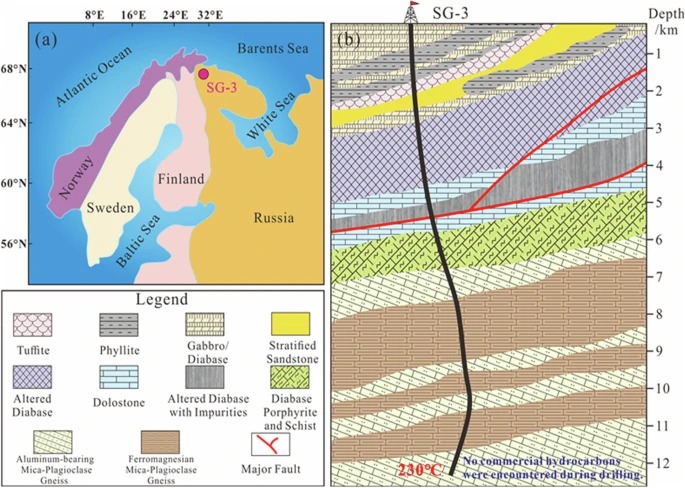
Зөвлөлт Холбоот Улсын инженерүүд 1970 оны тавдугаар сарын 24-нд Колагийн хойгт эхлүүлсэн SG-3 хэмээх гүний өрөмдлөгийн төсөл 1992 онд 12,262 метрийн гүнд хүрээд зогссон юм. Энэхүү төсөл нь хүн төрөлхтний түүхэн дэх хамгийн гүн өрөмдлөг хэвээр байгаа бөгөөд 2.5 тэрбум жилийн настай чулуулаг, бичил планктоны чулуужсан үлдэгдэл зэрэг шинжлэх ухааны үнэ цэнтэй олдворуудыг илрүүлжээ. Өрөмдлөгийн ажил нь гүний өндөр температур буюу 212 хэмд хүрсний улмаас чулуулаг нь хуванцар төлөвт шилжин өрөмдсөн нүхийг бөглөж байсан тул техникийн болон санхүүгийн хязгаарлалтын улмаас зогссон байна.
“Communications Earth & Environment” сэтгүүлд 2026 оны хоёрдугаар сард нийтлэгдсэн судалгаагаар, SG-3 төсөл нь Дэлхийн царцдасын бүтэц болон геологийн гүний үйл явцыг ойлгоход асар их хэмжээний анхдагч мэдээллийн санг бүрдүүлсэн болохыг онцолжээ. Өнөөдөр судлаачид энэхүү хуучны өгөгдлийг ашиглан “Enhanced Geothermal Systems” (EGS) хэмээх шинэ технологийг хөгжүүлж байна. Энэхүү технологи нь газрын гүний халуун чулуулагт өндөр даралттай ус шахаж, дулааныг цахилгаан эрчим хүч болгон хувиргах зарчимтай юм.
АНУ-ын Эрчим хүчний мэдээллийн албаны тооцооллоор, зөвхөн Грэйт Бэйсин бүс нутаг л гэхэд 135 гигаватт цахилгаан эрчим хүч үйлдвэрлэх боломжтой байгаа нь одоогийн уламжлалт аргаар гаргаж буй хүчин чадлаас даруй өндөр үзүүлэлт юм. Юта мужид EGS төслийн томоохон систем энэ онд ашиглалтад орох гэж байгаа бөгөөд цаашид Техас, Орегон мужуудад 400 хэм хүртэлх халуун чулуулаг бүхий бүсүүдэд төслүүдийг хэрэгжүүлэхээр төлөвлөж байна. Ийнхүү хагас зууны өмнөх эрдэм шинжилгээний өрөмдлөгийн үр дүн өнөөдрийн сэргээгдэх эрчим хүчний шилжилтийн гол хөшүүрэг болж байна.
Дэлгэрэнгүйг эх сурвалжаас харах
↓Эх сурвалжийг нээх ↓
Fifty-five years after Soviet engineers began drilling into the Kola Peninsula, the deepest hole humans have ever made, is getting a second look. Scientists now believe the heat data buried in its records could help unlock a new generation of geothermal power. Known officially as SG-3, the Kola Superdeep Borehole was never meant to produce anything useful in the conventional sense. The project launched on May 24, 1970, as part of a wave of initiatives meant to mark the 100th anniversary of Vladimir Lenin’s birth.
What makes the story relevant today isn’t the hole itself, but what engineers learned about the rock and heat far beneath the surface. As climate change pushes governments and utilities to rethink where power comes from, that decades-old data is being revisited by researchers exploring enhanced geothermal systems, a technology that didn’t exist when SG-3 was still active.
A Record That Still Stands
Drilling on the Kola Peninsula, a stretch of land straddling the border between Norway and Russia, continued on and off for over two decades. By the time the project ended in 1992, undone by physical, financial, and technological limits, the borehole had reached 12,262 meters, or roughly 7.6 miles down. A distance is still more than 3,700 miles from Earth’s core, but no other hole has gone deeper.
Along the way, the drill passed through deposits of copper, nickel, and magnetite, then rock resembling samples brought back from the Moon. As mentioned by Orion Magazine, it eventually reached rock roughly 2.5 billion years old, containing fossils of microscopic plankton, a strange find so far beneath the surface.
Why the Drilling Stopped?
However, the end of the borehole project came down to heat. Temperatures at the bottom reached 212 degrees Celsius, according to a scientific review of ultra-deep drilling published in February 2026 in the journal Communications Earth & Environment. At that depth, the rock stopped behaving like rock. It became, in the study’s words, a “plastic rock flow that repeatedly sealed the hole.”

Even if SG-3 never reached the Moho, the boundary separating Earth’s crust from its mantle, the authors noted that:
“The SG-3 well fundamentally reshaped understanding of continental crustal structure and deep geologic processes,” they added. “Despite not penetrating the Moho [boundary between Earth’s crust and mantle], SG-3 yielded the most extensive direct dataset on the crystalline continental crust.”
A Cold War Project’s Green Revival
That dataset is now informing enhanced geothermal systems (EGS), which drill deep and inject high-pressure water into hot rock to capture heat and carry it back to the surface as electricity. The U.S. Energy Information Administration has identified the western United States as the region with the greatest potential, estimating that the Great Basin alone could support 135 gigawatts of electrical generation, compared to the country’s current 4 gigawatts of conventional hydrothermal power.

A large-scale EGS system is due to begin sending power to Utah’s grid later this year, with additional sites in west Texas and central Oregon, none requiring depths anywhere near SG-3’s to reach rock as hot as 400 degrees Celsius. Today, the original borehole sits abandoned in a stretch of land now regarded as one of the most “poisoned spots on Earth.”
Enjoyed this article? Subscribe to our free newsletter for engaging stories, exclusive content, and the latest news.

