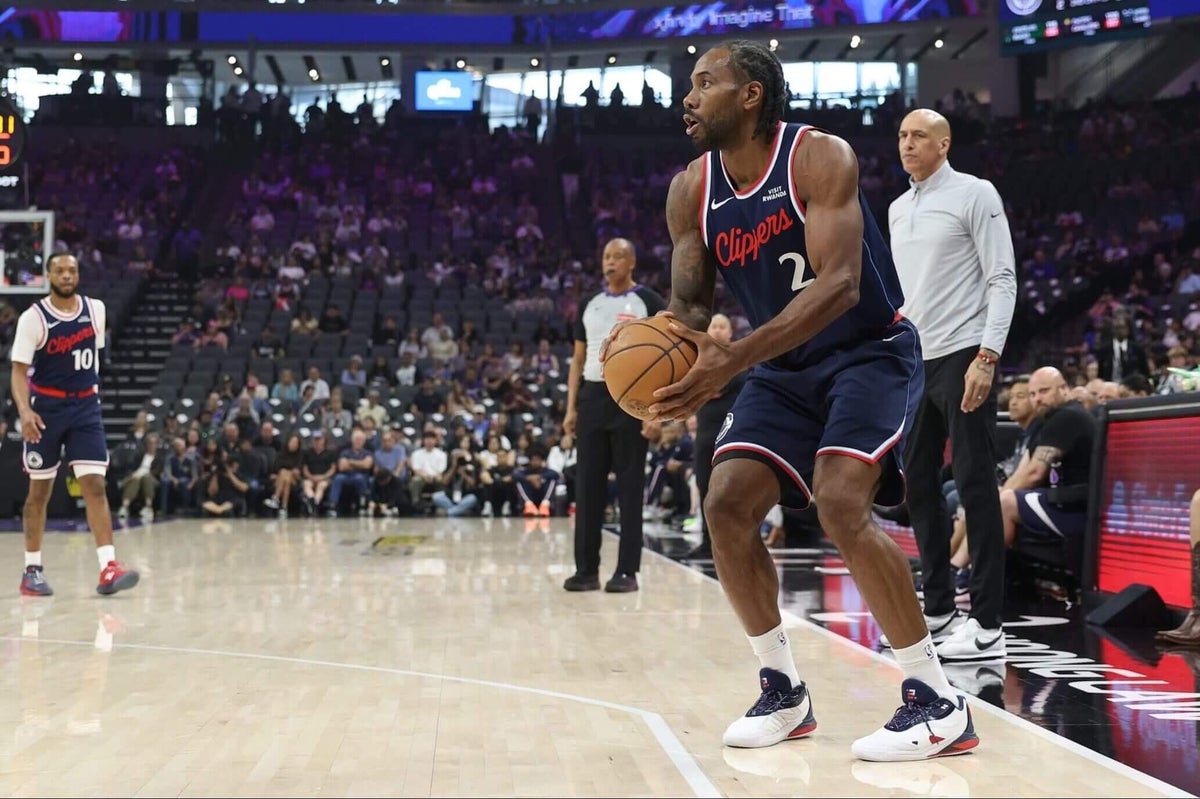
NBA-ийн мөрдөн байцаалтаар Лос Анжелес Клипперс баг Кавай Леонардад хууль бусаар нэмэлт хөлс олгосон нь тогтоогдож, лигийн түүхэн дэх хамгийн том торгуулиудын нэгийг хүлээлээ.
Лос Анжелес Клипперс баг 2020-2022 оны хооронд NBA-ийн хамтын хэлэлцээрийг зөрчиж, од тоглогч Кавай Леонардад хууль бусаар нэмэлт орлого олгох схем хэрэгжүүлсэн болохыг Wachtell, Lipton, Rosen & Katz хуулийн фирмийн тайлангаар тогтоолоо. Энэхүү зөрчлийн улмаас лигийн зүгээс Клипперс багт 30 сая долларын торгууль ногдуулж, драфтын эхний тойргийн таван сонголтыг хүчингүй болгов.
Түүнчлэн багийн эзэн Стив Балмер, бизнесийн үйл ажиллагаа хариуцсан захирал Гиллиан Закер нарыг нэг жилийн хугацаатай, сагсан бөмбөгийн үйл ажиллагаа хариуцсан ерөнхийлөгч Лоуренс Франкийг зургаан сарын хугацаатай тус тус эрхээ хасуулан түдгэлзүүллээ. Кавай Леонард 700,000 долларын нөхөн төлбөр төлөхөөр болсон бол түүний төлөөлөгч асан Деннис Робертсоныг NBA-д үйл ажиллагаа явуулахыг таван жилээр хориглов.
Клипперс баг мөрдөн байцаалтын үр дүнг эсэргүүцэж байгаа ч лигийн дүрэм журмын дагуу энэхүү шийдвэрийг давж заалдах боломжгүй юм. Тус баг 2029-2033 оны хоорондох драфтын эхний тойргийн сонголтуудаа алдаж байгаа бөгөөд одоогийн байдлаар ирээдүйн драфтын эрхээ бүрэн хянаж чадахгүй хүндхэн нөхцөл байдалд ороод байна.
Дэлгэрэнгүй эх сурвалжийг харах
Эх сурвалжийг нээх ↓
Caught. Nabbed. Busted.
The LA Clippers spent the last year insisting they had nothing to fear from an NBA investigation into cap circumvention and that everything would be fine.
Narrator voice: Everything was not fine. A half-decade-old scheme to funnel extra money to Kawhi Leonard has come to light, with the help of an investigative report from the “Pablo Torre Finds Out” podcast, and the Clippers are screwed.
First, the basics. After a yearlong investigation that culminated in a 35-page summary report from the law firm of Wachtell, Lipton, Rosen & Katz, the league brought down the hammer on the Clippers on Wednesday.
For what it deemed were four separate instances of violating the league’s collective bargaining agreement by engaging in cap circumvention to fill the pockets of star forward Kawhi Leonard from 2020 to 2022, the league stripped the Clippers of five first-round picks, fined the team $30 million, suspended owner Steve Ballmer and president of business operations Gillian Zucker for a full year and suspended president of basketball operations Lawrence Frank for six months. Leonard was also required to pay the league $700,000 in unreimbursed expenses, and his agent at the time, Dennis Robertson (aka “Uncle Dennis”), was banned from the NBA five years.
The Clippers, for their part, have stuck to their story and vowed to keep fighting, but it is not clear how. There is no appeals process for this, and courts generally give leagues wide latitude to enforce their own rules.
What’s more, the information in the Wachtell report is damning, and the Clippers’ only attempt at a factual refutation has been to call it a “witch hunt.” Also, it was common knowledge through the league that Uncle Dennis was asking for preposterous and blatantly illegal side benefits in the summer of 2019, which Leonard then began receiving in 2020 ahead of his next free agency, according to the report.
To say the burden of proof is now on the Clippers would be a massive understatement.
The Kawhi Saga: What the NBA’s investigation into the Clippers revealed
Mike Vorkunov and Jeshua Kidd
Regarding the lack of appeals process, an important clarification is in order, because my initial understanding of the NBA investigation’s endgame was incorrect. Article XIII, Section 3 of the Collective Bargaining Agreement was misunderstood by me and others, including people I know with legal backgrounds, to allow for a system arbitrator to hear a case before penalties for cap circumvention may be levied by the commissioner.
That particular part only applies to penalties applied to a player, not to a team or its management, something that is poorly explained in this section (page 340 of the CBA), but is spelled out in the document clearer in Article XXXII (not until page 470, but in a gripping romp like this tome, it feels sooner).
Because Leonard and the NBA Players Association signed off on his repaying $700,000, there was no further process that would require an arbitrator. Leonard, who made tens of millions in off-the-books, no-show endorsements, made out like a bandit with this settlement, especially since his $51 million contract for the coming season was not voided.
The only relevant remaining section of Article XIII is the part that describes the penalties for cap circumvention. The menu Adam Silver had to choose from includes:
- Imposing a fine of up to $7.5 million
- Directing the forfeiture of draft picks
- Suspending any team personnel for up to one year
It is notable that Silver chose to max out the potential penalties. A notion circulated for much of the last year that Ballmer might be able to “plea bargain” this down to a fine and lose two first-rounders, or something of that ilk.
Not so much. While the fine is the least impactful part from a basketball and material perspective, it’s notable because the league implemented the maximum financial penalty four times over because it found four violations.
Similarly, Ballmer and Zucker were suspended for a year because they can’t be suspended any longer. (The Wachtell report casts a harsh light on Zucker, in particular.) Five first-round picks? There were only five that the Clippers owned free and clear with no strings, although the league could theoretically have forfeited a couple of swaps, as well.
The draft picks are from 2029 to 2033, partly because the Clippers already traded their 2028 first and swapped their 2027 pick. The Clippers’ 2029 swap with the Philadelphia 76ers is unaffected, as the penalty from the league cost them their 2029 pick from the Indiana Pacers instead.
(Side note: The Clippers clearly were either unaware or in denial about how deeply they were in trouble, or they would have spent last season trading all their firsts while the Wachtell investigation meandered. Instead, they received two firsts from Indiana in the Ivica Zubac trade, one of which became 2026 lottery pick Keaton Wagler and the other was forfeited in this punishment).
Since the Clippers are still fighting in the court of public opinion, let’s make one thing clear: I believe virtually anyone who has worked in the league will agree that the Wachtell report absolutely hammered them, dead to rights. The Clippers make this sound like a case of somebody forgetting to put a cover sheet on their TPS reports, but the document shows a systematic process that yielded four different counts of circumvention.
“This is the largest punishment in the history of the NBA.”
Let me get into this text and some of my own front-office experience to explain:
The report starts by outlining how the league browbeats front offices with memos and other communication about cap circumvention and what qualifies, which is absolutely correct. You would have to be obtuse to work in an NBA front office for any length of time and not understand the rules on this — especially as a player-facing front-office executive, and especially an executive for a team previously found guilty of a fishy side-deal violation (during DeAndre Jordan’s 2015 free agency, for which the Clips were fined $250,000).
It then gets into the bizarre PR release from the Clippers two weeks ago:
On August 17, 2026, the Clippers appeared to double down on this theory by issuing a carefully worded public statement in defense of the team’s actions, asserting that “[m]aking introductions between players and team partners is both an ordinary practice by NBA teams and a common request of players and representatives.” To the extent these independent contentions were intended to imply that NBA rules permit teams, at the request of players, to initiate off-court income opportunities for players, that implication is incorrect. In any case, as set forth further below, the Clippers’ misconduct here extended far beyond simply initiating these opportunities.
Let me add some insider color on this. I can’t vouch for anyone else’s experience, but in seven years with the Memphis Grizzlies, this “ordinary practice” happened with me zero times … probably because, as the report notes, it’s illegal, and everyone knows this. Teams are periodically reminded about that by the league in case they forgot. There was one time in my tenure that the topic even came up, and it was immediately communicated to the person who asked if it would be blatant cap circumvention that would put us at risk of getting “Joe Smithed” by the league office.
Later in the document we get to some of the meat of the cap circumvention:
According to contemporaneous notes kept by Mr. Frank:
- Mr. Robertson complained to Mr. Ballmer that Ms. Zucker was making “introductions” for “bull—- deals,” and that “I [Mr. Robertson] cant [sic] wait on [Ms. Zucker] — I have to get paid.”
- Mr. Ballmer responded by telling Mr. Robertson that he and Clippers’ personnel were all “collective workers to try to help [Mr. Leonard] achieve his financial goals,”‘ and Ms. Zucker assured Mr. Robertson that Mr. Ballmer would “follow through on his promise.”
- Mr. Robertson requested a “3-6 month plan” for more lucrative introductions from the Clippers, a list of “5-6 companies” in the “pipeline” for “potential introductions,” and more frequent and consistent communication from Ms. Zucker.
Those who know Frank had to at least chortle in recognition, because he might be the league’s most scrupulous notetaker. Bad beat for the Clippers there. But it’s also the key exchange that sets up everything the report goes on to document. Also, the second Robertson started pushing for illegal benefits, the Clippers were required to notify the league, and they didn’t. It’s all downhill from there.
By Page 15, we are already dripping in sarcasm, thanks to the mountain of circumstantial evidence towering over the Clippers’ case — in particular, the team’s cover story for how the endorsements got off the ground:
Investigators do not credit the suggestion in the “introduction” emails that each of these companies in fact requested to be introduced to Mr. Leonard within six days of each other, in the midst of the COVID-19 pandemic, and while the NBA season was suspended.
One factor in the harsh penalty for the Clippers seems to be that their cooperation and truthfulness seemed, based on the Wachtell report, something short of optimal, particularly in Zucker’s case. The report asserts flatly that Zucker wasn’t truthful and danced around the same accusation regarding Ballmer. (The report’s introduction, in contrast, states Frank was forthcoming).
Witness:
In the September 5, 2025 television interview referenced above, Mr. Ballmer said this in defending the Clippers’ conduct related to Aspiration: “[W]e even found the email that makes the first introduction. It was early November, I won’t remember the exact date. So where, where could any of this circumvention have happened? It didn’t. It couldn’t have. The introduction got made and then they were off to the races on their own. We weren’t involved.”
Mr. Ballmer and Ms. Zucker told investigators the same: that the Clippers’ sole involvement in Mr. Leonard’s relationship with Aspiration was an introductory email. Based on the foregoing evidence, investigators find these statements to be inaccurate (at best) with respect to Mr. Ballmer and clearly false with respect to Ms. Zucker.
Yikes.
From there, the report lays out how the four endorsement deals came to pass and follows the money back to the Clippers in each case, as well as tracking the timing of each and, as in the text above, noting the clear conflicts with the team’s cover story.
TL;DR: Busted.
Silver had discretion in how to penalize these violations, and he hammered the Clippers. He had to. Twenty-nine other owners would have been varying shades of furiousness if he hadn’t, especially with this much evidence. Even setting that aside, Silver had to disincentivize this type of behavior in the future.
That’s because what’s done is done: The Clippers still got seven years* of superstar play from Leonard, and we have no idea if that would have happened if not for the assorted circumventions outlined here. All the teams they beat still took home an L.
(* — He did miss half the games, but still.)
In line with that, there was one penalty not mentioned in the CBA that I would have loved to see: restitution to the Dallas Mavericks and Utah Jazz, the two teams the Clippers beat in the 2021 playoffs while, according to the Wachtell report, funneling Leonard an additional $18 million off the books.
They can’t undo the scores of the games, and the NBA doesn’t really do “vacated wins” like the NCAA, but let’s not pretend this didn’t have an impact. Losing to the Clippers was the precursor to the Jazz blowing up their team a year later; Utah only came out of hibernation this past summer. Dallas changed coaches after losing to the Clippers in a tough seven-game series in the first round, although it worked out well for Rick Carlisle. Either squad could have plausibly won the 2021 Western Conference in a relatively down year.
That season’s trip to the West finals, alas, underscores what a disaster the Leonard era has been for this franchise, even as Leonard generally played amazingly. The Clippers’ price for signing Leonard was a simultaneous trade for Paul George that cost them five first-round picks, two swaps and Shai Gilgeous-Alexander. The shenanigans with Leonard and Uncle Dennis just cost them an additional five firsts.
Thus, while the Clippers in 2021 made the conference finals for the first and only time in franchise history, they effectively traded a two-time MVP and 10firsts to win three playoff series in seven years — and were realistic contenders in only two of the seven.
Now what? It’s hard to believe given the team’s pre-Ballmer history, but the Clippers are working on a streak of 15 straight winning seasons. They might not have another for some time.
Step one is figuring out who is even in charge. With the owner and president of basketball operations both suspended, one presumes that general manager Trent Redden is now holding the conch. His first order of business is likely completing the agreed-to trade of Leonard to Toronto, which the Clippers have even more incentive to finish given that the Raptors are sending them much-needed draft picks in 2031 and 2033, as well as a pick swap in 2027. (The Clippers, ironically, now would benefit hugely if Leonard faceplants as a Raptor.)
Otherwise, this feels like a franchise in limbo. The Clippers missed the playoffs last season, don’t control their own draft pick until Darius Garland is 34 years old(!), and their biggest offseason move other than the Leonard trade was letting a 24-year-old guard walk so they could retain 33-year-old Bradley Beal and trade for 30-year-old Max Strus. Frank’s suspension will carry through the trade deadline, but it would be hard for Redden or whoever is in charge to make significant moves regardless.
The Clippers, however, do have cap room in 2027 and will likely have abundant space in the summer of 2028. With little in the way of young players or draft capital aside from Wagler, scoring a big star in free agency is probably their best hope of digging themselves out of this mess in the next decade or so. Let’s hope that the money they offer above the table will be enough this time.

