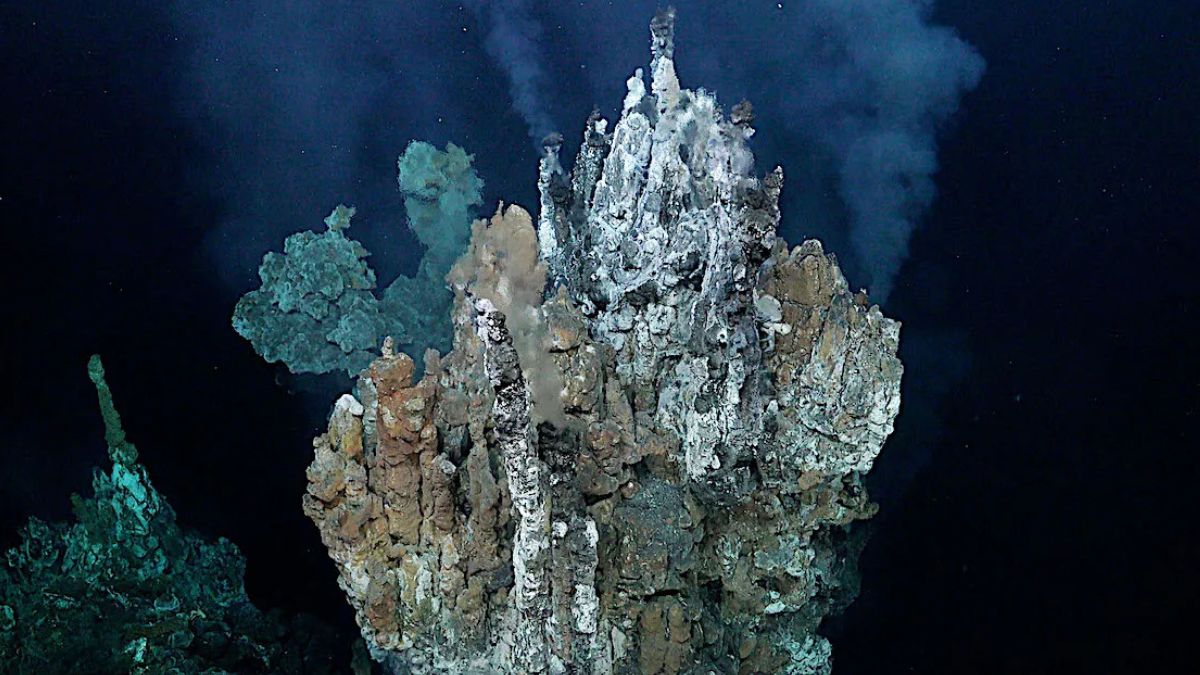
Далайн ёроолын халуун рашааны ундаргууд нь амьдралын эх үүсвэр байсан гэх түгээмэл таамаглал нь шинжлэх ухааны үндэслэл муутай болохыг эрдэмтэн Бенжамин Тутоло онцолжээ.
Калгарийн их сургуулийн геохимич Бенжамин Тутоло “PNAS” сэтгүүлд нийтлүүлсэн судалгаандаа амьдрал далайн гүний халуун ундаргуудад үүссэн гэх онолыг эрс шүүмжилсэн байна. Тэрээр дөрвөн тэрбум жилийн өмнөх эртний далайн химийн найрлага нь өнөөгийн халуун ундаргуудын шинж чанартай нийцэхгүй байгааг тогтоожээ. Тухайлбал, тухайн үеийн далайд амьдрал үүсэхэд шаардлагатай хүхэр болон бусад химийн нэгдлүүд хангалтгүй байсан нь энэхүү онолыг үгүйсгэж байна.
Өмнө нь эрдэмтэд 1970-аад онд далайн ёроолоос олдсон халуун ундаргуудыг амьдралын эхлэл хэмээн үзэж, тэдгээрийн шүлтлэг орчныг химийн энерги үүсгэгч “байгалийн зай хураагуур” гэж тайлбарладаг байв. Гэвч судалгаагаар эдгээр ундаргууд нь гадаргуу дээр гарахдаа хөрсний даралт болон температурын нөлөөгөөр химийн бүтцээ өөрчилдөг болохыг тогтоожээ. Иймд өмнөх таамаглалууд нь бодит нөхцөл байдалтай зөрчилдөж байгаа тул амьдрал үүссэн тухай онолыг дахин авч үзэх шаардлагатай гэж Тутоло үзэж байна.
Түүний дүгнэлтээр, амьдрал далайн гүнд бус, харин хуурай газрын ууршдаг нуур эсвэл цөөрөмд үүссэн байх магадлал илүү өндөр аж. Энэхүү нээлт нь зөвхөн манай гараг төдийгүй Ангараг болон бусад дагуул гаригууд дээрх амьдралыг эрж хайх эрдэмтдийн төсөөлөлд томоохон өөрчлөлт авчирч болзошгүй юм.
Дэлгэрэнгүйг эх сурвалжаас харах
↓Эх сурвалжийг нээх ↓
If you ask a scientist how life appeared on Earth, they will usually begin the story in one of two places:
A warm, mineral-rich pool on the surface of our primordial planet.
Or a deep-sea vent pumping warm, hydrogen-rich fluid through the ocean floor.
Both tales are highly engaging, but only one holds any water, according to a provocative new take by geochemist Benjamin Tutolo from the University of Calgary.
Tutolo’s perspective is now laid out in the peer-reviewed journal PNAS.
“Hydrothermal vent hypotheses for the origin of life are ingrained in our culture to the point that many of us no longer question them,” Tutolo toldScienceAlert.
“I even have a children’s book that I used to read to my kids that points to hydrothermal vents as the location where life originated.”
Based on the evidence at hand, however, Tutolo thinks it is highly unlikely that life originated in hydrothermal vents.
“That would require the systems to work in ways that we know that they do not, and that is obviously a fundamental issue,” he said.
That criticism could create waves.
Just this year, a review concluded that deep-sea hydrothermal vents and their potential role in the origin of life remain “a consistent hypothesis in the race to understand how living cells arose from the extreme conditions of our young planet.”
Tutolo agrees that the hypothesis has remained consistent through the years. But he argues it is now inconsistent with current evidence.
Today, we know that these deep-sea vents are not as alkaline as we once thought, nor as sulfur-rich.
We also know more about what Earth’s oceans looked like almost four billion years ago, when life first appeared.
“Outdated assumptions about the chemistry of the ancient oceans seem to have played a role,” he explained to ScienceAlert.
“For example, many vent hypotheses focus on sulfide minerals as facilitators of primordial metabolisms, but alkaline vent fluids, the rocks that host them, and the ancient oceans would have all been essentially barren of sulfur.”

What’s more, the powerful proton gradients required for the alkaline-vent origin-of-life hypothesis may not have existed here either.
The difference in acidity between the early ocean and the alkaline vents is thought to have provided a natural chemical battery, powering reactions that could have eventually produced life.
But highly alkaline measurements were observed when vent fluids were brought to the surface and cooled. Under the temperatures and pressures found at hydrothermal vents, the fluids are considerably less alkaline.
“These problems are so fundamental that hydrothermal vent hypotheses for the origin of life need to be taken back to the drawing board,” Tutolo said.
“They all rely on a similar series of assumptions, and this work demonstrates that these assumptions are misguided.”
So why has this hypothesis persisted despite emerging evidence to the contrary?
Tutolo says part of the problem is wishful thinking.
When humans got their first glimpse of hydrothermal vents on the deep ocean floor in the 1970s, they were shocked to find the dark and inhospitable habitats thriving with life.
Over the next few decades, scientists hypothesized that perhaps extreme environments like these once breathed life onto our planet.
Then, in the year 2000, researchers found the Lost City Hydrothermal Field near the Mid-Atlantic Ridge.
The location’s tall carbonate chimneys seemed to host a relatively warm, alkaline, and hydrogen-rich environment.
That was just the sort of habitat that some scientists thought would have hosted Earth’s first life.
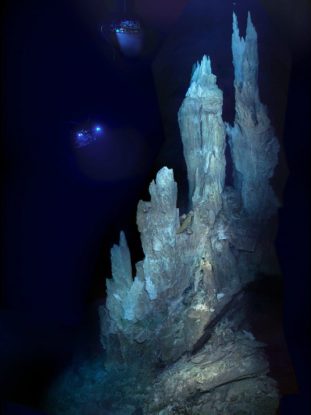
The alkaline-vent origin-of-life hypothesis took off. But it left reality in the dust, according to Tutolo.
“It took many years and numerous seagoing expeditions for many of the chemical characteristics of the Lost City system to be reported in detail,” said Tutolo.
“In the meantime, alkaline vent hypotheses had evolved in parallel and became increasingly incongruous with the Lost City system and its counterparts on the ancient Earth.”
Over the years, few geoscientists have thought critically about the alkaline vent hypothesis, argues Tutolo. Instead, they took the ideas at face value.
He thinks that lake environments are the more likely origin of Earth’s first life.
Related: This ‘Lost City’ Deep Beneath The Ocean Is Unlike Anything Seen Before on Earth
Several issues remain with that hypothesis, too, he admits, but studies have shown that the chemistry leading to RNA, proteins, and lipids could all be completed in evaporative ponds or lakes.
Tutolo suspects that if we want to find life on other planets, looking for evidence of hydrothermal vents on Mars or icy moons may not be our best bet.
“It pains me to say this because I tend to be an optimistic person, but I think this work indicates we should be far more pessimistic about the prospects for life elsewhere in the Universe,” Tutolo told ScienceAlert.
“That being said, evaporative lakes could occur on the surfaces of planets and moons, so it’s not as if Earth is the only place where life could originate.”
There’s hope yet.
The perspective is published in PNAS.
This article was fact-checked by Fiona MacDonald and edited by Fiona MacDonald. While we pride ourselves on our process, we are only human. If you spot a mistake, please let us know.

