Туннелийн аюулгүй байдлын мэргэжилтэн Арнольд Дикс үерийн улмаас гацсан байж болзошгүй ажилчдыг аврах ажиллагааг зогсоохгүй байхыг уриаллаа.
Австралийн туннелийн аюулгүй байдал, гамшгийн асуудал хариуцсан шинжээч Арнольд Дикс Непалын “Upper Trishuli-3A” усан цахилгаан станцын хонгилд гацсан байж болзошгүй ажилчдыг аврах найдвар байгааг мэдэгдэв. Тэрээр наймдугаар сарын 26-нд болсон үерийн үеэр 30 орчим хүн цахилгаан станцын хонгил руу орж хоргодож буй дүрс бичлэг бүртгэгдсэнийг дурджээ.
Диксийн тайлбарласнаар, газар доорх хонгилууд нь гадаргуу дээрх сүйрлийн дараа ч харьцангуй тогтвортой байж, амьсгалах агаар болон амьд үлдэх боломжтой орон зайг хадгалан үлдээх магадлалтай аж. Тэрээр Чили, Тайланд, Энэтхэгт болсон өмнөх ослуудыг жишээ болгон дурдаж, чимээгүй байдал нь үхлийн баталгаа биш, харин дохио өгөх боломжгүй байгаагийн шинж гэдгийг онцолсон байна.
Одоогоор Бхоте Коши-Тришулигийн дагуух усан цахилгаан станцын олон арван байршилд аврах ажиллагаа үргэлжилж байна. “Trishuli-3A” төсөл дээр 93 хүний бүрэлдэхүүнтэй баг БНХАУ-ын туннелийн мэргэжилтнүүдтэй хамтран ажиллаж байгаа бол Энэтхэг, Өмнөд Солонгосын багууд бусад байршилд дэмжлэг үзүүлж байна.
Непалын Гамшгийн эрсдэлийг бууруулах, удирдах үндэсний газрын мэдээлснээр, пүрэв гарагийн байдлаар 1,252 хүн амиа алдаж, 4,216 хүн сураггүй алга болжээ. Усан цахилгаан станцын төслүүдэд ажиллаж байсан 900 орчим хүн холбоо тасарсан хэвээр байгаа бөгөөд нийтдээ 21,000 гаруй аюулгүй байдлын алба хаагчдыг аврах ажиллагаанд дайчлаад байна.
Дэлгэрэнгүйг эх сурвалжаас харах
↓Эх сурвалжийг нээх ↓
Arnold Dix says underground powerhouses could offer survivable air pockets while teams search for hundreds of missing workers
Australian tunnel safety and disaster expert Arnold Dix has urged rescuers in Nepal not to give up hope of finding survivors inside the tunnels in the Upper Trishuli-3A hydropower project, where scores of workers are feared trapped underground days after a flash flood.
“The operation at Trishuli 3A is proceeding as a rescue, not a recovery,” Dix, who is remotely assisting the operation, wrote on LinkedIn. Footage recorded around the time of the August 26 flood shows around 30 people moving toward and seeking shelter in the power station tunnels, he said.
Dix said tunnels can remain comparatively stable after devastation above ground and may preserve breathable air and survivable spaces. “Silence is not evidence of death. It is only the absence of a signal,” he wrote, citing past rescues in Chile,
Thailand, and India where people survived underground for days without contact. Rescue teams are still trying to reach workers at more than a dozen hydropower sites along the Bhote Koshi-Trishuli corridor. At Trishuli-3A, a 93-member team is working with Chinese tunnel specialists, while teams from India and South Korea are assisting operations at other sites.
EditDelete
Nepal’s National Disaster Risk Reduction and Management Authority (NDRRMA) said on Thursday that 1,252 people have died and 4,216 remain missing. Around 900 people working at hydropower projects are among those still unreachable, while 11,993 people have been rescued.
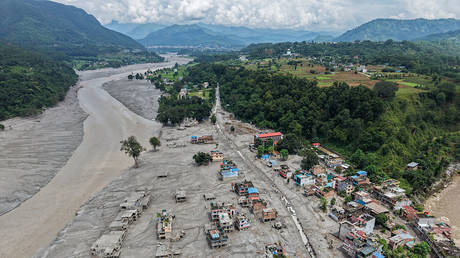
More than 21,000 security personnel have been deployed across the affected areas as rescue teams clear mud, rocks, and damaged roads. The flood swept away settlements near Nepal’s border with China, and the authorities estimate around 20,000 homes will have to be rebuilt in safer locations.
Dix helped advise the 2023 Silkyara tunnel rescue in northern India, where all 41 workers trapped after a collapse were brought out alive after 17 days. He described the scale of Nepal’s current operation as being like“23 Silkyaras going on at the same time.”
You can share this story on social media:



