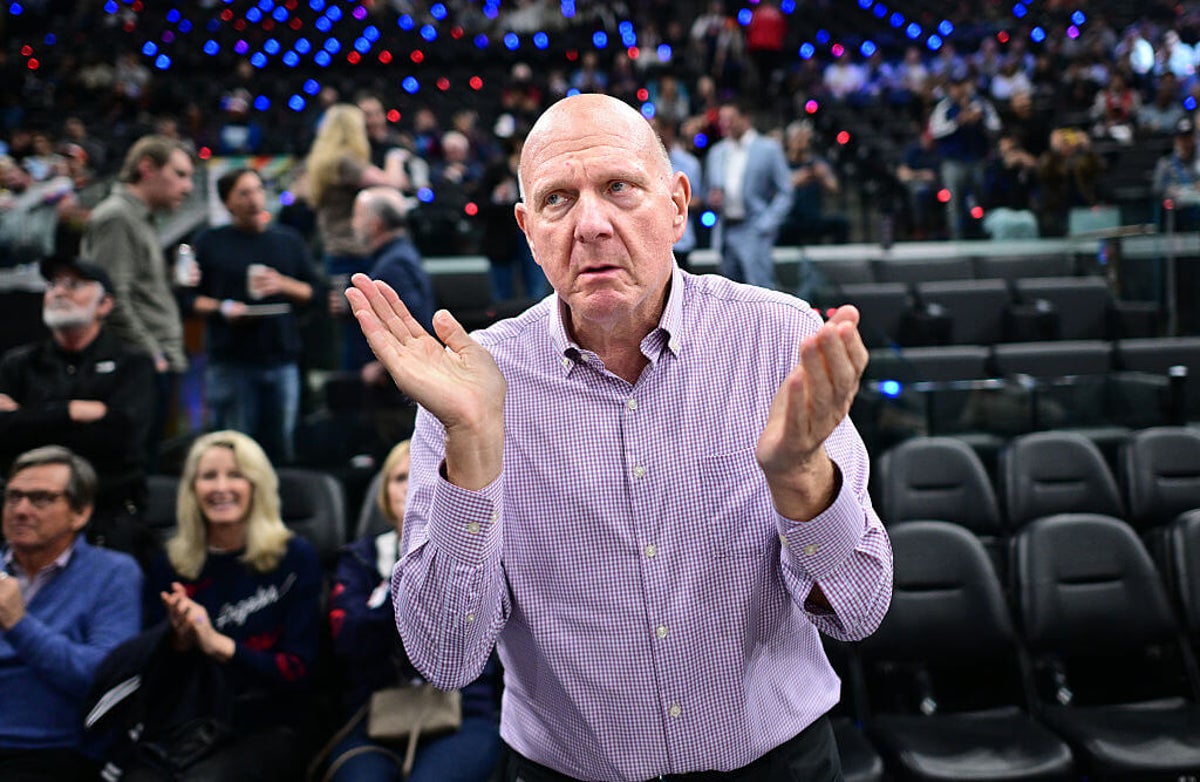
NBA-гийн мөрдөн шалгалтаар багийн эзэн Стив Балмер Кавай Леонардын гэрээний асуудалд цалингийн цэсний дүрмийг зөрчин оролцсон нь тогтоогдож, лигийн түүхэн дэх хамгийн хатуу шийтгэлүүдийн нэгийг хүлээлээ
Стив Балмер 2014 онд Лос Анжелес Клипперсийг худалдаж авахдаа Дональд Стерлингийн үеийн сөрөг нэр хүндийг арилгах зорилготой байсан ч өөрөө ижил төстэй асуудалд холбогдов. Тэрээр Кавай Леонардыг багтаа элсүүлэх явцад бизнесийн түншүүдээ ашиглан цалингийн цэсний дүрмийг тойрч, их хэмжээний санхүүгийн дэмжлэг үзүүлэхийг оролдсон нь NBA-гийн мөрдөн шалгалтаар илэрсэн юм.
Клипперс 30 сая долларын торгууль төлөхөөр болсон нь лигийн түүхэн дэх хамгийн өндөр дүн юм. Мөн Стив Балмер болон бизнесийн үйл ажиллагаа хариуцсан ерөнхийлөгч Гиллиан Зукер нарыг нэг жилийн хугацаатай, сагсан бөмбөгийн үйл ажиллагаа хариуцсан ерөнхийлөгч Лоуренс Франкийг зургаан сарын хугацаатай тус тус эрхээ хасуулж, Кавай Леонард 700,000 долларыг лигт буцаан төлөх шийдвэр гаргав. Леонардын авга ах бөгөөд бизнесийн менежер асан Деннис Робертсоныг NBA-гийн бизнесийн үйл ажиллагаанд оролцохыг таван жилээр хориглолоо.
Мөрдөн байцаалтын тайланд дурдсанаар, Стив Балмер цалингийн цэсний дүрмийг зөрчиж буйгаа мэдсээр байж Кавай Леонардын санхүүгийн хүсэлтийг дэмжин, Аспирэйшн (Aspiration) компанийн гэрээг батлахыг хувиараа зөвшөөрсөн байна. Уг гэрээнд Леонардад жил бүр 7 сая доллар олгохоор тусгасан нь Клипперс багийн Аспирэйшн компанитай байгуулсан 28 сая долларын тогтвортой байдлын гэрээний дүнгийн нэг хэсэг байжээ.
Багийн удирдлагууд Кавай Леонардад зориулж Аспирэйшн, Бойнго Уайрлес (Boingo Wireless), Дактроникс (Daktronics), Локтон (Lockton) гэсэн дөрвөн компанитай гэрээ байгуулах ажлыг санаачлан гүйцэтгэсэн байна. Стив Балмер өөрийн бүтээсэн 2 тэрбум долларын өртөгтэй Интүит Доум (Intuit Dome) ордонд ч эдгээр түншүүдийн үйлчилгээг ашигласан нь мөрдөн шалгалтаар илэрч, улмаар баг таван жилийн турш лигийн хяналтад байхаар боллоо.
Дэлгэрэнгүй эх сурвалжийг харах
Эх сурвалжийг нээх ↓
Steve Ballmer was supposed to scrub Donald Sterling’s stain from the LA Clippers. Instead, he left one of his own.
Their offenses are not morally equivalent. Sterling disgraced the franchise with his racism; Ballmer corrupted its integrity.
Both men made ownership the organization’s greatest source of shame. Ballmer’s fall for using the team’s business relationships to obtain millions of dollars for Kawhi Leonard through salary-cap circumvention is especially jarring because he arrived as the antidote to everything Sterling poisoned.
Sterling spent decades turning the Clippers into the NBA’s cheapest, most incompetent and most disgraceful organization. By the time his racist comments forced him out, everything about the franchise felt contaminated.
Ballmer arrived as the cleanser.
He spent $2 billion not to buy a basketball team in 2014. He was performing an exorcism.
He had more money than he could ever spend and more enthusiasm than he could contain. He screamed at games, bounded across stages and attacked the Clippers’ irrelevance with the same intensity he once used to climb to the top of Microsoft.
He spent on players, coaches, executives and facilities. He built Intuit Dome, a $2 billion basketball palace and an 18,000-seat shrine to technological excess, finally freeing the Clippers from feeling like squatters in the Lakers’ arena and giving them a home meant to embody everything Sterling never did.
Sterling was cheap. Ballmer was lavish.
Sterling was indifferent. Ballmer was obsessed.
Sterling made the Clippers embarrassing. Ballmer made them relevant.
Now 12 years later, Ballmer is another disgrace in a franchise history overrun with them.
The Kawhi Saga: What the NBA’s investigation into the Clippers revealed
Mike Vorkunov and Jeshua Kidd
This is the franchise that moved to Los Angeles without NBA approval, once celebrated Black History Month during the wrong month, traded Moses Malone after he played 6 minutes for the team (which was called the Buffalo Braves at the time), drafted Michael Olowokandi No. 1 in a class that included three future Hall of Famers (Vince Carter, Dirk Nowitzki and Paul Pierce), spent decades missing the playoffs and then blew 3-1 series leads five years apart.
Even the Clippers’ few bursts of prosperity quickly crumbled. Lob City never reached a conference final. Leonard and Paul George reached one in 2021 (Leonard was injured for it) but never an NBA Finals.
The bill for the disastrous Leonard era now includes Shai Gilgeous-Alexander — the reigning, two-time MVP — 10 first-round picks and two additional pick swaps. Five first-rounders were traded to acquire George as the prerequisite to signing Leonard, and five more were forfeited as punishment for circumventing the salary cap.
The Clippers were also fined $30 million, the largest sum in league history. Ballmer and president of business operations Gillian Zucker were suspended for one year, and basketball operations president Lawrence Frank for six months. Leonard was ordered to repay $700,000 to the league, and Dennis Robertson, Leonard’s uncle and former business manager, was banned from conducting NBA business for five years. The Clippers will remain under league monitoring for five years.
It is one of the harshest sentences in NBA history.
The case against Ballmer is far worse than an owner failing to control a few aggressive employees. Investigators concluded Ballmer knowingly tried to help Leonard obtain outside income and personally approved a transaction that allowed Leonard’s enormous Aspiration endorsement agreement to proceed.
Ballmer understood the rules. He understood what Aspiration was demanding. He approved the deal anyway, even after repeated warnings.
In 2015, the NBA fined the Clippers $250,000 for improperly attempting to arrange an endorsement opportunity for DeAndre Jordan. Ballmer responded then by acknowledging the organization had to be more diligent about complying with the collective bargaining agreement.
Four years later, Robertson requested prohibited benefits while negotiating with multiple teams. The requests included team equity, housing, private transportation and guaranteed endorsement income.
The NBA investigated. The Clippers acknowledged the requests but denied accommodating them. The league strengthened its enforcement program and required teams to report every improper solicitation, even those they rejected.
In December 2019, the NBA provided Ballmer, Frank and Zucker with specific training on its salary-cap circumvention rules, according to the report released this week by the independent investigating firm Wachtell, Lipton, Rosen & Katz.
Every team went through training rules, but few had more reason to understand them than the Clippers after their similar violations four years earlier.
None of them could claim confusion this time.
Within months, Robertson resumed pressuring the Clippers to generate approximately $10 million annually in outside income for Leonard. Those demands reached Ballmer directly.
According to notes Frank kept from the conversation, Robertson complained to Ballmer that the opportunities Zucker was finding weren’t lucrative enough. Ballmer responded that he and Clippers employees were “collective workers” trying to help Leonard achieve his financial goals. Zucker assured Robertson that Ballmer would follow through.
No one told Robertson to stop. No one reported his demands to the NBA.
Instead, the Clippers went to work.
Investigators found that they initiated, facilitated or induced Leonard endorsement agreements with four companies doing business with the team: Aspiration, Boingo Wireless, Daktronics and Lockton.
Why did the NBA’s investigation into the Clippers last so long?
The three non-Aspiration agreements paid Leonard $18 million. The Aspiration agreement promised another $48 million in cash and equity. All four arrangements were unusual, required little of Leonard and were never publicly announced.
The Aspiration arrangement was the most outrageous. Leonard was promised $7 million annually in cash — the precise amount the Clippers agreed to pay Aspiration each year under a separate $28 million Forum sustainability deal.
The Clippers claimed the Forum agreement was based on a consultant’s calculation of what it would cost to offset the building’s historical carbon emissions. Investigators interviewed the consultant, who said the process worked in reverse. The Clippers supplied him with a predetermined $28 million budget.
Even Clippers executives were alarmed. In internal messages, one called the Forum agreement “super shady” and flagged numerous red flags.
Then Aspiration co-founder Joe Sanberg made the connection impossible to ignore. He threatened to cancel Leonard’s endorsement agreement if the Clippers didn’t complete the Forum transaction. Clippers executives discussed whether Ballmer understood that Leonard would be told his deal was dead because of Clippers management.
Ballmer admitted to investigators that he knew about Sanberg’s threat. He then personally approved the Forum agreement.
That’s the central fact in all of this. It punctures Ballmer’s defense that he was merely another victim of a fraudulent company. He knew the Clippers’ business was contingent on Aspiration paying Leonard and authorized it anyway.
This wasn’t negligence. It was facilitation.
Ballmer later insisted publicly that the Clippers’ sole involvement with Leonard and Aspiration was an introductory email before the two sides proceeded independently. Investigators called his account “inaccurate at best.”
By the time Zucker sent that supposedly innocent introduction, the Clippers had already suggested Leonard to Aspiration, hired a team-retained business agent to draft an offer, conveyed proposed financial terms and provided input on the term sheet. Investigators concluded the introduction email was created solely to leave behind a compliant-looking record.
Ballmer might not have written the emails or negotiated every agreement. Zucker was the operational architect. Frank was Robertson’s primary basketball contact.
However, Ballmer owned the culture. When Leonard’s representative demanded outside income, Ballmer promised help. When NBA rules required disclosure, his organization remained silent. When Aspiration linked its payment to Leonard with Clippers business, Ballmer approved it.
It all grew out of his desperation to make the Clippers matter.
Even Intuit Dome looks different today. Ballmer built it as his monument to legitimacy, but its enormous halo scoreboard was constructed by Daktronics, one of the four team partners investigators found was induced to pay Leonard.
The halo now hangs over Ballmer’s franchise in every sense.
He changed the Clippers’ arena, expectations and value. He spent billions trying to ensure they would never again be treated as an NBA embarrassment.
He changed everything, except the ending.

