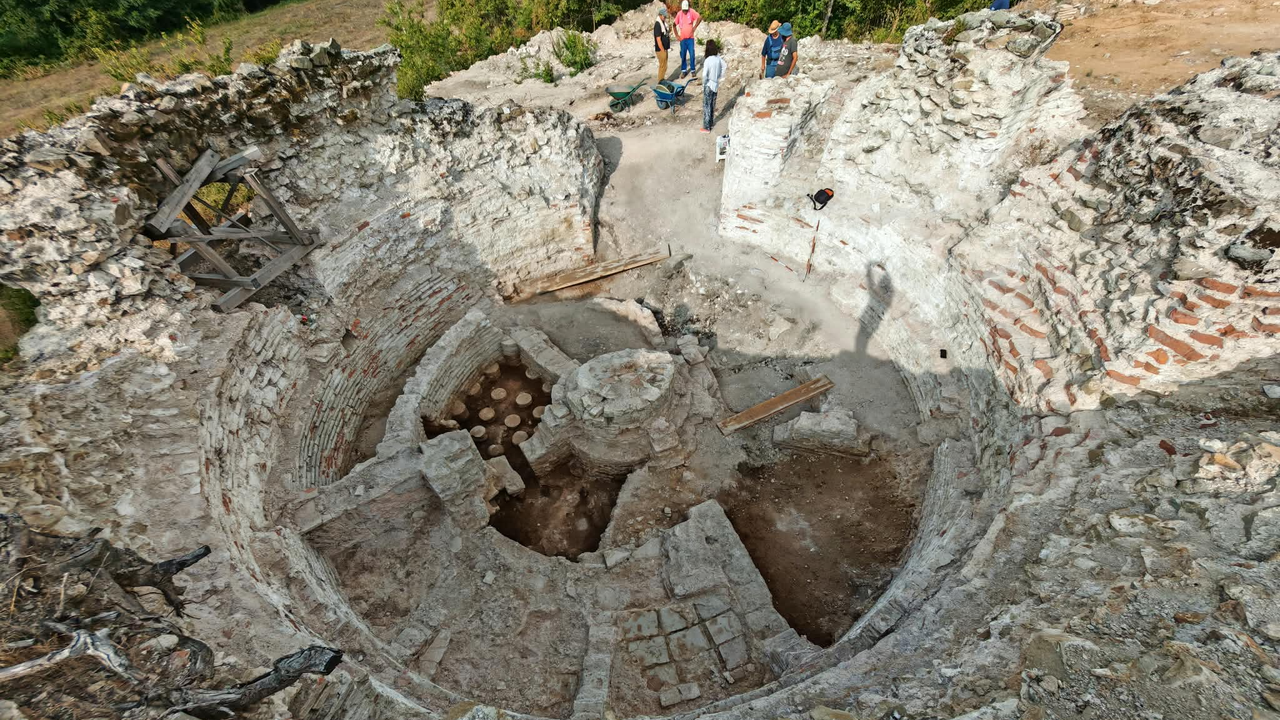
Археологичид Сербийн зүүн хэсгээс эзэн хаан Максиминус Дазагийн ордонд харьяалагдах, өвөрмөц хийцтэй эртний Ромын халуун усны цогцолборыг малтан илрүүллээ.
Сербийн Археологийн хүрээлэнгийн судлаачид “Врело-Шаркамен” хэмээх түүхэн дурсгалт газарт хийсэн малтлагаар уг олдворыг нээжээ. Энэхүү байгууламж нь эртний Ромын эзэнт гүрний үед ховор тохиолддог дугуй хэлбэртэй, зургаан цонхтой бөмбөгөр оройтойгоороо онцлог юм. Ромын үеийн ихэнх халуун усны газар нь шугаман бүтэцтэй байдаг бол уг цогцолбор нь ордон доторх цамхгийн хамгийн доод давхарт байрласан нь археологичдын хувьд анхны тохиолдол болж байна.
Малтлагаар халаалтын систем бүхий шал, гурван усан сан, саун буюу уурын өрөөний үлдэгдлийг олсон байна. Судлаачид уг цогцолборыг тоног төхөөрөмжийн болон амралтын гэсэн хоёр хэсэгт хуваагдаж байсныг тогтоожээ. Тоног төхөөрөмжийн өрөөнөөс халаалтын зуух болон зэс тогооны суурь илэрсэн нь тухайн үеийн архитектур, инженерийн өндөр түвшний мэдлэгийг илтгэж байна.
МЭ 310-313 онд төр барьж байсан Максиминус Дазагийн үед байгуулагдсан энэхүү цогцолбор нь зөвхөн ариун цэврийн зориулалттай бус, харин өндөр албан тушаалтнуудад зориулсан тухтай, функциональ орон зай байжээ. Судлаачид уг байгууламжийн бүтцийг илүү нарийвчлан судлах зорилгоор малтлагын ажлаа үргэлжлүүлж байна.
Дэлгэрэнгүйг эх сурвалжаас харах
↓Эх сурвалжийг нээх ↓
Archaeologists excavating in eastern Serbia have discovered the remains of a lavish and uniquely constructed Roman bath that once belonged to an emperor. The suite of rooms — which included heated floors, three bathing pools and a sauna — was uncovered at the bottom of a tower within an imperial palace, a design archaeologists had never seen before in the Roman Empire.
The bath complex, known in Latin as a balneum, was found at the archaeological site of Vrelo-Šarkamen, a monumental fortified residential complex that was built in the early fourth century and was occupied by Maximinus Daza (or Daia), who was Roman emperor from 310 to 313. Archaeologists have been excavating at Vrelo-Šarkamen on and off for decades, and the latest discovery was made by a research team from the Institute of Archaeology, an independent research institution in Serbia, according to a Sept. 3 statement.
Galerius Valerius Maximinus, born in what is now Serbia and originally named Daza, was one of the four Roman “tetrarchs.” In A.D. 293, Emperor Diocletian essentially split the Roman Empire into two halves — Eastern and Western — and each was administered by a senior emperor and a junior ruler. By 305, the rulers of the Roman Empire were Constantius and Galerius as senior emperors and Severus and Maximinus Daza as junior rulers, but the tetrarchy had begun to fall apart. Maximinus claimed the title of senior emperor in 301 but lasted only three years. He died in 313 after losing a civil war against his rival, Licinius.
The new excavations at Maximinus Daza’s imperial residence have revealed that the palace was even more complex and luxurious than previously thought, according to the statement.
Maximinus’ palace had a monumental tower in the southwest corner. But archaeologists were surprised to find a circular bath complex on the lowest level of the tower, as most ancient balnea were oriented linearly, with rooms in a row. This bath area had a domed ceiling with six windows, which shows a high level of engineering knowledge, according to the statement.
- Poop-encrusted chamber pots from the Roman Empire reveal oldest known human cases of Crypto parasite
- Ancient bullets reveal where a Roman camp hid in the Pyrenees of Spain before being ambushed
- Lavish Roman villa discovered outside Rome’s walls may have been frequented by Hadrian and Marcus Aurelius
The balneum was split into two sections: one for equipment needed to run the baths and one for bathing and relaxing. Within the equipment room, archaeologists found the furnace that heated the bath’s floors. They also discovered the base for a copper boiler that would have been used to heat up bath water. However, the copper boiler itself is now missing.
Within the suite of rooms that the emperor used, archaeologists found three bathing pools or tubs, along with a sudatorium, the Latin word for a steam bath or sauna.
According to the statement, “the complex was not simply a space intended for personal hygiene, but a carefully designed private bath intended for high-status residents of the palace, in which architecture, technical infrastructure and comfort formed a single functional whole.”
Researchers will continue to explore the bath complex to better understand how the rooms were structured and how Emperor Maximinus and his family accessed it.
From Augustus to Nero, see how much you know about ancient Rome’s famous leaders with our Roman emperor quiz!

