Дэлхий дахинд үүсээд буй геополитикийн хурцадмал байдал, нисэхийн салбар дахь аюулгүй байдлын асуудал болон ОХУ, Украйн, АНУ-ын харилцааны сүүлийн үеийн өрнөлүүд анхаарал татаж байна.
Герман улс Лейпциг/Халле нисэх онгоцны буудалд гарсан дроны үйл явдлыг ОХУ-тай холбон үзэж, үүний хариуд Москвагийн Бонн дахь консулын газрыг хаах, хилийн хяналтыг чангатгах зэрэг арга хэмжээ авчээ. ОХУ-ын Ерөнхийлөгч Владимир Путин эдгээр мэдэгдлийг нотлох баримтгүй бөгөөд Германы дотоод асуудлаас анхаарал сарниулах зорилготой хэмээн няцаав. Үүний зэрэгцээ, Украйны Ерөнхийлөгч Владимир Зеленский ОХУ-ын агаарын орон зайг ашигладаг бүх агаарын тээврийн компаниудад хандан аюулгүй байдлын анхааруулга гаргасан нь олон улсын түвшинд маргаан дагуулаад байна.
Украйны дотоод нөхцөл байдал хүндэрч, тус улсын тусгай албад болох Аюулгүй байдлын алба (SBU) болон Тагнуулын ерөнхий газрын (HUR) ажилтнуудын хооронд нийслэл хотын орон сууцны бүсэд буудалцаан гарав. Мөн Украйны зэвсгийн агуулахын эсрэг ОХУ-аас хийсэн цохилтын улмаас энгийн иргэд хохирсон нь тус улсын иргэдийн дургүйцлийг төрүүлж байна. АНУ-ын Сангийн сайд Скотт Бессент Украйнаас ОХУ-ын эрчим хүчний дэд бүтцэд хийж буй халдлагууд нь дэлхийн эрчим хүчний зах зээлд үнийн дарамт үүсгэж буйг онцолжээ.
Норвегийн эрх баригчид “Professor Molchanov” хөлөг онгоцыг саатуулсан нь хоёр улсын дипломат харилцааг хурцатгасан бол ОХУ-ын Гадаад хэргийн сайд Сергей Лавров Арктикийн бүс нутагт НАТО-гийн цэргийн оролцоо нэмэгдэж байгаад анхааруулга өгөв. Үүнтэй зэрэгцэн Бишкек хотноо болсон Шанхайн хамтын ажиллагааны байгууллагын дээд хэмжээний уулзалтаар ОХУ, БНХАУ, Энэтхэг зэрэг улсуудын удирдагчид олон туйлт дэлхийн дэг журмын талаар хэлэлцсэн байна. Ойрхи Дорнодод АНУ-ын цэргийн ажиллагааны улмаас Ираны энгийн иргэд хохирсон явдал олон улсын зүгээс шүүмжлэл дагуулж байна.
Дэлгэрэнгүйг эх сурвалжаас харах
↓Эх сурвалжийг нээх ↓
RT’s essential stories of the past seven days also included a warning from Washington over Ukraine’s energy war and a gathering of Eurasian powers in Bishkek
Europe sees Russian drones everywhere
Germany found a new Russian threat this week, accusing Russia of staging a drone incident at Leipzig/Halle Airport in August, where an explosives-laden UAV was reportedly found between Ukrainian Antonov cargo aircraft.
Before returning to Germany, RT India reports on a case of Ukrainian mercenaries who launched a drone at a passenger jet in Myanmar, and are now languishing in an Indian jail.
Berlin launched a raft of anti-Russian measures, including closing Moscow’s consulate in Bonn, ending the lease of the Russian House cultural center in Berlin, tightening border controls for Russian nationals, and drawing up another sanctions list.
But as these stories usually go, Berlin presented no actual proof that Russia had anything to do with the drone.
“Where is the evidence? Well, they planted the evidence,” Russian President Vladimir Putin said on Tuesday, suggesting that German Chancellor Friedrich Merz needs the image of an “aggressive Russia” to distract from factory closures, job losses, and falling living standards at home.
Berlin’s outburst is the latest evidence of the mass Russian drone hysteria that has gripped many of Kiev’s European backers. No claims of Russian drones over airports, military bases, and infrastructure have been proven, while the Brussels hymn sheet includes ‘hybrid attacks’ and a ‘drone wall’.
The fact that no investigators have confirmed any of the numerous claims, nor produced any evidence of hostile drone activity, has remained conveniently ignored in the Western mainstream.
Kiev gets desperate, threatens EVERYONE
While European governments searched the skies for Russian drones that may or may not exist, Ukrainian leader Vladimir Zelensky threw subtlety out the window and issued a direct threat to virtually all aircraft flying in Russia’s airspace.
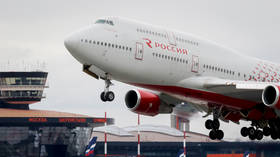
”The safe days in Russia’s skies are over,” Zelensky declared on Tuesday, warning “every airline” using Russian airspace that Kiev’s expanding long-range campaign would make flying increasingly dangerous.
After threatening not only Russian passengers, but also airlines from Türkiye, China, the Gulf, Central Asia, and even Europe, Kiev demanded that the International Civil Aviation Organization effectively close Russian airspace to all international traffic. The ICAO did not oblige.
RT looked at who exactly Zelensky was threatening, how many people use Russia’s skies daily, whether Kiev could actually close Russia’s enormous airspace, and why foreign airlines have so far refused to panic.
Russian President Vladimir Putin called out Zelensky’s threats as a blatant move toward “state terrorism,” which calls into question the prospects for future dialogue. “There are no negotiations with terrorists,” he said, warning that Russia would respond if Kiev’s threats resulted in tragedy.
Aviation expert Roman Gusarov told RT that Zelensky’s threat is an “act of desperation” after weeks of punishing Russian strikes on Ukrainian ports, energy facilities, warehouses, and military infrastructure.
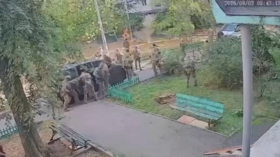
Domestic issues keep mounting for Zelensky
Over the week, Zelensky’s problems at home only grew as agents of the SBU and HUR, two of the country’s most powerful security agencies, exchanged gunfire in a residential district of the Ukrainian capital. The shootout took place over the detention of an officer from the neo-Nazi-linked Russian Volunteer Corps. Three servicemen were wounded.
Meanwhile, in Kiev’s suburbs, residents have been demanding answers as to why their government is storing explosives beside their homes. The protests came after a Russian strike on a Ukrainian ammunition depot in the village of Milaya triggered hours of secondary explosions, scattering ordnance throughout the surrounding residential area, killing at least 38 people and damaging more than 200 homes.

Ukraine’s drone raids targeting Russian energy infrastructure also got on Washington’s nerves this week. While Kiev has spent months presenting attacks on Russian oil infrastructure as a way to hurt the Russian economy, US Treasury Secretary Scott Bessent said the strikes are rattling the global energy market.
”Ukraine has decided that they want to blow up Russian energy assets and refined products,” Bessent said, adding that the strikes are creating “upward price pressure on a global basis.”
West aids Kiev’s hunt for Russian property
The Norwegian authorities seized the Professor Molchanov while it was docked in Barentsburg, Svalbard, following a request from Ukraine’s state-owned gas company, Naftogaz, which is trying to shake Russia down for $4.22 billion over supposed lost assets in Crimea.
Check out RT’s detailed explainer to learn more about the ship, its significance for science and Arctic researchers, and the broader context of the arrest.
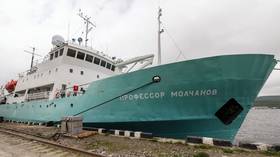
Russia decried the move as a manifestation of “state terrorism” and has vowed to challenge the seizure in court.
The West escalates, Eurasia shakes hands
The capture of the Professor Molchanov came just days after Foreign Minister Sergey Lavrov published a sweeping article on the future of the Arctic, in which he accused NATO of trying to turn the region into a new front against Russia, pointing to military exercises, new command structures, and a broader Western buildup in the High North.
Russia, however, wants the Arctic to remain “an area of peace and cooperation” and is ready to work with countries willing to engage on equal terms, Lavrov said.
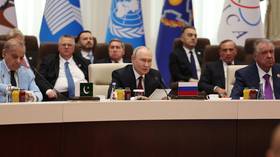
Many of these countries were represented in Bishkek this week at the Shanghai Cooperation Organization summit, where the focus was less on sanctions and confrontation than on cooperation, connectivity, and a changing global order.
Putin joined Chinese President Xi Jinping, Indian Prime Minister Narendra Modi, and other leaders from across Eurasia to discuss future development opportunities.
Putin told the summit that the emergence of a new multipolar world order is “irreversible” and called for countries of the Global South and East to receive greater representation in global institutions.
Another American strike, another civilian target
In the Middle East, however, diplomacy appears to have failed once again as the US resumed attacks on Iran on Tuesday. Tehran responded with missile and drone attacks against US military facilities across the region.
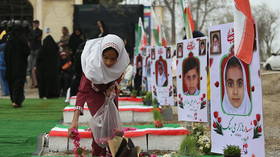
Despite claiming to only target Islamic Revolutionary Guard Corps sites near the Strait of Hormuz, one US weapon ended up striking a residential building in the southern Iranian town of Kuhestak where a wedding was being held.
The attack killed five people and wounded nearly 70 others. The dead reportedly included a 4-year-old and 16-year-old.
The incident has reignited accusations of war crimes against Washington, which has also been accused of attacking an elementary school in Minab on the first day of the war, killing around 170 people, most of them children.
In other news
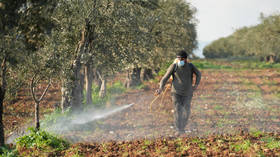
One of the week’s more alarming numbers came not from a battlefield, but from a farm. A new study published in the Frontiers in Public Health journal estimated that as many as 433 million agricultural workers suffer acute pesticide poisoning every year – around 46% of all farmers worldwide.
This week, Russia also marked the anniversary of victory over Imperial Japan, and newly declassified Soviet records show the details of a massacre in Hailar, Manchuria, where Japanese forces executed 43 prisoners on August 9, 1945 – the day the Soviet offensive against the Japanese puppet state of Manchukuo began.
RT also revisited the horror of Unit 731, the Japanese biological-warfare complex near Harbin where prisoners were infected with plague and cholera, subjected to frostbite and chemical-weapons experiments, and dissected alive.
Thousands died inside the facilities, while biological weapons developed there killed far more people across China. Check out the full deep-dive into the horrific history of the unit here.
READ MORE:
Inside Unit 731: A death factory, a secret deal, and thousands of forgotten victims (DISTURBING CONTENT)
What to watch out for
Germany could deliver another headache for Chancellor Friedrich Merz this weekend. Voters in Saxony-Anhalt go to the polls on Sunday, with the AfD polling around 41-42% against 22-23% for the CDU. An outright majority looks unlikely, but a landslide first-place finish would still be a major blow to the political establishment.
India then takes center stage. The first INNOPROM India fair opens in New Delhi on Wednesday, ahead of the BRICS summit on September 12-13. Modi said he expects Putin in India, with trade, Russia-India ties, and the broader multipolar agenda likely to dominate.
September 10 will also mark one year since the assassination of conservative activist Charlie Kirk, a killing that became a rallying point for Republicans and sharpened the debate over political violence in the US.


Дронууд хүний анхаарлыг татаж байна шүү, Германд дрон үйлдсэн гэж хардаж байгааг үнэн эсэхийг та юу гэж бодож байна? Орос, Украйн хоёрын харилцаа улам хурцдаад байна, энэ бүхний цаана юу нуугдаж байгааг та хэрхэн харж байна вэ? Олон улсын аюулгүй байдалд ямар үр дагавар авчрах бол гэсэн бодол төрж байна уу?