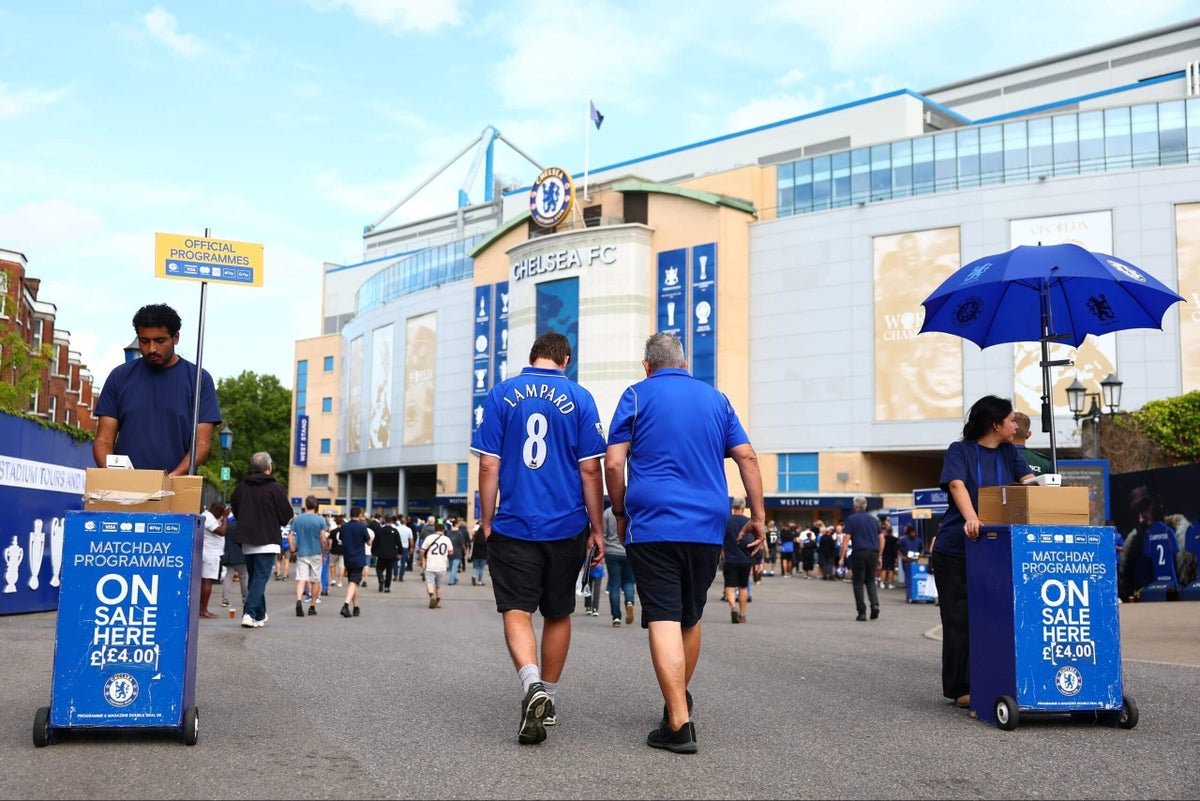
Премьер лигийн цэнгэлдэх хүрээлэнгүүдэд согтууруулах ундааг суудлын хэсэгт хэрэглэхийг хориглож, үзэгчдийн хөдөлгөөнийг хатуу хязгаарладаг нь Америк спортын соёлоос эрс ялгарч байна.
Английн хөлбөмбөгийн цэнгэлдэх хүрээлэнгүүдэд 1985 оны хуулийн дагуу талбай харагдах хэсэгт согтууруулах ундаа хэрэглэхийг хориглодог нь гадны жуулчдын хувьд анхаарал татсан зохицуулалт болжээ. Мөн Америкийн спортын тоглолтуудаас ялгаатай нь Премьер лигийн тоглолтын үеэр цэнгэлдэх хүрээлэнд үзэгчдийг зугаацуулах хөгжим, зарлал, том дэлгэцийн үзүүлбэр бараг байдаггүй бөгөөд үзэгчид зөвхөн хөлбөмбөгийн үйл явдалд бүрэн төвлөрдөг байна.
Цэнгэлдэх хүрээлэнгүүдийн бүтэц зохион байгуулалтын хувьд ч ялгаатай. Аюулгүй байдлын үүднээс зочин болон талбайн эзэн багийн хөгжөөн дэмжигчдийг хатуу тусгаарлаж, нэвтрэх хэсгүүдийг нарийн зохион байгуулсан байдаг нь үзэгчдийн шилжилт хөдөлгөөнийг хязгаарладаг. Түүнчлэн Премьер лигийн цэнгэлдэхүүд Америкийн спортын талбайнуудтай харьцуулахад харьцангуй жижиг багтаамжтай бөгөөд хотын төвд байрладаг тул өргөтгөх боломж хязгаарлагдмал байдаг аж.
Премьер лигийн гуравдугаар тойргийн тоглолтуудад Арсенал Челсиг 2-1 харьцаатай хожиж, Манчестер Сити Ковентри Ситиг 1-0-ээр буулган авсан бол Эвертон, Манчестер Юнайтед багууд 2-2-оор тэнцлээ. Ирэх есдүгээр сарын 13-нд Манчестер Юнайтед, Манчестер Сити багуудын дерби тоглолт болох хуваарьтай байна.
Дэлгэрэнгүйг эх сурвалжаас харах
↓Эх сурвалжийг нээх ↓
Did you enjoy this summer’s World Cup? Are you curious about the soccer world beyond that tournament? Welcome to The Athletic’s Soccer Weekender. We’ll be tackling the big topics from every weekend of action, and the funniest moments, weird histories, meaningful stories you may have missed and more. All fans are welcome.
I’ve seen a lot of sports. I’ve been to a lot of stadiums. I’ve covered the NFL, NBA, WNBA, college football, tennis and more. I wrote The Athletic’s World Cup newsletter. I’ve turned a lot of turnstiles, sat in a lot of seats, waited in a lot of lines and tested a Dionysian amount of stadium food and tipples.
Before I lose you with this braggadocio, my point is: despite all this, I still have the capacity to be shocked. And, as a newish soccer fan, the Premier League succeeded in surprising, annoying, delighting, and baffling this American sports journalist.
Over the past few weeks, I have attended not only my first Premier League match, but three others beyond that. I saw:
- Arsenal vs Coventry City at Arsenal’s Emirates Stadium
- Crystal Palace vs Manchester City at Palace’s Selhurst Park (all my UK colleagues’ eyes widened in concern when they heard The Athleticwas sending an American to Selhurst Park)
- Tottenham Hotspur vs Newcastle United at Tottenham Hotspur Stadium
- Chelsea vs Brighton & Hove Albion at Chelsea’s Stamford Bridge.
And boy, do I have some takeaways.
Here are six things that the American mind cannot comprehend about Premier League matches.
1. You can’t bring your drink to your seat
This is one that most English folks take for granted but leaves Americans gobsmacked. The alcohol rule is the ultimate in the reverse of “The European mind cannot comprehend” memes. More than one American tourist tried to bring their beer into the stands and got stopped by the matchday stewards. I even heard one woman say, “Wait, those signs are SERIOUS!?” pointing to a placard that clearly read: “No Alcohol Beyond This Point.”
The rule is a holdover from the 1980s, when football “hooliganism” and violence between opposing sets of fans were particularly out of control. Enter: a law called the “Sporting Events (Control of Alcohol etc.) Act 1985,” which made it illegal to consume alcohol within sight of the pitch.
Hooliganism is far less prevalent these days, but the rule has stuck, despite some attempts to uproot it in recent years. Even in the executive boxes, you can’t consume your libations within view of the field of play.
The rule has exposed plenty of nuances that I find fascinating, such as:
- Is it classist to have a “no drinking” rule for only one sport? (Cricket, rugby and tennis have no such stipulations.)
- Is it actually supporting the purity of the sport, since fans aren’t coming and going for fresh drinks during play?
“If you ever go to watch a rugby match,” my colleague, Alex Brodie, told me, “it’s constantly people getting up to go to the bar during the game. Which is really annoying.”
How do I tell Alex he has just described every U.S. sporting event ever?
Anyways, there are a few football events where you can drink:
- The sixth-division level of the men’s game and lower
- The Women’s Super League (WSL) — the top division of UK women’s soccer.
You are not allowed to drink alcohol within view of the pitch at Premier League games (Mike Hewitt/Getty Images)
2. Jumbotrons just… aren’t really a thing?
Some stadiums have them, of course, most notably the £1billion ($1.4bn at the current rate) new-ish Tottenham Hotspur Stadium, which opened in 2019. In others, the “jumbotron” is more like a smallish screen that shows the score and game-time and live footage of the match.
Oh, and in some of those venues, you may not even be able to see ANY scoreboard from your seat. I watched Crystal Palace play at home in Selhurst Park, and from my seat in the Whitehorse Lane Stand, I couldn’t see the score or game clock anywhere.
3. The sport IS the entertainment… and that’s your lot
In soccer, there are no breaks during play, no ads, no announcements, and very minimal half-time entertainment — giving you time to get your half-time pint.
The real difference in “Jumbotron” culture is that the stadium isn’t using screens or music or announcements to entertain the crowd. In the Premier League, no deep-voiced man on a microphone is going to demand that you “GET LOUD.”
That’s because there really isn’t downtime in soccer. People are there for the football, and they are locked in. (I didn’t even see much smartphone use at some of the smaller stadiums with true home crowds.)
I worked in Chicago this summer with my British colleague Jay Harris, and we took him to a Cubs baseball game. He was absolutely stunned by the number of people arriving late, blocking our view while they found their seats, leaving in the middle for more drinks or food, and generally not paying attention to the sport at all. (He did love the “Hot dogs! Get your hot dogs!” guy and could not believe that was real.)
4. The away section is inaccessible to home fans
Violence is still arguably a real concern between opposing sets of fans. Every ground has a designated section for away fans, much like college-football stadiums … except the segregation is a lot more rigidly enforced.
Stadiums have separate entrances for away supporters that the home crowd don’t use, and there is no way to access that section except by those specific routes. Should you try, you will run into an actual wall.
At Arsenal’s Emirates Stadium, I thought I’d test this theory and try my usual sporting-event tradition: Walk around the entire stadium on the concourse level to see every possible permutation of snacks I could assemble.
No dice. I hit a concrete wall, and had to double back in defeat. I learned what Brodie told me later: “In a lot of stadiums, you can only move within the stand you have a ticket for. So you can’t move from the east to the north stand, for example.”
5. Why are these entrances so narrow?
I’m a smallish person. I brought a smallish bag. And yet, at three of the four stadiums I went to, the entry points were so long and narrow that I essentially ricocheted my way into the concourse, banging both shoulders and at least one hip as I went.
The reasons for this tightness are twofold:
- Older urban builds
- Crowd control.
One of my favorite things about Premier League stadiums is how they are planted amid the homes, pubs and shops of the cities and towns those teams represent. It’s special when you see that in the States, a stadium growing in the middle of a city, like the Cubs’ Wrigley Field. The downside is that it makes expansion very difficult, as Chelsea’s controversial attempts to relocate from historic Stamford Bridge exemplify.
The second reason is more obvious: Older entrances were designed to force single-file entry, controlling dangerous crowd surges and ticket verification.
6. Why are Premier League stadiums so small?
Population?
The average NFL stadium has about a 70,000 capacity. Some college-football stadiums in the U.S. are much larger, with the University of Michigan’s “Big House” holding over 100,000 fans.
Premier League stadiums, by contrast, average about 40,000, though the largest ones are comparable to, or larger than, NFL venues:
- Old Trafford (Manchester United): 74,879 seats
- Tottenham Hotspur Stadium (Tottenham): 62,850
- Etihad Stadium (Manchester City): 61,470.
The largest football arena in England is Wembley Stadium in north-west London (90,000), home to the men’s and women’s England national teams, many finals in the domestic club game and occasional host to concerts and other sporting events, like some of the UK’s annual NFL games.
My favorite things this weekend
Tottenham has not scored a goal in its matches so far. What a rebuild!
Anyways, here are two moments I loved from this weekend’s action:

Ainsley Maitland-Niles celebrates his late equaliser for Everton against Manchester United (Michael Regan/Getty Images)
Most important soccer dates on the calendar (for American fans)
Now that the Champions League’s opening-phase draw is out, here are a few of the highlights of the international soccer calendar.
A star * by the especially anticipated matchups.
Premier League: Key fall fixtures
Sorry to all devoted fans of smaller teams, but I am highlighting the ‘Big Six’ clubs that are easier to catch here in the U.S. and find fellow fans.
*September 13: Manchester City vs Manchester United (the Manchester derby, pronounced “dahrby”, not “durrby”)
October 10: Manchester United vs Tottenham Hotspur
October 11: Liverpool vs Manchester City
October 24: Chelsea vs Tottenham
October 31: Chelsea vs Manchester United
November 1: Liverpool vs Arsenal
Games from this point may be moved to another date the same weekend for live TV coverage
November 21: Liverpool vs Manchester United
*November 28: Arsenal vs Manchester City
November 28: Everton vs Liverpool (Merseyside derby)
December 5: Chelsea vs Liverpool
December 5: Tottenham vs Arsenal (north London derby)
December 12: Manchester City vs Chelsea
December 19: Arsenal vs Manchester United
December 19: Liverpool vs Tottenham.
Major clashes in other international leagues
*October 24 or 25: Barcelona vs Real Madrid (Spanish soccer’s biggest fixture, known as El Clasico.)
Champions League matches
Remember, this is the big tournament between clubs from different nations across Europe. The best clubs in each country’s league from the previous season get to compete against each other for the top trophy in European football.
A few matchups to highlight this fall:
September 8: Real Madrid vs Inter
September 9: Liverpool vs Atletico Madrid
October 14: Manchester City vs Paris Saint-Germain (PSG)
*October 20: PSG vs Barcelona
October 21: Bayern Munich vs Arsenal
November 3: Atletico Madrid vs Bayern Munich
December 8: Barcelona vs Manchester City
*December 9: Arsenal vs Real Madrid.
Week 3 Premier League scores
Quick tip for newbies: In England, the home teams are listed first
- Ipswich Town 0-2 Liverpool
- Newcastle United 2-2 Bournemouth
- Brentford 1-1 Sunderland
- Brighton & Hove Albion 1-1 Leeds United
- Fulham 2-3 Crystal Palace
- Manchester City 1-0 Coventry City
- Nottingham Forest 0-0 Tottenham Hotspur
- Hull City 0-0 Aston Villa
- Everton 2-2 Manchester United
- Arsenal 2-1 Chelsea.
Week 4 Premier League fixtures (games) — and where to watch them in the United States
Saturday, September 12
- Aston Villa vs Nottingham Forest, 3 p.m. BST / 10 a.m. ET
- Bournemouth vs Brentford, 3 p.m. BST / 10 a.m. ET
- Chelsea vs Hull, 3 p.m. BST / 10 a.m. ET
- Crystal Palace vs Ipswich, 3 p.m. BST / 10 a.m. ET
- Liverpool vs Fulham, 3 p.m. BST / 10 a.m. ET
- Tottenham vs Everton, 5:30 p.m. BST / 12:30 p.m. ET
- Sunderland vs Arsenal, 8 p.m. BST / 3 p.m. ET
Sunday, September 13
- Coventry vs. Brighton, 2 p.m. BST / 9 a.m. ET
- Manchester United vs. Manchester City, 4:30 p.m. BST / 11:30 a.m. ET
All Premier League games are broadcast in the U.S. on Peacock/NBCSN/NBC or the USA Network, with specifics confirmed later this week.

