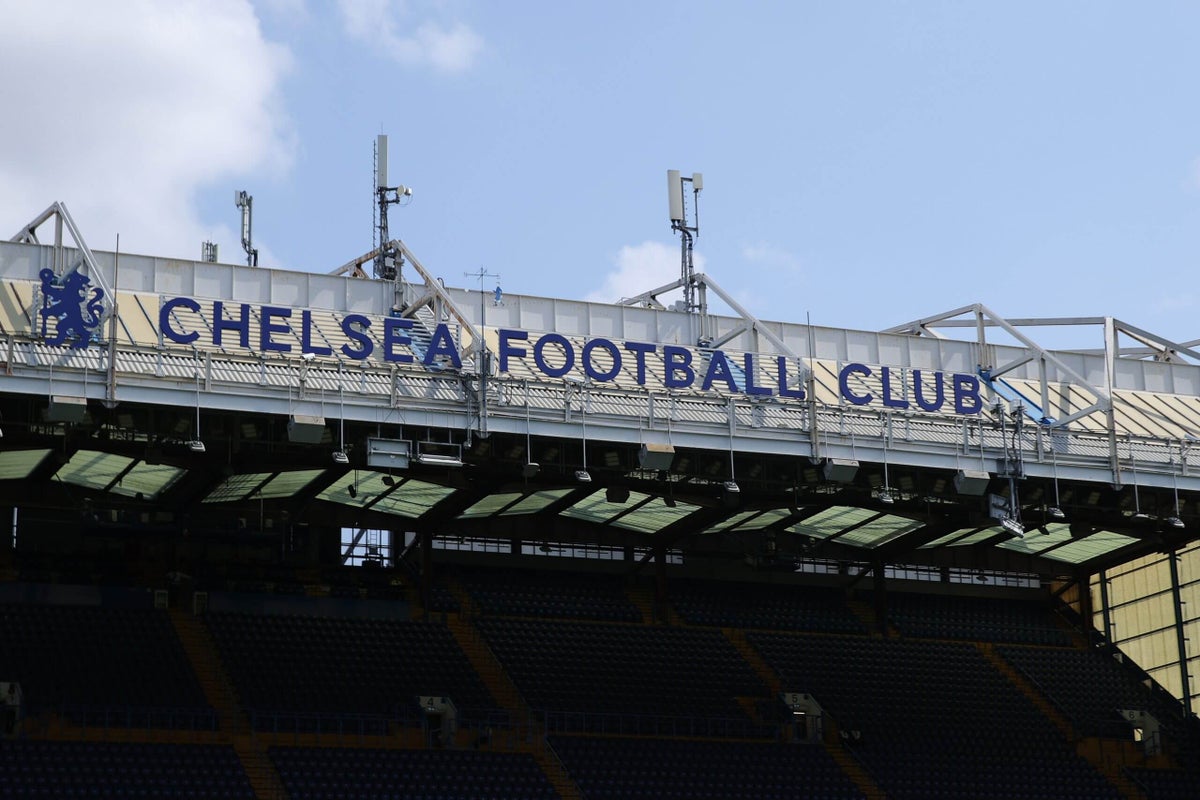
Премьер лигийн Челси клуб өөрийн нэршлийг хууль бусаар ашигласан хэмээн үзэж, Челси АИ Вентурес компанид албан ёсны шаардлага хүргүүлсэн байна.
Наймдугаар сарын 13-нд илгээсэн уг бичигт Челси клуб өөрийн брэнд болон барааны тэмдгийн эрхийг хамгаалах үүднээс тус компаниас нэрээ өөрчлөх, өнгөний схемээ солих, вэб домэйн нэрээ шилжүүлэн өгөхийг шаарджээ. Челси АИ Вентурес компанийн үүсгэн байгуулагч Бен Ауффарт нь тус нэршил нь зөвхөн хөлбөмбөгийн клубээр хязгаарлагдахгүй, газар зүйн байршил илэрхийлдэг болохыг онцлон эсэргүүцсэн байна.
Хуулийн мэргэжилтнүүдийн зүгээс уг асуудлыг брэнд эзэмшигчид өөрсдийн нэр хүндээ хамгаалах оролдлого гэж дүгнэж байгаа ч томоохон байгууллагууд жижиг бизнесүүдэд дарамт үзүүлэх эрсдэлтэйг анхааруулжээ. Хэдийгээр талууд шүүхийн маргаанд хүрэх эрсдэлтэй байсан ч эцэст нь Бен Ауффарт нэршлээ дангаар нь ашиглахгүй байх, өнгөний хослолоо өөрчлөх тохиролцоонд хүрч, асуудлыг шийдвэрлэсэн байна.
Энэхүү үйл явдлын дараа Челси клуб тайлбар өгөхөөс татгалзсан юм. Өмнө нь Ливерпүүл зэрэг томоохон клубууд хотын нэрээ барааны тэмдэгтээр бүртгүүлэхээр оролдож байсан ч олон нийтийн эсэргүүцэлтэй тулгарч байсан тохиолдлууд гарч байв.
Дэлгэрэнгүйг эх сурвалжаас харах
↓Эх сурвалжийг нээх ↓
Hiring the best available manager, buying a reliable goalkeeper, making a profit on Enzo Fernandez. Chelsea Football Club have got a lot right recently.
But there was a moment last week when it looked as if they might be about to score a public relations own goal of epic proportions.
Thankfully, common sense prevailed and Chelsea swerved the risk of joining Victoria Beckham, Iceland Foods and Liverpool FC, among others, in future listicles of famous losers in trademark disputes.
If you have no idea what I am banging on about, neither did Ben Auffarth when he received a letter, via email, on August 13 from intellectual property protection specialist Abion.
Auffarth is a British-German computer scientist who lives in the Hammersmith area of west London. In early 2025, he founded Chelsea AI Ventures, a small business that makes bespoke software for companies. Its office is a mile, as the crow flies, from Stamford Bridge, Chelsea’s home stadium.
Abion was writing on behalf of its client, Chelsea Football Club Limited, or, as it put it, “the company behind the world-famous Chelsea Football Club (known simply as Chelsea) founded in 1905”. This Chelsea, it continued, are the Club World Cup champions and play in the Premier League.
British-German computer scientist Ben Auffarth (Image courtesy of Ben Auffarth)
Having established which Chelsea it was talking about, Abion went on to explain its client has spent a lot of effort, money and time establishing its brand, which is protected by “an extensive global portfolio of trademarks”. The details of these trademarks were listed in a 19-page annex to the email and make for interesting reading.
It will probably not surprise you to learn that the club have protected the trademark “Chelsea FC” across almost every area of human activity. But it surprised me to learn that it has also protected “Chelsea” across a range of goods and services that start with the obvious — football kit, merchandise and schools — but extend to fire extinguishers, magnifying glasses and, crucially, software.
The letter underlines that last point before getting to the heart of the matter: Auffarth’s use of “Chelsea” in the name of his company.
“By using CHELSEA AI VENTURES, you are using a sign that reproduces our client’s earlier CHELSEA rights followed by the elements AI VENTURES, which are descriptive of the AI-related goods and services provided under the sign and, as such, are non-distinctive,” it stated.
The letter said that the company’s name including the word ‘Chelsea’ so prominently made it “highly similar” to Chelsea FC’s brand. It argued that “the average consumer” could become confused between the two or believe the club and firm were linked.
In other words, Chelsea thought Auffarth’s customers — financial services companies, online travel agents, e-commerce sites — might think they were buying fraud-detection software off Cole Palmer and his colleagues in the squad down the road from him at Stamford Bridge.

Cole Palmer – not a fraud-detection software provider (Justin Setterfield/Getty Images)
The letter continued to say Auffarth may also be breaking the law by trying to “take unfair advantage of and free-ride on” the club’s brand. As an example of this, it notes that his firm’s website has a blue-and-white colour scheme, as do the Chelsea team.
Having listed the “unacceptable” grievances, Abion spelt out the remedy: agree to the terms in the second annex to the email by August 27 or face legal action.
Those terms? Do not apply for or register any trademark, domain name or sign that incorporates Chelsea, Chelsea AI Ventures or “any confusingly similar sign”; change the colour scheme and cease all use of Chelsea and Chelsea AI Ventures within a month; file an application to change the firm’s name at Companies House, the UK’s registrar of companies, within two months; and, within three months, transfer the www.chelseaai.co.uk domain name to the club without charge.
Auffarth would then have 14 further days to provide written confirmation he had taken all these steps.
Fail to do all of this, and he would have to accept that Chelsea Football Club Limited “shall be entitled to seek all available relief, including injunctive relief, damages or an account of profits, delivery up/destruction of infringing materials and legal costs”.
Auffarth’s first response was to share the news on LinkedIn. A post on the company’s page said it had just received a “cease and desist” letter from Chelsea’s lawyers, despite never using “Chelsea as a standalone brand” or claiming to have any association with the club. “We’ll have more to say once we’ve taken legal advice,” it added.
But, in a repost on his own LinkedIn page, Auffarth wrote: “Isn’t it surprising that Chelsea FC maintains a trademark on hundreds of different goods and services, including software? For the record: we’re (an) AI technology/venture business. We’ve never used any branding related to Chelsea Football Club, wouldn’t that be absurd?”
Among the responses to this post were suggestions there might be a business opportunity for him down the line in creating software that uses AI to write strongly-worded legal threats.
But Auffarth, who is among our subscribers, also reached out to The Athletic.
“Chelsea is a place as well as a football club, and ‘Chelsea’ has long been used by organisations with no connection to Chelsea FC to identify businesses, institutions and events associated with the area,” he said, before listing the annual Chelsea Flower Show and Royal Hospital Chelsea’s red-coated Chelsea Pensioners as examples.

The Chelsea Pensioners are British army veterans who live at Royal Hospital Chelsea in that area of London (Justin Setterfield – UEFA/UEFA via Getty Images)
Auffarth raised the infamous example of the Iceland v Iceland Foods dispute that started in 2002, when the British supermarket chain, which specialises in frozen foods, applied to the European Union Intellectual Property Office (EUIPO) to claim ‘Iceland’ as a trademark.
The country of Iceland, the land of fire and ice, objected, but the supermarket got its way in 2014.
A year later, however, an Icelandic government agency applied for an EU trademark for the phrase “Inspired by Iceland” — the idea was that it could be used to promote a range of products from the island. Iceland Foods objected.
This caused anger in Iceland, with the government filing an application at the EUIPO in 2016 to revoke the supermarket’s trademark, as it was too ambiguous. The EUIPO eventually granted this demand, with its ruling noting that a chain founded in 1970 “cannot reasonably trademark the name of a country that has been around since the ninth century”. The supermarket challenged this ruling twice, but failed both times.
There have been two more relevant disputes in recent years.
The first came in 2019, when Liverpool FC tried to trademark ‘Liverpool’ at the UK Intellectual Property Office. The club said it was an attempt to crack down on counterfeit merchandise, but the UK IPO said they could not trademark the name of a city. The decision was widely greeted by local businesses, politicians and even many Liverpool fans. The club accepted the decision.
There was another example on the other side of the Atlantic earlier this year, whenthe U.S. Patent and Trade Mark Office rejected the A’s request to trademark the names “Las Vegas Athletics” and “Vegas Athletics” ahead of the baseball team’s move from Oakland in California to the Nevada city. The rationale for the rejection was that the trademarks are too “generic” and “geographically descriptive”.
But the franchise does have a trademark for its former name, the “Oakland Athletics”, so the real issue is that the A’s have not been playing in Las Vegas long enough (the move isn’t scheduled to be complete until 2028) to claim consumers will automatically know that “Las Vegas Athletics” applies to them, as opposed to any other sports team based there.
And the reference at the beginning of this piece to Victoria Beckham is that the former pop star tried to block lower-league football club Peterborough United’s attempt to trademark their long-standing ‘Posh’ nickname in 2002, with the Spice Girl claiming she was the more famous ‘Posh’ of the two. That may have been true at that particular moment, certainly in particular circles, but the club, currently in third-tier League One, got there first and won that particular row.
OK, back to our central storyline.
“I just might have to cede the name and the website domain I’ve spent effort and money building,” continued Auffarth, noting the contrast in resources between the parties in his dispute.
“But the question this raises is: at what point does protecting a football club’s brand become an attempt to control the use of the place name itself? Isn’t their trademark intended to stop unofficial merchandise or to protect their brand from marketplace confusion? What gives them the right to monopolise a descriptive geographic term that tells consumers where a product comes from?”
Good questions, we thought, so we put them to two independent experts.
Colin Bell, head of intellectual property and technology at British law firm Brabners, explained how Chelsea FC had initially managed to register their trademarks in the EU. These trademarks were then automatically registered in the UK following Brexit.
“It does not appear the EUIPO raised an objection based on the fact that Chelsea is a geographic location,” Bell said. “This may be due to a lack of knowledge of London or because the examiner was aware of Chelsea Football Club and considered it had sufficient distinctiveness.”
He added that the UK IPO may have come to the same conclusion it made in the Liverpool case if it had dealt with the applications in the first place.
“That said, Chelsea FC would argue they have acquired distinctiveness in the mark Chelsea on its own, as they have a global audience and are known by the name Chelsea on its own,” Bell said, before explaining it is “not unreasonable” for the owner of a trademark to try to enforce its rights.
“While it can seem like ‘bullying’ where the alleged infringer is a small local company, it is important for rights holders to seek to enforce their rights so they are not diluted or weakened,” he said.
“However, trademark owners can often overreach with infringement claims, which can then be defended. While Chelsea FC have larger pockets to bring such claims, there are specialist courts which would be the appropriate forum for such a claim, with limits on cost recovery, making it more affordable to defend overreaching claims.
“There is an argument that the goods and services for which the Chelsea FC trademarks are registered are not identical or similar to the services which Chelsea AI Ventures Limited provide, so it is possible Chelsea FC might fail on a claim of infringement on this basis.”
But Bell explained that trademark owners can also stop third parties from using a similar name to their registered mark, regardless of the goods or services it covers, if the third party is trying to take “unfair advantage” of the trademark’s reputation or damages its “distinctive character”. This is the “free ride” point Abion raised.
“There are, again, a number of difficulties with such a claim,” he said, pointing out that Chelsea FC would need to prove their case, which usually requires evidence of economic impact. The use would have to be without “due cause”, which might be a hard argument to win, given Chelsea AI Ventures’ address.
Jasmine Fearnley is a senior associate in the intellectual property team at British law firm Mills & Reeve. She agrees with Bell on the background but has a firmer view on the merits of the case.
“This is a classic example of a brand owner trying to monopolise the use of the name of the geographical area they operate in — we see it regularly, across all sectors,” she said.
“In my view, this is also an example of a high-profile brand potentially overreaching with their rights. I would be surprised if Chelsea had strong concerns over there being a likelihood of confusion between the club and Chelsea AI Ventures to form the basis of an infringement claim, or that the company is taking unfair advantage of the club’s reputation.
“Chelsea is a geographical name, and its use can’t be monopolised across all products, services and sectors. The word Chelsea is, of course, synonymous with the club in a football context, so the club will have enhanced rights for sporting services, merchandise and so on. But that doesn’t mean they have enhanced rights for software.”

Chelsea’s Stamford Bridge home stadium in west London (Jonathan Brady/PA Images via Getty Images)
But it is Fearnley’s next point that really resonated.
“High-profile brand owners always need to consider how their cease-and-desist demands might impact their reputations if they were to become known to the wider public,” she said.
“It’s often better to avoid the risks and consequences of a David-versus-Goliath narrative unless the other side’s conduct, and the commercial threat they pose, justifies that approach.
“If a high-profile brand owner has concerns around confusion in the marketplace, it’s always an option for them to reach out to the other side to see if they can find ways to address them. In the Chelsea context, it could have been a request to change the colour scheme rather than a complete rebrand.”
So, how did this play out?
Auffarth’s lawyer wrote back to Abion saying he would change the colour scheme and promise never to use the word “Chelsea” on its own in any of Chelsea AI Ventures’ documents, marketing or products. That compromise was quickly accepted.
“It’s a huge relief,” said Auffarth, after he had taken a day to celebrate.
“If I’d lost the email address and domain name I’d spent months building, it could have lost me leads and business opportunities. I feel their letter was quite aggressive and potentially damaged my business, which is my livelihood.”
So all is well that ends well. And he, I and hopefully you have learned more about trademarks than any of us imagined possible.
Chelsea, the football club, declined to comment.

