Генийн засварын туршилтуудад гарсан үхлийн тохиолдлууд нь тус улсын биоанагаах ухааны салбарын хяналт болон ёс зүйн асуудлыг хөндөхөд хүргэлээ.
Хятад улсад явуулсан генийн засварын хоёр өөр эмнэлзүйн туршилтын явцад хоёр хүүхэд нас барсан нь тус салбарын хяналт, ил тод байдлын талаар ноцтой асуултуудыг үүсгэж байна. Өнгөрсөн оны гуравдугаар сард Шанхайн Жяо Тун их сургуулийн судлаач Зилонг Чиу болон Шинхуа эмнэлгийн эмч Ёнгуо Ю нарын удирдсан туршилтад орсон зургаан настай охин нас баржээ. Уг охин нь бие бялдар, оюун ухааны хөгжлийн бэрхшээл үүсгэдэг Snijders Blok-Campeau хам шинжтэй байсан бөгөөд судлаачид адено-холбоот вирус (AAV) ашиглан генийн засвар хийхээр оролдсон байна.
Шинжлэх ухааны нийгэмлэгүүдийн мэдээлснээр, тус туршилт нь ёс зүйн ноцтой зөрчлүүдтэй байсан гэж үзэж байна. Тухайлбал, судлаачид сармагчин дээр хийсэн хор судлалын туршилтаар элэгний гэмтэл илэрсэн нотолгоог авснаас нэг сарын дараа охинд эмчилгээ хийсэн нь тогтоогджээ. Түүнчлэн, Зилонг Чиу өвчтөний гэр бүлтэй шууд харилцсан нь ашиг сонирхлын зөрчил үүсгэсэн гэж мэргэжилтнүүд шүүмжилж байна.
2025 онд Шанхайд байрладаг HuidaGene Therapeutics компани өөрийн явуулсан генийн засварын туршилтын үеэр нэг хүү нас барсан талаар зарлажээ. Дюшенний булчингийн дистрофи өвчнийг эмчлэх зорилготой уг туршилтад оролцсон хүү амьсгалын цочмог дутагдлын улмаас нас барсан байна. Компанийн зүгээс тухайн үед хэрэглэсэн вирусийн тун нь бусад туршилтуудтай ижил түвшинд байсан бөгөөд аюулгүй байдлын хорооноос зөвшөөрөл авсан гэж мэдэгджээ.
Эдгээр тохиолдлууд нь Хятадын “судлаачийн санаачилгаар явагддаг” (IIT) хурдавчилсан туршилтуудын хяналтыг чангатгах шаардлагатай байгааг харуулж байна. Хэдийгээр засгийн газар тавдугаар сараас эхлэн хяналтаа нэмэгдүүлсэн ч эрдэмтэд, ёс зүйчид болон хуульчид генийн эмчилгээний салбарын журамд илүү хатуу шаардлага тавих шаардлагатай гэж үзэж байна.
Дэлгэрэнгүйг эх сурвалжаас харах
↓Эх сурвалжийг нээх ↓
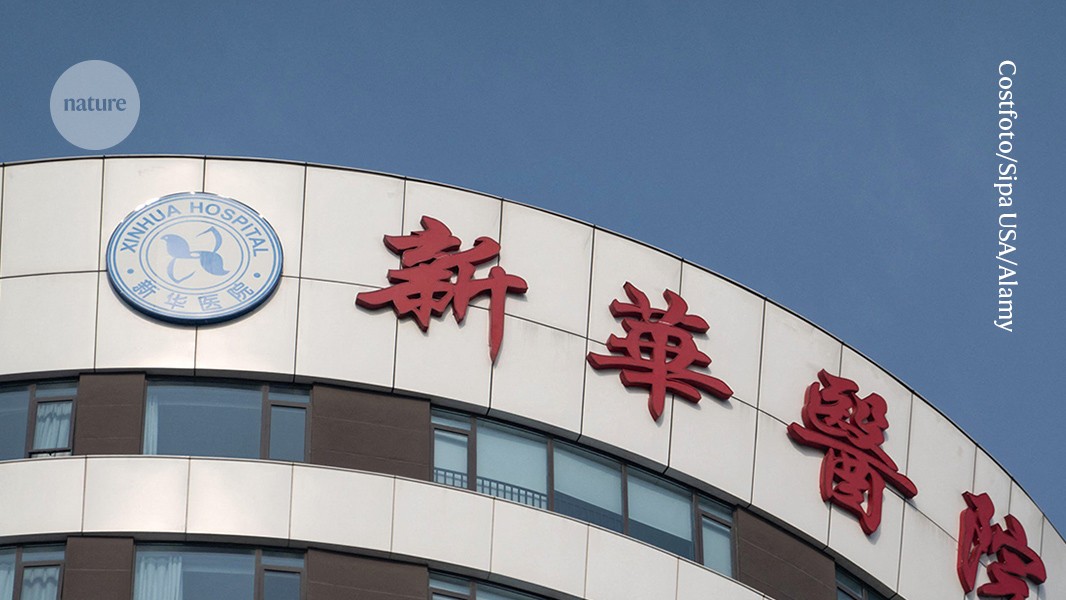
Xinhua Hospital in Shanghai, China, hosted one of the gene-therapy trials that led to the death of a child last year.Credit: Costfoto/Sipa USA/Alamy
The deaths of two children in separate gene-editing trials in China raise serious questions about oversight and could have a profound effect on the country’s biomedical industry, say researchers, ethicists and legal scholars.
On 5 August, a Shanghai-based gene-editing company, HuidaGene Therapeutics, announced that a young boy had died during one of its trials in 2025. And in July, an investigation by Science and Retraction Watch revealed that a six-year-old girl had died in March last year after receiving a different experimental gene therapy. That trial was pioneered by neuroscientist Zilong Qiu at Shanghai Jiao Tong University and clinician Yongguo Yu at Xinhua Hospital, also in Shanghai. On 26 July, the university announced an investigation into the trial and a related preclinical study the researchers had published in Nature1. The university did not respond to Nature’s questions about the investigation.
Gene therapies can have serious side effects, including severe immune reactions that cause death2. At least a dozen people have died in clinical trials of such therapies in the United States, Europe and Russia over the past three decades.
Researchers say the two trials in China involved breaches of ethics and lacked transparency. “This will do or has done great damage to the credibility of Chinese institutions,” says Joy Zhang, a sociologist of science at the University of Kent in Canterbury, UK.
The trials also put a spotlight on China’s fast-track clinical trials, called investigator-initiated trials, just as the government seeks to reign them in. IITs allow researchers to test therapies quickly without supervision from the country’s drug regulator, although the government increased oversight of these trials in May.
Regulations for gene-therapy trials will probably be strengthened in response to the deaths, says Jiayou Shi, a lawyer at the National Research Center for Civil and Commercial Law at Renmin University of China in Beijing. Zhang thinks the Chinese government might even halt gene-editing research or put stricter requirements on funding.
The government has been quick to act on similar incidents in the past. When Chinese biophysicist He Jiankui went against research ethics and Chinese regulations by conducting experiments that produced gene-edited babies in 2018, the government strengthened laws around this kind of editing and He was sentenced to three years in prison. But whereas He is considered a “rogue scientist”, Zhang says, Qiu is a successful scientist and an influential science communicator.
Ethics breach
According to Science and Retraction Watch, which used pseudonyms for the girl in Qiu’s trial and her parents, the girl had a defect in a gene called CHD3. The mutation caused Snijders Blok–Campeau syndrome, the symptoms of which include physical differences and impaired intellectual development. Qiu and his colleagues used a type of gene editing to correct the mutation; the therapy was carried by an adeno-associated virus (AAV), which was injected into the spine and then travelled to the brain.
The research and medical team committed several “egregious wrongs”, says Fyodor Urnov, who studies molecular therapeutics, including gene-editing therapies, at the University of California, Berkeley. For instance, Qiu reportedly corresponded directly with the family, which is a conflict of interest given that he developed the treatment. Qiu did not respond to Nature’s questions about this.
What’s more, according to Science and Retraction Watch, the researchers received results from a toxicology study in monkeys, in which all four animals sustained liver damage from the treatment. A month after they received this evidence of harm, they gave the therapy to the girl at Xinhua Hospital. Urnov says the trial should not have gone ahead if the therapy showed evidence of harm in animals.
Neither Qiu nor Yu responded to Nature’s requests for comment about the toxicology studies.
The girl had mild symptoms, says Philippe Campeau, a medical geneticist at the University of Montreal in Canada who helped to characterize Snijders Blok–Campeau syndrome, throwing into question the decision to make her the first person to receive a potentially risky treatment.
The girl’s death has parallels to that of US teenager Jesse Gelsinger, who in 1993 became the first person to die in a gene-therapy trial3, says Hank Greely, a legal scholar at Stanford University in California who studies the ethics of new biotechnologies. Gelsinger had a metabolic disorder that stops the body eliminating the waste product ammonia but, as with the Chinese girl, his condition was not life-threatening, says Greely.
Gelsinger’s death continues to inform safety considerations for gene-therapy trials, says Urnov. The US Food and Drug Administration barred the lead investigator from leading clinical trials for five years and the University of Pennsylvania in Philadelphia, which ran the trial, agreed to pay a settlement to the Gelsinger family. The FDA also introduced new rules to increase the safety of participants in gene-therapy trials.
“The field has come a long way since that tragedy, but that doesn’t mean the field is perfect,” says Urnov.
Another criticism of Qiu is that he co-authored a preclinical study showing that the gene therapy worked in mice with the same genetic defect, but which did not mention that the therapy had been tested in the girl who later died. Although the preclinical study was submitted to Nature in December 2024, before the trial, the paper wasn’t accepted for publication until January, five months after the girl died. Campeau, who reviewed the study for Nature, says that at no point did the manuscript mention that the therapy had been tested in a person who had died.
On 29 July, Nature issued an editor’s note saying that concerns had been raised about the article and were being investigated. (Nature’s news team is editorially independent of the team that publishes research manuscripts, and of its publisher, Springer Nature.)
Following the editor’s note, Victoria Aranda, deputy editor at Nature, says that no information that a human trial was planned or ongoing was ever shared with the journal, nor was any data related to human therapy shared or mentioned in any version of the submitted study. “We would like to stress that we take concerns very seriously and are committed to acting as quickly as possible, whilst still ensuring that a robust and comprehensive investigation is undertaken,” Aranda says.
Qiu did not respond to Nature’s requests for comment about the trial or the paper.
Second trial
HuidaGene’s trial involved a treatment for Duchenne muscular dystrophy (DMD), a progressive and fatal genetic disorder. HuidaGene used gene editing to alter the faulty gene responsible; as with Qiu’s trial, the therapy was carried into the body by an AAV.
Four children were enrolled in the trial. The boy who died was the final person enrolled, the company said. He died from acute respiratory distress syndrome, a side effect of the therapy.
Because DMD can be fatal, the ethical case for trying out a treatment with substantial risk is stronger than in the Qiu case, says Lizzi Lee, who studies China’s economic and technological policies at the Asia Society Policy Institute think tank in New York City.
But Shi says there were problems with the HuidaGene trial, too, including the high dose of the AAV-based therapy given to the boy who died. High doses of AAVs in other gene therapy trials have been linked to serious complications and even death4,5,6.
Fangxin Li, HuidaGene’s general manager for China, told Nature that the safety of AAV-based therapies cannot be determined by the dose alone, and the specific viral vector used, the disease, and route of administration are some of the factors that should be considered. Li says the dose was similar to that given in two other trials of gene therapies for DMD in children, and to an approved gene therapy for spinal muscular atrophy. The dose was only administered to the boy after safety information for a lower dose was approved by the trial’s safety review committee and information about another participant – the first in the trial to receive the high dose – was reviewed, says Li. Neither the first high-dose participant nor the two boys who received a lower dose developed the same symptoms, and all three are still being monitored, says Li.

