Шведийн Уппсала хотын ойролцоох эртний булшнаас олдсон шонгийн эгнээ нь готчууд тэнгэрийн эрхсийн байрлалыг ашиглан тахилгын үйл ажиллагаагаа зохицуулдаг байсныг харуулж байна.
Шведийн Уппсала хотын хойд хэсэгт орших 2500 гаруй жилийн настай эртний булшны орчимд хийсэн малтлагаар одон орон судлалын нарийн тооцоолол бүхий хуанлийн систем илэрчээ. Астрофизикч Горан Хенрикссоны судалгаагаар, эртний готчууд нар болон сарны хөдөлгөөнийг ашиглан найман жилийн давтамжтай томоохон тахилгын өдрүүдийг тогтоодог байсан нь тогтоогдсон байна. Археологийн малтлагаар олдсон 850 метр болон 600 метр урт хоёр эгнээ шон нь сарны мандах цэг болон хоёрдугаар сарын 6-8-ны хооронд нарнаас тусах сүүдрийг ажиглахад зориулагдсан байжээ.
Судлаачийн үзэж байгаагаар, эртний готчууд сарны үе шатыг зургаан оронтой нарийвчлалтайгаар хэмждэг байсан нь тухайн үеийн шашны зан үйлд одон орон судлал хэр чухал байсныг илтгэнэ. Тэдний хувьд сар нь шүтээний гол бурхан байсан бөгөөд тахилгын эхлэх өдрийг нэгдүгээр сарын 28-наас хоёрдугаар сарын 26-ны хоорондох тэргэл сарны байрлалаар тодорхойлдог байжээ. 852 оноос эхлэлтэй энэхүү мөчлөг нь тухайн үед католик сүм хийдийн ашиглаж байснаас илүү нарийвчлалтай хуанли байсан гэж үзэж байна.
Мөн 450-1100 оны хооронд хамаарах завь хэлбэрийн булшнууд нь тахилгын үеийн тэргэл сарны мандах зүг чигийг баримжаалан байрласан нь тогтоогдсон байна. Энэхүү нээлт нь эртний готчуудын одон орон судлалын мэдлэг болон шашны зан үйл хоорондоо нягт холбоотой байсныг баталж байгаа юм. Хэдийгээр тухайн үеийн газар зүйн байрлал өнөөгийнхөөс өөр, тэнгисийн түвшин 19.5 метрээр өндөр байсан ч тэдний ажиглалтын аргачлал өндөр нарийвчлалтай байсныг судалгаа харуулж байна.
Дэлгэрэнгүйг эх сурвалжаас харах
Эх сурвалжийг нээх ↓
On a mostly flat plain an hour north of Stockholm lies a collection of large burial mounds dating from an ancient culture at least 2500 years old. These people were not Vikings; they were northern Germanic Goths, pagan polytheists worshiping the precursors of Odin, Freyr and Thor.
In truth, this ancient subgroup of Goths could probably have cared less about astronomy as we know it today. Yet inexplicably they were driven to make precise measurements of the Sun and Moon. They were obsessed with precisely timing nine days of gruesome midwinter human and animal sacrifices. Despite such barbarism, they apparently believed that if they did not make these great midwinter sacrifices every eight years, the following eight years might bring catastrophe.
The sacrifices usually began at the height of winter between February 6 through 8. And at least one contemporary Swedish astrophysicist claims to have found these Goths’ sacrificial calendar.
I have discovered the calendar that regulates the dates for the Grest Midwinter Sacrifice that took place every eight years, Goran Henrikson, an astrophysicist and former lecturer at Uppsala University in Sweden, tells me in Uppsala. In 2014, archeologists discovered two long rows of poles that marked the northern limit for the rising of the full Moon and the direction to the rising Sun when it was time to start a sacrificial cycle, Henricksson tells me.
The sacrifice at Old Uppsala took place every eighth year; the starting date was defined by the full Moon that occurred between 28 January and 26 February in the Gregorian calendar, Henricksson writes in a paper given at the 2014 meeting of the European Society for Astronomy in Culture. By combining historical data and calculations of the dates of full moons, Henricksson has established the exact years of the eight-year cycle with one such cycle beginning in 852 A.D.
The Burial Mounds north of Uppsala, Sweden. Credit: Bruce Dorminey
As for today?
Uppsala is a contemporary Swedish city only a short distance from Arlanda international airport. But walking through these hills on a windy July afternoon, one can only imagine Visigoth culture as it once was. These people obviously had an appreciation of the natural world — including the celestial sphere — that completely eludes us at present.
Royal Burial Mounds
Three ‘royal’ burial mounds have been dated to 450-550 A.D. and oriented in such a way that they could have been used to regulate the sacrificial calendar, Henricksson writes. During archeological excavations in 2013, two long rows of postholes were discovered, he writes.
An 850-meter-long row was oriented towards the northern limit for the rising midwinter full Moon on the earliest date, Henricksson notes in his paper. And the approximately 600-meter-long row was oriented towards the rising Sun on the 6th through the 8th of February, he writes.
In fact, this sacrifice took place according to an eight-year cycle determined by the phases of the Moon which they could measure to six digits of accuracy. For a period of nine days, one man and seven male domestic animals were sacrificed. And when the sacrifices were complete, one could see altogether 72 bodies hanging upside down in a holy tree.
Incredibly, these burial mounds, which today are surrounded by at least a hundred square miles of flat plain, were at the time less than half a mile from what we now call the Baltic Sea. At that time, local sea level was 19.5 meters higher than today.
The rays of the Sun were reflected in the sea on both sides of the posts, and the shadows from the posts were aligned with the row, Henricksson writes. It was a magnificent and very precise way to determine the correct date for the great midwinter sacrifice, he notes.
A Precision Calendar
They had a very sophisticated calendar here, says Henricksson. The poles determined very accurately when it was full Moon and when the Sun was rising along this 600-meter-long row of poles, and when they should start the next great sacrifice, he says.
These Goths thought that it was necessary to make sacrifices to the gods to ensure order and good times for another eight years. And, ironically, they had a more precise calendar than the Catholic Church did hundreds of years later.
Above all, despite their strange behavior, it’s arguably their religious beliefs and an afterlife that drove their quest for precision calendrics.
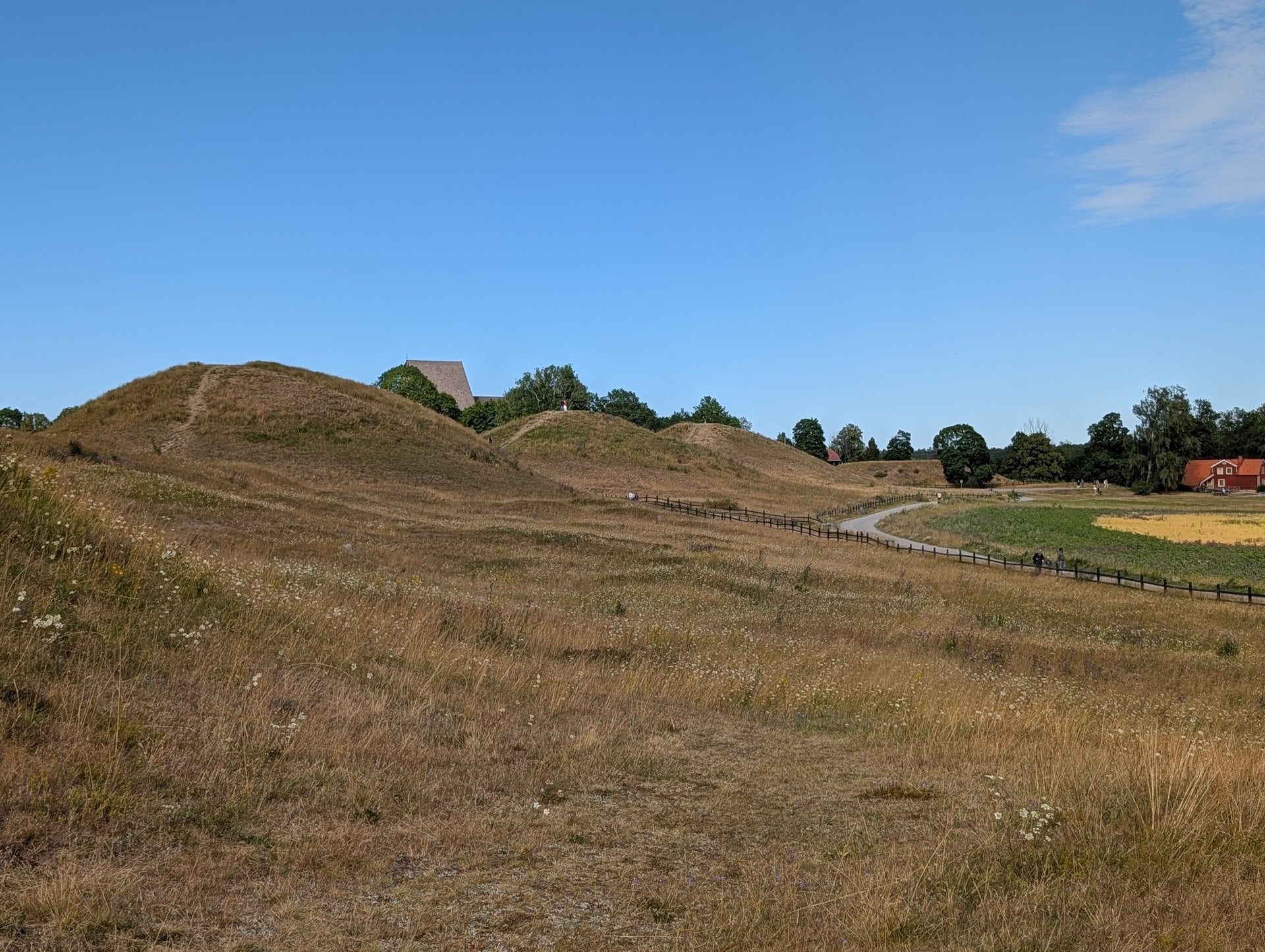 The three royal burial mounds north of Uppsala. Credit: Bruce Dorminey
A preliminary investigation shows that the boats are oriented towards the rising full moon of the Great Midwinter Sacrifice in the eight-year cycle, Henricksson writes in his paper. The most remarkable type of grave contains a warrior with full equipment, including a horse, buried in a boat, he notes. Fifteen such boat-graves from 550-1100 A.D. have been investigated, he writes.
They wanted their dead chieftains to have everything they thought would be needed in an afterlife including a horse, dogs and even a complete kitchen, says Henricksson.
But why did they orient it toward the Moon?
The Moon was very important to them; it was a Goth god, says Henricksson.
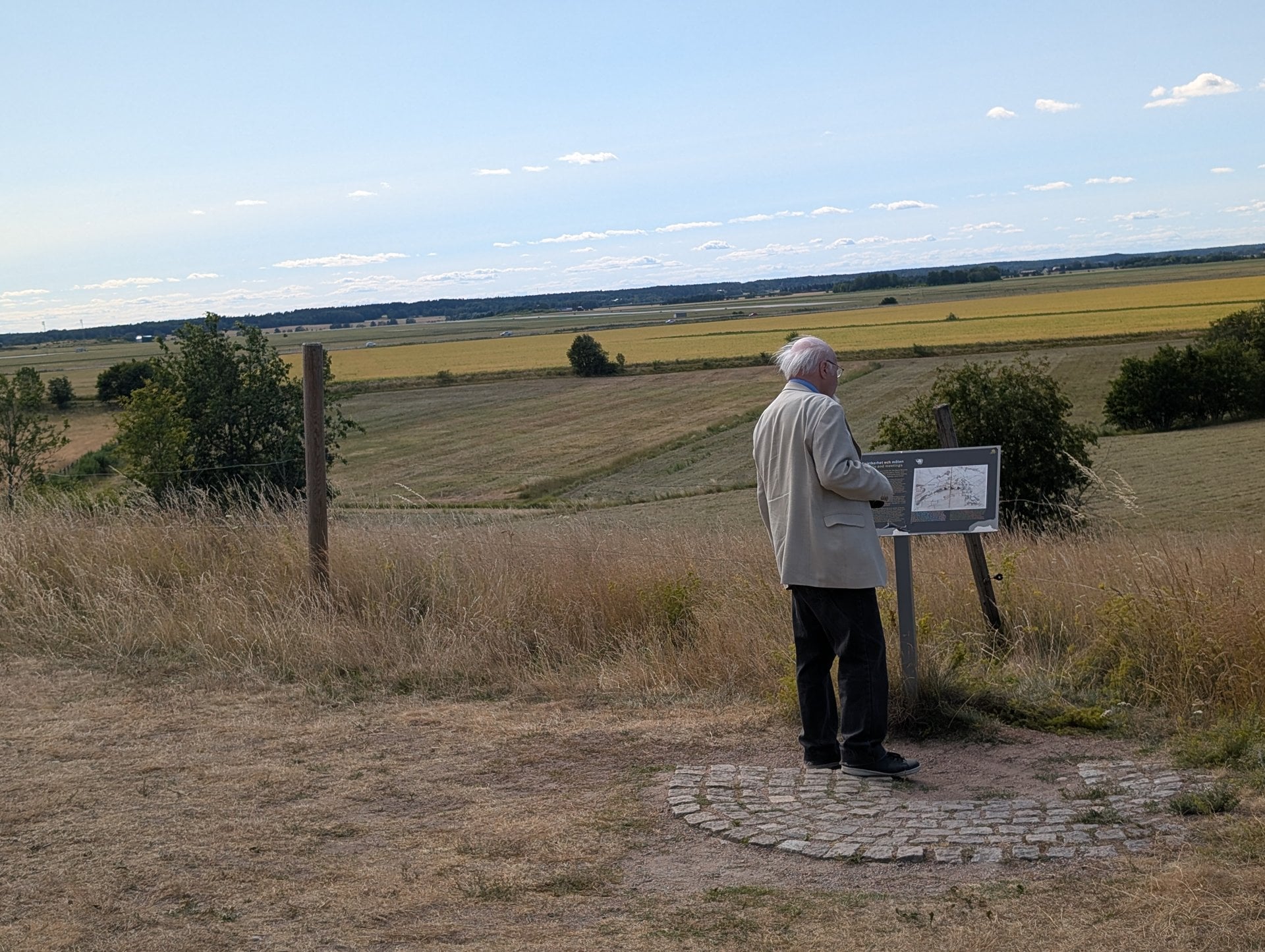 Goran Henricksson looking out onto the plain surrounding the ancient Goth burial grounds. Credit: Bruce Dorminey

