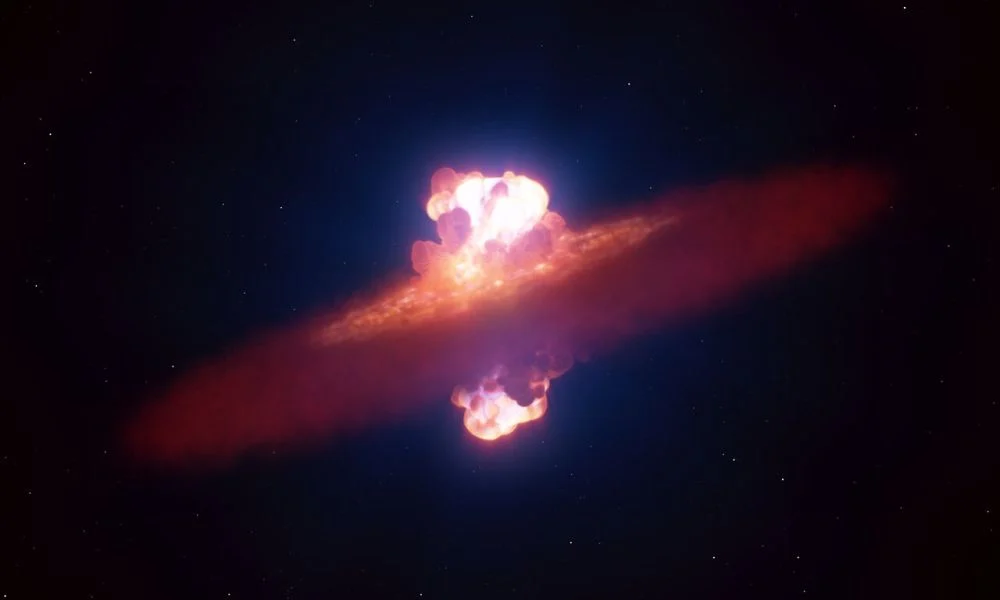
Олон улсын судлаачдын баг 2884 супернова дэлбэрэлтийг багтаасан хамгийн том мэдээллийн санг бүрдүүлснээр орчлон ертөнцийн тэлэлтийг хурдасгадаг харанхуй энерги тогтмол шинж чанартай эсэхэд эргэлзээ төрүүлж эхэллээ.
Квинсландын их сургуулийн эрдэмтдээр удирдуулсан олон улсын баг 30 жилийн хугацаанд хийгдсэн одон орны ажиглалтууд болон 2024 онд хэвлэгдсэн Dark Energy Survey (DES) төслийн мэдээллийг нэгтгэн, 1а төрлийн супернова дэлбэрэлтийн хамгийн өргөн хүрээтэй мэдээллийн санг бүтээжээ. Судлаачид хуучин ажиглалтын өгөгдлийг орчин үеийн аргачлалаар дахин боловсруулж, сансрын тоос болон таталцлын линзийн нөлөөллийг тооцоолон нэгдсэн системд оруулсан байна.
Эдгээр дэлбэрэлтийг ашиглан сансрын алслалтыг хэмждэг бөгөөд энэхүү шинэ судалгаагаар харанхуй энерги нь урьд өмнө таамаглаж байсанчлан тогтмол бус, цаг хугацааны явцад өөрчлөгддөг байж болзошгүйг харуулжээ. Энэхүү дүгнэлт нь стандарт сансар судлалын загвар болох Lambda Cold Dark Matter (ΛCDM) загварын таамаглалыг сорьж байгаа юм.
Тус багийн ахлагч Райан Камиллери болон профессор Тамара Дэвис нарын тэмдэглэснээр, энэхүү үр дүн нь James Webb Space Telescope болон Dark Energy Spectroscopic Instrument (DESI) төслүүдийн олж илрүүлсэн харанхуй энергийн хувьслын шинж тэмдгүүдтэй нийцэж байна. Эрдэмтэд харанхуй энергийн мөн чанарыг ойлгох нь таталцлын хүч болон квант физикийг нэгтгэн тайлбарлах онолын том алхам болно хэмээн үзэж байна.
Дэлгэрэнгүйг эх сурвалжаас харах
Эх сурвалжийг нээх ↓
After decades of observations, an international effort led by researchers at the University of Queensland’s School of Mathematics and Physics (UQ-SMP) has created the largest-ever dataset of supernovae. The dataset includes information on 2,884 Type 1a supernovae, a rare type that only occurs about once every 500 years. These supernovae take place in binary systems when a white dwarf draws too much material from a stellar companion (or two white dwarfs merge).
Astronomers are particularly interested in supernovae for two reasons. In addition to being one of the most energetic events in the Universe, astronomers use them to measure cosmic distances. From this, astronomers hope to gain a better understanding of Dark Energy, the mysterious force believed to be driving cosmic expansion. Based on this latest dataset, the researchers conclude that dark energy may not be constant as previously thought.
The international team was led by Ryan Camilleri, a Ph.D. candidate at the UQ-SMP, and included researchers from the U.S., UK, Australia, South Africa, Spain, and France. The dataset combines 30 years of historical measurements with data from the Dark Energy Survey (DES), published in 2024, along with other cosmological datasets.
Artist’s impression of a supernova. If two white dwarfs are massive enough when they merge, they’ll explode as a supernova. Credit: NASA
“We’ve rebuilt 3 decades of astronomical observations into a single, consistent framework,” as Camilleri said in a UQ press release. “We combined our data with other cosmic measurements including relic light from the Big Bang and maps of how galaxies are distributed through space.”
To unify the information, the international team also reanalyzed older supernova observations using modern techniques. According to Camilleri, astronomers have learned a lot about how supernovae behave, and they’ve applied that knowledge to older data. In addition, researchers have made extensive efforts to link observations from different telescopes that study the Universe across different wavelengths. The combined data also accounts for factors that can affect light from supernovae, such as cosmic dust and gravitational lensing.
The results, as noted, contradicted previously held notions that the effects of Dark Energy (aka. the Hubble-Lemaître Constant) were indeed constant. As Camilleri added:
We also incorporated more subtle effects such as gravitational lensing, which is the bending and magnification of light around large objects as it travels from a supernova to Earth. Instead of confirming the standard model of cosmology, which assumes dark energy is fixed and unchanging, we have more evidence that dark energy may change over time.
These results bolster other findings that the effects of Dark Energy vary over time. This includes new data obtained by the James Webb Space Telescope (JWST) and fresh findings from the Dark Energy Survey Instrument (DESI).
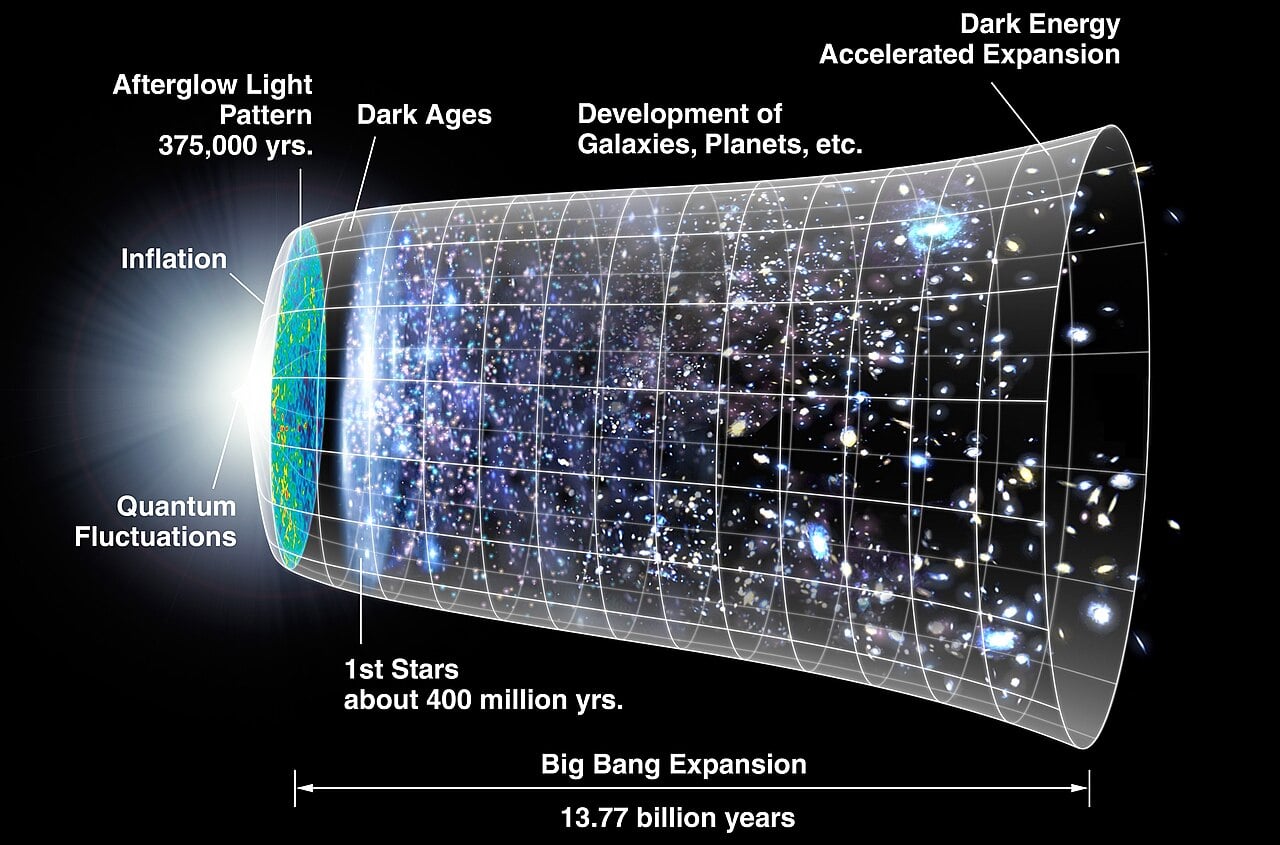 The expansion of the universe over time. Dark energy began accelerating the expansion roughly five billion years ago (Credit: NASA/WMAP Science Team)
As astrophysicist Professor Tamara Davis said, the dataset is an exciting step towards understanding the true nature of Dark Energy:
Our supernova data from DES in 2024 first showed hints that dark energy may be time-varying, and this new compilation also sees a deviation from the standard model, although in a slightly different direction. Similarly, results from the Dark Energy Spectroscopic Instrument (DESI) found hints of variations in dark energy in its surveys of relic sound waves from the early universe.
Multiple independent measurements have found evidence that the Standard Model of Cosmology – known as the Lambda Cold Dark Matter (ΔCDM) model – could be wrong. For decades, scientists have theorized that the Lambda parameter (which represents the Hubble-Lemaître Constant) was consistently pushing the large-scale structure of the Universe apart. Over the past four billion years, this expansion accelerated as galaxies move farther apart and are less subject to mutual gravitational attraction.
“All of this research may also hold the clue to explain how gravity and quantum physics fit together,” added Davis. “We know these 2 theories are each immensely successful in their own realms, so if we can figure out how to put them together, that would be a huge step in theoretical physics.”
The paper detailing their research appeared in the Publications of the Astronomical Society of Australia, while a corresponding paper detailing the host galaxy mass measurements can be found here.
Further Reading: University of Queensland

