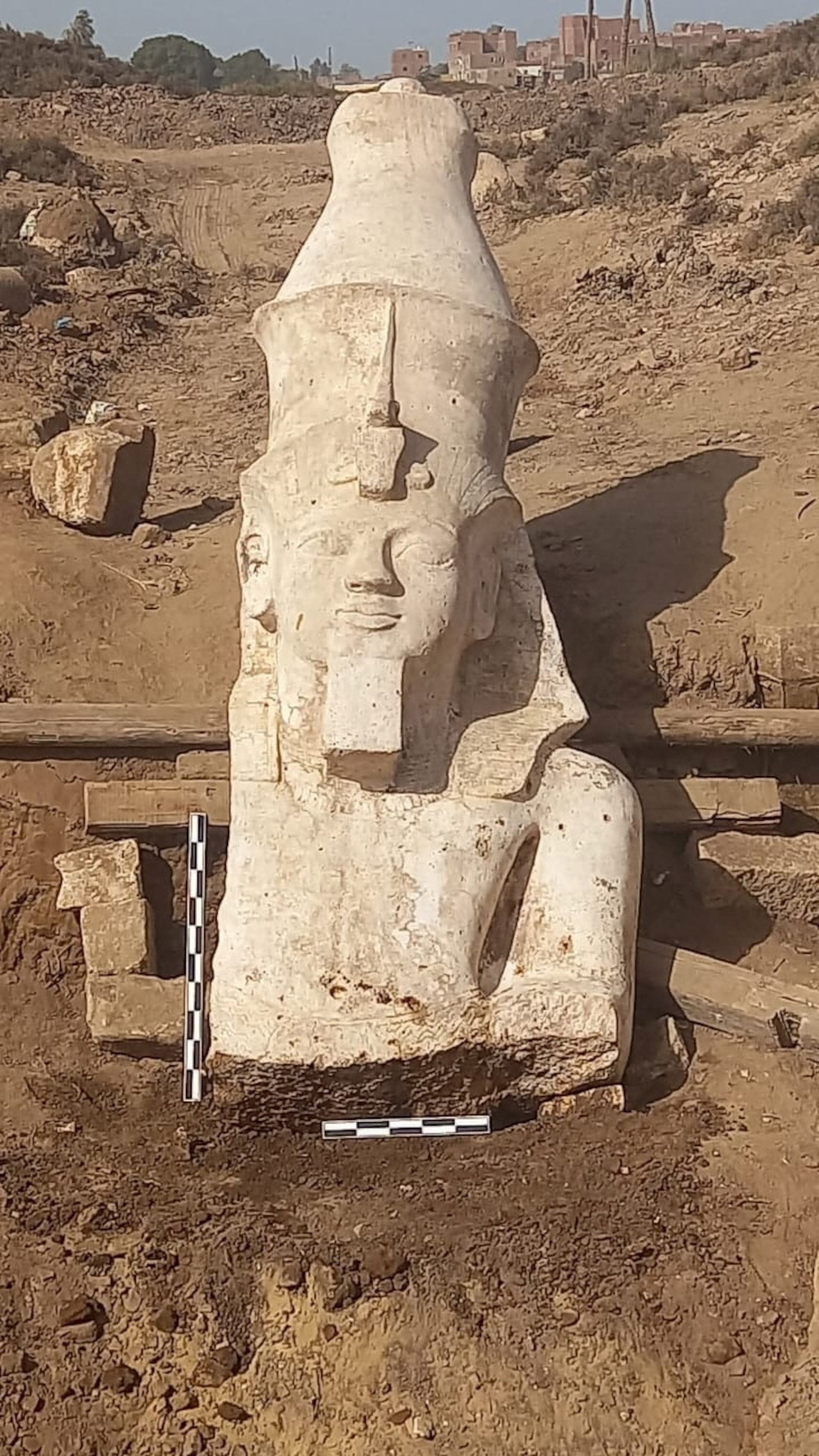
Эртний Египетийн түүхэн дэх нөлөө бүхий фараон Рамзес II-ын хөшөөний дутуу хэсгийг археологийн малтлагын үеэр олж, хоёр талыг нэгтгэх боломж бүрдэв.
Эл Ашмунейн талбайд явуулсан малтлагын үеэр судлаачид 2024 оны нэгдүгээр сард шохойн чулуугаар хийсэн фараоны хөшөөний дээд хэсгийг олжээ. Энэхүү олдвор нь 1930 онд герман археологич Гюнтер Родерын илрүүлж байсан хөшөөний доод хэсэгтэй яг таарч байгаа бөгөөд хоёр хэсгийг нийлүүлбэл нийт 23 фут өндөр болох юм.
Колорадогийн их сургуулийн сонгодог судлаач Ивона Трнка-Амрейн болон Египетийн Аялал жуулчлал, эртний олдворын яамны Басем Гехад нар уг малтлагыг хамтран удирдан явуулсан байна. Судлаачид анх фараоны хөшөө хайгаагүй бөгөөд эртний грек жүжгийн зохиолч Эврипидийн бүтээлийн папирус бичвэрийг судлах зорилгоор ажиллаж байхдаа энэхүү нээлтийг санамсаргүйгээр хийжээ.
Хөшөөний дээд хэсгийн ар талд байрлах иероглиф бичээс нь Рамзес II-ын хааны цол гуншинг илтгэж, 1930 онд олдсон доод хэсэгтэй бүрэн нийцэж байгааг баталгаажуулсан байна. Олдворын нүүрэн талд эртний цэнхэр болон шар өнгийн будгийн ул мөр хадгалагдан үлдсэн нь тогтоогдсон бөгөөд үүнд цаашид нарийвчилсан шинжилгээ хийхээр төлөвлөжээ.
Нил мөрний ойролцоох усны түвшин өндөр байгаа нь эртний чулуун олдворуудын бүрэн бүтэн байдалд сөргөөр нөлөөлөх эрсдэлтэй байсан ч энэхүү олдвор харьцангуй сайн хадгалагдсан байна. Одоогоор хөшөөний хоёр хэсгийг нэгтгэх санал гаргаад байгаа бөгөөд уг дурсгалыг хаана байрлуулах эсэх нь нарийвчилсан судалгааны дараа шийдэгдэнэ.
Дэлгэрэнгүйг эх сурвалжаас харах
↓Эх сурвалжийг нээх ↓
For nearly a century, one of ancient Egypt’s most recognizable pharaohs existed at Hermopolis Magna as half a statue. German archaeologist Günther Roeder pulled the lower portion of an enormous seated figure from the sediment at El Ashmunein in 1930, identified it as Ramesses II, and left scholars with the obvious question. Where was the rest of it?
For 94 years, the site gave them nothing.
Close to the Nile, Hermopolis had another problem. The Aswan Low Dam, completed in 1902, had raised the water table enough to reduce buried stone to rubble, meaning any surviving fragment could easily have degraded beyond recognition. The first major excavation since a British Museum dig in the 1980s wasn’t even looking for it.
Then, in January 2024, the team found the upper half face-down in the sediment. Twelve and a half feet of limestone, showing the pharaoh seated, wearing a double crown and headdress topped with a royal cobra. Reunited, the two pieces would stand approximately 23 feet tall.
A Papyrus Expedition That Turned Into Something Else
Co-leading the dig was Yvona Trnka-Amrhein, an assistant professor of classics at the University of Colorado Boulder, alongside Basem Gehad of the Egyptian Ministry of Tourism and Antiquities. Neither had come to Hermopolis for pharaonic sculpture.
Trnka-Amrhein’s way into the project was a papyrus Gehad offered her access to: 98 lines containing substantial excerpts of two lost works by the Greek playwright Euripides. After that collaboration, Gehad asked her to co-lead a broader field excavation at the site.
“We knew it might be there, but we were not specifically looking for it,” she said. “It was plausible that the rest of the statue might be there, but it was a total surprise.”
Even with the fragment out of the ground, the team couldn’t be sure what they had. The Nile’s proximity meant the stone might have deteriorated into little more than compacted sediment. “Sometimes sandstone is uncovered that is basically just sand or degraded limestone,” Trnka-Amrhein said. “It could have just been a lump of rock.”
What the Stone Preserved
As excavation continued, the pharaoh’s face appeared in remarkable condition, and the team found traces of ancient blue and yellow pigment. Gehad, a specialist in Greco-Roman period paintings, plans to analyze it. The soil mixed into the paint will be examined separately.
The match to the 1930 lower section was confirmed through hieroglyphic inscriptions on the back pillar, listing Ramesses II’s royal titles in direct correspondence with those already known from Roeder’s find.
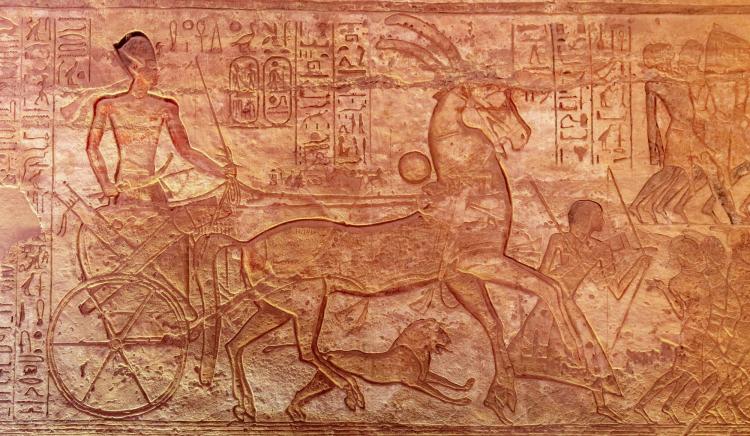
Hermopolis Magna was the ancient cult center of Thoth, god of learning, and one of Egypt’s most productive sites for Greek papyri. Over the centuries, medieval stone quarrying stripped away most of the surrounding temple complex, leaving the statue fragments among the most intact pharaonic material at the site.
Gehad has submitted a proposal to physically reunite the two halves.
Whether a reassembled statue would remain at El Ashmunein or move to a museum is not yet decided. The scientific analysis of the pigment, which Trnka-Amrhein called “quite exciting,” has not been completed.
Enjoyed this article? Subscribe to our free newsletter for engaging stories, exclusive content, and the latest news.

