Хоккайдогийн их сургуулийн судлаач Ясүхиро Иба тэргүүтэй баг 100-72 сая жилийн өмнө амьдарч байсан эртний наймаалжууд далайн хүнсний гинжин хэлхээний оргилд байсан болохыг тогтоожээ.
Судлаачид Япон болон Ванкувер арлын тунамал чулуулгаас олдсон наймаалжийн эрүүний ясыг өндөр нарийвчлалтай томографи болон хиймэл оюун ухааны тусламжтайгаар судалсан байна. Зөөлөн биетэй амьтдын үлдэгдэл ховор хадгалагддаг ч наймаалжийн хатуу эрүү нь олон сая жилийн турш бүрэн бүтэн үлджээ. Шинжилгээгээр эдгээр амьтан нь өнөөгийн наймаалжууд шиг нуугдаж амьдардаг бус, харин далайн аварга махчин амьтад байсныг илрүүлсэн байна.
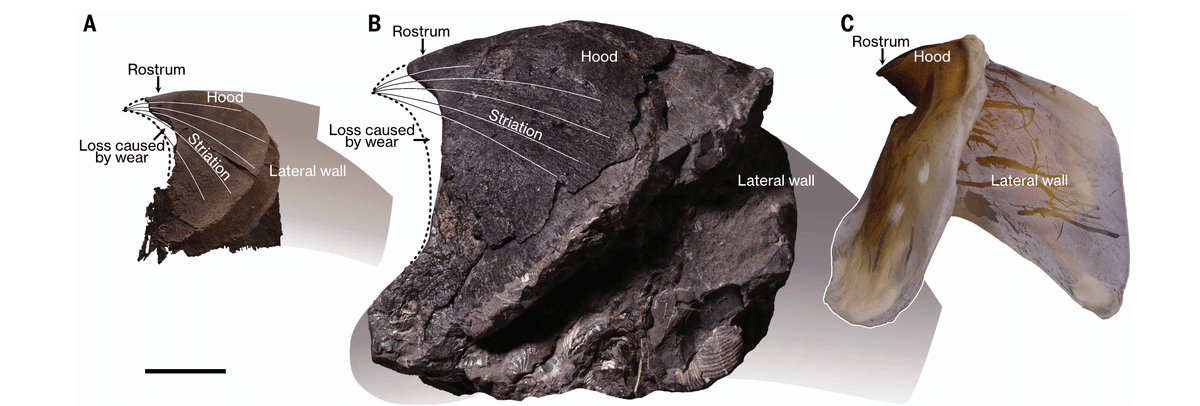
Олдворын элэгдлийн хэв маягийг шинжлэхэд тэдгээр амьтан маш хүчтэй хаздаг байсан нь тогтоогджээ. Зарим тохиолдолд эрүүний үзүүрийн 10 хувь нь элэгдсэн байсан нь тэднийг хатуу бүрхүүлтэй олзоор хооллодог түрэмгий махчин байсныг гэрчилж байна. Мөн эрүүний элэгдэл нэг талдаа илүү их байсан нь эдгээр амьтан нэг талыг түлхүү ашигладаг байсныг буюу мэдрэлийн системийн нарийн зохион байгуулалттай байж болзошгүйг харуулж байна.
Тооцооллоор эдгээр амьтан 20 метр хүртэлх урттай байсан нь тухайн үед амьдарч байсан аварга том далайн мөлхөгчидтэй өрсөлдөхүйц хэмжээ юм. Энэхүү судалгаа нь сээр нуруугүй амьтад далайн хүнсний гинжин хэлхээний хамгийн дээд түвшинд байж чаддаггүй гэсэн уламжлалт ойлголтыг няцааж байна. Судлаачид цаашид хиймэл оюун ухааны тусламжтайгаар чулуун цуглуулгуудаас илүү олон олдвор илрүүлэх боломжтой гэж үзэж байна.
Дэлгэрэнгүйг эх сурвалжаас харах
↓Эх сурвалжийг нээх ↓
For centuries, Scandinavian sailors told of a sea monster big enough to pull ships beneath the ocean. The kraken moved from oral tradition into travel accounts, then onto old maps, where it appeared as a warning to mariners.
In his 1755 Natural History of Norway, Bishop Erik Pontoppidan devoted pages to the creature and treated it as a documented inhabitant of northern waters. Scientists eventually dismissed the stories as folklore swollen by fear and distance.
New fossil evidence does not bring the legend back to life. But it points to an ancient ocean predator that might easily have earned the name.
A study published April 23 in Science, led by Yasuhiro Iba of Hokkaido University, used fossil jaws recovered from sedimentary rock in Japan and on Vancouver Island to reconstruct what octopuses were doing between 100 and 72 million years ago. The picture is striking: the earliest known Cretaceous octopuses were not the furtive, reef-dwelling animals familiar today, but giant hunters operating near the top of the food web alongside the large marine reptiles that ruled those seas.
The octopus fossil record has always been sparse. Soft-bodied animals rarely last long enough to mineralize.
Fossil jaws are different. Hard and chemically durable, they can preserve fine surface detail after tens of millions of years buried in quiet seafloor sediments, making them one of the few surviving windows into cephalopod prehistory. To find them, Iba’s team used high-resolution grinding tomography and a zero-shot learning AI model to scan rock samples that would have looked featureless to the naked eye. Hidden jaws emerged from the concretions, wear patterns still intact.
Scientists Found Bite Marks That Suggest Crushing Force Far Beyond Any Modern Octopus
The fossils belonged to Cirrata, an extinct group of finned octopuses. An earlier study in the Journal of Paleontology had identified large octobrachiate coleoid jaws from the same Vancouver Island and Hokkaido deposits, establishing that substantial animals lived in the Late Cretaceous North Pacific.
What the new Science study adds is time and behavior. It pushes that record back roughly 15 million years and uses close wear analysis to work out what those animals actually did with their jaws.
The damage was hard to miss. “In well-grown specimens, up to 10% of the jaw tip relative to the total jaw length had been worn away, which is larger than that seen in modern cephalopods that feed on hard-shelled prey,” Iba said. “This indicates repeated, forceful interactions with their prey, revealing an unexpectedly aggressive feeding strategy.”
Across the jaw surfaces, researchers found chipping, scratching, cracking, and polishing. The pattern points to animals that behaved as giant predators, crushing hard prey repeatedly over much of their lives. Size estimates from the fossils put these octopuses at total lengths of nearly 20 meters, a scale that Iba suggested may have surpassed the large marine reptiles swimming beside them.
Nearly 20 meters.
One detail brought behavior into the picture in a way the researchers had not expected. In both species examined, the biting surface was worn more heavily on one side than the other, suggesting the animals consistently favored one side of the jaw.
Modern animals sometimes show the same sort of asymmetry, known as lateralization, and it is associated with more complex neural processing. Whether these ancient octopuses possessed correspondingly sophisticated cognition is unresolved. Still, the wear pattern fits with the advanced behavior the group would eventually become known for.
The Kraken Legend Has a Real Biological Basis, Just Not the Right Animal or Era
The kraken imagined by sailors almost certainly had a more modest biological source. Giant squids (Architeuthis) and colossal squids (Mesonychoteuthis) are real cephalopods, and their tentacles, beaks, and sheer dimensions line up with pieces of the classic descriptions. Rare encounters with damaged or beached specimens, especially when seen from a ship at an awkward angle, could become something much larger in the retelling.
Other things can fool the eye at sea. Decomposing carcasses twist into strange shapes in the water. Whales surfacing near a vessel produce misleading silhouettes. Scientists have found no evidence that any living cephalopod could attack and sink a ship as the myth describes, and known squid species fall well short of the most extravagant size claims.

The prehistoric animals in Iba’s study predate human observation by roughly 100 million years and had nothing to do with shaping the legend.
They are, however, the largest and most predatorily capable animals from the octopus lineage yet produced by the fossil record.
These Ancient Octopuses Broke a 400-Million-Year Rule About Which Animals Reach the Top of the Food Chain
The study also unsettles a long-standing view of ancient marine ecosystems. Scientists have generally assumed that vertebrates held an effective monopoly on the ocean’s top trophic tier for most of its history, leaving invertebrates in supporting roles. These octopuses appear to be a genuine exception.
“Our findings suggest that the earliest octopuses were gigantic predators that occupied the top of the marine food chain in the Cretaceous,” Iba said.
He identified two traits shared with large marine vertebrates as central to that shift: powerful jaws and the loss of a rigid external skeleton. “Powerful jaws and the loss of superficial skeletons, common characteristics of octopuses and marine vertebrates, were essential to becoming huge, intelligent marine predators,” he said.
The fossils push the known origins of the group backward as well. The new specimens extend the finned octopus record by about 15 million years and the broader octopus fossil record by about 5 million years. Confirmed members of the lineage now reach as far back as 100 million years ago.
The team expects the combination of grinding tomography and AI-assisted fossil detection to uncover more hidden specimens in existing rock collections, and the consistent lateralization pattern seen across individual specimens in both species studied may itself become a target for further investigation.
Enjoyed this article? Subscribe to our free newsletter for engaging stories, exclusive content, and the latest news.

