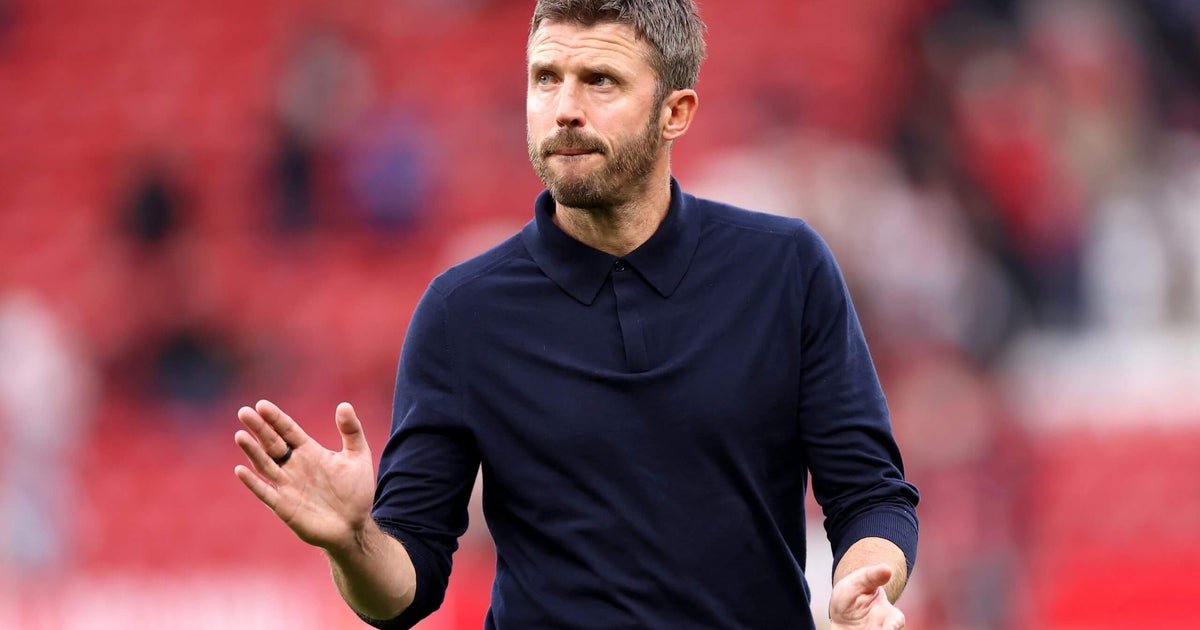
Манчестер Ситигийн эсрэг хийсэн тоглолтод Манчестер Юнайтедын дасгалжуулагч Майкл Каррикийн завсарлагааны үеэр хийсэн тактикийн өөрчлөлт багийн довтолгооны бүтээмжийг бууруулжээ.
Фил Фоден 23 дахь минутад улаан хуудас авч талбайг чөлөөлсөн нь тоглолтын явцыг эрс өөрчилсөн юм. Манчестер Ситигийн дасгалжуулагч Энцо Мареска тоглолтын дараа 10 хүнтэй үлдэх нь тэдний хувьд хүндрэлтэй байсан ч Манчестер Юнайтедын хувьд эсрэгээрээ сөрөг довтолгоонд тулгуурлах боломжийг нь хязгаарласан гэж мэдэгджээ. Тоглолт 1-0-ийн харьцаатай Манчестер Ситигийн ялалтаар өндөрлөсөн байна.
Тоглолтын эхний хагаст Манчестер Юнайтед талбайн зүүн жигүүрт илүүтэй төвлөрч, олон тоглогчтой “хэт ачаалал” үүсгэх тактикийг амжилттай ашиглаж байв. Энэхүү аргаар тэд Манчестер Ситигийн хамгаалалтын шугамыг тэлж, Бруну Фернандеш болон Маркус Рэшфорд нарын дамжуулалтаар гоолын боломж үүсгэхийг хичээж байсан юм.
Гэвч хоёрдугаар хагаст Майкл Каррик тоглогчдоо талбайн өнцөг булан бүрт жигд байрлуулах тактикт шилжсэн нь Манчестер Ситигийн хамгаалалтын блокийг эвдэхэд хялбар болгосон байна. Бруну Фернандеш болон Юри Тилеманс нарын тоглолтын байрлал өөрчлөгдсөнөөр Манчестер Юнайтед довтолгооны бүтээлч байдлаа алдаж, эцэст нь Бенжамин Шеског чиглэсэн хол дамжуулалтуудаар тоглолтыг үргэлжлүүлжээ.
Дэлгэрэнгүйг эх сурвалжаас харах
↓Эх сурвалжийг нээх ↓
Generally speaking, red cards are a club analyst’s worst nightmare.
As soon as the referee pulls one out of his pocket, all of the previous lines of enquiry go out the window, leaving behind a different tactical matchup from what had been anticipated when it was 11 vs 11.
It’s easy to generalise. From the moment Phil Foden was sent off and Manchester United began playing with a man advantage against Manchester City this weekend, the narrative shifted to their difficulty breaking down ‘low blocks’.
Even Enzo Maresca went there. “The game with 10 players became more difficult for us,” the City manager said after his side won 1-0. “But also for Manchester United, because they are a team that loves transitions. They love space in behind.”
Well, there’s your nice, neat tactical angle.
Phil Foden’s dismissal had a big impact on the game (Paul Ellis/AFP via Getty Images)
Maresca is suggesting that after a red card, the team with 10 players are more more likely to be conservative. In United’s case, the man advantage will mean more of the ball and the return of a problem that has existed since Sir Alex Ferguson left a decade ago: an inability to cause problems against deep-lying opponents.
There’s only one issue… in this instance, it doesn’t really fit the facts — after all, Did You Notice that the most meaningful turning point in the game wasn’t actually the red card, but Michael Carrick’s half-time changes?
How Carrick’s tactical change made Manchester United worse
Jon Mackenzie
In the immediate aftermath of Foden’s red card in the 23rd minute, United may not have created any notable chances — but they did generate some promising situations using an interesting tactic.
Take this sequence around the 32nd minute, when they have recycled the ball following an unsuccessful attack. After Harry Maguire passes the ball to Kobbie Mainoo on the left, we can see that Bruno Fernandes has also drifted across to that side, with Youri Tielemans moving over too.

If we draw a line down the centre of the pitch once Fernandes receives the ball, there are six players on the left ahead of the two centre-backs, with only two players on the right.

In tactical parlance, we describe this as an ‘overload’ — the United players are outnumbering their opponents on the left.
It’s worth exploring the tactical nuances of this sort of overload. One recent shift in the game is the increasing reliance of many teams on man-oriented defensive schemes.
Previously, most teams would focus on covering space by organising themselves into defensive structures, with the players tasked with covering different zones. The modern game has seen a return to man-focused approaches, where proximity to opposition players helps destabilise opponents, making it harder for them to hold onto the ball or find simple passing options.

Here the blue team are defending space in a zonal structure

But despite this return to man-oriented defending, zonal structures haven’t completely disappeared. When you’re defending around your own goal, zonal structures often provide better coverage, and so many teams will drop into these structures when they are defending deep.
This poses a problem when an opponent decides to form an overload against one of these lower blocks. Do you compromise your space coverage and leave yourself weaker on the other side of the pitch from the overload? Or do you retain your structure across the pitch and hope that the opponent doesn’t find a way through the block with their extra players?
Returning to our sequence, we can see how these ideas play out. With Fernandes receiving the ball wide, Rayan Cherki moves out to cover him, with Matheus Nunes pressing out onto Patrick Dorgu, the United left-back who has pushed up into the front line of their attack.

This opens space for Marcus Rashford — the City centre-backs don’t want to leave Matheus Cunha free, and Elliot Anderson is reluctant to abandon his zone in front of the back line.

When Fernandes drives inside with the ball, a potential passing lane opens out to Rashford, and Fernandes finds it smartly.

Despite the left-sided overload, Bryan Mbeumo is offering a presence on United’s right. With City’s back line dragged across, Mbeumo darts into the space behind Josko Gvardiol when the pass is played to Rashford.

Unfortunately, though, Rashford struggles to control the pass and the ball gets away from him. A better touch would have opened up Mbeumo for a tap-in. Instead, City goalkeeper Gianluigi Donnarumma rushes out and smothers the ball.

Even if United failed to create scoring chances, they still managed to find ways through the City block in the first half by using these left-sided overloads.
After half-time, everything changed.
Take a look at this screenshot, showing the first instance when United are up against the City block in the second half.

United’s players are much more evenly distributed, with four players on either side of the centre line. It seems that, at half-time, the instruction to the team had been to stop drifting to the left.
The contrast in approach can be seen through Fernandes’ touch maps below.

In the opening 45 minutes, most of Fernandes’ touches in the City half came from the left. In the second half, he only made one touch in an attacking position on the left. Tielemans also kept to the right in the second half.
This raises a question. Why might Carrick have told the team to spread themselves across the pitch rather than focus their attention on one side?
For many years, the conventional wisdom on breaking down low blocks was influenced by Pep Guardiola.
This is hardly surprising. The former City manager’s tactical approach was based on forcing opponents deep into their own box and then finding ways of breaking these blocks apart.
A Guardiola team would usually focus on pulling apart the block laterally. Using wide wingers, he would stretch the opposition back line as wide as possible, and then use technical players to work the ball across the pitch, forcing the opposition to stay compact in their block while looking for any cracks that might emerge.
At half-time in the Manchester derby, Carrick’s coaching staff appeared to decide that if United were going to break down City’s 10-man block, they would do it by using this more lateral approach.
Here’s a screenshot showing how United are looking to stretch their opponents laterally, with Rashford and Diogo Dalot holding width on either side of the block, and the rest of the United team providing symmetrical access to the block and a clear passing route from one side to the other.

However, all United ended up doing was simplifying the block for City.
Yes, Maresca’s side had to remain diligent in shifting from side to side to deal with the wide wingers. But the more symmetrical approach that United adopted stopped them from generating the routes through the block that had been much more promising in the first half.
In part, this is because modern teams are so good at structuring their block against a symmetrical attack. In part, it is because United don’t have the players to manipulate a block through long periods of possession.
But as the game wore on, it became clear that United’s players were struggling to exploit, or even generate, the sorts of weaknesses seen against teams managed by Guardiola. In the end, United resorted to swinging hopeful balls towards Benjamin Sesko in the box.
This season, the Premier League finds itself squarely in the post-Pep era.
This is a tricky position for many of us. Our ideas about the game have been shaped for well over a decade by Guardiola and it will take time to learn that his ideas might not always be the answer.
In the case of the Manchester derby, Carrick found out the hard way that spreading his players evenly wasn’t the best solution against a low block. Rather than helping them find a way, Carrick’s half-time tweaks simply made it harder for his team to come out on top.
As the season goes on, we will encounter more of these situations. Coaches may find out the hard way that the tactical landscape has shifted and that not all problems lead to Guardiola-style remedies.

