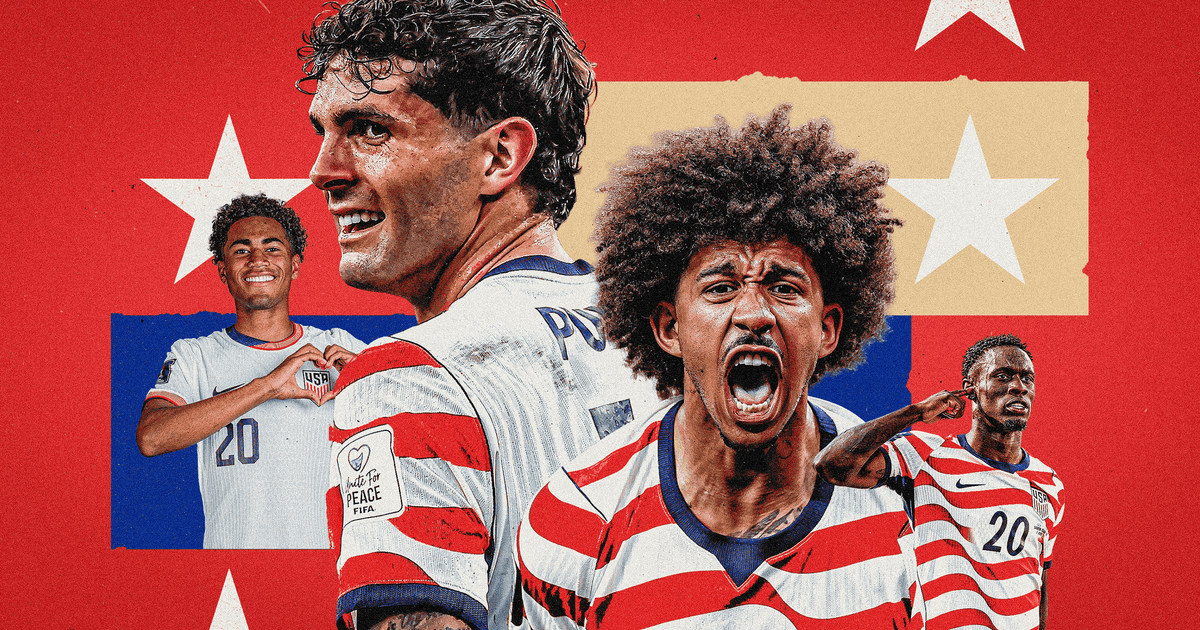
Ахлах дасгалжуулагч Маурисио Почеттино шигшээ багийн ирээдүйн бүрэлдэхүүнийг бүрдүүлэх шинэ үйл явцыг албан ёсоор эхлүүлжээ.
АНУ-ын эрэгтэйчүүдийн хөлбөмбөгийн шигшээ баг сүүлийн есөн жилийн хугацаанд анх удаа бүрэлдэхүүнээ бүрэн шинэчлэх “шинэ гараа”-г эхлүүлээд байна. Дасгалжуулагч Маурисио Почеттино ирэх долоо хоногт Жоржиад болох бэлтгэл цугларалтад туршлагатай тоглогчид, 2026 оны Дэлхийн аваргад дуудагдаагүй тоглогчид болон залуу авьяастнуудыг багтаасан холимог бүрэлдэхүүнийг дуудахаар төлөвлөжээ.

Одоогийн шигшээ багийн гол цөм болох Тайлер Адамс, Уэстон Маккенни зэрэг тоглогчид 2030 оны Дэлхийн аварга болоход 30 насны босгыг давсан байх тул Почеттино 100 орчим тоглогчийг хянаж, шинэ үеийн тоглогчдыг бэлтгэхэд анхаарч байна. Ялангуяа 16 настай Каван Салливан, 18 настай Нил Пьер зэрэг өсвөрийн авьяастнууд шигшээ багийн шинэ үеийн гол хөзөр болох магадлалтай байна.
Хаалгачийн байрлал дээр тодорхой нэгдүгээр сонголт байхгүй байгаа бөгөөд Крис Брэди, Диего Кочен нар ирээдүйд өрсөлдөхөөр байна. Түүнчлэн хамгаалалтын шугамд Крис Ричардсаас бусад байрлал дээр шинэ тоглогчдыг туршиж үзэх шаардлагатай байгаа юм.
Шигшээ баг ирэх гурван жилийн хугацаанд нөхөрсөг тоглолтууд болон бага зэрэглэлийн тэмцээнүүдэд оролцож, 2030 оны Дэлхийн аваргад бэлтгэх стратегийн чухал шийдвэрүүдийг гаргах болно. Почеттино тоглогчдын одоогийн ур чадвар болон ирээдүйн чадавхыг тэнцвэржүүлэх замаар шигшээ багийн дараагийн үеийг бүрдүүлэхээр ажиллаж байна.
Дэлгэрэнгүйг эх сурвалжаас харах
↓Эх сурвалжийг нээх ↓
The U.S. men’s national team, for the first time in nearly nine years, has arrived at “a fresh start.”
Those were the words that head coach Mauricio Pochettino used as the yearslong march to the 2030 World Cup began. When he convenes a new collection of players next week in Georgia, it will be “a new process, new project, new rules, new principles.”
It is, therefore, a chance to step back and assess the USMNT player pool in a way that nobody really has this decade.
Coming out of the 2022 World Cup, it was relatively clear who would lead the U.S. into 2026. A youthful core had crystallized; key players at nearly every position were entering their primes. Of the 24 initially called into their first full training camp post-Qatar, 15 made the 2026 World Cup roster; a 16th, Folarin Balogun, was already being recruited; and a 17th, Tyler Adams, was only absent due to injury. There was no need to reset, and then no time to reset when Pochettino took charge in 2024. Although he opened up the roster and unsettled some incumbents, eight of his eventual World Cup starting 11 were already presumed starters before he arrived.
Now, coming out of 2026, he and U.S. Soccer have time for a proper reboot.
They’ll have friendlies and lesser competitions over the next three years. But “the objective,” Pochettino said, “is 2030, the World Cup.” Countless decisions will be made through that long lens. When Pochettino on Thursday names his first roster of the new cycle, for a September-October training camp and four matches, it will be “a mix” of World Cup veterans, 2026 omissions and youngsters. All of them, and dozens of others, will get opportunities to shape the 2030 squad. Pochettino said that he and his staff are tracking around 100 players.
So, before the focus narrows, the following is a broad look at some (not all) of those 100 players — the USMNT player pool as this 2030 cycle starts spinning.
And the looming reality underpinning all of it is that, at some point between now and 2030, some (not all) of the current main characters, the faces of the program, could begin to fade.
U.S. midfield mainstays Weston McKennie (8) and Tyler Adams (4) will be into their 30s when the 2030 World Cup rolls around (Emilee Chinn / Getty Images)
The aging core
The once-youthful core that came to define two straight World Cup cycles will soon age into its 30s.
For now, players like Adams and Weston McKennie are undoubtedly among the best at Pochettino’s disposal. But what will they be at 31 years old? That’s the unanswerable question that will complicate the coming months and years. Even World Cup debutants like Balogun and Chris Richards could be past their primes — which for many players in the modern era is age 24-27 — by 2030.
The following table, like others below, shows their ages on June 1, 2030, with greens highlighting younger players and reds denoting those who’ll be over 30.
| Player | 2030 age | Club |
|---|---|---|
|
Alex Freeman |
25.8 |
Villarreal |
|
Malik Tillman |
28.0 |
Bayer Leverkusen |
|
Folarin Balogun |
28.9 |
Monaco |
|
Sergiño Dest |
29.6 |
PSV |
|
Chris Richards |
30.2 |
Crystal Palace |
|
Tim Weah |
30.3 |
Marseille |
|
Tyler Adams |
31.3 |
Bournemouth |
|
Christian Pulisic |
31.7 |
AC Milan |
|
Weston McKennie |
31.8 |
Juventus |
|
Antonee Robinson |
32.8 |
Fulham |
<![CDATA[if([“rgb(17, 17, 17)”, “rgb(0, 0, 0)”, “rgb(18, 18, 18)”, “rgb(26, 26, 26)”].indexOf(getComputedStyle(document.body).backgroundColor) != -1) {var x = document.querySelectorAll(“#ath_table_670665 .ia-hlt”);for (var i = 0; i < x.length; i++) {x[i].classList.add(“dark-mode”);}}var all_table_images = document.querySelectorAll(“#ath_table_670665 img”); for (var i = 0; i
Others on the edge of the core, meanwhile, could play their way into it; or, they could stagnate.
And beneath them, there is a void. Whereas the average 2026 World Cup team featured three-plus outfield players under 23 years old; and whereas the 2022 USMNT had eight, Pochettino took just one, Alex Freeman. In the cohort of players currently aged 20-22, the U.S. has not produced any surefire stars — which is why the door is wide open for teenagers.
The next generation
Beneath that cohort are the kids that every blue-checked USMNT X account is talking about.
They range from 16-year-old Cavan Sullivan, a potentially world-class prospect, to teens who could become USMNT stars (but also could become ordinary squad players).
| Player | 2030 age | Club |
|---|---|---|
|
Cavan Sullivan |
20.7 |
Philadelphia Union |
|
Mathis Albert |
21.0 |
Borussia Dortmund |
|
Adri Mehmeti |
21.2 |
Red Bull New York |
|
Julian Hall |
22.2 |
Red Bull New York |
|
Peyton Miller |
22.6 |
New England Revolution |
|
Neil Pierre |
22.6 |
Philadelphia Union |
|
Justin Ellis |
23.0 |
Orlando City |
|
Zavier Gozo |
23.2 |
Crystal Palace |
<![CDATA[if([“rgb(17, 17, 17)”, “rgb(0, 0, 0)”, “rgb(18, 18, 18)”, “rgb(26, 26, 26)”].indexOf(getComputedStyle(document.body).backgroundColor) != -1) {var x = document.querySelectorAll(“#ath_table_837033 .ia-hlt”);for (var i = 0; i < x.length; i++) {x[i].classList.add(“dark-mode”);}}var all_table_images = document.querySelectorAll(“#ath_table_837033 img”); for (var i = 0; i
Some will almost certainly be called into this month’s camp. Others will have to wait their turn. And, of course, there are plenty who won’t be mentioned here but will get their shot with the USMNT between now and 2030.
Development, as scouts often say, is non-linear — which makes this exercise tricky. It is neither a World Cup roster projection nor a September 2026 roster projection. It’s a snapshot of the player pool now but with a view to 2030.
The position-by-position breakdowns that follow, therefore, should not be read as a depth chart, but rather as a roadmap. These are the players at the USMNT’s disposal for the foreseeable future — and their ages on June 1, 2030.
They are ordered unscientifically, roughly by the likelihood that they’re starting potential Copa América matches in 2028 or World Cup qualifiers in 2029. In other words, we’ve split the difference between present-day levels and potential. Because that’s what Pochettino will have to do as he searches for a balance between winning games, rewarding performance and granting opportunities to the youngsters who, come 2030, will need international experience.
Positional breakdown
Before we dive in, three notes. First: dual-nationals who’ve primarily represented other countries at youth levels aren’t listed. That’s not to say they aren’t on the radar, and some will be mentioned in a separate section below, but Pochettino has very rarely called upon those who haven’t committed to the U.S. The only ones we’ll include, therefore, are players currently affiliated with the U.S. program.
Second: the colors correspond to age ranges. The deepest green is reserved for players who’ll be under 24 in 2030. The next three shades represent a player’s approximate prime. Red, on the other hand, indicates that a player will likely be past his prime when the next World Cup rolls around.
And third: an asterisk indicates that a player is age-eligible for the 2028 Olympics. LA28 will be a priority for the men’s program in a way that Olympics haven’t been in the past. The 18-man team, coached by Steve Cherundolo, will be allowed to bring three overage players, but the rest must be born on or after Jan. 1, 2005. That cutoff will impact roster decisions — both for the senior team and the U-23s — between now and 2028.
Goalkeepers
| Player | 2030 age | Club |
|---|---|---|
|
Chris Brady |
26.2 |
Chicago Fire |
|
Matt Freese |
31.7 |
New York City FC |
|
Diego Kochen* |
24.2 |
Lyngby |
|
Matt Turner |
35.9 |
New England Revolution |
|
Brian Schwake |
28.8 |
Nashville |
|
Patrick Schulte |
29.2 |
Columbus Crew |
|
Julian Eyestone* |
24.1 |
Rotherham |
|
Andrew Rick* |
24.3 |
Philadelphia Union |
|
Duran Ferree* |
23.7 |
San Diego FC |
|
Andrew Thomas |
31.8 |
Seattle Sounders |
|
Gaga Slonina |
26.0 |
Chelsea |
|
Roman Celentano |
29.7 |
FC Cincinnati |
<![CDATA[if([“rgb(17, 17, 17)”, “rgb(0, 0, 0)”, “rgb(18, 18, 18)”, “rgb(26, 26, 26)”].indexOf(getComputedStyle(document.body).backgroundColor) != -1) {var x = document.querySelectorAll(“#ath_table_311416 .ia-hlt”);for (var i = 0; i < x.length; i++) {x[i].classList.add(“dark-mode”);}}var all_table_images = document.querySelectorAll(“#ath_table_311416 img”); for (var i = 0; i
Goalkeeper remains a problem position. On 2026 performance alone, the No. 1 would probably be … Brian Schwake, who, at 25, is in his first season as Nashville SC’s starter after a journey through the lower leagues of Scotland and the Spanish Segunda.
Matt Turner has also been strong in MLS, and has a much longer track record. But he’ll be 35 going on 36 in 2030, and already lost his U.S. starting spot to Matt Freese, who’s now best known for the costliest error in modern U.S. World Cup history.
Chris Brady was the No. 3 this summer and might be the de facto favorite to start in 2030. A few years behind him is Diego Kochen, 20, who is currently getting his first top-flight minutes at Lyngby in Denmark, on loan (with an option to buy) from FC Barcelona, whose academy he joined at age 13.
In other words, the position is wide open. The top five players above could be listed in almost any order.
The training keepers this summer — those who traveled and practiced with the USMNT throughout the World Cup but weren’t rostered — were Kochen and Andrew Rick, a 20-year-old Philadelphia Union backup. Kochen then left camp and was replaced by Julian Eyestone, also 20, who’s currently on loan at Rotherham in the English fourth division.
Center backs
| Player | 2030 age | Club |
|---|---|---|
|
Chris Richards |
30.2 |
Crystal Palace |
|
Noahkai Banks* |
23.5 |
Augsburg |
|
Auston Trusty |
31.8 |
Celtic |
|
Neil Pierre* |
22.6 |
Philadelphia Union |
|
George Campbell |
28.9 |
West Brom |
|
Justin Che |
26.5 |
Red Bull New York |
|
Josh Wynder* |
25.1 |
New England Revolution |
|
Mark McKenzie |
31.3 |
Toulouse |
|
Cameron Carter-Vickers |
32.4 |
Celtic |
|
Miles Robinson |
33.2 |
FC Cincinnati |
|
Tristan Blackmon |
33.8 |
Vancouver Whitecaps |
|
Tim Ream |
42.7 |
Charlotte FC |
|
Jackson Ragen |
31.7 |
Seattle Sounders |
|
Daniel Munie |
30.3 |
San Jose Earthquakes |
|
Sean Zawadzki |
30.1 |
Columbus Crew |
|
Reid Roberts |
26.5 |
San Jose Earthquakes |
<![CDATA[if([“rgb(17, 17, 17)”, “rgb(0, 0, 0)”, “rgb(18, 18, 18)”, “rgb(26, 26, 26)”].indexOf(getComputedStyle(document.body).backgroundColor) != -1) {var x = document.querySelectorAll(“#ath_table_727649 .ia-hlt”);for (var i = 0; i < x.length; i++) {x[i].classList.add(“dark-mode”);}}var all_table_images = document.querySelectorAll(“#ath_table_727649 img”); for (var i = 0; i
As it has been for the past couple years, center back is Richards and then a giant question mark.
Tim Ream filled the void almost by default in 2026, but on the brink of his 39th birthday, he’ll surely cede that spot to … somebody.
The two most prominent names are Noahkai Banks and Neil Pierre. Banks, who attended one USMNT camp last fall, is the top defensive prospect in the pool but remains undecided between the U.S. (where he was born) and Germany (where he’s spent most of his life). Pierre, a towering presence already at 18, has broken through in Philadelphia for the youthful Union, who are carving up MLS.
Beyond them, there are known quantities like Auston Trusty and other up-and-comers finding their footing. Josh Wynder, now 21, moved to Benfica as a teen but recently joined the New England Revolution on loan in search of first-team minutes. Justin Che, 22, after a few adventurous years in Europe, is having his best season as a pro with Red Bull New York.
In between those two groups is George Campbell, who got a January-camp look in 2025 and now, at age 25, is captaining West Brom in the English Championship. While he doesn’t have the upside of a player like Pierre or Wynder, he could push his way into the 2030 mix, à la Mark McKenzie or Trusty last cycle.
Expect Pochettino to try a variety of combinations over the next two years as he seeks a new partner for Richards.
Flex defenders
| Player | 2030 age | Club |
|---|---|---|
|
Alex Freeman |
25.8 |
Villarreal |
|
Joe Scally |
27.4 |
Borussia Mönchengladbach |
|
Frankie Westfield* |
24.5 |
Philadelphia Union |
|
Reed Baker-Whiting* |
25.2 |
Nashville |
|
Nathan Harriel |
29.1 |
Philadelphia Union |
<![CDATA[if([“rgb(17, 17, 17)”, “rgb(0, 0, 0)”, “rgb(18, 18, 18)”, “rgb(26, 26, 26)”].indexOf(getComputedStyle(document.body).backgroundColor) != -1) {var x = document.querySelectorAll(“#ath_table_16830 .ia-hlt”);for (var i = 0; i < x.length; i++) {x[i].classList.add(“dark-mode”);}}var all_table_images = document.querySelectorAll(“#ath_table_16830 img”); for (var i = 0; i
A “flex defender” is our imperfect term for the role that Freeman owned in 2026. It’s a fullback who tucks into a back three in possession, or simply a versatile defender who can play either centrally or wide, or whose position is tough to pinpoint in the incumbent U.S. system — one who doesn’t belong on a depth chart with Richards nor one with Tim Weah.
Freeman and Joe Scally are the clear No. 1 and 2 in this spot for now, but Westfield, the 20-year-old Philadelphia right back, has the profile to grow into it. (Westfield, like others, could also evolve into a wingback; none of these positional designations are definitive.)
Wingbacks
| Player | 2030 age | Club |
|---|---|---|
|
Antonee Robinson |
32.8 |
Fulham |
|
Sergiño Dest |
29.6 |
PSV |
|
Tim Weah |
30.3 |
Marseille |
|
Peyton Miller* |
22.6 |
New England Revolution |
|
Max Arfsten |
29.1 |
Middlesbrough |
|
Kevin Paredes |
27.1 |
Utrecht |
|
Luca Bombino* |
23.9 |
Stoke City |
|
Caleb Wiley |
25.4 |
Preston North End |
|
George Bello |
28.4 |
LASK |
|
Tate Johnson* |
24.9 |
Vancouver Whitecaps |
|
Bryan Reynolds |
28.9 |
Rennes |
|
John Tolkin |
27.8 |
Holstein Kiel |
<![CDATA[if([“rgb(17, 17, 17)”, “rgb(0, 0, 0)”, “rgb(18, 18, 18)”, “rgb(26, 26, 26)”].indexOf(getComputedStyle(document.body).backgroundColor) != -1) {var x = document.querySelectorAll(“#ath_table_378772 .ia-hlt”);for (var i = 0; i < x.length; i++) {x[i].classList.add(“dark-mode”);}}var all_table_images = document.querySelectorAll(“#ath_table_378772 img”); for (var i = 0; i
Wingback is the foremost example of a position that’s currently settled but might not be four years from now.
Antonee Robinson, when healthy, has been the best USMNT left back ever; but he often hasn’t been healthy, and will turn 33 in the summer of 2030. Will he still have the pace that has made him such a two-way menace? There’s no way to know, so Pochettino must explore other options intermittently.
A few years ago, Kevin Paredes would have been the next in line, but he has dealt with a series of injuries that disrupted his progress. The newest name of note is Peyton Miller, a left-footed fullback/winger who’s producing at age 18 for the New England Revolution.
On the right, Sergiño Dest is the top dog until further notice. Hopefully Pochettino realizes that Weah belongs there, on the right, where his verticality remains his best asset, rather than as a miscast left winger.
Central midfielders
Pochettino’s midfield has been fluid; the line between a traditional No. 6, 8 and 10 is blurry. In this central midfield category, therefore, we’ll include anyone who could slot in next to Adams. And by that definition, this is probably the USMNT’s deepest position.
| Player | 2030 age | Club |
|---|---|---|
|
Malik Tillman |
28.0 |
Bayer Leverkusen |
|
Tyler Adams |
31.3 |
Bournemouth |
|
Weston McKennie |
31.8 |
Juventus |
|
Yunus Musah |
27.5 |
AC Milan |
|
Johnny Cardoso |
28.7 |
Atlético Madrid |
|
Sebastian Berhalter |
29.1 |
Middlesbrough |
|
Tanner Tessmann |
28.7 |
Lyon |
|
Adri Mehmeti* |
21.2 |
Red Bull New York |
|
Aidan Morris |
28.5 |
Middlesbrough |
|
Jack McGlynn |
26.9 |
Stoke City |
|
Benjamin Cremaschi* |
25.2 |
Parma |
|
Gianluca Busio |
28.0 |
Venezia |
|
Santiago Castañeda |
25.6 |
Paderborn |
|
Rokas Pukštas |
25.8 |
Middlesbrough |
|
Brooklyn Raines* |
25.2 |
New England Revolution |
|
Owen Wolff |
25.4 |
Sporting Kansas City |
|
Cristian Roldan |
35.0 |
Seattle Sounders |
|
James Sands |
29.9 |
New York City FC |
|
Djordje Mihailovic |
31.6 |
Toronto FC |
|
Taha Habroune* |
24.3 |
Columbus Crew |
|
Snyder Brunell* |
23.2 |
Seattle Sounders |
<![CDATA[if([“rgb(17, 17, 17)”, “rgb(0, 0, 0)”, “rgb(18, 18, 18)”, “rgb(26, 26, 26)”].indexOf(getComputedStyle(document.body).backgroundColor) != -1) {var x = document.querySelectorAll(“#ath_table_888578 .ia-hlt”);for (var i = 0; i < x.length; i++) {x[i].classList.add(“dark-mode”);}}var all_table_images = document.querySelectorAll(“#ath_table_888578 img”); for (var i = 0; i
There are four World Cup starters in the mix — the three from 2026, plus Yunus Musah (2022), who looks revitalized at AC Milan. There’s also Johnny Cardoso, who might have been a World Cup starter had he avoided injuries; and Tanner Tessmann, who seemed primed to snag that same starting spot before his controversial omission. Then there’s Sebastian Berhalter, the workhorse whom Pochettino would turn to before anyone else off the bench this summer; if this were a present-day depth chart, he might be fourth.
And now there’s Adri Mehmeti, who might already be better at dictating play with his passes than any of the seven players referenced above. At 17, he has a long way to go physically and defensively, but he’s widely regarded as one of the best midfield prospects that MLS has produced — ever. His development with Red Bull New York, and perhaps soon in Europe, could help determine the shape of the U.S. midfield in 2030.

Red Bull New York midfielder Adri Mehmeti is drawing some lofty comparisons (Mitchell Leff / Getty Images)
Benjamin Cremaschi is another U-23 to watch. He doesn’t have anywhere near the on-ball ability of Mehmeti or the incumbents, and he profiles more as a utility midfielder than an indispensable starter, but he’s only 21; he could grow into something more.
And Santiago Castañeda, a 21-year-old defensive midfielder who’s shaky on the ball but strong without it, has held his starting spot after helping lead SC Paderborn into the German Bundesliga.
Attacking midfielders/wingers
| Player | 2030 age | Club |
|---|---|---|
|
Christian Pulisic |
31.7 |
AC Milan |
|
Gio Reyna |
27.6 |
Strasbourg |
|
Zavier Gozo* |
23.2 |
Crystal Palace |
|
Brenden Aaronson |
29.6 |
Leeds |
|
Cavan Sullivan* |
20.7 |
Philadelphia Union |
|
Alejandro Zendejas |
32.3 |
Club América |
|
Mathis Albert* |
21.0 |
Borussia Dortmund |
|
Diego Luna |
26.7 |
Real Salt Lake |
|
Cole Campbell* |
24.3 |
Elversberg |
|
Niko Tsakiris* |
25.0 |
San Jose Earthquakes |
|
Quinn Sullivan |
26.2 |
Philadelphia Union |
|
Paxten Aaronson |
26.8 |
Colorado Rapids |
<![CDATA[if([“rgb(17, 17, 17)”, “rgb(0, 0, 0)”, “rgb(18, 18, 18)”, “rgb(26, 26, 26)”].indexOf(getComputedStyle(document.body).backgroundColor) != -1) {var x = document.querySelectorAll(“#ath_table_672422 .ia-hlt”);for (var i = 0; i < x.length; i++) {x[i].classList.add(“dark-mode”);}}var all_table_images = document.querySelectorAll(“#ath_table_672422 img”); for (var i = 0; i
Christian Pulisic’s trajectory over the next four years will be fascinating. In the immediate term, he needs to win back his place at Milan (and his 45 minutes this past weekend made for a decent start). In the long term, his slight, injury-riddled body will have to resist the effects of age. His magic depends heavily on quickness. If wear and tear start to cost him an ounce or two of burst, he’s the type of player who could decline rather abruptly. His evolution — and his response to a disappointing World Cup — will be an ongoing storyline as the national team evolves around him.
Elsewhere, Gio Reyna is starting and contributing in France. He is still, remarkably, just 23, with plenty of limitations and lingering fitness concerns but also plenty of upside.
But for the first time in over a decade, neither Reyna nor Pulisic is the most intriguing playmaker on the USMNT radar.
Enter Cavan Sullivan.
Sullivan, over the past month-plus, has been living up to years of inordinate hype. A couple weeks shy of his 17th birthday, he is making MLS defenders dizzy and creating goals week after week. He comes with the usual cautionary notes — will his game translate to the English Premier League when he goes, or to the senior international level? What’s his position and profile at a higher level? — but he looks ready for his maiden USMNT call-up.
And he isn’t the only young attacker on the verge of opportunity. Zavier Gozo, 19 and fresh off a move to Crystal Palace, might be more ready. Mathis Albert, 16 and once described to The Athletic’s Tom Bogert as “Cavan Sullivan without the hype,” is making matchday squads at Borussia Dortmund. Cole Campbell, 20, is starting and scoring for newly-promoted Elversberg in the Bundesliga. Niko Tsakiris, 21, is back from injury and re-finding his creative rhythm for the San Jose Earthquakes.
The future, at least in these attacking midfield areas, appears to be bright.
Strikers
| Player | 2030 age | Club |
|---|---|---|
|
Folarin Balogun |
28.9 |
Monaco |
|
Ricardo Pepi |
27.4 |
PSV |
|
Julian Hall* |
22.2 |
Red Bull New York |
|
Patrick Agyemang |
29.6 |
Derby County |
|
Haji Wright |
32.2 |
Coventry City |
|
Justin Ellis* |
23.0 |
Orlando City |
|
Josh Sargent |
30.3 |
Toronto FC |
|
Damion Downs |
25.9 |
St. Louis City |
|
Brian White |
34.3 |
Vancouver Whitecaps |
|
Sam Adeniran |
31.7 |
LASK |
|
Milan Iloski |
30.8 |
Philadelphia Union |
|
Logan Farrington |
28.5 |
FC Dallas |
|
Malik Jakupovic* |
20.9 |
Philadelphia Union |
<![CDATA[if([“rgb(17, 17, 17)”, “rgb(0, 0, 0)”, “rgb(18, 18, 18)”, “rgb(26, 26, 26)”].indexOf(getComputedStyle(document.body).backgroundColor) != -1) {var x = document.querySelectorAll(“#ath_table_823903 .ia-hlt”);for (var i = 0; i < x.length; i++) {x[i].classList.add(“dark-mode”);}}var all_table_images = document.querySelectorAll(“#ath_table_823903 img”); for (var i = 0; i
Balogun is the starter when healthy and available, and frankly, it’s difficult to envision that changing anytime soon.
If he falters or misses time due to injury, Ricardo Pepi is capable and waiting. Julian Hall, 18, is rising for RBNY. Justin Ellis, 19, is creating (though not really scoring) goals in Orlando. Haji Wright, 28, could have a few productive years left in England once he returns from a quadriceps injury. Patrick Agyemang, 25, will also be a factor once his Achilles heals.
And there is always room for a late-blooming forward, like Logan Farrington in Dallas or Milan Iloski in Philly, or even Sam Adeniran (currently injured but previously off to a flying start this season at LASK in Austria), to battle his way onto a tournament roster — as Agyemang did last cycle.
But Balogun has entered his prime and shouldn’t exit it anytime soon. He’s on a different level.
The unknowns: dual-nationals, late bloomers and kids
All of this comes with a caveat worth repeating: the player pool will look much different one, two and three years from now. Three years ago, nobody would have predicted that Berhalter, Freese, Freeman and Max Arfsten would be at the 2026 World Cup. There will surely be names you don’t know now who’ll be top of mind in 2030.
Some of them could be 15 years old right now and not yet professional. Some of them could be MLS journeymen who force their way into the mix.
And some could be recruited, like Balogun and Malik Tillman were by previous U.S. coaches.
The dual-national concept is a complicated one, and in fact, many of the most talented American players who are presumed to be USMNT-bound are also eligible for other countries. Hall could play for Poland; Mehmeti could play for Albania; Pierre could play for Haiti; Sullivan could play for Bangladesh. But they were all born and raised in the States, and have played for U.S. youth national teams, so they’re included in the pool above without reservation.
The corollaries are players like Montrell Culbreath, Landon Emenalo and Taishi Nozawa. Culbreath is a 19-year-old wingback at Bayer Leverkusen who was born in Germany to a German mother and American father. He played a few times for the U.S. U-16s, and has not ruled out the USMNT, but he has mostly represented Germany — in four different age groups. He is U.S.-eligible but would need to file for a one-time switch of sporting nationality, a switch he doesn’t seem close to making.
Nozawa, a 23-year-old goalkeeper at Royal Antwerp in Belgium, played exclusively for Japan’s youth teams but is U.S.-eligible via his American father. Emenalo, 18, is the Arizona-born son of an American mother and Nigerian father (former defender and Chelsea technical director Michael Emenalo). Similar to Culbreath, he played a few times for the U.S. U-17s; but he’s primarily been with the youth national teams of England, where he grew up. He’s currently at Celtic, on loan from Chelsea.
Pochettino hasn’t yet had success recruiting multi-nationals. When first asked about the subject in 2024, he seemed to brush it aside; “we don’t need to convince (players),” he said. “A player needs to want to play for the national team.” But he has since adjusted his stance, and seems to understand the potential importance of reaching out and making players with dual citizenship feel comfortable.
Ultimately, though, the decisions are in the hands of players. And in addition to deciding, they must develop.
That development is the variable that will push and pull the USMNT pool in different directions. There are hundreds of players who could, at some point, break in. The proverbial slate, for the first time since 2019, is somewhat clean. And a newly-constructed group, of veterans and upstarts alike, will get chances to write the USMNT’s next chapter.
Paul Tenorio contributed to this story.

