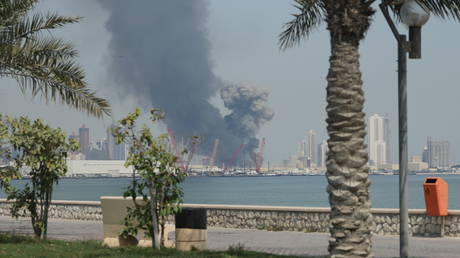
Ираны эсрэг явуулсан “Epic Fury” ажиллагааны улмаас АНУ-ын цэргийн баазууд хохирол амссан нь ложистикийн сүлжээг тасалдуулж, ирээдүйн стратегийн төлөвлөлтийг хүндрүүлж байна.
АНУ-ын Засгийн газрын шинэ тайланд дурдсанаар, Ирантай хийсэн мөргөлдөөний дараа Ойрх Дорнод дахь АНУ-ын хүчний байршил, гэмтсэн баазуудыг сэргээн босгох асуудал тодорхойгүй хэвээр байна. Хоёрдугаар сарын 28-наас зургаадугаар сарын 30-ныг хүртэл үргэлжилсэн “Epic Fury” ажиллагааны нийт зардал зургаадугаар сарын 29-ний байдлаар 33.4 тэрбум ам.долларт хүрсэн боловч үүнд барилга байгууламжийг сэргээн босгох зардал багтаагүй байна. Пентагон ирээдүйд баазуудыг хэрхэн байгуулах, холбоотнууд болон түншүүд зардлаас хэдэн хувийг хариуцах талаар шийдвэр гаргаагүй байгаа аж.
Ираны халдлагын улмаас АНУ-ын Төвийн командлал (CENTCOM) үйл ажиллагаагаа Ирантай ойр байрлах баазуудаас алслагдсан бүс рүү шилжүүлэхээс өөр аргагүйд хүрсэн юм. Бахрейн дахь АНУ-ын Тэнгисийн цэргийн бааз ложистикийн дэмжлэг үзүүлэх чадваргүй болсноор Diego Garcia дахь бааз руу түшиглэх болсон нь хангамжийн хугацааг 14-18 хоногоор сунгажээ. Энэхүү өөрчлөлт нь АНУ-ын Тэнгисийн цэргийн USS Abraham Lincoln хөлөг онгоцны бүлгийн хангамжийн асуудалд хүндрэл учруулсан байна.
Тайланд дурдсанаар, ажиллагааны явцад ашигласан зэвсэг хэрэгслийг нөхөх явцад үйлдвэрлэлийн ноцтой дутагдал илэрчээ. Ялангуяа пуужингийн хатуу түлш, өндөр чадлын тэсрэх бодис үйлдвэрлэх хүчин чадал болон мэргэшсэн ажиллах хүчний хомсдол нь стратегийн томоохон сорилт болж байгааг Пентагоны хяналтын байгууллагууд анхааруулсан байна.
Дэлгэрэнгүйг эх сурвалжаас харах
↓Эх сурвалжийг нээх ↓
Damage to American bases has made Operation Epic Fury against Iran more costly and complicated, a government report has said
The Pentagon has yet to determine the future posture of US forces in the Middle East, including how regional bases damaged in the conflict with Iran will be rebuilt, according to a new government report examining Operation Epic Fury.
The US military operation against Iran lasted from February 28 through June 30, although the confrontation remains unresolved, with Washington relying on a naval blockade and sanctions to pressure Tehran. Iran responded to the US-Israeli attack by striking military and infrastructure targets across the region and restricting traffic through the strategic Strait of Hormuz.
The report, prepared by three inspector general offices and released on Monday, highlighted difficulties in determining the full cost of Operation Epic Fury. The Pentagon estimated the campaign had cost $33.4 billion as of June 29, excluding the reconstruction of damaged military infrastructure.
During congressional appropriations hearings in May, the department did not include military reconstruction costs because it “has not determined what its future posture will be in the region, how it will construct its bases, and what percentage of the construction costs Allies and partners will contribute,” the report said.
Iranian attacks forced US Central Command (CENTCOM) to move operations away from bases close to Iran, significantly disrupting established supply lines. The US Navy base in Bahrain, a major regional logistics hub, could no longer properly support maritime operations, forcing the military to rely on alternative facilities farther away.
The change “posed significant challenges before and during” the operation, CENTCOM told Pentagon Inspector General Platte Moring, who led the joint oversight effort.
“An issue with shifting logistics support and infrastructure to Diego Garcia has been distance, with extended sea transit requiring 14- to 18-day logistics cycles,” the report said.
The increased reliance on military facilities on the Chagos Islands, operated jointly by the US and British militaries, became a source of friction between US President Donald Trump and then-British Prime Minister Keir Starmer during the first phase of the Iran war.

US media have linked problems experienced by the USS Abraham Lincoln aircraft carrier strike group during its deployment to the roughly 2,200-mile (3,500-kilometer) supply route between Diego Garcia and the Middle East.
The report to Congress also detailed bottlenecks exposed by Pentagon efforts to replenish munitions consumed during the operation.
The most persistent problems “remain in the production of solid rocket motors, the availability of high-grade explosives and propellants, and the recruitment of skilled manufacturing labor,” the report said, describing the resulting inventory shortfalls as “strategic.”
The 40-page document was prepared by the inspector general offices overseeing the Department of War, the State Department, and the shuttered US Agency for International Development.
You can share this story on social media:



