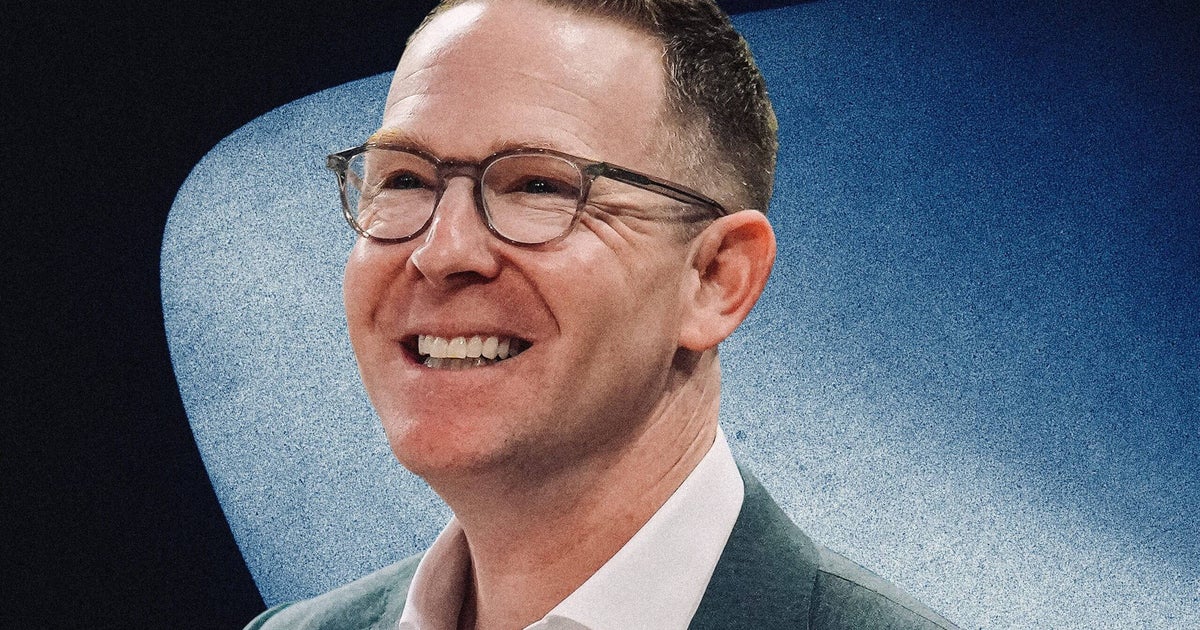
It was only a moment, a random encounter on an ordinary day, but Sam Presti never forgot it.
A 17-year-old high school gym rat on his way to play Division III basketball, Presti was at the Lexington Club, a fitness center in suburban Boston, one day in the 1990s when he saw a man across the gym.
The man did not look like much. A shade above 6 feet. Medium build. Probably in his 30s with an office job. So, when he walked over to Presti and asked to play one-on-one, Presti thought, All right, I’ll give it to this guy.
Then the game began. And the man kicked his ass. Completely humiliated him in an empty gym.
Presti soon learned why: The man was not just a desk jockey at a local real estate firm. He was Jim McCaffrey, a former star guard at Holy Cross who the Phoenix Suns had drafted a decade earlier.
<![CDATA[!function(){"use strict";window.addEventListener("message",(function(a){if(void 0!==a.data["datawrapper-height"]){var e=document.querySelectorAll("[id='datawrapper-chart-tAQKk']");for(var t in a.data["datawrapper-height"])for(var r=0;r
It was what happened next that lodged in Presti’s memory as he rose through the NBA to become one of the most celebrated executives in sports.
When it was over, McCaffrey didn’t leave. He offered Presti tips, showing him how to position his feet better on defense and breaking down the moves he’d made on offense. He encouraged him to keep working. Made him feel like a peer.
“He really coached me,” Presti said.
Presti finished high school, played Division III basketball at Emerson College and dedicated his life to the sport, first as a whiz-kid front-office staffer for the San Antonio Spurs, then as the mastermind general manager behind the Oklahoma City Thunder.
Then one day in 2023, he reread a book called “Values of the Game” by Bill Bradley, the former New York Knicks forward and United States senator. It was about the through lines that exist in sports, the pieces of shared wisdom that shape our lives, the ideals that get passed down.
“Leadership,” Bradley wrote, “means getting people to think, believe, see and do what they might not have without you.”
Moved by the message, Presti decided to track down McCaffrey. He hadn’t seen or spoken to him since that day at the Lexington Club. But he felt an urge to explain why the brief encounter meant so much.
The funny thing was, McCaffrey didn’t remember it.
The Lexington Club? Sure.
A game against a random teenager? Sorry.
But as Presti tried to explain the significance of their encounter 30 years earlier, McCaffrey told him he had a similar story.
He hadn’t thought about it in years.
It led to another story, and then another and another, creating a chain of mentorship that stretched back 80 years.
<![CDATA[!function(){"use strict";window.addEventListener("message",(function(a){if(void 0!==a.data["datawrapper-height"]){var e=document.querySelectorAll("[id='datawrapper-chart-zO6xE']");for(var t in a.data["datawrapper-height"])for(var r=0;r
In the fall of 1981, Jim McCaffrey walked on the basketball team at Saint Michael’s College, a Division II school in Colchester, Vt.The campus was about 75 miles from Rutland, an industrial town in the Taconic Mountains, where at 10 years old, McCaffrey made a promise to himself: He would be a professional basketball player.
The idea had driven him to marathon training sessions and hitchhiking quests to find better competition. But all of that work still resulted in zero scholarship offers, so he took his chance at Saint Michael’s.
It was there that McCaffrey met a young basketball coach named Stan Van Gundy, a graduate assistant at the University of Vermont, just 10 minutes away in Burlington. It was Van Gundy’s first coaching gig: $1,000 salary, free tuition and three meals a day, which he ate at the Saint Michael’s dining hall.
Passionate about coaching and eager to make an impact, he invited McCaffrey to work out. They began with offseason pickup. Then group training. Before long, McCaffrey and Van Gundy were going at it in games of full-court one-on-one.
“Finally, my mother was like, ‘Where are you for these eight hours a day?’” McCaffrey recalled. “I’m like, ‘Well, I got this friend Stan.’”
McCaffrey eventually transferred to Holy Cross and became an executive at Eastdil Secured in London. Van Gundy had a long career as a college and NBA head coach, leading the Orlando Magic to the NBA Finals in 2009. In both their lives, it was a mere blip, but 45 years later, McCaffrey could still remember the exact words Van Gundy used during those workouts.
Respect yourself, respect the game and get better every day.
“Stan Van Gundy,” McCaffrey said, “taught me how to be a basketball player.”
Decades later, Van Gundy was surprised to hear about his impact. He didn’t feel like he meant that much. He was just a young coach working out a player.
But it did remind him of those people who had done something similar for him. In fact, there was one that almost nobody knew about.
<![CDATA[!function(){"use strict";window.addEventListener("message",(function(a){if(void 0!==a.data["datawrapper-height"]){var e=document.querySelectorAll("[id='datawrapper-chart-lDvEk']");for(var t in a.data["datawrapper-height"])for(var r=0;r
One summer morning in the early 1980s, Herb Livsey asked Van Gundy to drive Pete Newell, the legendary former college coach. Livsey was the head of the Snow Valley Basketball School, one of the premier instructional camps on the West Coast, and Newell was coming to teach. Van Gundy’s assignment was to pick up Newell in Palos Verdes, Calif., drive him two hours back to the camp, then spend the next few days at his side.
For Van Gundy, who was in his early 20s, it was a plum assignment — and a meaningful one.
“I probably wore Pete Newell out for two days, asking questions,” Van Gundy said. “I don’t think I ever let him catch his breath.”
Just as important was the unspoken message behind the assignment. Van Gundy was only a few years removed from being a Snow Valley camper himself. Livsey could have given the Newell task to any of the ambitious, fresh-faced staffers.
But Livsey gave Van Gundy the opportunity to grow. He saw something in him. Encouraged him. Told him he had a bright future.
“What he did for me was just so meaningful,” Van Gundy said. “He really made me feel like I had a chance in the business.”
Livsey worked in pro and college basketball, became an NBA scout and ran Snow Valley for 40 years, teaching young players and mentoring young coaches. He didn’t remember doing anything unique or special for Van Gundy.
He did, however, have a story about the person who had once given him the confidence to start a basketball camp.
<![CDATA[!function(){"use strict";window.addEventListener("message",(function(a){if(void 0!==a.data["datawrapper-height"]){var e=document.querySelectorAll("[id='datawrapper-chart-EpqxT']");for(var t in a.data["datawrapper-height"])for(var r=0;r
One day in the mid-1950s, when Livsey was 19, he picked up Sport magazine and found a story about Bob Cousy, the star point guard of the Boston Celtics, and a summer camp he ran in Pittsfield, N.H., which specialized in basketball training.
Intrigued, Livsey decided to write Cousy a letter and ask for a job.
Soon after, he received a call. The camp didn’t need any basketball staff — but it was looking for someone to teach archery. Livsey, a native New Yorker, replied right away.
“I said, ‘I’m a master archer,’” Livsey recalled. “I had never held a bow and arrow in my life.”
He took an archery course and then set off for the camp in New Hampshire, hitchhiking and walking part of the way. When he arrived, he met Cousy in his office.
“I didn’t talk much,” Livsey said. “I just listened.”
For the next two summers, he worked at the camp for Cousy, soaking up wisdom. After the second summer, Livsey had plans to get married, which meant he could not return the next year.
On his way out, he met with Cousy one more time.
“He called me into the office,” Livsey recalled, “and he said, ‘I’ve never known a 19- or 20-year-old that loved the game more than you do. If you ever have a chance to own a basketball camp — to have something to do with the game — you should do it.’”
It was only a moment, a short meeting on a summer day nearly 70 years ago, and Cousy had a lot of meetings with a lot of camp staff. He didn’t remember this one.
But speaking on the phone just days after his 98th birthday, Cousy said that he, too, had a story.
<![CDATA[!function(){"use strict";window.addEventListener("message",(function(a){if(void 0!==a.data["datawrapper-height"]){var e=document.querySelectorAll("[id='datawrapper-chart-1lbZ2']");for(var t in a.data["datawrapper-height"])for(var r=0;r
One New York day in the early 1940s at the O’Connell basketball court in St. Albans, Queens, a local playground director named Morty Arkin wandered over and introduced himself to Cousy as an eighth-grader.
“I’ve been watching you,” Arkin said. “I think you could be pretty good.”
Cousy had just quit baseball to spend more time playing basketball on the playground. He was still learning the game. Arkin showed him how to hold a basketball with his fingertips. He explained the importance of the follow-through on his set shot. He told him to work on using his left hand.
“I just fell in love with it,” Cousy said.
It was the same way that Presti talked about his pickup game against McCaffrey, and the same way McCaffrey talked about his sessions with Van Gundy, and on and on. It was the values of the game, passed down from generation to generation.
Cousy would go on to become one of the greatest players in NBA history. He retired from the Celtics in 1963. The decades passed. In his memory, Arkin was a portly man with curly black hair. He couldn’t even recall how old he was.
All Cousy knew was that Arkin was the first person to teach him the fundamentals of basketball, and one of the first to tell him he had talent.
It was the kind of moment you never forget.