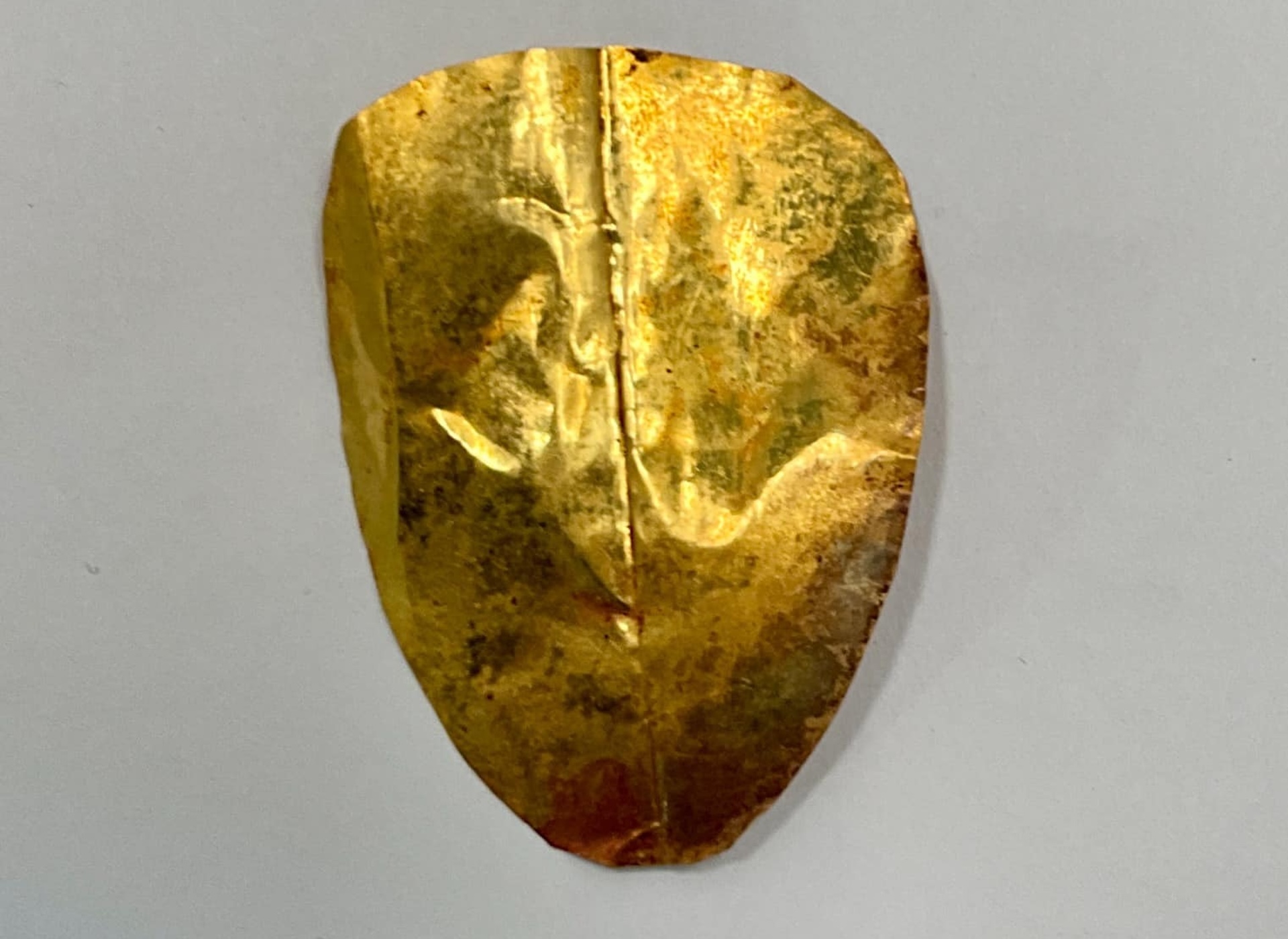
Испани, Египетийн археологийн баг Птолемейн үед хамаарах эртний булшнаас тусгай зан үйлийн шинжтэй оршуулгыг илрүүллээ.
Египетийн Минья мужийн Оксиринхус буюу нутгийнхны нэрлэдгээр Аль-Бахнаса бүсэд явуулсан малтлагаар гурван танхим бүхий булшны доод хэсгээс олон тооны мумми олджээ. Эдгээрээс 13 муммигийн амны хөндийд алтаар хийсэн, хэлний хэлбэртэй ялтас байрлуулсан байв. Эртний Египетийн үзэл баримтлалаар алт нь мөнхийн чанартай, бурхдын мах бодь хэмээн тооцогддог байсан тул талийгаачийг нөгөө ертөнцөд Осирис бурхантай уулзахдаа ярих чадвартай байлгахын тулд ийнхүү оршуулдаг байсан гэж судлаачид тайлбарлаж байна.
Археологичид мөн мумминуудын хуруу, хөлийн хуруун дээр алтан хадаас байрлуулсныг илрүүлсэн бөгөөд энэ нь талийгаачийг муу ёрын хүчнээс хамгаалах зорилготой байжээ. Булшнаас Хорус, Тот, Исида бурхдыг дүрсэлсэн 29 сахиус болон зүрхний хэлбэртэй сахиус зэрэг олон үнэт олдвор гарч ирсэн байна. Эгипет судлаачдын таамаглаж буйгаар, ийм олон тооны алтан хэлтэй мумми олдсон нь тухайн үед тус бүс нутагт нөлөө бүхий элитүүд оршуулагдсан эсвэл занданшуулах цехийн уламжлалт үйл ажиллагаатай холбоотой байж болох юм.
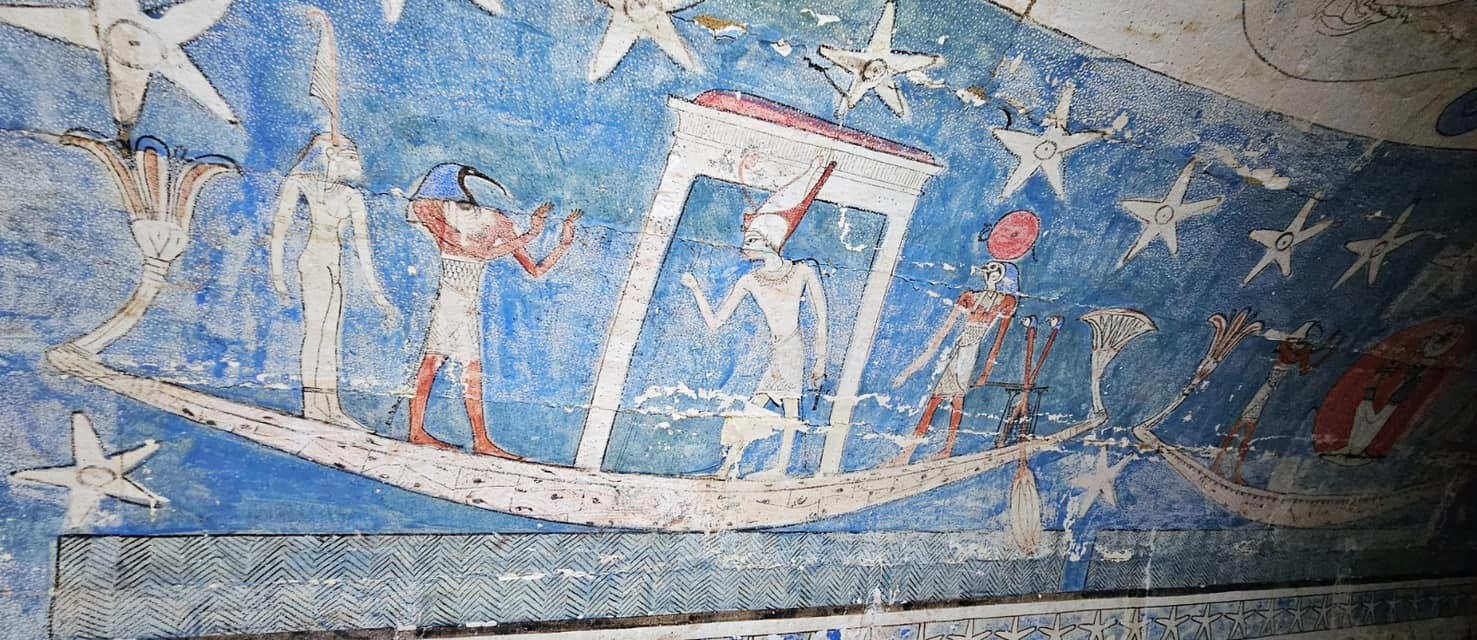
Тус малтлагын үеэр олдсон ханын зураг болон бусад дүрслэлүүд нь түүхэн ач холбогдолтойд тооцогдож байна. Булшны хананд талийгаач “Вэн Нефер” гэр бүлийнхний хамт бурхдад өргөл өргөж буй дүрслэл, таазны хэсэгт од эрхэс болон бурхдын завь бүхий тэнгэрийн дагина Нутын зураг зэргийг маш сайн хадгалагдсан байдалтайгаар илрүүлжээ. Олон улсын археологийн баг Оксиринхус дахь малтлагын ажлыг цаашид үргэлжлүүлэхээр төлөвлөж байна.
Дэлгэрэнгүйг эх сурвалжаас харах
↓Эх сурвалжийг нээх ↓
At the bottom of a burial shaft in Minya Governorate, Middle Egypt, a joint Egyptian-Spanish archaeological team descended into a hall with three chambers branching off it, each crowded with mummies laid side by side. On 13 of the bodies, thin pieces of gold had been fitted over the mouth, shaped to replace the tongue.
The Egyptian Ministry of Tourism and Antiquities announced the finds, crediting them to a mission run by the University of Barcelona and the Institute of the Ancient Near Eastern Studies. The site is Oxyrhynchus, known locally as Al-Bahnasa, a place excavated for years that keeps turning up surprises.
The mummies date to the Ptolemaic period, roughly 304 to 30 B.C.
Gold tongues were a documented funerary practice of that era, but the thinking behind them reaches straight into Egyptian cosmology. “For the Egyptians, gold was a material that had qualities of everlastingness,” said Jennifer Houser Wegner, a curator of Egyptian artifacts at the Penn Museum in Philadelphia. “It never tarnished. It always shone brilliantly.” Because gold was considered the flesh of the gods, placing it in the mouth of the dead was understood to give the deceased the capacity to speak when facing Osiris in the underworld.
An Unusual Concentration
What caught the attention of specialists who were not involved in the dig was the sheer number of tongues. “The number of gold tongues here is high, which is interesting,” Salima Ikram, an Egyptology professor at the American University in Cairo, told Live Science.
She offered two possibilities: the individuals may have belonged to elites connected to the local temples and animal cults, or fitting gold tongues may simply have been routine for the embalming workshop operating in the area.
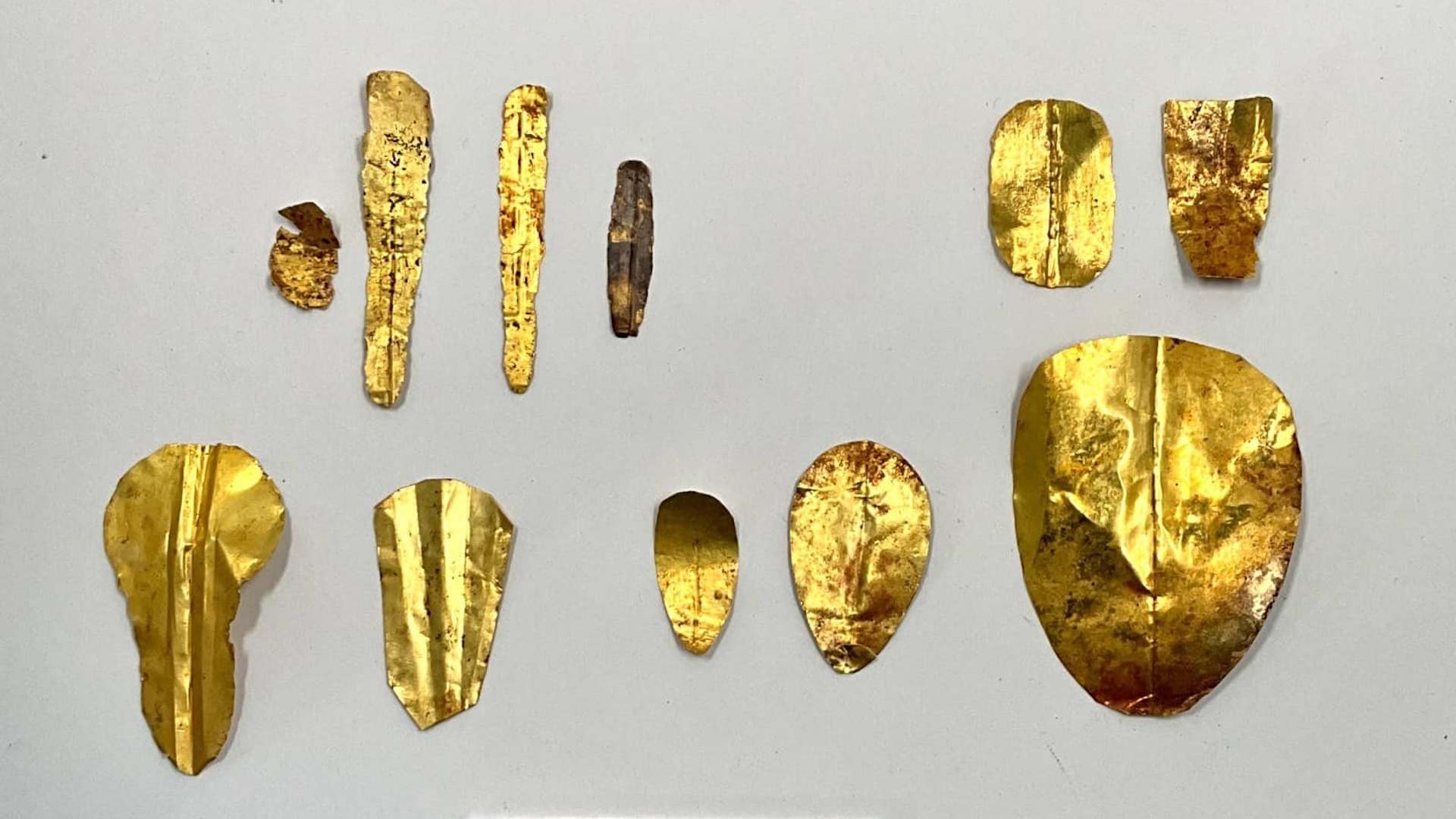
Earlier seasons had already established a pattern at Oxyrhynchus, with the same mission recovering 16 gold tongues. Gold nails were also found with these mummies, placed on fingers and toes.
According to the Ministry’s statement, those nails had a protective role, meant to shield the body from corruption and guard the deceased against malevolent forces in the afterlife. Among the 29 amulets recovered beside the mummies were djed pillar forms and scarabs representing Horus, Thoth, and Isis, along with composite pieces combining all three.
A heart scarab was found still in position inside one mummy.
Paintings Not Seen Before in This Region
Beside the first burial shaft, a second one dropped into another set of three chambers. One held wall paintings whose pigments, according to Egyptologist Francesco Tiradritti of D’Annunzio University of Chieti-Pescara, were of excellent quality and striking freshness. In one scene, the tomb owner, identified as “Wen Nefer,” presents offerings alongside family members to Anubis, Osiris, Atum, Horus, and Thoth.
Across the ceiling, the sky goddess Nut appears in white against blue, surrounded by stars and sacred boats carrying Khepri, Ra, and Atum.
Another image shows a mummy being embalmed by Anubis, its face covered in a thin luminous layer of gold, with the depicted faces of Osiris, Isis, and Nephthys flanking the deceased given the same treatment. The mission noted that compositional scenes of this type, a tomb owner and family among the gods, had not previously been documented in the Al-Bahnasa region. The chamber held four limestone sarcophagi.
Kathleen Martinez, a Dominican archaeologist who has worked extensively on Ptolemaic-era sites, put the broader stakes of discoveries like these plainly. “Very little information has remained about the Greco-Roman period in Alexandria,” she said. “The discoveries we have found in this necropolis are not only extraordinary, but they also indicate that there are more secrets to reveal.”
Co-director Maite Mascort confirmed that earlier seasons at Oxyrhynchus had uncovered tombs from the Saite, Greek, and Roman periods, as well as a Roman basilica church and an Osirion temple.
The mission plans to continue excavation at the site.
Enjoyed this article? Subscribe to our free newsletter for engaging stories, exclusive content, and the latest news.

