Сан-Антонио Спөрсийн бүрэлдэхүүний өөрчлөлтүүд болон энэ зуны бэлтгэлүүд нь багийн хагас талбайн довтолгооны үр ашгийг дээшлүүлэх үндсэн зорилготой байна.
Өнгөрсөн улирлын плэй-оффийн сүүлийн хоёр шатанд Сан-Антонио Спөрсийн хагас талбайн довтолгоо доголдож, ялангуяа дөрөвдүгээр үед хамгаалалтын нягтрал нэмэгдэхэд Виктор Вембаньяма довтолгоог үр дүнтэй зохион байгуулахад хүндрэлтэй тулгарч байв. Багийн зүгээс Тобиас Харрисыг эгнээндээ нэгтгэснээр довтолгооны хувилбаруудыг төрөлжүүлж, тоглолтын төгсгөлийн мөчүүдэд тулгардаг оноо авалтын зогсолтыг шийдвэрлэхээр зорьж байна.
Виктор Вембаньямагийн хувьд улирлын туршид 9 өөр төрлийн довтолгооны хувилбарт 100-аас дээш удаа оролцсон нь түүнийг лигийн хамгийн олон талт төвийн тоглогчдын нэг болохыг харуулж байгаа ч түүний үр ашгийг улам нэмэгдүүлэх шаардлагатай байгаа юм. Ирэх улиралд түүнийг бөмбөгтэй гүйцэтгэх үүрэг болон дамжуулалтын чадварыг хөгжүүлэх төлөвлөгөөтэй байгаа бөгөөд бөмбөг дамжуулах болон довтолгооны шидэлтийн хослолыг сайжруулах нь багийн хагас талбайн довтолгоог илүү уян хатан болгох түлхүүр гэж үзэж байна.
Дэлгэрэнгүй эх сурвалжийг харах
Эх сурвалжийг нээх ↓
Earlier this month, I asked for questions about the San Antonio Spurs leading up to the start of training camp in a few weeks. I compiled answers based on some of your questions, which we’ll release in a few articles over the course of the month.
In this edition, we’ll talk about the Spurs’ biggest shortcoming in last season’s playoffs — their half-court offense — and how it could improve this season. Future editions will dissect the roles of the three lead ballhandlers (De’Aaron Fox, Stephon Castle and Dylan Harper), dive deeper into the impact of free-agent signing Tobias Harris and ponder how replacing Sean Sweeney with Billy Donovan may affect Mitch Johnson’s coaching staff.
Questions have been lightly edited for clarity and brevity.
What do you think the Spurs think is their biggest weakness to overcome and put behind them? I don’t think they care or have decided who gets minutes and who starts or doesn’t, but they must have something they looked at from last year and said, “This is our main goal. We must be better here.” What is that? Why? — Dylan M.
I think the Spurs’ roster decisions and points of emphasis this summer serve the bigger goal of improving as a half-court offense.
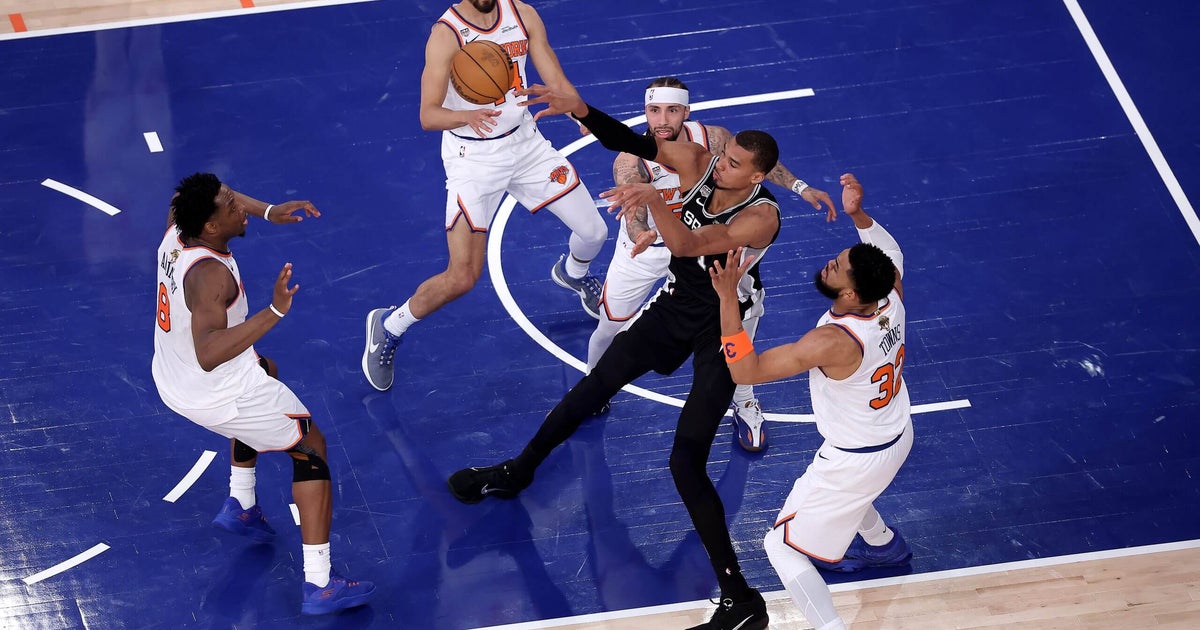
The droughts they went through in the last two rounds of the playoffs last season were perplexing. Victor Wembanyama, in particular, struggled to create good looks when defenses ramped up the physicality in the fourth quarter and killed the Spurs’ execution. A lot of that is on him to improve as a creator in a way we probably won’t see tested until next postseason. He needs more simple shots in his arsenal to use when he can’t win the position battle or attack space.
It’s important to remember that, for a third-year player, Wembanyama was already way ahead of anyone’s reasonable expectations. But the Spurs need a system that can take that burden off him, beyond one of their other point guards getting to a contested midrange pull-up. That could be a permanent uphill battle unless Fox, Castle and/or Harper can be a legit knockdown deep shooter in the playoffs.
The Spurs haven’t made any firm decisions on how the playing rotation will work, and there should be some good training camp battles to settle things. Last year, they course-corrected halfway through the season by putting Julian Champagnie in the starting lineup over Harrison Barnes, plus Harper took a big leap forward to change the dynamic.
The hope is that Tobias Harris changes a lot of things by scoring with ease and holding up defensively against big fours. He bridges that gap they have between their guards’ floater game, Wembanyama’s mid-post jumpers and the one-dribble midrange pull-ups from Champagnie and Devin Vassell. Harris can attack all the way to the rim through traffic, has an array of low- and mid-post finishes and can make good playmaking reads off the bounce. He can be the solution to a lot of those early fourth-quarter droughts.
The Spurs rarely played from behind, so their goal is to simply not let go of the rope late in games. Last postseason, they experienced the classic conundrum of an inexperienced team. Maybe one NBA Finals heartbreak and a dose of Harris is enough to give them the mindset callouses to hold it together.
In his rookie season under Gregg Popovich, Wemby showed some flashes of being a solid offensive hub, operating in dribble handoffs and even pick-and-rolls. It made sense to streamline his responsibilities with the three guards and make him a play finisher, but during the finals, we saw the limits of this approach when he had to create offense on his own. Do you believe there is a plan in place to develop these skills again despite the natural hurdles that will eventually arise, at least during the regular season? — Thomas G.
There is certainly a plan in place, but let’s first figure out the context of his development path.
I wouldn’t make the NBA Finals a litmus test for Wembanyama’s development program at this point, because it was drastically harder than what he faced during the regular season. Throughout the year, he showed all of the skills you mentioned. If you look at his play-type breakdown on Synergy, he actually has nine different categories with at least 100 possessions used (transition, spot-up, isolation, roll man, post-up, cut, off screen, put-backs, pick-and-roll ballhandler).
For comparison, Nikola Jokić had eight (though he had 97 cuts, so he was close to nine). Looking at other centers averaging 20-plus points a night, you have Karl-Anthony Towns (seven), Alperen Şengün (seven) and Bam Adebayo (five). Wembanyama’s variety, at least in the regular season, is as wide as it gets. Doing some digging to find comps in previous years, I could find only Jokić having nine categories with at least 100 possessions, which he did in the prior two seasons. So, Wembanyama’s versatility is already rivaling that of one of the greatest offensive stretches in NBA history.
The drastic difference is his efficiency on said plays. Jokić’s superpower is that he can hit a shot from anywhere on the court at any time. Wembanyama is trying to become that kind of player, but he isn’t yet.
When I first moved to San Antonio last year and was asked who Wembanyama should model his game after, I always said Jokić. He should be able to play with the ball over his head and pick offenses apart, then throw it up toward the rim when he doesn’t see a pass he likes. That is the idealized version of Wembanyama. But he just finished Year 3, so he is far from that player today.
It’s easier to explain why operating as the ballhandler in ball screens is a low-usage area for him right now. It’s the hardest skill in the league, and this roster design makes it the least necessary for him. But if the Spurs are going to have a truly interchangeable offense, he has to be able to flow into those easily. We saw more of that early last season when he was experimenting a lot with dribble driving, then it drifted a bit as his game became more transition/cut heavy with less orchestrating on the perimeter and posting up. That was a reflection on the three-guard rotation hitting full swing, the team’s overall tempo picking up and the recognition that Wembanyama’s load needs to be managed within games so he can remain effective in the fourth quarter.
The effects of that pull-back didn’t manifest in the regular season, but they showed deep into the playoff run. His handle needs to get tighter for him to be a playmaker with the ball more regularly. In the playoffs, it seemed like the bigger challenge was that Wembanyama’s dribbling cadence to get two feet into the paint was disrupted effectively. He didn’t have a lot of rhythm when he put the ball on the floor. That is to be expected in his first playoff run; in fact, he did an impressive job working around it considering his experience level.
Wembanyama’s had some good moments in the past running pick-and-roll where he can snake back through coverages to hit a roller or drive around defenses to draw a foul. As he gets older, he’ll build out that skill more.
This year, I’d expect to see more dribble handoffs early on because it opens up the guards to hit the pockets in the defense with more speed. Wembanyama’s ability to play hide-and-seek with the ball could be an effective weapon, but his pull-up game has to get better for it to work. If he can fake a dribble handoff into a pull-up shot, he’ll really open up the Spurs’ offense.

