АНУ-ын хоригт орсон Хятадын компаниуд инновацыг дэмжихийн тулд шинжлэх ухааны бүтээлүүдэд илүүтэй түшиглэх болсон болохыг шинэ судалгаа харууллаа.
Science сэтгүүлд нийтлэгдсэн уг судалгаагаар 2010-2022 оны хооронд АНУ-ын “Entity List” буюу технологийн хязгаарлалтын жагсаалтад орсон Хятадын аж ахуйн нэгжүүдийн үйл ажиллагааг шинжилжээ. Тус жагсаалт нь компаниудад тодорхой технологийг лицензлэх болон хамтарсан судалгааны төсөлд оролцохыг хориглодог бөгөөд үүнийг АНУ үндэсний аюулгүй байдлыг хамгаалах зорилгоор хэрэгжүүлдэг.
Судлаачид Хятадын оюуны өмчийн газар (CNIPA), Web of Science болон санхүүгийн мэдээллийн санг ашиглан хоригт орсон компаниудыг ижил төстэй салбар, өмчлөл, байршил бүхий хоригт ороогүй компаниудтай харьцуулсан байна. Үр дүнд нь хоригт орсон компаниуд шинжлэх ухааны өгүүлэл иш татсан патентын тоогоороо ижил төстэй компаниудаас 72.3%-иар илүү байгааг тогтоожээ. Мөн эдгээр компаниуд эрдэм шинжилгээний өгүүлэл хэвлүүлэх нь 33.3-85.2%-иар илүү байсан нь ажиглагдсан байна.
Ноттингем Нинбо их сургуулийн инновацын бодлого судлаач Цун Цао энэхүү үр дүн нь АНУ-ын экспортын хяналтын төлөвлөөгүй үр дагаврыг харуулж байна гэж дүгнэжээ. Стэнфордын их сургуулийн улс төр, эдийн засагч Динша Мистри технологийн хяналт нь тодорхой зардал дагуулдаг бөгөөд хоригт орсон компаниуд инновацын үйл ажиллагаагаа улам эрчимжүүлж байгааг онцолсон юм.
Гэсэн хэдий ч Сингапурын үндэсний их сургуулийн судлаач Кеннет Хуан энэхүү өөрчлөлтөд зөвхөн АНУ-ын хориг нөлөөлсөн үү, эсвэл өөр хүчин зүйлс нөлөөлсөн эсэхийг баттай хэлэх боломжгүй гэж үзэж байна. Хэдийгээр Хятадын компаниуд бүхэлдээ шинжлэх ухаантай холбогдох хандлага нь тухайн хугацаанд эрс нэмэгдсэн ч, хоригт орсон компаниуд илүү эрчимтэй арга барил баримталсан болохыг судалгааны дүн илэрхийлж байна.
Дэлгэрэнгүйг эх сурвалжаас харах
↓Эх сурвалжийг нээх ↓
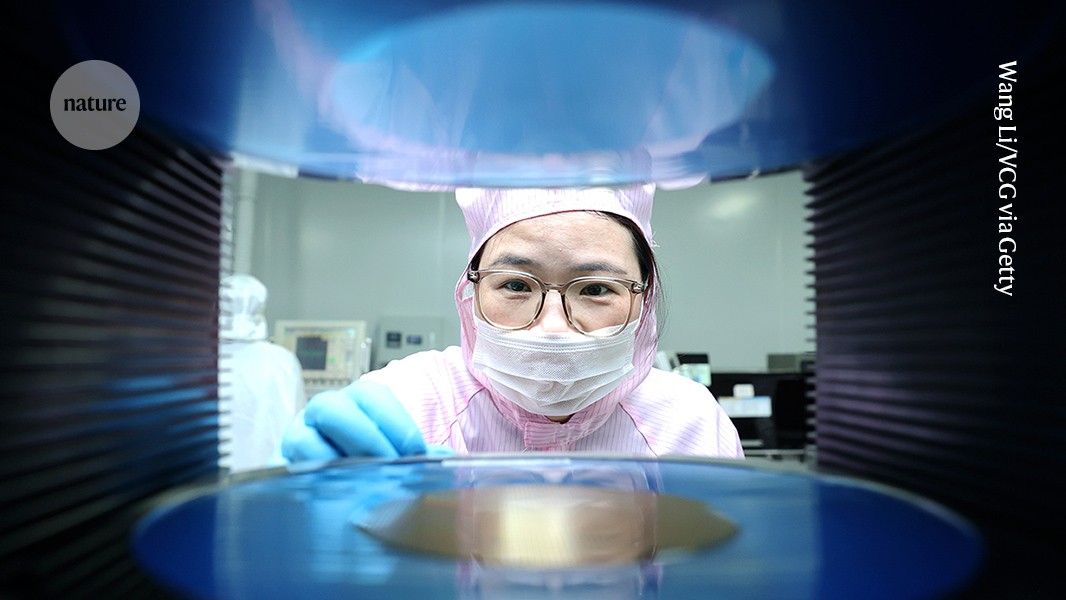
Chinese firms increased their reliance on science publications after the US restricted their access to proprietary information.Credit: Wang Li/VCG via Getty
Chinese firms that were restricted from accessing specific technologies created in the United States increased their use of science publications to boost innovation, according to an analysis of patent citations and scientific publications1 in Science today.
Researchers examined how Chinese firms adjusted their ways of accessing knowledge after the US government put them on an ‘Entity List’. The list prevents those on it from licensing certain materials and engaging with joint research and development projects. The US government says that the Entity List is designed to safeguard national security: It began putting large Chinese firms on the list in 2018 when the China–US geopolitical relationship became tense.
After their inclusion on the list, Chinese firms produced more patents that cited scientific publications than did companies similar to them that had not been sanctioned, as well as publishing more scientific articles than did unsanctioned companies, the article says.
The finding is notable because it shows the “unintended consequences” of US export controls, says Cong Cao, a researcher of innovation policy at the University of Nottingham Ningbo China.
“Whether or not one supports technology controls, it is important to recognize that they can come with costs,” adds Dinsha Mistree, a political economist at Stanford University in California.
Although Chinese firms boosted their engagement with science after restrictions were introduced, Kenneth Huang, a researcher of innovation and technology management at the National University of Singapore, says the authors cannot be sure that a Chinese firm being placed on the Entity List actually caused this shift or whether other factors were at play.
Science against sanctions
Other studies have assessed the impact of US sanctions on Chinese innovation. But the latest analysis “uses some of the best data, as well as rigorous methods for such an analysis”, says Mistree.
To show the effect of US sanctions on Chinese innovation, the authors of the latest analysis used data sets spanning 2010–22 from several sources, including the China National Intellectual Property Administration (CNIPA) — which is China’s patent and trademark office — the article-indexing platform Web of Science and the China Stock Market and Accounting Research Database.
The team began by identifying long-term trends: they found that Chinese companies in general, whether sanctioned or not, deepened their engagement with the scientific community during the studied period. For example, the number of patents granted by CNIPA that cited at least one scientific paper increased by more than 18-fold: from 5,225 in 2010 to 94,441 in 2022. Patents granted to Chinese firms by the US Patent and Trade Office jumped by more than 13-fold, from 452 to 6,071. However, US inventors and firms still lead the world in the use of scientific knowledge in patents.
The authors then compared Chinese companies that were included on the US Entity list between 2010 and 2022 with those that were not over the same period. To ensure the comparison was robust, they compared sanctioned firms with non-sanctioned firms that shared similar characteristics, such as their industry, owners and location.
The authors shows that Chinese firms subject to sanctions produced 72.3% more patents that cite at least one scientific publication than similar non-sanctioned companies. Sanctioned companies also published 33.3% more papers tindexed in the China National Knowledge Infrastructure, China’s largest academic database of papers, than their non-sanctioned peers. In Web of Science, they published 85.2% more.
Mistree says that he would expect Chinese firms to increase their publications and the number of patents that cite papers, regardless of whether they were sanctioned, owing to China’s substantial investments in science and technology during this time. “What the authors show so convincingly is that the Chinese companies that were subject to US sanctions pursued an even more intensive science and technology approach than they would have otherwise. These Chinese companies seem to double down on innovation when they are sanctioned,” he adds.

