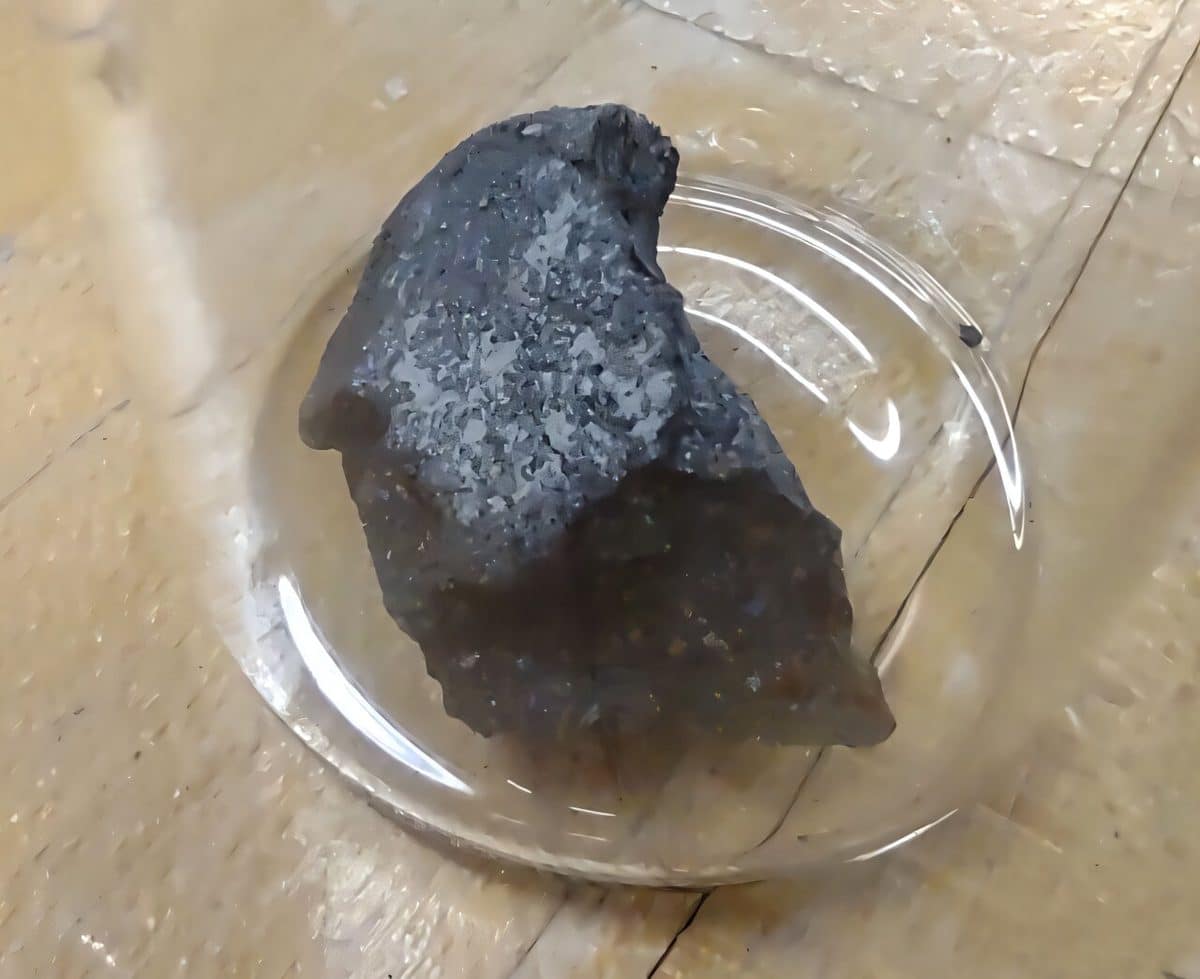
Эрдэмтэд 1969 онд Австралид унасан солир болон 2019 онд Коста Рикад унасан солирын хэлтэрхийг шинжилж, сансрын химийн бүтэц дэх нарийн төвөгтэй органик нэгдлүүдийг тогтоов.
National High Magnetic Field Laboratory болон Brookhaven National Laboratory-ийн судлаачид дэлхийн хамгийн хүчирхэг масс спектрометрүүдийн нэгийг ашиглан солируудын доторх нүүрстөрөгчид суурилсан олон арван мянган органик нэгдлийг илрүүлжээ. Энэхүү судалгаагаар нарны аймгийн гарагууд үүсэхээс өмнө сансарт ямар төрлийн химийн бодисууд оршин байсныг нарийвчлан тодорхойлсон байна. Судалгааны үр дүнг The Planetary Science Journal сэтгүүлд нийтэлжээ.
Судалгаанд ашигласан Murchison солир нь дор хаяж 5.5 тэрбум жилийн настай буюу Дэлхийгээс нэг тэрбум гаруй жилээр ахмад болохыг тогтоосон байна. Эрдэмтэд солирын хэлтэрхийг нунтаглан метанол, этанол зэрэг органик уусгагчаар боловсруулж, химийн бүтцийг нь шинжилжээ. Үр дүнд нь Murchison болон Aguas Zarcas солируудын молекулын найрлага хоорондоо эрс ялгаатай байгаа нь тогтоогдсон бөгөөд энэ нь нарны аймаг үүсэх үед астероидууд өөр өөр орчинд байсныг илтгэж байна.
Судалгааны баг масс спектрометрийн шинжилгээнээс гадна Brookhaven National Laboratory-ийн дэвшилтэт атом хүчний микроскопыг ашиглан нэг бүрчлэн дүрслэн харуулах аргыг хэрэглэжээ. Энэхүү арга нь молекулуудын зөвхөн химийн томьёог төдийгүй тэдгээрийн атомын холбоосын бүтцийг нарийвчлан таних боломжийг олгосон байна. Уг технологийн тусламжтайгаар сансрын биетүүдэд хадгалагдан үлдсэн нарийн төвөгтэй химийн системийг судлах шинэ боломж нээгдэж байгааг судлаачид онцоллоо.
Дэлгэрэнгүйг эх сурвалжаас харах
↓Эх сурвалжийг нээх ↓
Fragments of an ancient meteorite have exposed a stunning array of molecules that predate the formation of Earth. Inside two meteorites, researchers identified tens of thousands of organic compounds. Using one of the most powerful mass spectrometers in the world together with cutting-edge molecular imaging, teams from the National High Magnetic Field Laboratory and Brookhaven National Laboratory mapped the complex chemistry locked inside these rocks. The results reveal a remarkable diversity of carbon-based molecules, some of which stayed concealed for billions of years.
The team analyzed samples from the Murchison meteorite, which struck Victoria, Australia, in 1969, and the Aguas Zarcas meteorite, which fell in Costa Rica in 2019. Published in The Planetary Science Journal, the study provides new details about on the organic material carried by meteorites and on the chemical variety that existed before the planets took shape.
Meteorites Hide A Chemical Treasure
The analysis revealed an unexpectedly large variety of carbon-based compounds inside small samples of both meteorites. Researchers identified tens of thousands of molecular signatures, with each one potentially representing several different chemical structures. Joseph Frye-Jones, lead author of the study, explained that:
“This can shed light on how much complex organic material is out in space,” he said.
The Murchison meteorite was particularly important for the research because of its extreme age. The space rock is at least 5.5 billion years old, making it around one billion years older than Earth. Despite spending billions of years away from our planet, the meteorite still contains a highly complex mixture of organic compounds.
The research noted that the molecular complexity found in Murchison is comparable to some of the most complicated mixtures studied in laboratories, including petroleum deposits. This reveals that space environments can preserve incredibly diverse chemical systems.
The comparison between Murchison and Aguas Zarcas also produced a surprising result. Although both meteorites belong to the same broad cosmic family and appear similar visually, their molecular compositions were very different. Only a small portion of their complex compounds overlapped. The scientists explained that this difference reflects the variety of environments experienced by different asteroids during the formation of the solar system.
“It is giving us a glimpse at the origins of our planet and solar system,” Frye-Jones said.
Advanced Technology Unlocks New Details From A Famous Meteorite
Recent improvements in scientific instruments have allowed researchers to examine the space rock with much greater precision. The team used the National High Magnetic Field Laboratory’s 21-tesla Fourier transform ion cyclotron resonance mass spectrometer, one of the most advanced systems available for analyzing complex mixtures.
To prepare the samples, scientists crushed fragments of the meteorites and dissolved them in organic solvents, including methanol and ethanol. The resulting solutions were then analyzed to determine the different molecules present inside the material.

The instrument allowed researchers to study the chemical fingerprints of thousands of compounds at an extremely detailed level. The same technology has previously been used to examine complex substances such as petroleum, persistent chemical compounds and dissolved organic matter.
“The technique that we are using has been steadily getting better as technology improves. With the highest-resolution mass spectrometer in the world, we can look at things that others cannot,” Frye-Jones explained.
Molecules From Space Revealed In Detail
Identifying molecules is only part of the challenge. A chemical formula does not always reveal how atoms are connected, meaning two molecules can contain the same elements but have different structures.
To investigate this hidden information, researchers from Brookhaven National Laboratory used high-resolution noncontact atomic force microscopy. Percy Zahl, a senior staff scientist at Brookhaven’s Center for Functional Nanomaterials, used the technique to create images of several individual molecules extracted from the meteorite samples.
The method works by moving an extremely sharp tip above a surface and measuring atomic interactions to map the structure of molecules. Because meteorite samples contain such a complicated mixture of compounds, capturing a single molecular image can require days or even months of work.
“Mass spectrometry can reveal the molecular formulas hidden within a meteorite, but this takes the analysis one remarkable step further,” Zahl explained. “This is the only method that can actually image the structure of a single molecule.”

By merging molecular detection with direct imaging, researchers can now determine not only which compounds exist, but also what their exact structures look like. The team stressed that this microscopy has been used on meteorite material just three times so far.
Enjoyed this article? Subscribe to our free newsletter for engaging stories, exclusive content, and the latest news.

