Биологийн тооцоолол ашиглан хиймэл оюун ухааныг илүү үр ашигтай болгох зорилготой “The Biological Computing Company” (TBC) стартапын шинэ бүтээл Amazon Web Services (AWS) платформын хязгаарлагдмал хүрээний хэрэглэгчдэд нээлттэй боллоо.
TBC компанийн бүтээсэн уг технологи нь хулганы тархины эсийн мэдрэлийн хэв маягийг ашиглан дүрс бичлэг үүсгэх хиймэл оюун ухааны загваруудыг сайжруулахад чиглэдэг. Компанийн үүсгэн байгуулагч Александр Ксендзовскийн тайлбарласнаар, тэд биологийн материалыг мэдээлэл кодлох хэрэгсэл болгон ашиглаж, биологийн процесс хэрхэн явагдаж байгааг ажигласны үндсэн дээр түүнийг дуурайх программ хангамжийг бүтээн гаргажээ.
Amazon Web Services-ийн зүгээс TBC-ийн энэхүү прагматик хандлагыг онцолж байна. Тус компани нь хиймэл оюун ухааны суурь бүтцийг бүхэлд нь өөрчлөхийг оролдохын оронд одоогийн дүрс үүсгэгч загваруудыг хэрхэн илүү үр ашигтай болгох вэ гэдэг асуудалд төвлөрч ажиллаж байгаа юм. AWS нь өмнө нь Австралийн “Cortical Labs” компанитай хамтран ажиллаж, лабораторид ургуулсан мэдрэлийн эсүүдийг силикон чиптэй нэгтгэн өгөгдөл боловсруулах технологийг нэвтрүүлж байсан туршлагатай.
Биологийн тооцооллын салбар нь зөвхөн математик алгоритмд тулгуурладаг уламжлалт технологиос ялгаатай нь хүний тархины мэдрэлийн сүлжээний ажиллагааг дуурайхыг зорьдог. Гэсэн хэдий ч энэ нь биологийн лабораторийн нарийн хяналт, эсийг амьд байлгах, улмаар биологийн үйл явцыг дижитал мэдээлэлд хөрвүүлэх зэрэг өвөрмөц сорилтуудыг дагуулдаг юм. Балтимор хотод байрлах TBC компани нь энэ оны эхээр 25 сая ам.долларын хөрөнгө оруулалт татсан бөгөөд AWS-ийн бүх корпорацийн хэрэглэгчдэд уг технологийг удахгүй хүргэхээр төлөвлөж байна.
Дэлгэрэнгүйг эх сурвалжаас харах
↓Эх сурвалжийг нээх ↓
A biological computing startup that uses neural patterns from rat brain cells to build artificial intelligence just got a major boost from Amazon.
Starting Tuesday, select Amazon Web Services customers will gain access to The Biological Computing Company’s “rat brain” AI model as part of a limited preview. The startup’s technology is specifically designed to improve AI for generating videos. Both Amazon and The Biological Computing Company, which goes by the acronym TBC, says they expect the tech to roll out to all AWS enterprise customers soon.
“We figured out a way to code information, like images for example, to the biological material,” says TBC cofounder Alexander Ksendzovsky. “We then observe how the biology processes that information, and then we build a tool that mimics that process.”
This is not the first biologically-derived computing platform that Amazon has made available in its marketplace, says Deap Ubhi, global director of technology for startups at Amazon Web Services. Ubhi says the cloud-computing giant also works with Cortical Labs, an Australia-based company that combines lab-grown neurons with silicon chips to help companies process data. (It calls its products WAAS, or “wetware as a service.”) Cortical Labs also sells a multi-thousand dollar “biological computer,” a low-power device designed for use in laboratories that can supposedly keep neurons alive for six months.
TBC takes a “pragmatic approach,” says Ubhi, which is part of why the company appealed to Amazon. Rather than taking big swings or trying to reinvent the transformer, the core architectural unit of large language models, “they’re working within existing standards of the generative AI space and saying, ‘How can we make the current visual models more efficient?’” he explains.
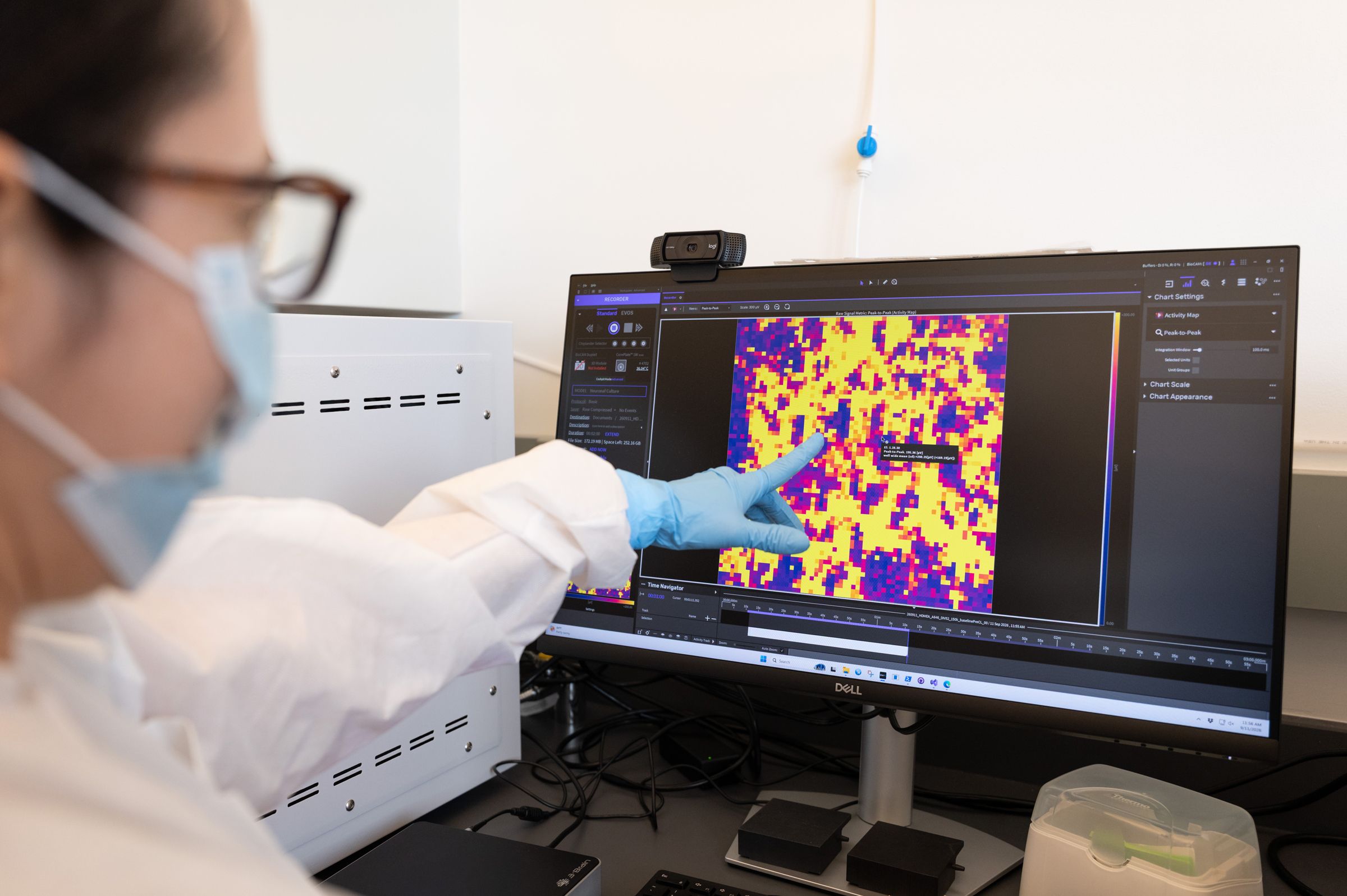
A multi-electrode array, which TBC uses to record the activity of rat brain cells.Courtesy of The Biological Computing Co
As AI companies race to find ways to make their models more efficient, a once-fringe field known as biological computing has begun gaining traction. Researchers have long envisioned a world where computer software performs more like the neural networks inside human brains instead of relying solely on math-based algorithms.
But biological computing comes with unique challenges. The field requires running actual biology labs, not just computer labs, in which brain cells, stem cells, or synthetic biomaterials must be kept alive or preserved, carefully monitored, and somehow translated into meaningful digital information. While some startups have made progress in the field, bridging the divide between nature and code remains complicated.
The Biological Computing Company was founded in Baltimore, Maryland four years ago by two neuroscientists and neurosurgeons: Ksendzovsky, now the company’s CEO, and Jon Pomeraniec, who serves as president and COO. Earlier this year, TBC raised $25 million from a group of investors led by Primary Venture Partners, its first significant round of funding.

