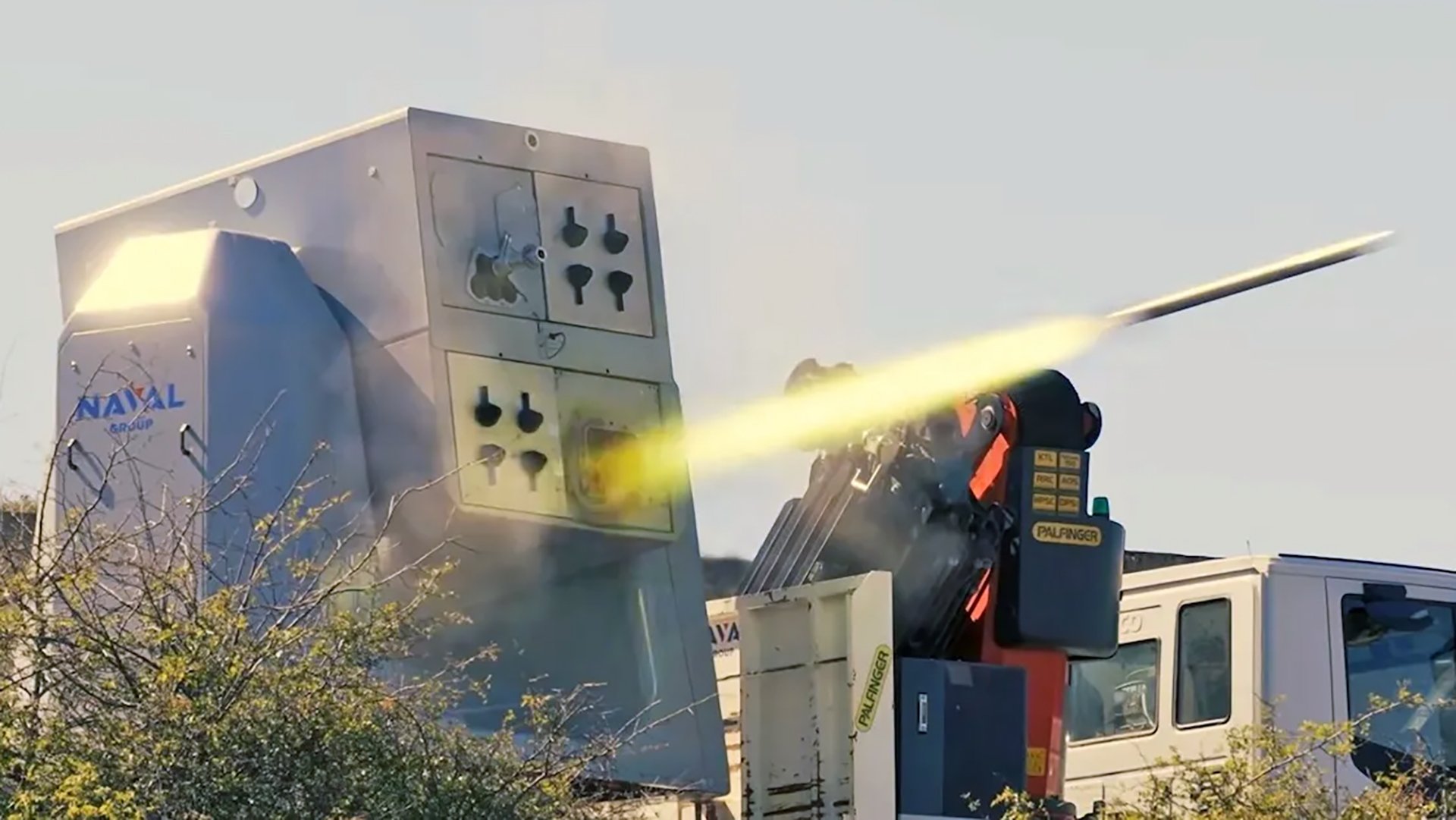
Францын Тэнгисийн цэргийн хүчин Mistral ангиллын хөлөг онгоцон дээрээ Naval Group компанийн боловсруулсан “Rampart” нэртэй олон зориулалттай пуужин харвах системийг суурилуулж, тэнгисийн нөхцөлд туршиж эхэлсэн нь гэрэл зурагт буужээ.
Есдүгээр сарын 21-нд Тулон хотын ойролцоо хийсэн сургуулилалтын үеэр уг системийг хөлөг онгоцны урд хэсэгт суурилуулсан нь анх удаа олон нийтэд ил болсон юм. “Rampart” нь нэг төрлийн зэвсэгт бус, харин сольж болох модулиудын тусламжтайгаар пуужин, нисгэгчгүй онгоц эсэргүүцэх пуужин болон бусад хэрэгслийг нэгэн зэрэг ашиглах боломжтой модульчлагдсан архитектуртай гэдгээрээ онцлогтой.
Энэхүү систем нь үнэтэй байлдааны хөлөг онгоцуудыг өртөг багатай нисгэгчгүй онгоц болон пуужингийн довтолгооноос хамгаалах зорилготой юм. Naval Group-ийн мэдээлснээр, уг систем нь 80 хүртэлх тооны 68 мм-ийн лазер удирдлагатай пуужин эсвэл 48 хүртэлх тооны 70 мм-ийн пуужин харвах чадвартай бөгөөд шаардлагатай бол богино зайн пуужингууд болон бусад нэмэлт хэрэгслээр тоноглох боломжтой.
“Rampart” систем нь бие даан болон хөлөг онгоцны байлдааны удирдлагын системтэй хоршин ажиллах чадвартай. Францын тэнгисийн цэргийн хүчин аравдугаар сард болох “Wildfire” нэртэй нисгэгчгүй онгоц эсэргүүцэх сургуулилалтын үеэр уг системийг бодитоор туршихаар төлөвлөж байна. Энэхүү туршилт нь хөлөг онгоцны хөдөлгөөн, чичиргээ болон далайн эрс тэс уур амьсгалд системийн ажиллагааг шалгах чухал үе шат болох юм.
Дэлгэрэнгүйг эх сурвалжаас харах
Эх сурвалжийг нээх ↓
A French Navy Mistral class amphibious assault ship has been photographed carrying Naval Group’s new Rampart modular launcher, a system designed to allow a single weapon station to employ different types of rockets, missiles, and other effectors against a wide range of threats.
The imagery, captured off Toulon during training on September 21, reveals the launcher installed on the ship’s forward starboard sponson. While the specific identity of the vessel is unclear, this represents the first publicly observed evidence that Rampart has moved into shipboard testing.
https://t.co/l9f8uOi1w3 pic.twitter.com/9efp3C8glH
— PEtienne
(@_PEtienne_) September 22, 2026
French Navy Mistral-class amphibious assault ship and
— G.GYSSELSSHIPCOLLECTION (@GGYSSELSSHIPS) September 22, 2026
Naval Group announced in June that the first at-sea firing campaign for Rampart was planned for October aboard a Mistral class ship during the French Navy’s Wildfire counter-drone exercise.
What makes Rampart unusual is its modular architecture. Rather than being built around one missile or rocket, the system uses interchangeable launch modules that can accommodate different weapons. This allows a ship to carry large numbers of relatively inexpensive guided rockets for counter-drone work while retaining the option of using larger and more capable short-range missiles against more challenging targets.
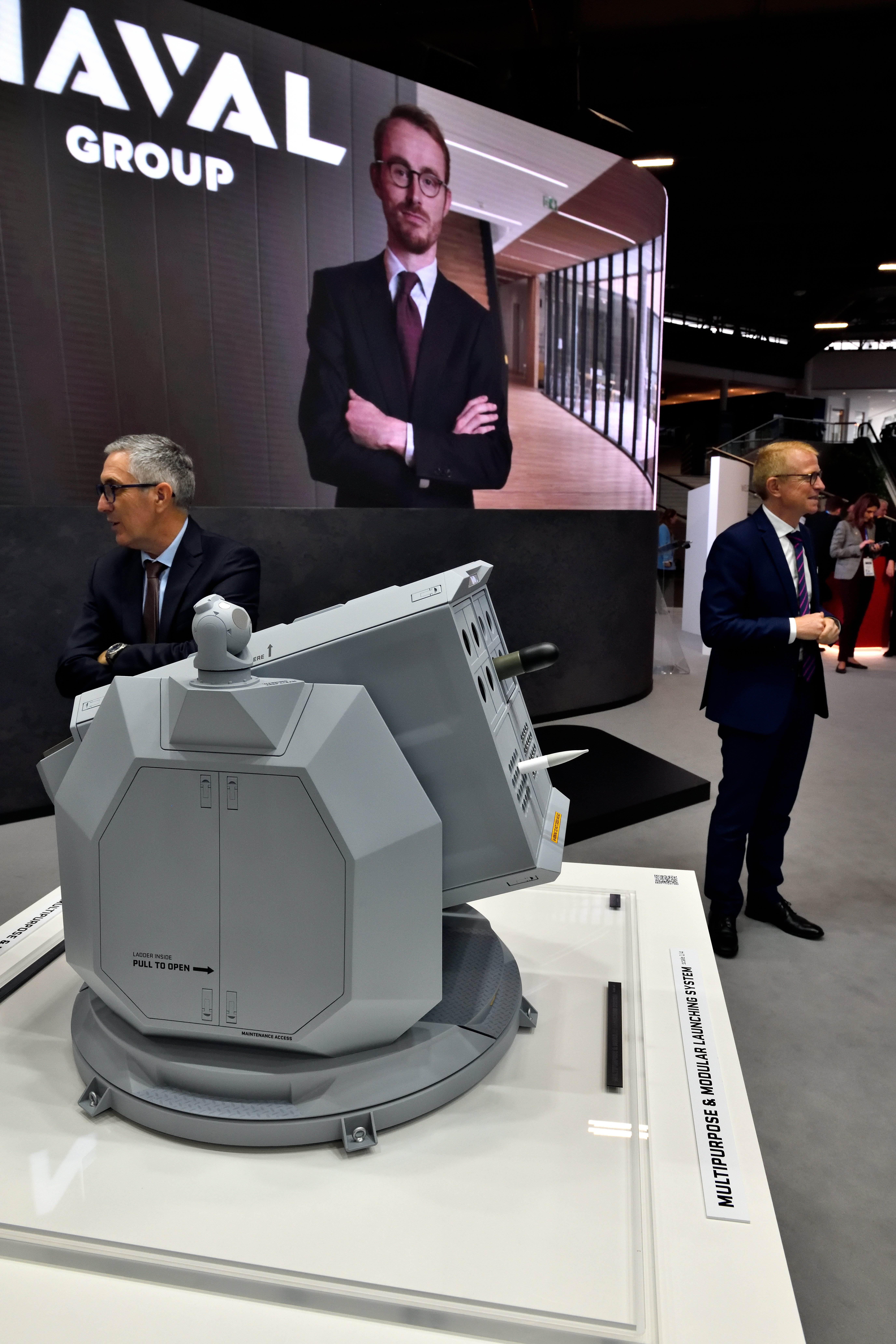
Because the launch modules are interchangeable, the mix can theoretically be changed as the mission or threat environment changes.
The approach is aimed squarely at a problem that has become increasingly important for naval forces: defending expensive ships against potentially large numbers of inexpensive uncrewed systems and missiles without relying exclusively on high-cost interceptors.
Rampart was previously known as the Multi-purpose and Modular Launching System (MPLS). Naval Group unveiled the concept in 2023 as a self-funded development effort and formally presented the Rampart earlier this year.
The launcher uses four interchangeable ammunition modules. Depending on the configuration, Naval Group says that the system can accommodate up to 80 Thales 68mm laser-guided rockets or 48 NATO-standard 70mm laser-guided rockets. Other configurations can carry smaller numbers of short-range missiles (four to six per module, depending on type) or other effectors, including decoys.
The system has already been demonstrated with guided rockets. A January 2026 test involved a Thales 68mm guided rocket, followed by a series of firings at the Canjuers range in southern France in May. Those trials, seen in the video below, included engagements against targets at roughly two miles and a five-rocket salvo.
The relatively small guided rockets are particularly relevant to counter-drone operations. They offer a way of engaging aerial targets with a weapon substantially smaller than a conventional surface-to-air missile, while still providing precision guidance.
As well as rockets, Naval Group has been working with Thales on the Lightweight Multirole Missile (LMM). Also known as Martlet, the LMM is intended to tackle a range of challenging airborne and surface targets, as you can read about here.
The company has also explored integration of loitering munitions and other missiles, while a separate agreement with the UAE-based EDGE Group covers trials of the SkyKnight surface-to-air missile.
The company has also pursued integration of Poland’s Piorun short-range air-defense missile. This may well be with a view to a potential Polish purchase of Rampart to arm its forthcoming frigates, which you can read about here.
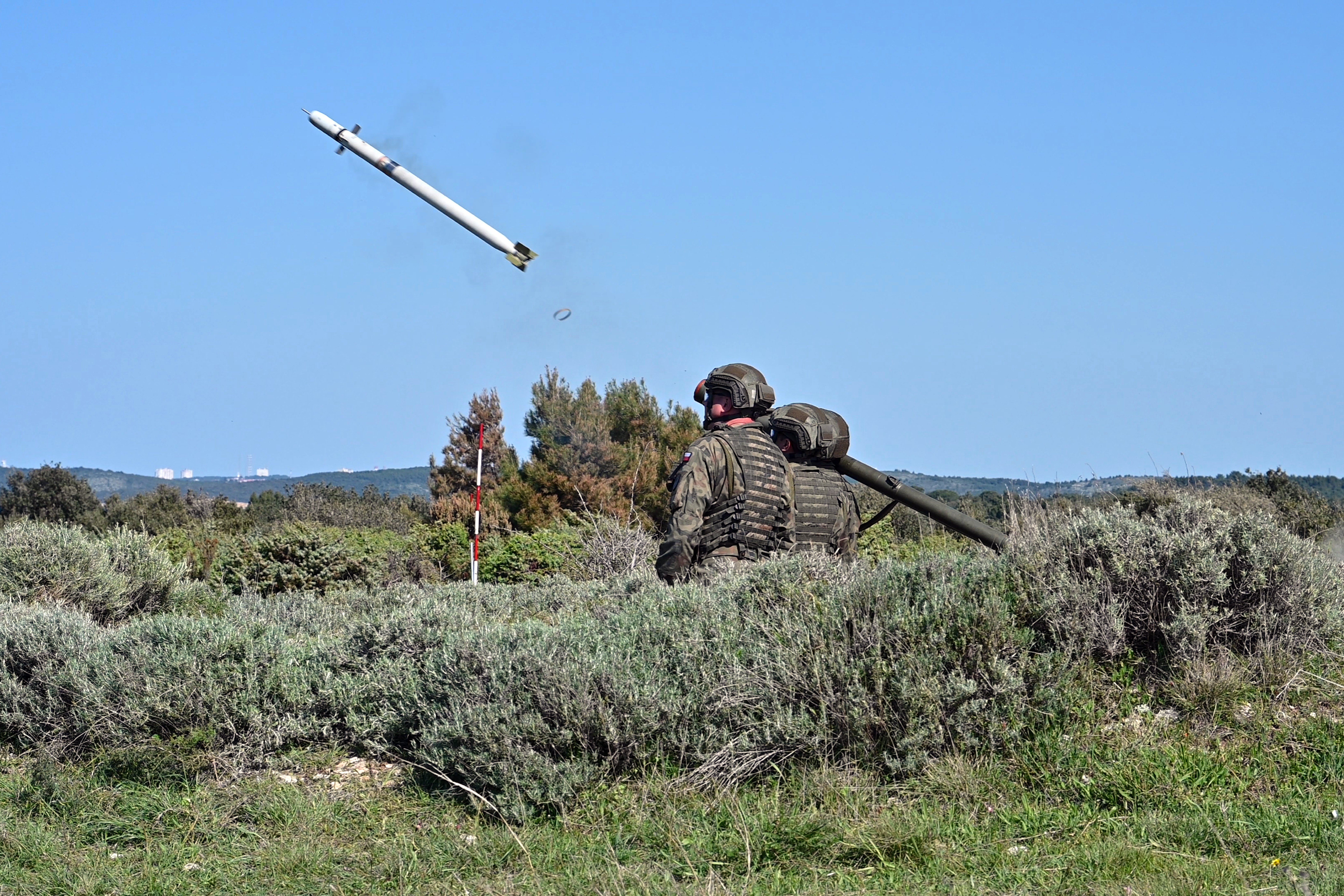
This means the launcher is effectively being developed as an open weapons-integration platform, rather than as a dedicated launcher for one or a small set of particular munitions.
That openness could make Rampart attractive to a wide range of navies. Instead of requiring customers to adopt a completely new missile family, the launcher can potentially be configured around weapons already in their inventories or sourced from their domestic defense industries. A country could therefore buy the common Rampart launcher while retaining control over the effectors it wants to integrate, whether those are guided rockets, short-range missiles, loitering munitions or other systems. at the same time, when it comes to air threats, this is very much a point defense system for close-in engagements, and a last line of defense to complement longer-range and more capable systems.
Naval Group has described the system as capable of operating either autonomously or as part of a ship’s combat system, with a stabilized turret and integrated fire-control equipment.
That integration will be particularly important during the upcoming sea trials. A launcher that works against stationary or land-based targets still has to contend with ship motion, vibration, sea spray, sensor integration, and the compressed timelines involved in defending a moving vessel.
France operates three Mistral class amphibious assault ships, which serve as major aviation, command, and amphibious warfare platforms. Their size and mission make them high-value assets that could face a broad range of aerial threats during operations. Another two vessels were built to the same design for Russia, before being placed under embargo, and then sold to the Egyptian Navy.

Naval Group’s choice of a Mistral for the initial at-sea campaign provides an opportunity to test Rampart under realistic operational conditions while integrating it with an existing French naval combat system.
In its basic form, each Mistral is armed with a pair of Simbad launchers, each of which is fitted with two Mistral short-range surface-to-air missiles. In terms of guns, each of the vessels is armed with two 30mm and two 20mm cannons, two 7.62mm M134 Miniguns, and four 12.7mm machine guns. Adding even a single Rampart launcher provides considerably more options against aerial targets across a wide range of threats — depending on the effectors that are included.
Recent U.S. and allied operations in the Middle East have highlighted the problem of large-scale missile and drone attacks have forced forces to expend substantial numbers of interceptors, raising concerns about both magazine depth and the cost of using high-end missiles against lower-cost threats. Directed-energy weapons could eventually provide a way out of that cost-exchange problem, but shipboard laser systems remain in the early stages of operational development. Navies cannot simply wait for them to mature, creating an immediate requirement for lower-cost, high-capacity kinetic options. Rampart’s large guided-rocket capacity and ability to mix different effectors are aimed at exactly that gap.
If Rampart can reliably engage drones with inexpensive guided rockets while retaining the ability to employ more capable missiles from the same launcher, it could offer navies an additional defensive layer between conventional guns and high-end surface-to-air missile systems.
Critically, new effectors could potentially also be integrated as they become available, allowing the system to evolve without replacing the entire turret.
Reflecting the urgency of the requirement, Naval Group’s development path for Rampart has been relatively rapid.
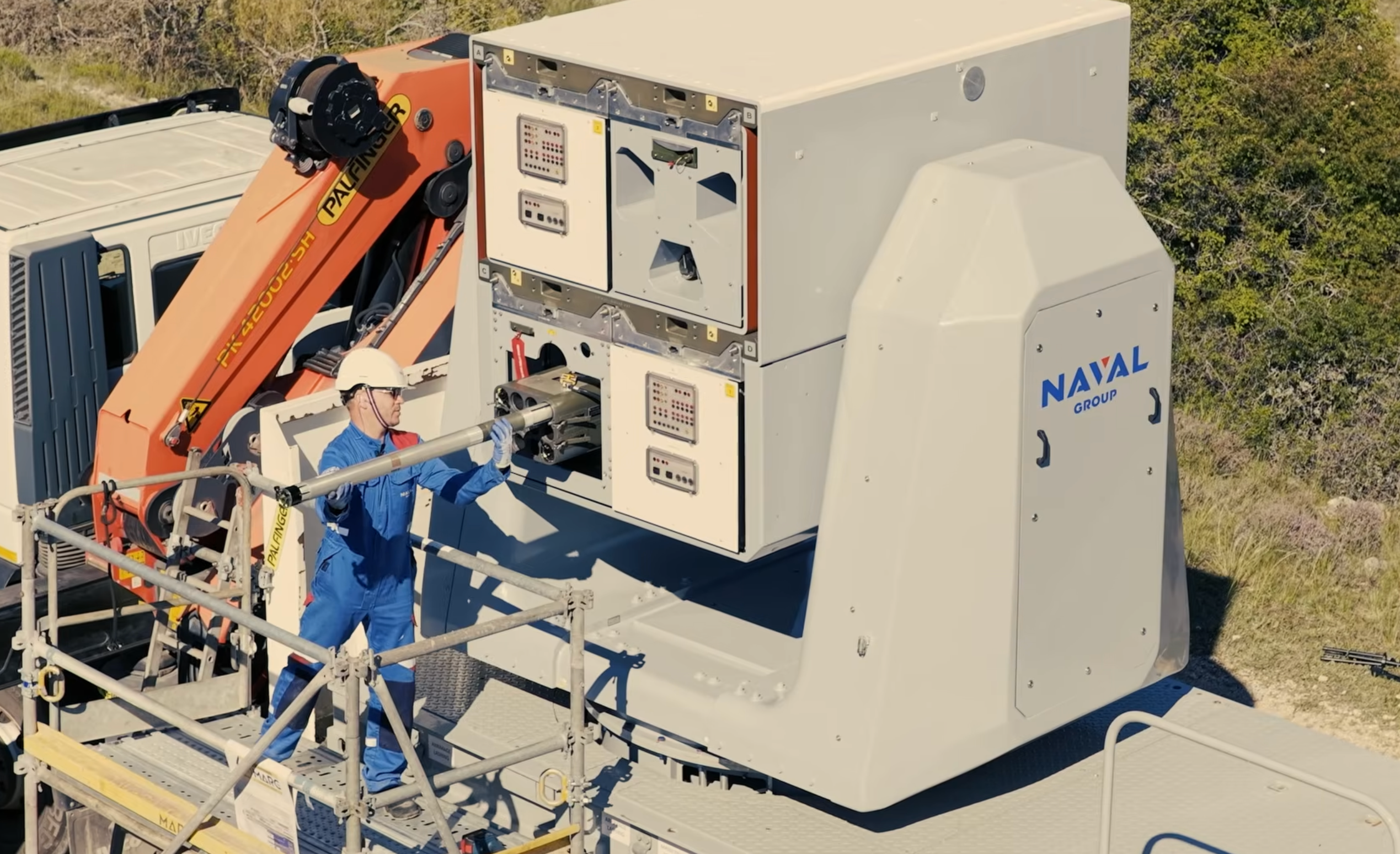
Naval Group has also demonstrated a ground-based Rampart, mounted on a high-mobility truck chassis. This configuration is intended for mobile air defense missions as well as protection of fixed sites, giving the system a role beyond ship self-defense. The truck-mounted version could provide a rapidly relocatable launcher for counter-drone and short-range air-defense missions, while retaining the same basic modular architecture and ability to employ different effectors.
The photographs from Toulon indicate that the Rampart concept is now moving from the range to the French fleet, albeit on an experimental basis. The forthcoming sea campaign will be an important milestone and should provide a better idea of how this system works at sea.
Contact the author: thomas@thewarzone.com
The post France’s Modular Rampart Point Defense Launcher Has Gone To Sea appeared first on TWZ.

