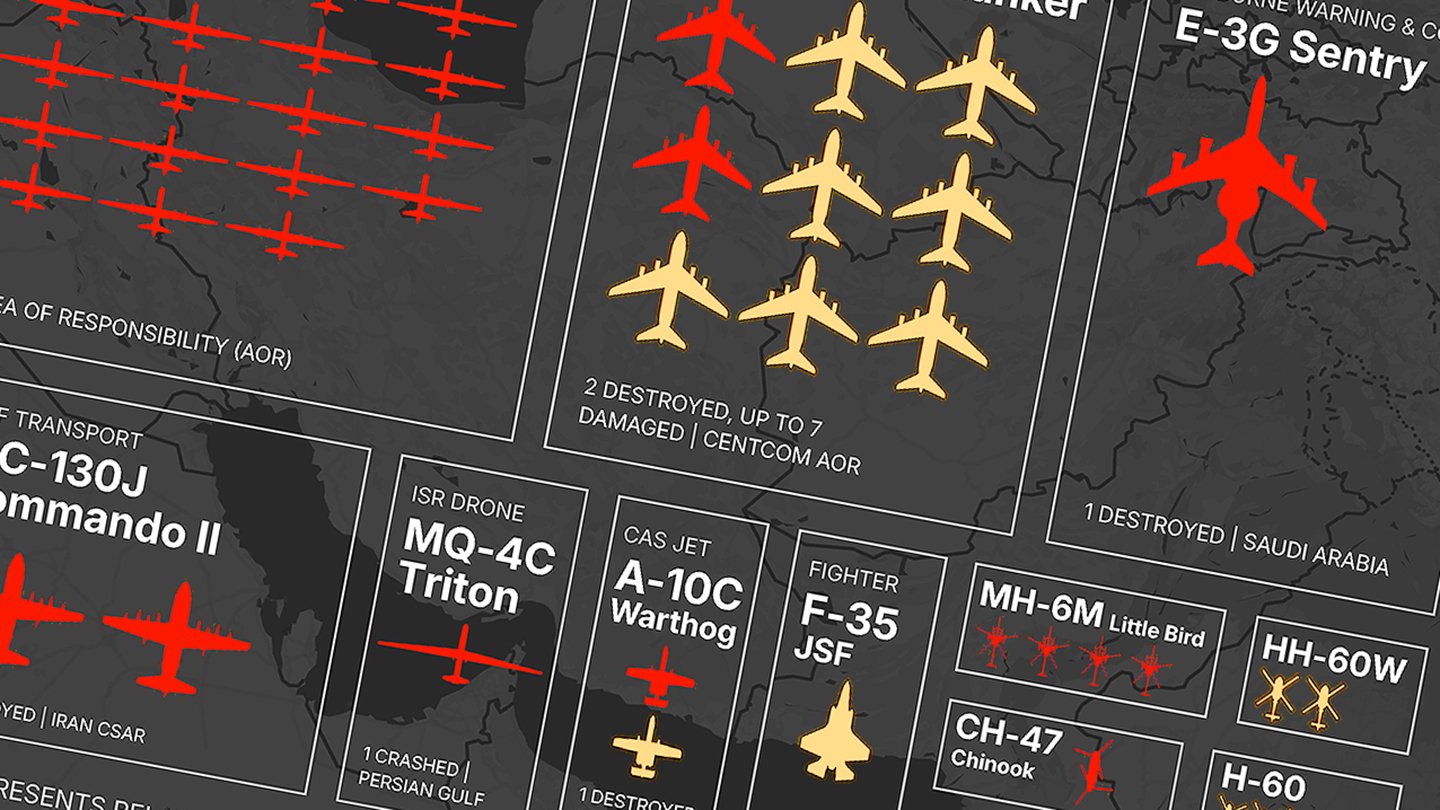
АНУ-ын Засгийн газар “Epic Fury” ажиллагааны хүрээнд Ираны талд алдсан болон гэмтсэн нисэх онгоц, нисгэгчгүй төхөөрөмжүүдийн талаарх анхны албан ёсны тайланг танилцууллаа.
Пентагоны Ерөнхий байцаагч болон Конгрессын Төсвийн газрын тайланд дурдсанаар, дайн эхэлснээс хойш АНУ-ын агаарын цэргийн хүчин томоохон хохирол амссан байна. Үүнд хамгийн их өртсөн нь MQ-9 Reaper нисгэгчгүй онгоцууд бөгөөд 47 орчим нэгж сөнөөгдсөн эсвэл ашиглах боломжгүй болжээ. Мөн KC-135 түлш цэнэглэгч онгоц, F-15E сөнөөгч, E-3G Sentry тагнуулын онгоц зэрэг хөлөг онгоцууд дайны ажиллагааны үеэр сүйрсэн буюу гэмтсэн байна.
Алдагдсан техник хэрэгслийг нөхөх зардал 3.3 тэрбум ам.долларт хүрэх төлөвтэй байгаа нь зөвхөн санхүүгийн асуудал төдийгүй АНУ-ын зэвсэглэл, тэр дундаа пуужингийн нөөцөд ноцтой дарамт учруулж байна. Тайланд дурдсанаар, Patriot, THAAD зэрэг агаарын довтолгооноос хамгаалах системийн пуужингуудын нөөцийн 50-60 хувийг хэдийн зарцуулсан бөгөөд нөхөн бүрдүүлэхэд дор хаяж таван жил шаардлагатай аж.
АНУ-ын цэргийн удирдлагууд Ирантай хийж буй энэхүү удаан үргэлжилсэн мөргөлдөөн нь Номхон далайн бүс нутаг дахь бэлэн байдалд сөргөөр нөлөөлж болзошгүйг анхааруулж байна. Ирээдүйн болзошгүй том хэмжээний мөргөлдөөний үед шаардлагатай зэвсэг, техник хэрэгслийн хомсдол үүсэх эрсдэл нэмэгдэж байгаа нь АНУ-ын стратегийн тооцоололд томоохон сорилт болж байна.
Дэлгэрэнгүйг эх сурвалжаас харах
Эх сурвалжийг нээх ↓
Two reports released last week by the U.S. government shed light officially, for the first time, on the damage Iran has inflicted on the Pentagon’s aerial fleet since the war began almost seven months ago. TWZ has combined their accounting with open-source intelligence (OSINT) reporting and our own tracking to produce a comprehensive graphic visualizing what the U.S. has lost – and what it will cost to replace. The picture it paints is not a pretty one, with implications should the U.S. trade blows with a peer adversary in the Pacific.
On September 14, the Pentagon’s Lead Inspector General (IG) released its first quarterly report to Congress on Operation Epic Fury (OEF), which included aircraft casualties suffered by the U.S. from the beginning of the war on February 28, 2026, through June 30. The Congressional Budget Office (CBO) followed the next day with even more detail, assessing the costs incurred during combat operations against Iran with an overview of aircraft losses through August 1, as well as the estimated replacement cost in 2026 dollars. TWZ went a step further, continuing where both reports left off with the help of the OSINT community, to update our previous visualization and tally losses through September 18, incorporating damage from attacks by the Islamic Revolutionary Guard Corps (IRGC) on American bases in the Middle East over the past two months. The final accounting can be viewed in the high-definition graphic below.
Drone Fleet Takes The Brunt Of The Blow
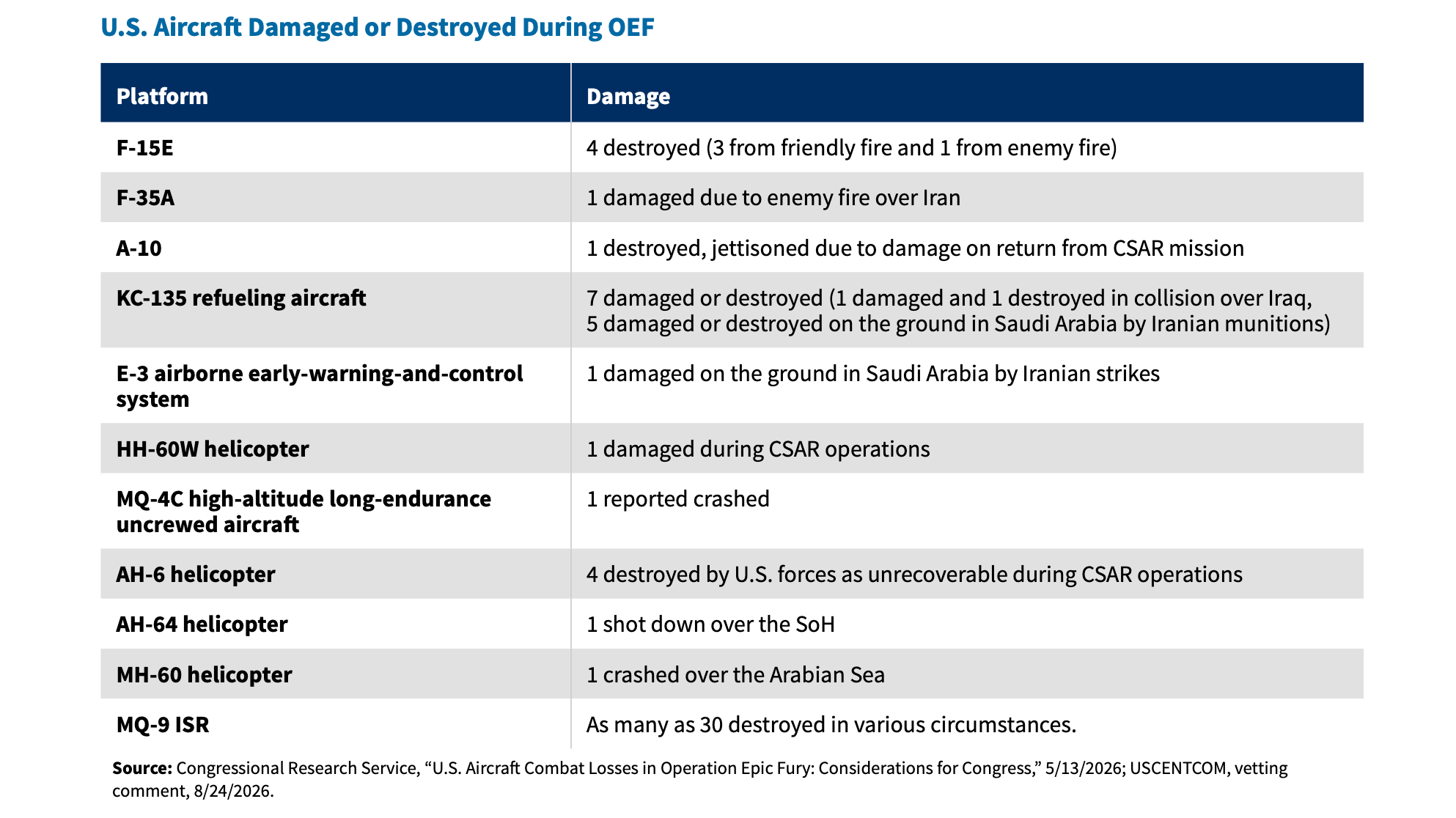
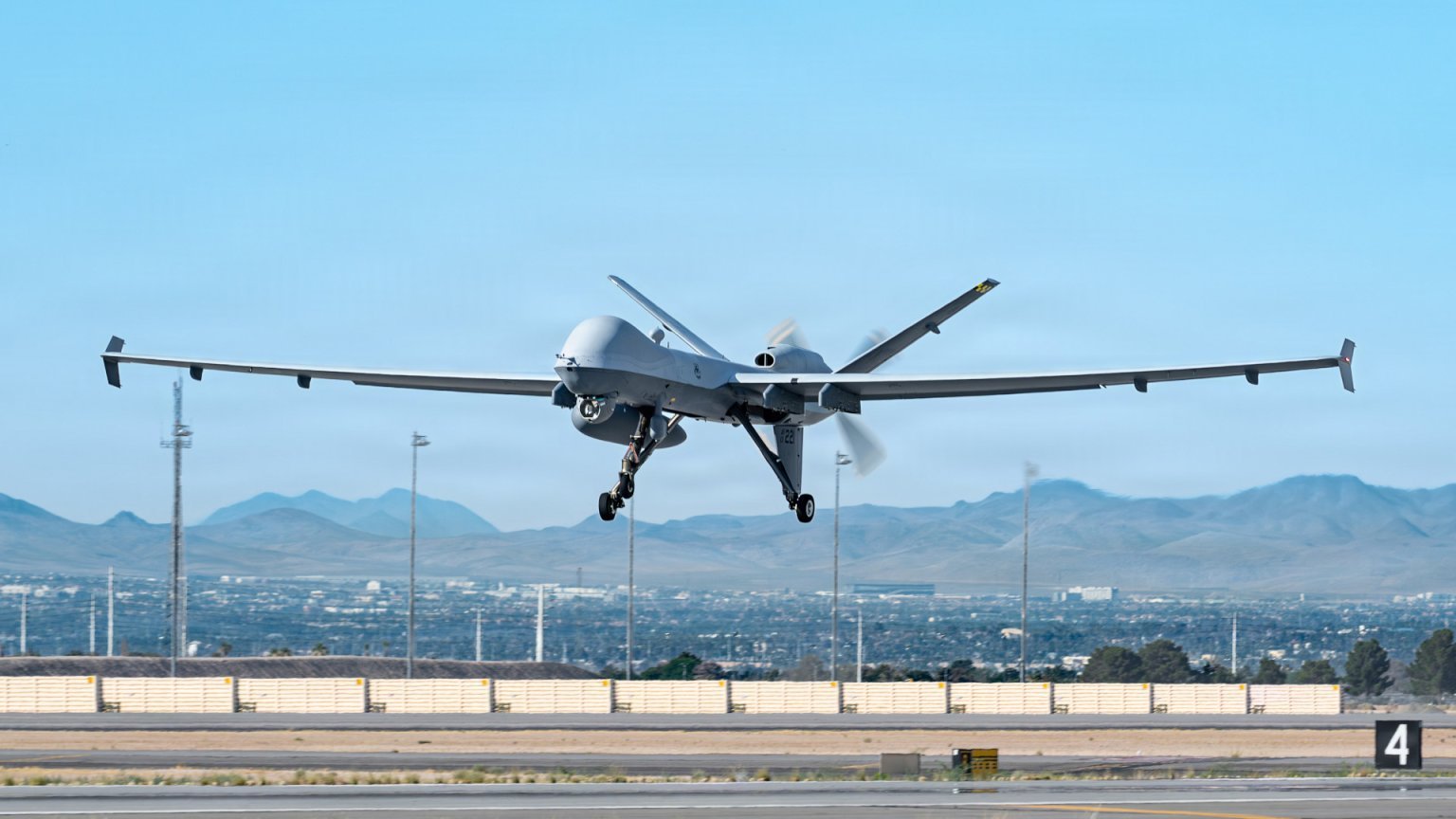
America’s MQ-9 Reaper drone fleet has absorbed the bulk of the damage and accounts for the largest single line-item expenditure in the CBO’s letter to the ranking member of the House Budget Committee. According to the Lead IG, “as many as 30” MQ-9A Reaper drones were destroyed in “various circumstances,” while the CBO booked 24 at a unit cost of $30 million (based on the Foreign Military Sales program), which totals $720 million to $900 million in lost equipment. The cost of a fully kitted-out Reaper can approach $50 million, depending on the sensors, weapons, and other mission equipment it carries. The Air Force Chief of Staff, Gen. Kenneth Wilsbach, told the House Armed Services Committee in May that the Reaper was the war’s “most valuable player.”
But both numbers are stale. The Washington Post reported in August that at least 45 Reapers, approximately a quarter of the pre-war fleet, were shot down, crashed, or destroyed on the ground, citing three U.S. officials familiar with the matter. That figure covers MQ-9s lost across the Middle East, including those downed over Iran and by the Houthis in Yemen. The Air Force is on record admitting that the Reaper fleet shrank to 135 airframes as of May, down from an official total of 165 at the start of fiscal year 2026. Another two have been shot down since the Post’s report, according to open-source intel, bringing the total to 47, or more than $1.4 billion based on the CBO’s methodology. While every Reaper lost is expensive, in some cases at least, each would represent a soul, or crew, that may have been at risk in a previous era’s conflict, and no dollar figure captures that trade-off.
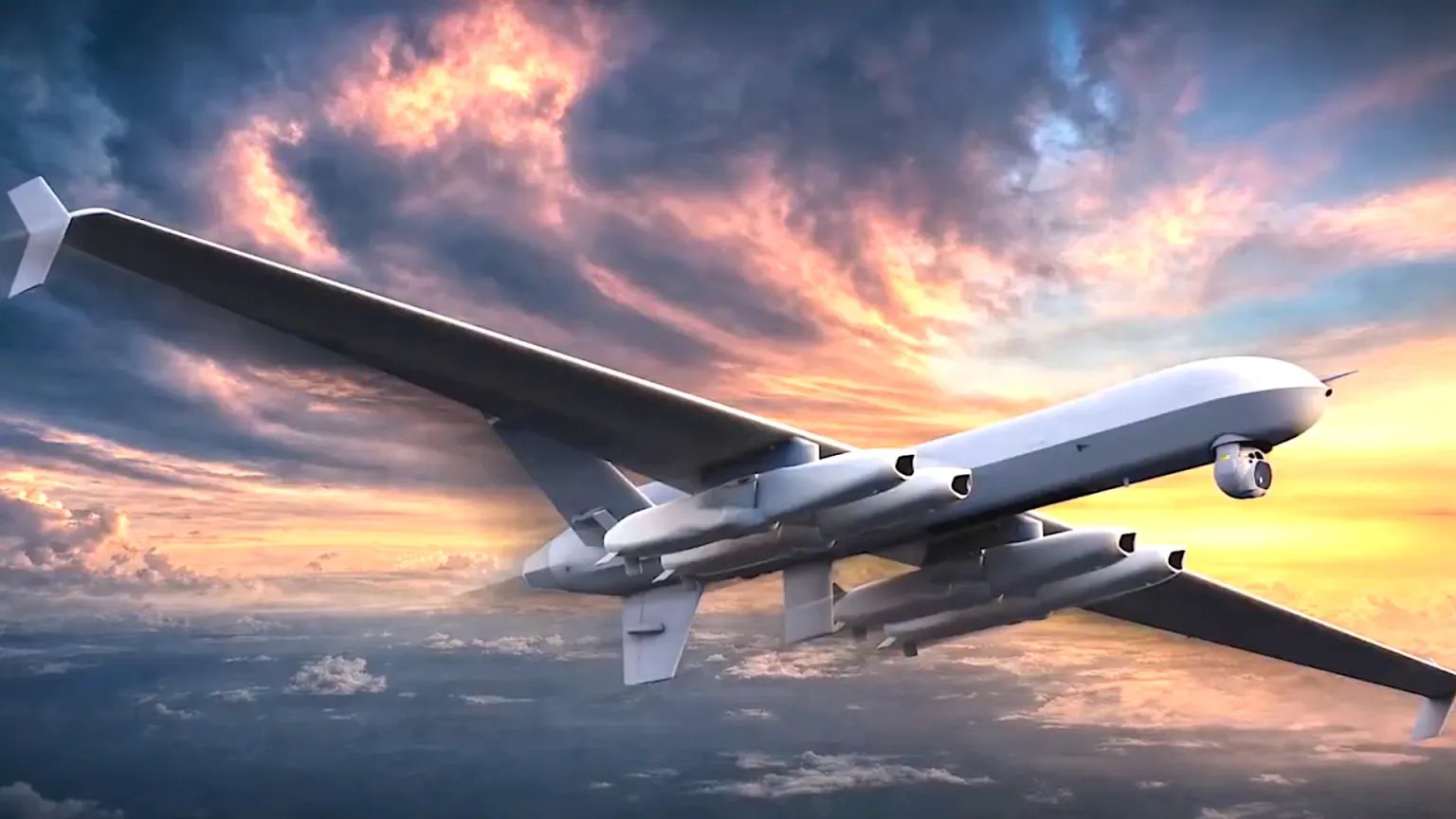
General Atomics’ iconic MQ-9A is no longer in production, and the service does not view the newer, in-production MQ-9B as a platform to meet its current needs and cost demands. Instead, it is targeting a replacement with a unit cost of around $10 million (excluding sensors) and pushing to accelerate the program to acquire these lower-cost platforms, dubbed the Massed Modular Aircraft (MMA). “If you don’t like losing an MQ-9A that cost on the order of $50 million, with the sensors, you’re probably not going to like losing an MQ-9B at a higher price point,” Lt. Gen. Christopher Niemi, the Air Force’s Chief Modernization Officer, said at a roundtable in September, according to a report from Air & Space Forces Magazine.
In June, the USAF confirmed to TWZ that after a relatively frantic hunt for additional airframes, it was planning to purchase a number of unused Reapers from General Atomics, which turned out to be fewer than ten. There is no easy answer to this problem, as cheaper alternatives cannot replace all the capabilities provided by pricier platforms. There are several more attritable alternatives in development, such as the General Atomics Wildfire, which the company is building specifically to meet the needs outlined in the MMA program. Swarm Aero’s Gamera is another possible contender.
The Reapers were not the only aerial drones lost. An MQ-4C Triton went down over the Persian Gulf in April after squawking a lost-link code and general emergency on its way back to Naval Air Station Sigonella in Italy. The Navy logged it as a Class A mishap and the cause remains unknown. There are only 20 in the fleet, and at $150 million a pop, the loss represents a significant outflow. Navy budget documents place the unit price higher at $238 million. And, in late May, U.S. Central Command (CENTCOM) announced that Iran shot down an MQ-1 over international waters. CENTCOM declined to tell TWZ whether it was an Air Force Predator, which is officially out of service, or an Army Gray Eagle platform, and neither appeared in the government reports.
The Crewed Aircraft Tally
In terms of manned aircraft, the KC-135 Stratotanker fleet took the biggest hit. The workhorse aerial refueling tanker is primarily tasked with keeping America’s fighters, bombers, and cargo haulers airborne, and crews have been flying nearly nonstop sorties to support active operations in the CENTCOM area of responsibility (AOR). Two were destroyed and up to seven have been damaged, although the Air Force has become relatively efficient at repairing the damaged aircraft enough to fly them home. In a tragic incident on March 12, a collision between two Stratotankers that was “not due to hostile fire or friendly fire,” according to CENTCOM, resulted in the loss of six airmen after one went down over western Iraq.
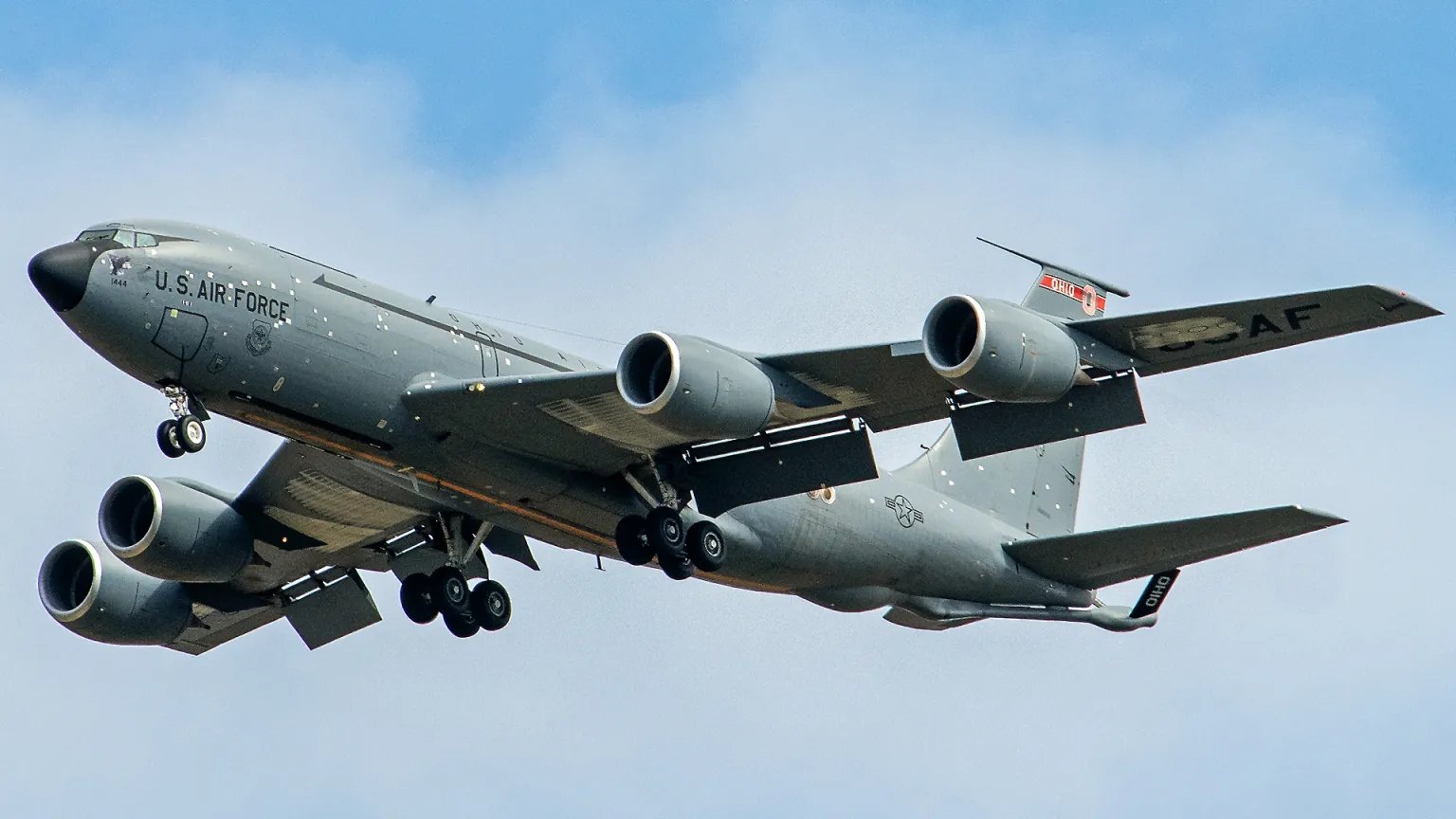
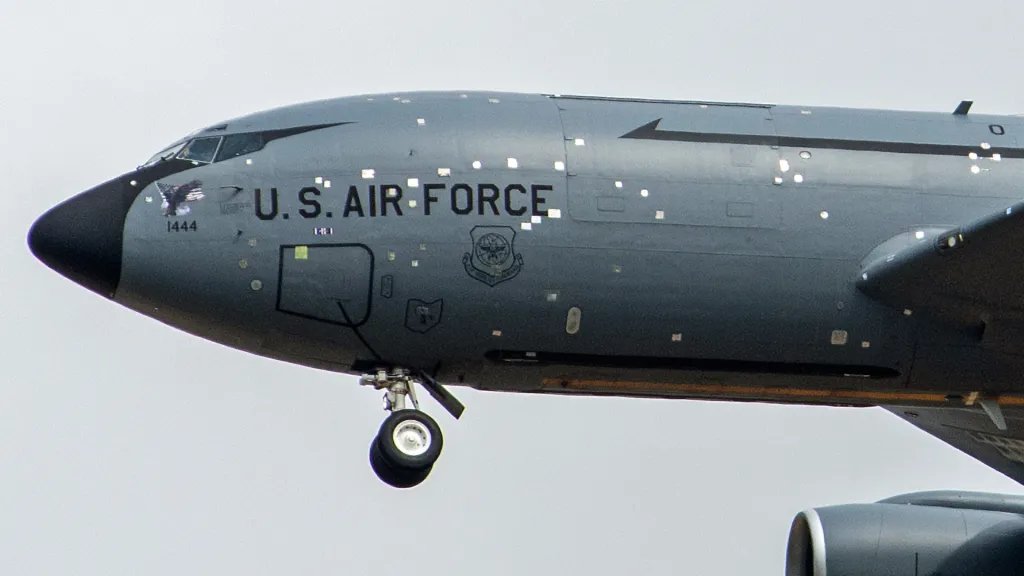
Three F-15E Strike Eagles were destroyed early in the conflict due to friendly fire over Kuwait, and one was shot down over Iran on April 3, leading to a massive combat search and rescue (CSAR) operation. “Roughly eight” more were damaged in a recent salvo of ballistic missile fire on Muwaffaq Salti Air Base in Jordan, first reported by CBS News and confirmed by Air & Space Forces Magazine, both citing unnamed U.S. officials. President Donald Trump dismissed the reports, telling NewsNation there was “no damage, no nothing.”
The daring CSAR mission to save the two F-15E crew members who ejected inside Iran, one of whom 60 Minutes interviewed on September 13, took place between April 3 and 5. While no American lives were lost during the operation, several aircraft were destroyed, including two MC-130J Commando IIs and four Night Stalker MH-6 Little Bird helicopters (which TWZ was first to report), representing, at north of $400 million, the costliest single operation of the war for aircraft inventory. The mission reportedly included more than 150 aircraft and 92 special operators on the ground deep in enemy territory. The MC-130Js became stuck on a temporary remote airstrip and were deliberately destroyed by American forces to prevent capture, along with the Little Birds operated by the 160th Special Operations Aviation Regiment (SOAR). An HH-60W Jolly Green II was also struck but continued flying. The CBO booked the MC-130Js at $300 million, and the five helos at $122 million.
Two A-10C Warthog close air support jets also took hits. The first, while flying in a “Sandy” escort role during the rescue operation, was hit by enemy fire. “This pilot continued to fight, continued the mission, and then upon exit, flew his aircraft into another country and determined that the airplane was not landable,” Chairman of the Joint Chiefs of Staff, Gen. Dan Caine, said during a presser in April. “The pilot then made the decision to eject over friendly territory, and was quickly and safely recovered.” The second Warthog sustained damage on the ground in Jordan during the IRGC’s latest round of strikes referenced above.
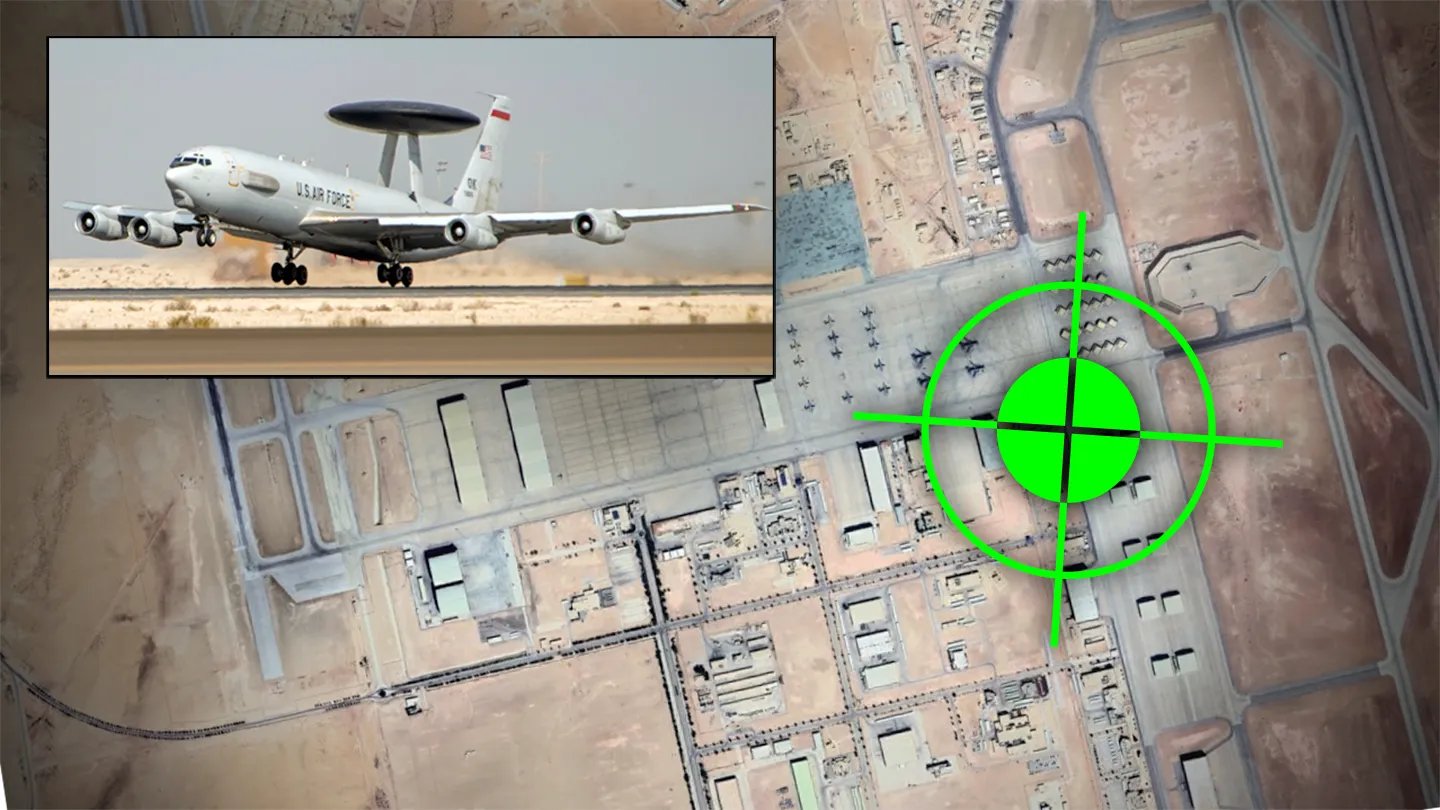
The most expensive single crewed loss was an E-3G Sentry, which is out of production and can only be replaced by the E-7A Wedgetail, a program that the Pentagon recently revived, at a unit cost the CBO estimates to be half a billion dollars. The jet, serial number 81-0005, was struck on the taxiway at Prince Sultan Air Base in Saudi Arabia on March 27, one of just 16 Sentries the service had left after initially deploying six to the theater before the conflict kicked off. The IG report lists it as damaged, but that is generous, considering that photographs and satellite imagery show the plane cut in half with the rear fuselage destroyed. The CBO report is more candid, categorizing the Sentry as lost in battle and assigning a $500 million replacement value. The Pentagon tried to cancel the E-7 program last year, but has since reversed course, after Secretary Pete Hegseth said the department’s mindset “completely changed.”
A handful of other hits round out the tally. A 5th-generation F-35A Lightning II Joint Strike Fighter (JSF) was struck by Iranian fire in mid-March and forced to make an emergency landing. As far as we know, this was the first time an F-35 took hostile fire in combat. The following week, a first-person-view (FPV) short-range kamikaze drone successfully targeted a U.S. Army Black Hawk parked at a base outside Baghdad, Iraq. The next month, images circulated by Iranian state media, which TWZ did not independently verify, showed a CH-47F Chinook wrecked on the ground at Camp Buehring in Kuwait. And, in June, an AH-64 Apache was shot down near the Strait of Hormuz.
Recent retaliatory attacks by IRGC forces on U.S. bases have damaged additional aircraft in the weeks following the CBO’s cutoff date. Another four helicopters were hit since September 10, Jonathan Elliot, a UK-based OSINT researcher and flight tracker, told TWZ. Elliot and his team at @MATA_osint reviewed open-source videos and identified them as H-60 models, likely UH-60M/L variants.
The True Cost Explained
Through August 1, the CBO estimated that the losses represented nearly $1.9 billion in 2026 dollars, but that figure only counts hardware the Pentagon “would have to change its plans to replace.” If the department sought funding to replace everything it lost with platforms available today, the true cost rises to $3.3 billion. For example, the A-10C Warthog is no longer being built, and the CBO assesses that if it were to be replaced with an F-35A instead, the price balloons from $0 to $120 million. Similarly, since the F-15E has no active production line, the replacement cost of four F-15EX would total $400 million, compared to $0 on paper. The CBO figure also includes a $500 million charge for a lost THAAD AN/TPY-2 radar, a prized air defense asset, one of only eight radars the Army has for its THAAD batteries. It is (obviously) not an aircraft but counted in the report’s accounting.
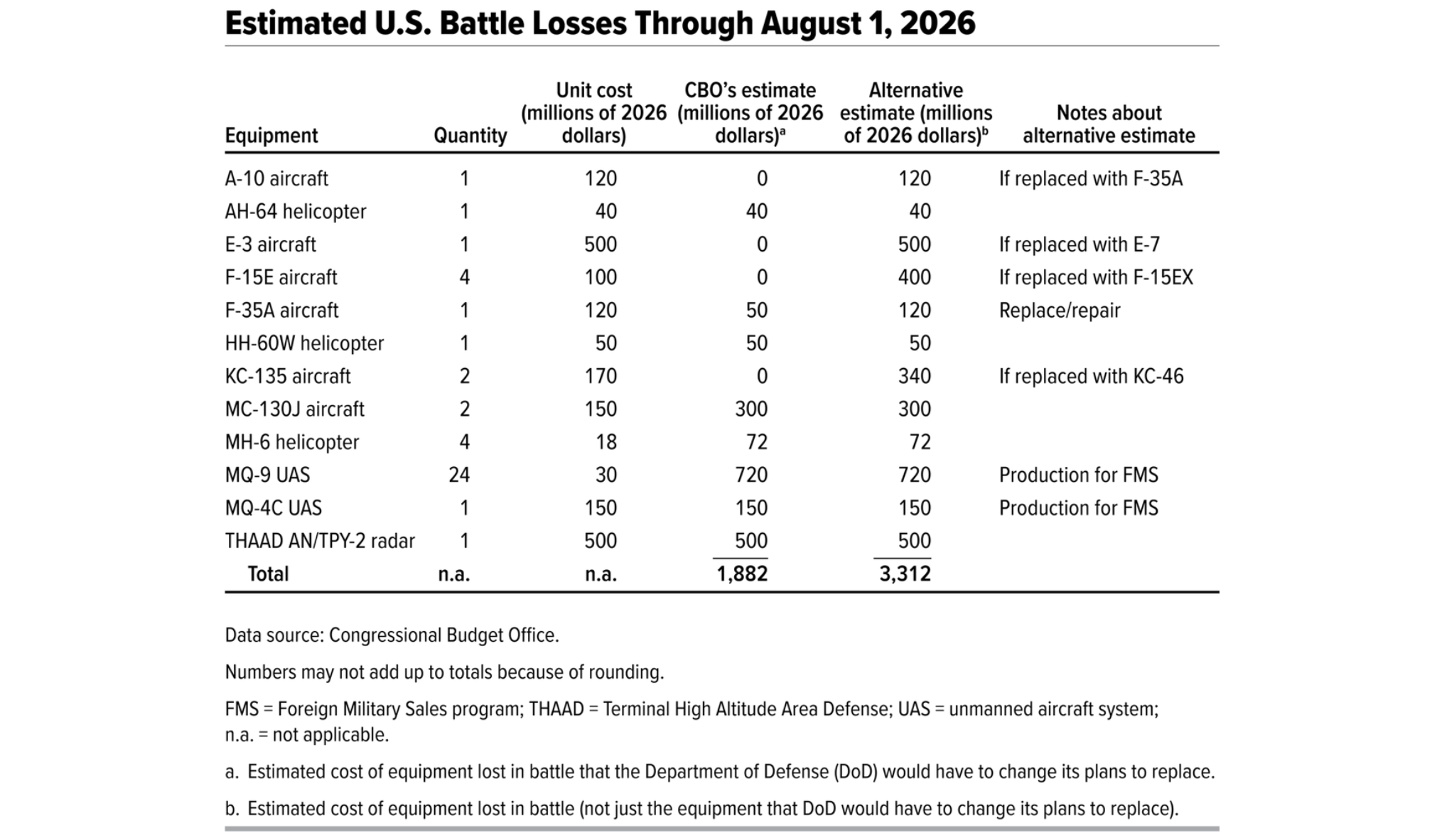
Taking into consideration the losses suffered since the CBO’s assessment on August 1, and the cost to repair damaged aircraft, which is not included in the table above, the $3.3 billion figure could top $4 billion. Additionally, CENTCOM told the IG that “hundreds of buildings and structures” were damaged and destroyed at various bases across the AOR, in addition to miscellaneous equipment, sensors, and other installations that were targeted but not included in the estimates. However, these are rough calculations, and the actual outlays will likely differ substantially.
Reports Highlight Strain On America’s Munitions Stockpile
The Lead IG and CBO both address the precarious state of America’s munitions stockpile, which contradicts recent commentary by some senior military officials. The IG reiterated that the Office of the Under Secretary of War for Acquisition and Sustainment said the “munitions expenditure in OEF has resulted in strategic inventory shortfalls and revealed industrial base bottlenecks for munitions resupply.” The CBO report goes further, concluding the U.S. has “probably used between one-half and two-thirds of its inventory” of Patriot, THAAD, Standard Missile 3 (SM-3), and SM-6 missiles since June 2025, and states that rebuilding those stocks “would probably take at least five years, even if production was increased.” These numbers generally align with a report earlier this year from the Center for Strategic and International Studies (CSIS) that highlighted the rapid expenditure of critical munitions and how it could affect a future fight against China.
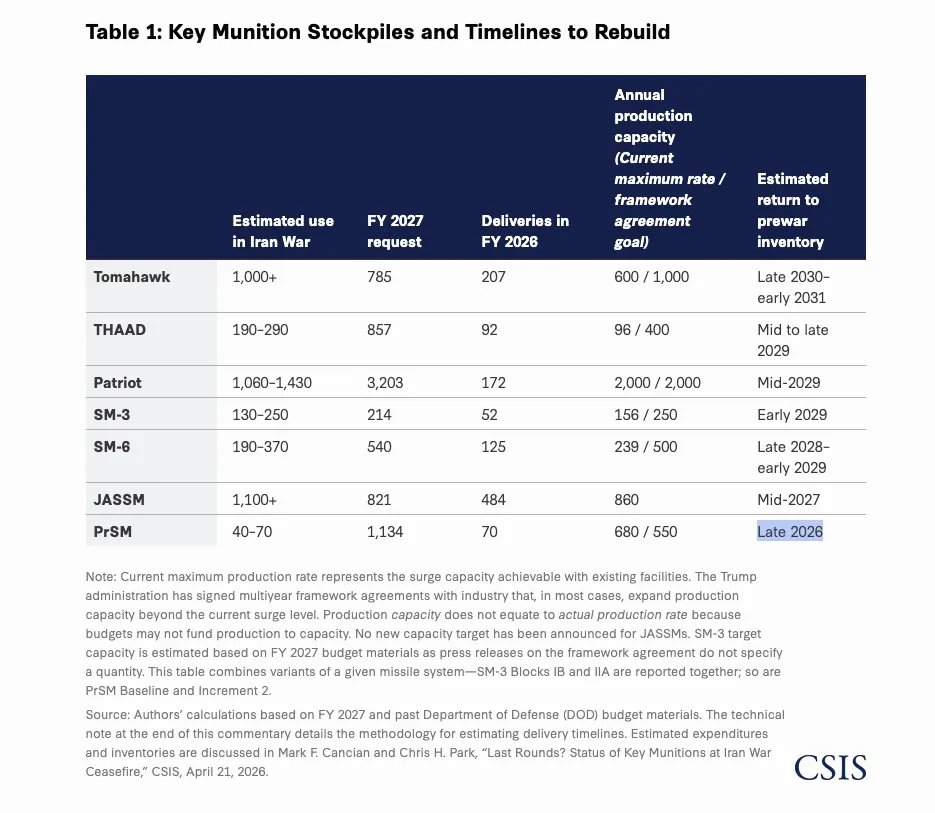
CENTCOM commander Adm. Brad Cooper, who is responsible for executing the day-to-day operations against Iran, said he was “not concerned at all” when asked about America’s munitions stockpile during the 60 Minutes segment mentioned above. “We’re well armed and ready for any contingency,” he told Norah O’Donnell. This may be sincere, as the commander overseeing an active war tends to get whatever is required, but other theater-level commanders don’t necessarily share the same sentiment.
Last month, the heads of U.S. European, Pacific, and Southern Commands, as well as the Chief of Naval Operations, each registered a formal “non-concur” in the August 14 Secretary of Defense Orders Book (SDOB), warning that extending their forces’ commitment to the Iran fight risked draining America’s combat power, especially in the Pacific. In an exclusive citing people familiar with the assessment, the Washington Post reported that Adm. Samuel Paparo, the commander of U.S. Pacific Command, “disagreed with the level of support he was ordered to continually provide, including an aircraft carrier strike group and naval destroyers.” On social media, the Pentagon’s chief spokesman called the story inaccurate but stated, “Non-concurs are standard. The Secretary sees them constantly.”
Back in 2024, prior to Operation Rough Rider, the Twelve-Day War, Midnight Hammer, and Epic Fury, Adm. Paparo voiced concerns about munitions expenditures, saying, “With some of the Patriots that have been employed, some of the air-to-air missiles that have been employed, it’s now eating into stocks, and to say otherwise would be dishonest.” He continued, “Inherently, it imposes costs on the readiness of America to respond in the Indo-Pacific region, which is the most stressing theater for the quantity and quality of munitions, because the PRC [People’s Republic of China] is the most capable potential adversary in the world.”
The math does not bode well should the U.S. get into a dust-up with China before stockpiles can be replenished. The CBO notes China “has many more ballistic and cruise missiles than Iran had at the onset of Operation Epic Fury,” with a “significantly larger economic base” that “can produce such missiles more rapidly.” As Iran has shown, stationary bases make for easy targets, and U.S. installations in the Pacific that fall under the PRC’s ballistic missile umbrella are exposed, unhardened, and require a high volume of interceptors to defend. “Having used a large portion of its missile defense inventory in combat operations against Iran, DoD now has fewer interceptors on hand to use in a potential conflict with the PRC,” the CBO concluded.
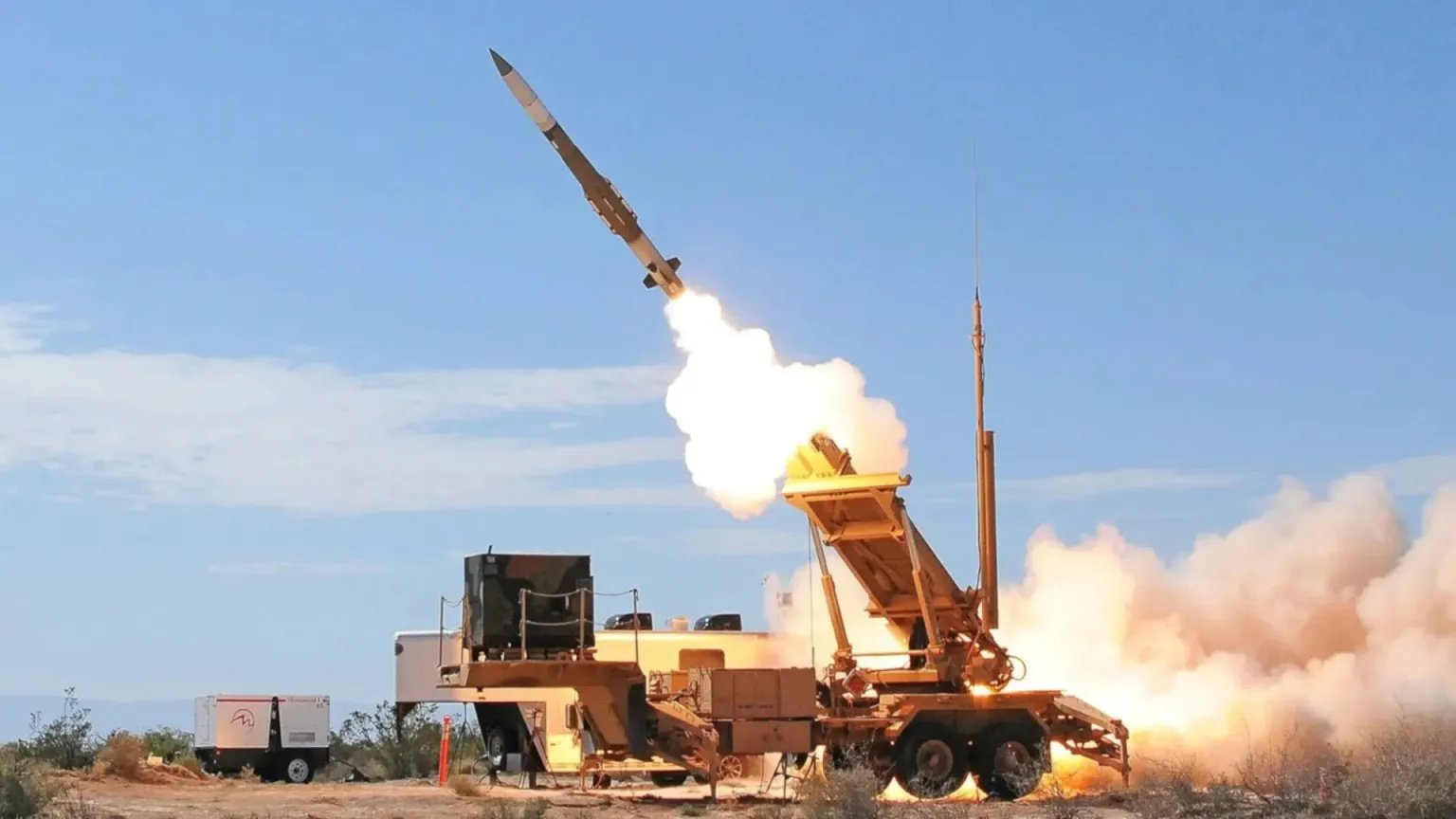
The Pentagon has since announced deals with Lockheed Martin and Northrop Grumman to drastically increase Patriot and THAAD production, but that ramp-up will take years to materialize. According to the CBO, “Boosting missile production has historically been a slow process with lags of three to five years between the placement and delivery of new orders. After production was increased, several more years would be required to replace the missiles that have been used in the conflict with Iran.”
The Impact On Deterrence
Aircraft casualties are to be expected in any conflict, especially considering the intensity, scope, and length of operations against a formidable opponent with home-field advantage. Airframes can be rebuilt and stockpiles replenished. But such dynamics impact deterrence in other regions, as America’s own military leaders have said on the record in the past.
“Deterrence is achieved by that ability to demonstrate capability and will, and it comes down to your ability to either impose costs on an adversary or including in response to aggression. And it’s also a big part of defending yourself against missiles and so China is building 800+ missiles per year,” Adm. Paparo explained in a recent interview with Hawaii News Now. “And so the ability to defend that, the ability to impose costs, this gets back to the changing character of warfare with information operations, drone operations, and deep precision strike are much more salient instruments of national power than they’ve been in the past. And to be able to deter is to be able to demonstrate that the risk of armed conflict far outweighs the benefits and part of that is imposing costs and part of that is defending ourselves against those costs.”
TWZ noted many of these questions in February, before the first Tomahawk was fired, and has been reporting on stockpile concerns for years. Now, the Pentagon’s bill for the conflict conservatively sits at over $38 billion, America’s fleet of Reapers is down a quarter, and its bases in the Middle East are battered and could still be targeted. The interceptors that kept the number of aircraft depicted on our graphic from being higher are, by the CBO’s own estimate, years from being replaced – a notable dynamic considering military leaders have suggested China, with a much larger missile arsenal than Iran, could be prepared to move on Taiwan by 2027.
Contact the author:ian.ellis-jones@recurrent.io or @ianellisjones
Author’s note: Special thanks to Jonathan Elliot and the team at the Military Air Tracking Alliance (MATA) for assisting with the open-source analysis and battle damage assessment. Be sure to follow them on X at @DefenceGeek and @MATA_osint.
The post Every American Aircraft Lost Or Damaged During The Iran War, Visualized appeared first on TWZ.

