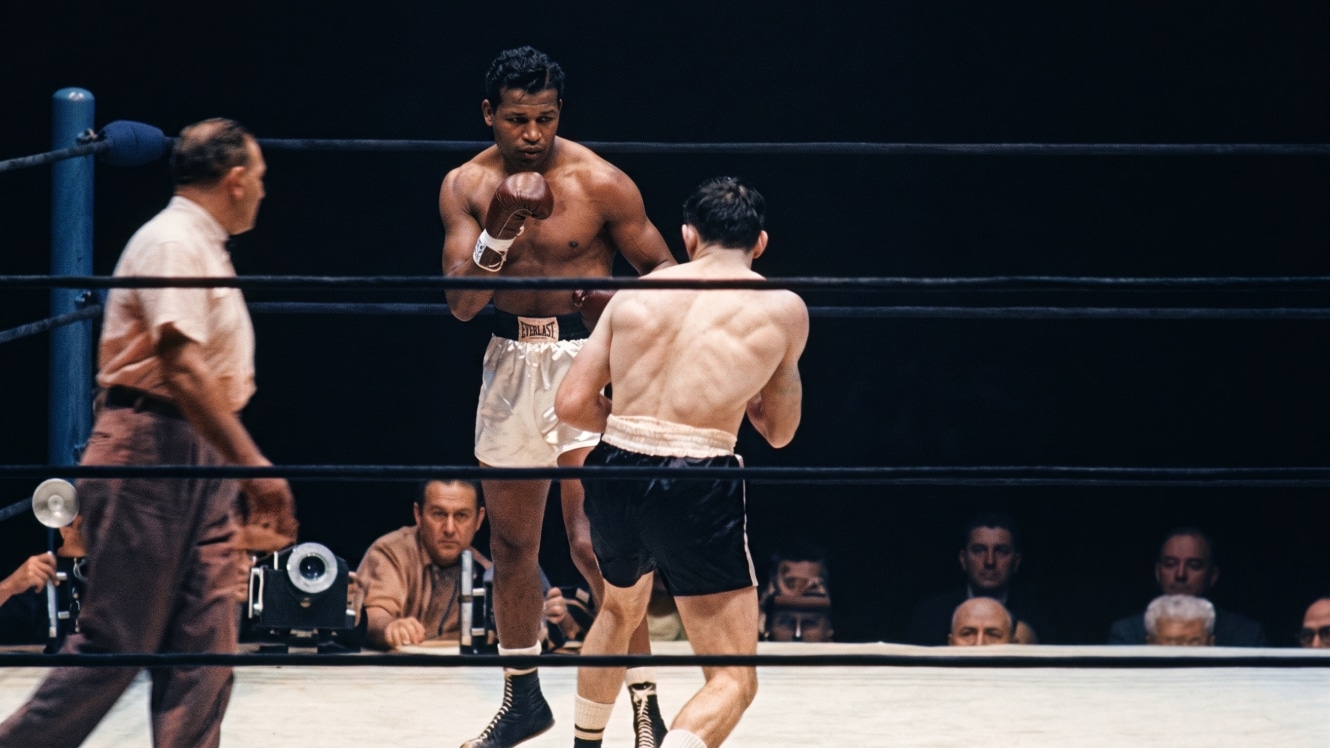
Кармен Базилио 15 раунд үргэлжилсэн ширүүн тулааны эцэст шүүгчдийн хуваагдсан шийдвэрээр дунд жингийн дэлхийн аваргын бүсийг эзэмшигч Шугар Рэй Робинсоныг ялж, аварга боллоо.
1957 оны есдүгээр сарын 23-нд Нью-Йорк хотын “Yankee” цэнгэлдэх хүрээлэнд болсон уг тулаанд Базилио жин өгсөн гарч ирсэн бөгөөд аварга Робинсоныг өөрийн хүссэн зайнаас тулалдах боломж олголгүй, ойрын зайн ширүүн солилцоог тулгасан байна. Робинсон илүү өндөр, биеийн жингийн хувьд зургаан фунтаар илүү байсан ч Базилио түүнийг рингийн буланд шахаж, бие рүү нь чиглэсэн цохилтуудаар дарамт үзүүлснээр өрсөлдөгчийнхөө давуу талыг үгүй хийжээ.
Тулааны туршид хоёр тамирчин хэн нь ч нокдаундад ороогүй бөгөөд Робинсон илүү цэвэр, хүчтэй цохилтуудыг оновчтой гүйцэтгэж байсан бол Базилио тасралтгүй шахалт үзүүлж, өрсөлдөгчөө үндсэн байрлалаа олоход нь саад болж байв. Шүүгч Ал Берл 9:6 харьцаагаар Робинсоныг ялсан гэж үзсэн ч нөгөө хоёр шүүгч Базилиог дэмжсэнээр тэрээр дэлхийн аваргын бүсийг хүртсэн юм.
Нийт 38,072 үзэгчийн өмнө болсон энэхүү тулаан нь “The Ring” сэтгүүлийн 1957 оны “Оны шилдэг тулаан”-аар шалгарсан билээ. Хэдийгээр Робинсон дараа оны гуравдугаар сард болсон хариу тулаанд ялалт байгуулж, бүсээ эргүүлэн авсан ч Базилиогийн үзүүлсэн энэхүү тактикийн тоглолт боксын түүхэнд онцгой байр суурь эзэлдэг.
Дэлгэрэнгүй эх сурвалжийг харах
Эх сурвалжийг нээх ↓
Sugar Ray Robinson had knocked out Gene Fullmer with a left hook less than five months earlier. Carmen Basilio knew the danger. On September 23, 1957, he stepped up from welterweight to face Robinson at Yankee Stadium and spent 15 rounds denying the middleweight champion the room to set that punch up.
Robinson was taller, six pounds heavier, and dangerous whenever he could jab, turn, and punch from a comfortable distance. Basilio’s task was to make those moments scarce. He pressed behind a crouch, worked Robinson’s body and stayed close enough to force short exchanges. A body shot did not have to buckle Robinson to serve its purpose: each attack made it harder for him to leave his elbows high and simply glide away.
The ropes became crucial territory. Basilio did his best work when he followed Robinson’s exits and crowded him before the champion could extend his punches. With little space between them, Robinson’s reach counted for less. Basilio’s compact hooks and steady work counted for more.
Robinson still landed the cleaner, more striking head shots. Basilio absorbed them and came back with punches of his own. Neither fighter went down. Their contrasting work also helps explain why the verdict remains arguable: a sharp Robinson combination could command attention, while Basilio might spend the rest of the exchange pressing, punching and keeping the champion from setting his feet where he wanted.
By the 11th round, Basilio had Robinson near the ropes and was unloading at close range. Robinson rallied in the 12th, a reminder that Basilio had never solved his skill or taken away his power entirely. But the fight kept returning to the sort of grinding exchanges the smaller man had sought from the start.
At 36, Robinson had the experience to answer Basilio’s attacks. What he did not have was an easy round. Basilio made him work to regain distance each time they separated, then came after him again. That sustained effort, rather than any one punch, was the strongest case for the challenger.
Referee Al Berl scored the fight nine rounds to six for Robinson. The two judges favored Basilio, who won the middleweight title by split decision. Of 47 ringside writers polled, 26 favored Basilio, 17 chose Robinson and four called it even. The result reflected a genuine difference in what observers valued: Robinson’s clean punching or Basilio’s success in making the champion fight at close quarters.
Basilio’s victory before 38,072 spectators earned the bout The Ring’s 1957 Fight of the Year award. Robinson reclaimed the title in their rematch the following March. That fight received the same award, but Basilio’s first win remains the night he made one of boxing’s finest movers fight largely in a space of his choosing.
AI-improved archival image.

