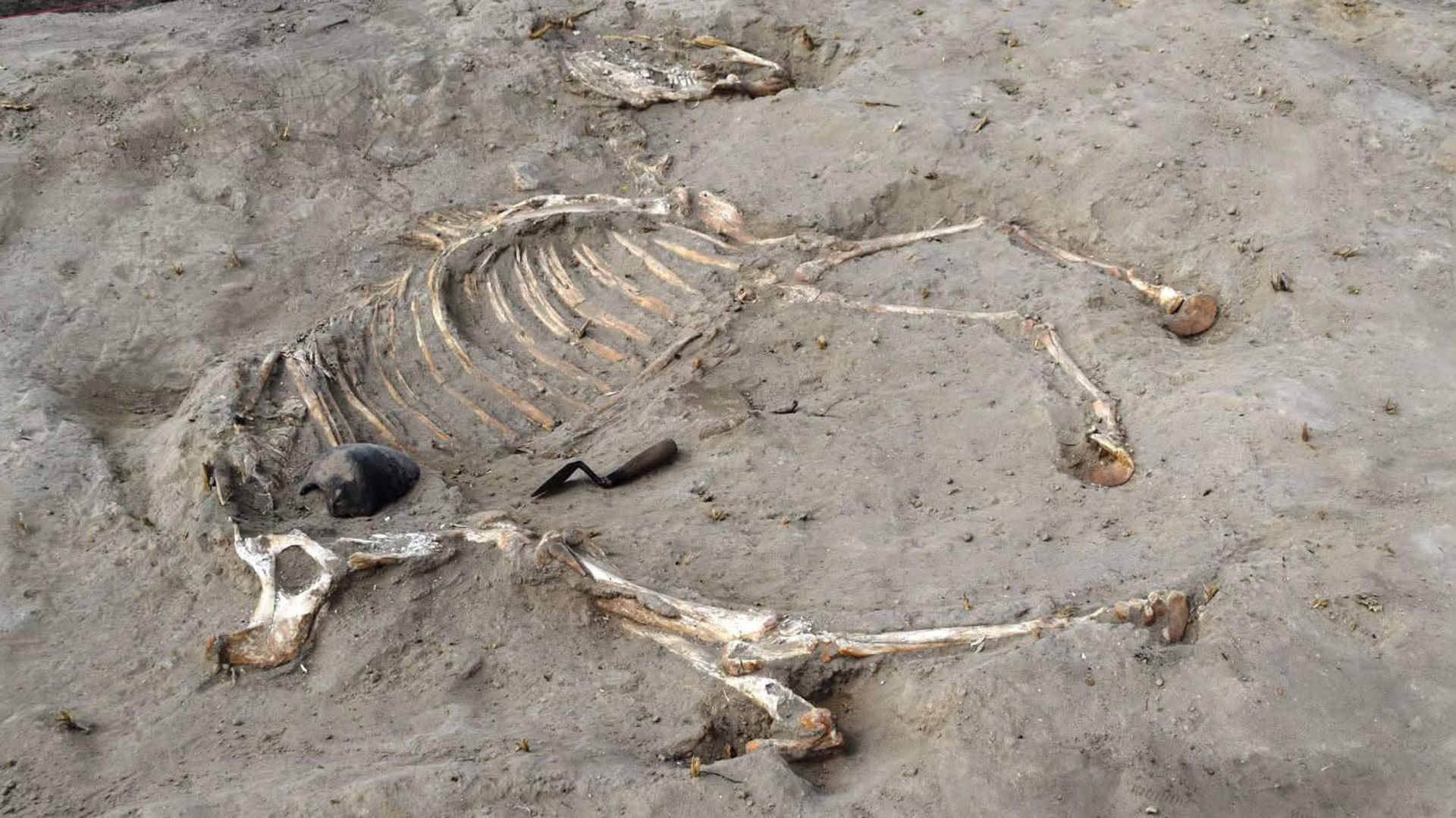
Археологичид Египетийн баруун Нил мөрний бүс нутаг дахь эртний бэхлэлтийн тууриас цэргийн зориулалттай байж болзошгүй морины оршуулгыг малтан илрүүллээ.
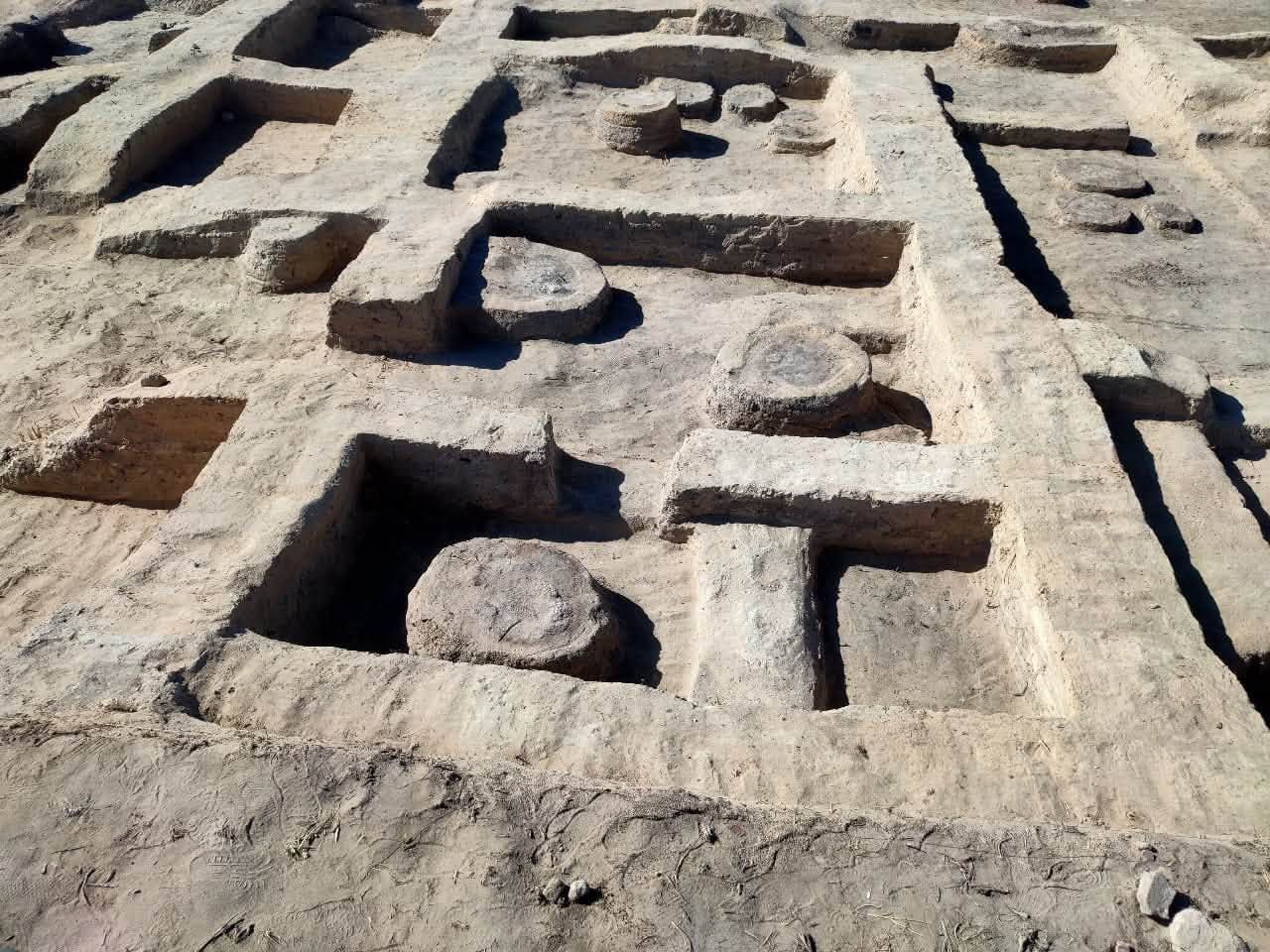
Египетийн Аялал жуулчлал, эртний олдворын яамны мэдээлснээр, уг олдвор нь Шинэ хаант улсын үед (МЭӨ 1550–1070) хамаарах бөгөөд тухайн үед Ливийн дайсагнагч омгуудаас хамгаалах зорилгоор ашиглаж байсан бэхлэлтийн дотор байжээ. Археологичид морины араг яснаас гадна түүнийг хөллөж байсан морины тоног хэрэгслийн үлдэгдлийг олсон нь энэхүү булш нь ёслолын шинжтэй байсныг илтгэж байна.
Малтлагын явцад Рамзес II болон Мернептах хаадын нэр бүхий дүрс бичигтэй чулуун хавтангууд олдсон байна. Тэдгээрийн нэгэнд Мернептах хааны хүчийг цөл, шуурганы бурхан Сеттэй зүйрлэсэн бол, өөр нэг хавтан дээр Египетчүүдтэй байнга зөрчилддөг байсан Мешвеш омгийн олзлогдсон дайчныг дүрсэлжээ.
Судлаачдын үзэж буйгаар, эртний Египетийн үеийн бүрэн бүтэн морины араг яс олдсон нь маш ховор тохиолдол юм. Венийн их сургуулийн судлаач Лоннеке Делпэ болон Монт Роялын их сургуулийн эрдэмтэн Кэролин Виллекес нар энэхүү олдвор нь эртний Египетийн цэргийн хүчин болон хүн ба морины харилцааны талаарх мэдлэгийг нэмэгдүүлнэ гэж дүгнэжээ. Энэхүү морь нь тэрэг татах зэрэг цэргийн үйл ажиллагаанд ашиглагдаж байсан үнэ цэнтэй амьтан байсан нь түүнийг хүндэтгэлтэйгээр оршуулснаас тодорхой байна.
Дэлгэрэнгүйг эх сурвалжаас харах
↓Эх сурвалжийг нээх ↓
Archaeologists have unearthed a 3,000-year-old burial of a horse, likely used for military purposes, inside an ancient fort on the western Nile Delta in Egypt.
The horse was a young male of medium size that may have pulled a chariot or worked in other military activities. Archaeologists also found remains of the chariot horse’s harness fittings nearby. Given these discoveries, it’s likely that this was a ceremonial burial, according to a translated statement from the Egyptian Ministry of Tourism and Antiquities.
The fort, which was found at the archaeological site of Abqaa’ in Egypt’s Lake District, dates to the New Kingdom period (circa 1550 to 1070 B.C.) and was used to guard against hostile Libyan tribes to the west. Among the finds from the fort excavation was a tablet depicting a Libyan prisoner whose clothing signifies his membership in the Meshwesh tribe, a group that Egypt was often in conflict with.
The prisoner is shown with his hands bound behind his bent body, a posture that signifies his submission, the statement noted.
A hieroglyphic tablet with the name of pharaoh Ramesses II was also found; he reigned from about 1279 to 1213 B.C. A second tablet included the name of the pharaoh Merneptah, who reigned from about 1213 to 1203 B.C., and compared his strength to that of Seth, an ancient Egyptian god associated with the desert and storms.
“An amazing find”
The horse burial is a unique discovery, scholars not associated with the excavation told Live Science.
“It is an amazing find, simply because we have so few horse remains from Pharaonic Egypt,” especially complete skeletons, Lonneke Delpeut, a researcher at the University of Vienna who has conducted extensive research into ancient Egyptian horses, told Live Science in an email.
Archaeologists have found the remains of horse stables, such as those at the ancient Egyptian capital of Pi-Ramesses, but horse remains have been scarce, Delpeut said. “This horse will therefore surely contribute to what we know about the use of horses in military forts, of which there are many in the region.”
But Delpeut cautioned against definitively calling it a war horse, “mainly because we do not have a definition of what a war horse is in ancient Egypt,” she said. “It was certainly a chariot horse. Horses revolutionised mobility and warfare in ancient Egypt, so this horse was without a doubt a valuable animal, reflected by its careful burial.”
- 3,500-year-old Egyptian military fortress with ancient ovens and fossilized dough discovered in Sinai Desert
- Archaeologists unearth tree-lined walkway that led to ancient Egyptian fortress in Sinai Desert
- This 2,300-year-old Egyptian fortress had an unusual task: guarding a port that sent elephants to war
Carolyn Willekes, an expert on ancient horses at Mount Royal University in Calgary, Canada, told Live Science in an email that the discovery is exciting. “Well-preserved horse remains have the potential to provide important information about the life of that individual horse,” she said. The “fact that this appears to be an intentional horse burial also gives tantalizing hints about the equine-human relationship in ancient Egypt and the cultural importance of the horse,” Willekes said.
An archaeological team from the Egyptian Ministry of Tourism and Antiquities made the discovery. Live Science contacted the team for comment but had not heard back at time of publication.
Are you a fan of mummies and hieroglyphs? Find out with our ancient Egypt quiz!

