БНХАУ-ын удирдагчийн АНУ-д хийсэн айлчлалын хүрээнд хиймэл оюун ухааны хөгжил болон хоёр орны технологийн өрсөлдөөний асуудал гол сэдэв боллоо.
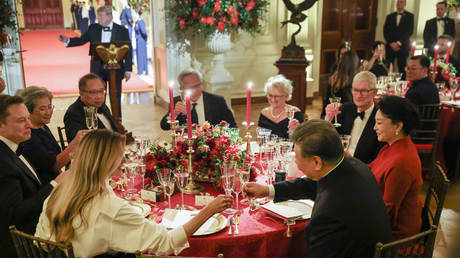
АНУ-ын Ерөнхийлөгч Дональд Трамп болон БНХАУ-ын дарга Ши Жиньпин нар Цагаан ордонд 130 гаруй зочдын хамт оройн зоог барив. Энэхүү арга хэмжээнд Tesla болон SpaceX-ийн гүйцэтгэх захирал Илон Маск, Amazon-ы үүсгэн байгуулагч Жефф Безос, Nvidia-гийн гүйцэтгэх захирал Женсен Хуанг, Meta-гийн Марк Зукерберг, OpenAI-ийн Сэм Алтман, Microsoft-ын Сатья Наделла, Google-ийн Сундар Пичай зэрэг технологийн салбарын томоохон төлөөлөгчид уригджээ. Мөн JPMorgan, BlackRock, Boeing зэрэг санхүү, аж үйлдвэрийн салбарын удирдлагууд оролцсон байна.
Уулзалтын үеэр талууд хиймэл оюун ухаан буюу “супер оюун ухаан”-ыг хөгжүүлэх, түүнийг хүний хяналтад байлгах, нийгэмд тустай байдлаар ашиглах үүрэг хариуцлагын талаар хэлэлцлээ. Түүнчлэн АНУ болон БНХАУ хиймэл оюун ухаантай холбоотой ноцтой ослын үед харилцан мэдээлэл солилцох механизм байгуулах саналыг хэлэлцсэн байна. Трамп болон Ши Жиньпин нар худалдаа, Тайвань болон Ираны асуудлаар 90 минутын турш яриа хэлэлцээ хийж, худалдааны түр эвлэрлийн хугацааг хоёр сараар сунгахаар тохиролцлоо.
Энэхүү оройн зоогт Anthropic компанийн удирдлага болон Palantir-ийн үүсгэн байгуулагч Питер Тиел зэрэг салбарын зарим нэр хүндтэй хүмүүс оролцоогүй байна. Мөн БНХАУ-ын зүгээс бизнес эрхлэгчид оролцох хүлээлт байсан ч төлөөлөгчдийн бүрэлдэхүүнд зөвхөн өндөр албан тушаалтнууд багтжээ. Айлчлалын хүрээнд Цагаан ордонд цэргийн ёслолын ажиллагаа болж, B-2 Spirit бөмбөгдөгч онгоц болон дөрвөн F-22 Raptor сөнөөгч онгоцны үзүүлбэр үзүүлсэн байна.
Дэлгэрэнгүйг эх сурвалжаас харах
↓Эх сурвалжийг нээх ↓
The White House guest list featured leaders of America’s biggest AI and technology companies as Washington and Beijing grapple with an intensifying tech rivalry
Virtually all of America’s most powerful technology executives joined US President Donald Trump and Chinese leader Xi Jinping for a lavish White House state dinner on Thursday, as artificial intelligence emerged as a major theme of the Chinese leader’s visit.
The black-tie dinner in the White House East Room brought together more than 130 guests, including Tesla and SpaceX CEO Elon Musk, Amazon founder Jeff Bezos, Nvidia CEO Jensen Huang, Meta CEO Mark Zuckerberg, OpenAI CEO Sam Altman and president Greg Brockman, Microsoft CEO Satya Nadella and Google CEO Sundar Pichai.
Apple chairman Tim Cook, AMD chief Lisa Su, Qualcomm CEO Cristiano Amon, Micron CEO Sanjay Mehrotra, Zoom CEO Eric Yuan and Dell Technologies chief Michael Dell were also among those invited. Major finance and industrial executives, including JPMorgan CEO Jamie Dimon, BlackRock CEO Larry Fink, Citigroup CEO Jane Fraser and Boeing CEO Kelly Ortberg, attended as well.
One notable Silicon Valley name was missing, however. Anthropic – the developer of the Claude AI models and one of OpenAI’s biggest US rivals – had no representative. Its CEO, Dario Amodei, has been among the industry’s more vocal advocates of tighter safeguards around increasingly powerful AI systems.
Palantir co-founder Peter Thiel was also absent, though he was in Berlin that evening receiving the 2026 Axel Springer Award. His CIA-seeded data-mining giant has grown into one of Silicon Valley’s biggest defense-tech players, supplying AI and analytics software to all six branches of the US military, as well as the FBI, NSA and DIA. Its technology is also used by NATO and the Israeli and Ukrainian militaries, while the company has faced sustained criticism over its expanding role in surveillance and AI-enabled warfare.
Intel, IBM and Oracle were also absent from the guest list, which otherwise featured most of America’s biggest technology and AI companies.
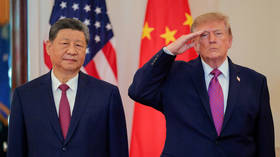
There was also a conspicuous absence on the other side of the table: no Chinese corporate executives were listed, despite earlier expectations that business leaders could accompany Xi. Instead, his delegation at the dinner was composed of senior Chinese officials.
The concentration of American tech executives came as Trump and Xi discussed the increasingly intense US-China competition in artificial intelligence and advanced semiconductors.
Earlier on Thursday, Xi said both countries had a responsibility to ensure AI remained “under human control” and was developed for the benefit of people.
Trump, meanwhile, said AI – which he has increasingly referred to as “superintelligence” – was high on the summit agenda, while reiterating his opposition to slowing development through extensive regulation. Washington has also proposed establishing a mechanism allowing the two countries to notify each other about serious AI-related incidents, an idea discussed by senior economic officials ahead of the summit.
The dinner followed roughly 90 minutes of talks between Trump and Xi at the White House, where the two sides also addressed trade, Taiwan and the ongoing conflict involving Iran. Washington and Beijing agreed earlier this week to extend their existing trade truce by two months while negotiations continue.
Trump used his toast to emphasize cooperation despite the rivalry, saying the two leaders represent “different systems” but could continue building a relationship promoting prosperity and security.
In his toast, Xi said China’s pursuit of the “great rejuvenation of the Chinese nation” and Trump’s “Make America Great Again” agenda “can surely be mutually reinforcing.”
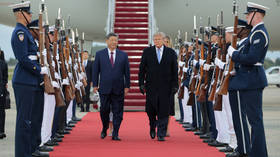
The dinner capped a day of elaborate ceremonies at the White House, including a military review and a separate flyover featuring a B-2 Spirit and four F-22 Raptors. Trump also revealed that earlier in the day, he had presented Xi with a roughly three-foot-tall bald eagle statue designed by an American artist in collaboration with the president and first lady, calling the bird a symbol of America’s “free and soaring spirit.” Details of Xi’s gift were not immediately disclosed.

