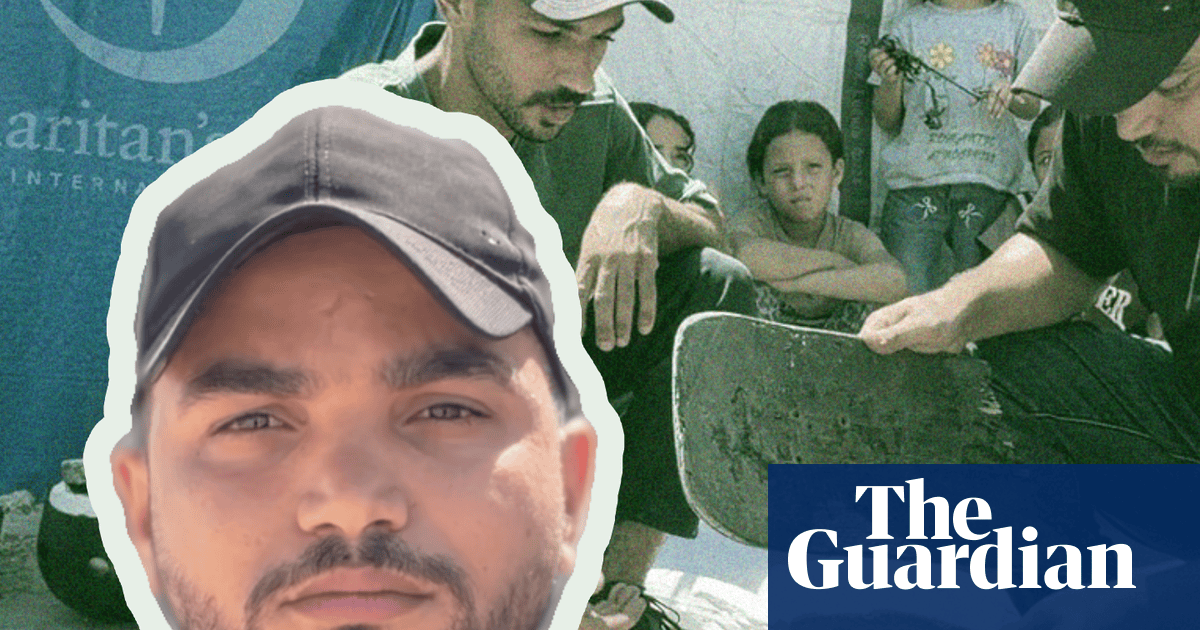
Израйлын бүслэлтийн улмаас Газын зурваст энгийн бараа бүтээгдэхүүний хомсдол үүсэж, хүүхдүүдийн дуртай скейтборд зэрэг тоглоомыг нэвтрүүлэхийг хориглосон ч багш Ражаб аль-Рифи хүүхдүүдэд итгэл найдвар өгөхийн тулд хуучин тоног төхөөрөмжөө сэлбэн ашиглаж байна.
Газын зурвасын хил орчмын бүсэд амьдардаг 30 настай Ражаб аль-Рифи дайны улмаас сүйдсэн барилгуудын дээвэр болон YMCA-ийн хашаанд хүүхдүүдэд скейтбордын хичээл заадаг байна. Дайн эхлэхээс өмнө бүтээн байгуулсан скейт парк нь майхан барих талбай болж сүйдсэн тул тэд одоо эвдэрхий барилгын үлдэгдэл болон пуужингийн хоосон хонгил зэрэг дээр дасгал сургуулилтаа хийж байна.
Тэрээр дайны хөлд үрэгдсэн байшингуудын нуранги дороос хуучин скейтбордуудыг эрсдэлтэйгээр хайж олох, эвдэрснийг нь сэлбэх замаар хүүхдүүдийн сэтгэл зүйн дарамтыг багасгахыг хичээж байгаа юм. Израйлын зүгээс ХАМАС бүлэглэл ашиглаж болзошгүй гэх үндэслэлээр скейтбордыг хориглосон барааны жагсаалтад оруулсан нь тэдний үйл ажиллагааг улам бүр хүндрүүлж байна.
Ражаб өдөр тутмын усны хангамж, гэр бүлийн аюулгүй байдал болон агаарын довтолгооны чимээ зэрэг хүнд нөхцөл дунд амьдарч байгаа ч хүүхдүүдэд энгийн амьдрал үргэлжилж байгааг мэдрүүлэхийг зорьж байна. Тэрээр 2026 онд энгийн модон скейтборд оруулж ирэх боломжгүй байгаа нь хүүхдүүдийн баяр хөөрийг үгүйсгэж буй хэрэг хэмээн шүүмжилжээ.
Дэлгэрэнгүйг эх сурвалжаас харах
↓Эх сурвалжийг нээх ↓
Rajab al-Reefi remembers the day the club’s last skateboard broke. Those pastry-thin layers of maple, carefully pressed into a curve, had carried child after child up and down the homemade ramps of the skatepark. Having endured years beyond their typical lifespan, the board’s layers buckled, cracked and finally snapped.
At 30, Rajab is a leader of the Gaza skate club, a group that has spent the past decade teaching girls and boys to skate. But Israel’s siege of Gaza blocks a vast array of ordinary household goods from entering the territory, with the Israelis claiming they could be used by Hamas. One of the banned items is a skateboard.
Rajab is a skater in Gaza, a place with almost no boards left. This is what a day in his life looks like.
Daybreak
double quotation mark I wake up early in the morning, and the first thing I do is go to get water for the house and bring drinking water.
Water trucks stopped reaching our area because drivers are afraid to come this close, due to the risks. We have been living about 30 metres away from the yellow line [a border line controlled by Israel]. As a result, I have to travel to other areas – water for daily use is even harder to obtain, as it arrives only once a week and at a specific time.
After I get the water, my wife prepares breakfast and we have it together. I take my children to kindergarten, then return home, get dressed, prepare my equipment and head to work. Before the war, all of my work revolved around skateboarding and working with children. But now, with skateboarding activities mostly suspended, I work as a photographer whenever opportunities arise, so that I can support my family. I also spend time posting on social media to bring attention to our cause.
Midday
double quotation mark After I finish work, I go home and prepare myself to go to skateboard practice with the kids, so we can do the things we dream about.
Getting the boards we have now was extraordinarily difficult. When the war began, I had to leave all our skateboards with some of the children I train, because I couldn’t take them with me. Our area is near the [yellow line] border, and I was afraid that something might happen to the houses we had left there, and that I would lose whatever equipment remained. In the end we lost them – some of the houses were bombed with the boards inside. Only a very small amount remained.
In Gaza, we always try to repair and reuse whatever we can. We have even managed to produce fuel from old car tyres. So of course we tried every possible way to repair our skateboards and keep going. But eventually we reached a point where repairs were no longer possible because of heavy wear and the lack of spare parts.
When the last board broke a few months ago, honestly, we felt hopeless. But we started contacting the children who we’d left skate equipment with during the war, asking if it was still in their destroyed homes. Some said yes – so we searched under the rubble to retrieve these boards. Honestly, while we were digging, we were working with our bare hands. We knew we might encounter unexploded ordnance. We were in great danger, but we found some equipment there, and now we have a few repaired boards.
Afternoon
In the sun outside the YMCA, a group of about 40 children have gathered. They stand in an orderly line against the fences and watch two small girls wearing matching pink trousers, white T-shirts and long ponytails run a few steps, drop the boards and jump on. They bounce over the uneven ground, attempting a body aerial – where you jump 180 degrees and land back on the board. Neither quite lands it, but when they turn at the edge of the court, both are grinning.
double quotation mark In the afternoon, it is time for skateboarding. I walk with my son past streets full of rubble, go to the YMCA and we practise skating until sunset and the call to prayer.
There used to be a whole skate park that we built here with the help of friends overseas, but it has all been demolished to make way for tents. For training spaces now we can use the courtyard of the YMCA, the remaining open areas along the seaport, or even the rooftops of damaged buildings. We do tricks in the rubble – sometimes on empty missile casings – and post them online.
Today, we try to skate using simple moves, just to bring some joy to the children. Let them do simple moves, just so they feel that skateboarding still exists in Gaza.
Losing children whom we had trained was one of the hardest tragedies we experienced. We also lost the places – like our homes and the skate park – we had dreamed of for years and worked tirelessly to build. As soon as those dreams became reality, the war came and destroyed everything.
When we had no boards, the absence of skateboarding completely changed my life. I have become more irritable and less able to cope with what is happening around me. Still, I continue reaching out to many people in the hope of finding a solution.
I find it astonishing that in 2026 no one is able to bring in a simple wooden skateboard – something that harms no one and could bring happiness to hundreds of children.
Evening
double quotation mark After the skating is over, I make my way back home. In the evening, we often feel anxious because the bombing has not stopped.
Sometimes we cannot fall asleep straight away, and we spend the whole night feeling anxious because of the sound of aircraft. Since I have children, I try to calm and reassure them. I tell them, “Don’t worry, the bombing is far away. We are safe, and nothing will happen to us.” I do not do anything in the evening apart from spend time with my children and my wife.
My main goal is to help children release the negative emotions caused by everything they have witnessed and endured during the war, while also ensuring that skateboarding continues to exist in Gaza.
Credits
Video: Tantesh Media Services
Art direction: Harry Fischer, Anaïs Mims, Barry Ainslie and Alessia Amitriano
Video editor/producer: Joshua Jacob
Video executive producers: Temujin Doran and Augusta Anthony
Additional reporting and research: Aseel Mousa and Harriet Barber

