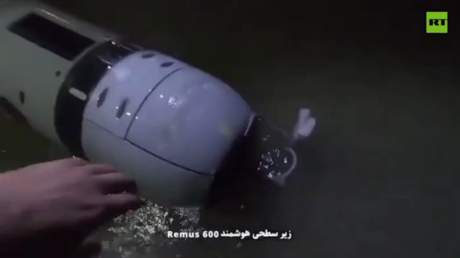
Ираны Хувьсгалт гварди (IRGC) АНУ-ын тэнгисийн цэргийн хүчинд харьяалагддаг, тагнуулын зориулалттай Remus 600 загварын шумбагч төхөөрөмжийг Хормузын хоолойд баривчилсан гэж мэдэгдлээ.
Ираны тал уг дрон нь тус стратегийн бүсэд тагнуулын ажиллагаа явуулж байсан гэж үзэж байгаа бөгөөд одоогоор мэргэжилтнүүд төхөөрөмжид хадгалагдсан мэдээллийг сэргээхээр ажиллаж байна. Энэ нь тус бүс нутагт энэ сард гарч буй хоёр дахь тохиолдол юм. Есдүгээр сарын эхээр Ираны тал АНУ-ын Dive-LD загварын шумбагч төхөөрөмжийг баривчилсан бол дараа нь Saildrone Explorer загварын дроныг устгаснаа зарласан билээ. АНУ-ын зүгээс эдгээр асуудлаар одоогоор албан ёсны тайлбар өгөөгүй байна.
АНУ болон Ираны хооронд далайн бүс нутагт хурцадмал байдал нэмэгдэж байгаа энэ үед дипломат харилцаа ч мухардалд ороод байна. НҮБ-ын Ерөнхий ассамблейн чуулганы үеэр Ираны Гадаад хэргийн сайд Аббас Арагчи Хормузын хоолойг нээх, цөмийн хэлэлцээг сэргээх зэрэг багтаамжтай долоон өдрийн төлөвлөгөөг танилцуулсан ч АНУ-ын Ерөнхийлөгч Дональд Трамп үүнийг “хүлээн зөвшөөрөх боломжгүй” хэмээн няцаажээ.
Дональд Трамп хэлэлцээ амжилтгүй болсон тохиолдолд Ираны эсрэг “эцсийн шийдвэр” гаргах боломжтойг анхааруулав. Үүний хариуд Ираны зэвсэгт хүчний командлагч, хошууч генерал Амир Хатами мөргөлдөөний эхний үе шат өндөрлөсөн гэж үзэж байгаа ч Иран улс ялалтаа бэхжүүлэх шаардлагатай байгааг онцоллоо. АНУ-ын тал Хормузын хоолой орчимд цэргийн идэвхжилээ нэмэгдүүлж, тагнуулын онгоц болон сөнөөгч онгоцуудаа бүс нутагт нэмж байршуулсан тухай эх сурвалжууд мэдээлж байна.
Дэлгэрэнгүйг эх сурвалжаас харах
↓Эх сурвалжийг нээх ↓
IRGC has released footage of an unmanned underwater vessel it says belonged to the US military
Iran’s Islamic Revolutionary Guard Corps (IRGC) says it has captured a US autonomous underwater vehicle in the Strait of Hormuz, the second such incident reported this month.
According to an IRGC Navy statement carried by Iranian media, the military UROV was conducting espionage in the strategic waterway.
The IRGC identified the vessel as a Remus 600, an advanced autonomous underwater vehicle used by the US Navy for mine detection, surveillance, and reconnaissance.It released footage of the vehicle being lifted from the water and said specialists are now working to recover its data.
The IRGC also warned that the Strait of Hormuz remains “closed,” saying it will continue confronting what it described as “dangerous movements and unauthorized” vessel activity.The US has not yet commented on the incident.
The claim follows a series of drone incidents in the Strait of Hormuz this month.
In early September, Iran said it had seized a US underwater drone, with IRGC footageappearing to show an Anduril-built Dive-LD. The Pentagon acknowledged losing the submersible but said it was an older, damaged model carrying no sensitive data or classified equipment. Days later, the IRGC said it had destroyed a US Saildrone Explorer near the entrance to the strait, releasing footageof the craft burning in the water. In mid-September, the US military said it had thwarted an IRGC attempt to seize another Saildrone, striking two Iranian boats allegedly involved.
The incidents come amid an escalating maritime standoff between Washington and Tehran. The US has destroyed several Iranian oil tankers after accusing the IRGC of firing ballistic missiles at US warships. Iran, meanwhile, has targeted US vessels and commercial tankers it accused of violating restrictions around the Strait of Hormuz. Earlier this week, reports claimedthat Washington had increased military activity around the waterway, with reconnaissance aircraft spotted near Iranian territory and additional fighter jets reportedly deployed to the region.

Meanwhile, this week’s diplomatic efforts to break the Iran-US deadlock appear to have failed. At the UN General Assembly, Iran presented what Foreign Minister Abbas Araghchi called a “concrete seven-day plan,” offering to reopen the Strait of Hormuz and resume nuclear talks if Washington lifted its naval blockade, eased restrictions on Iranian oil exports, released frozen assets, and observed a ceasefire, including an end to Israel’s operations in Lebanon. US President Donald Trump rejected the proposal as “unacceptable.”
“I reject their proposal,” he told reporters outside the White House on Saturday, claiming Tehran wants a deal “because they’re losing so badly.” At the UN gathering, he also said he faced a “big decision” over whether to “annihilate” Iran if negotiations failed.
Iran’s top army commander, Major General Amir Hatami, on Sunday argued that the “war is not over,” insisting Tehran had won the initial phase of the conflict but now needs to “consolidate its victory.”

