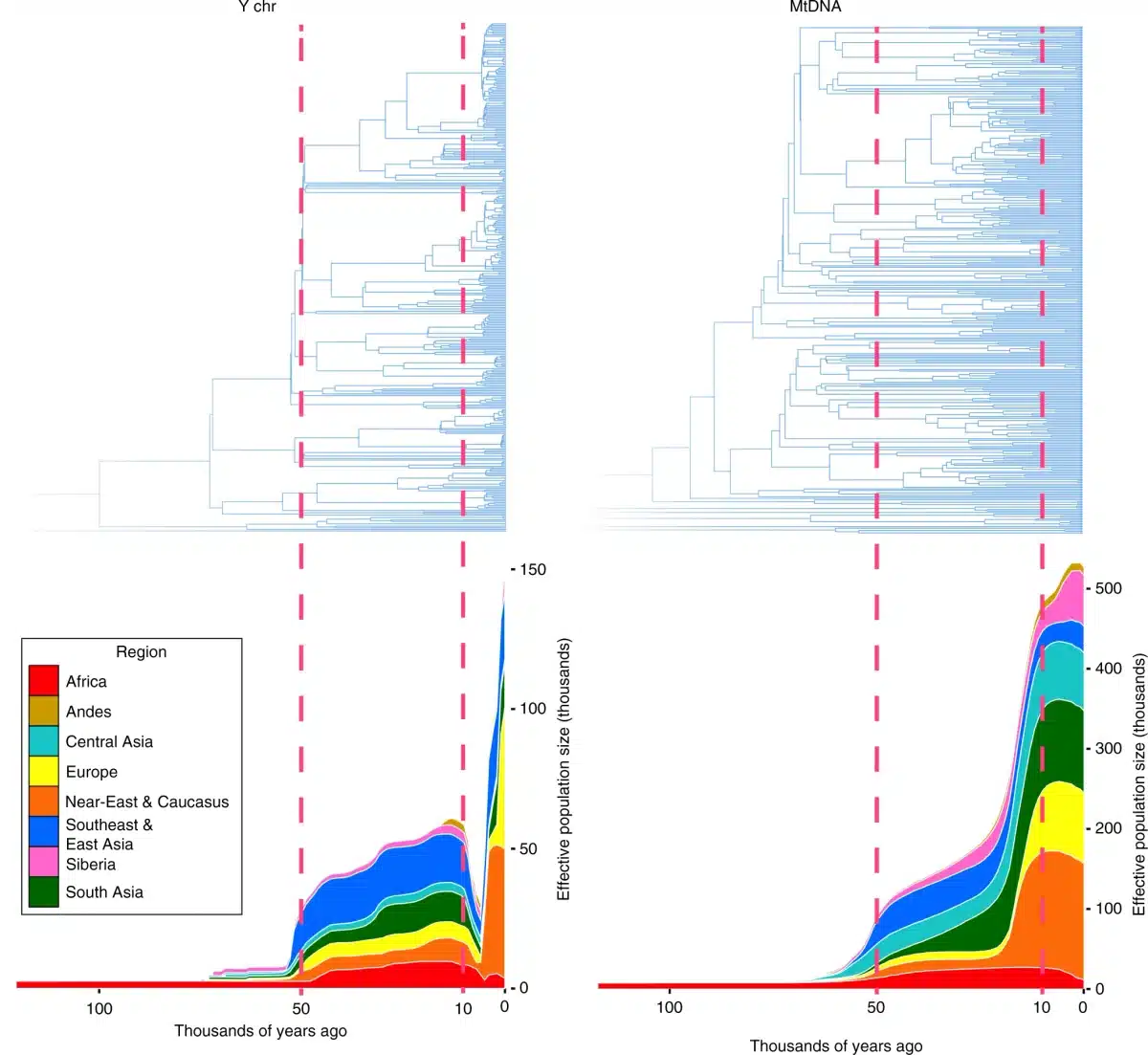
Эрдэмтэд 5,000-7,000 жилийн тэртээ Африк, Европ болон Ази тивд эрэгтэйчүүдийн генетик олон янз байдал огцом буурсныг судалж байна.
Судлаачид эрэгтэйчүүдийн удам дагаж ирдэг Y хромосомын дарааллыг шинжлэх явцдаа генетикийн олон янз байдал 5 хувь хүртэл буурсан нотолгоог илрүүлжээ. Энэхүү үзэгдлийг “Неолитын дараах Y хромосомын гацалт” гэж нэрлэх бөгөөд эмэгтэйчүүдийн митохондрийн ДНХ-д ийм өөрчлөлт ажиглагдаагүй нь энэ үйл явц зөвхөн эрчүүдийн удамшлын шугамд нөлөөлснийг харуулж байна.
Энэхүү генетикийн өөрчлөлтийн шалтгааныг тогтоохоор эрдэмтэд олон таамаглал дэвшүүлж байгаа юм. Стэнфордын их сургуулийн судлаачдын үзэж буйгаар, газар тариалангийн үеийн овог аймгуудын хоорондох тэмцэл нь тодорхой удамшлын шугамуудыг устгаж, цөөн тооны эрчүүдийн удам давамгайлахад хүргэсэн байж болзошгүй гэж таамаглаж байна.
Гэсэн хэдий ч Nature Communications сэтгүүлд нийтлэгдсэн өөр нэгэн судалгаагаар, энэхүү генетикийн гацалт нь заавал зэвсэгт мөргөлдөөнөөс үүдэлтэй байх албагүй гэж үзжээ. Нийгмийн бүтэц, тэр дундаа эцгийн эрхт овгийн зохион байгуулалт болон нөхөн үржихүйн амжилт, санамсаргүй хүчин зүйлүүд нь тухайн үеийн эрэгтэйчүүдийн генетикийн дүр төрхийг өөрчлөхөд хангалттай нөлөө үзүүлсэн байх магадлалтай байна.
Дэлгэрэнгүйг эх сурвалжаас харах
↓Эх сурвалжийг нээх ↓
Around 7,000 years ago, the genetic diversity of human males suddenly dropped across parts of Africa, Europe, and Asia. Scientists studying the DNA, more specifically Y chromosome, and found evidence of a dramatic bottleneck that erased many paternal lineages from the human gene pool.
The Y chromosome is passed from fathers to their sons, making it a valuable tool for tracking male ancestry through time. When researchers examined its variations, they discovered a surprising pattern: while female genetic diversity remained relatively stable, many male lineages seemed to disappear during a period when human societies were changing rapidly.
This event, known as the post-Neolithic Y-chromosome bottleneck, happened thousands of years after the rise of agriculture. Researchers are still debating exactly what caused it, but several studies point toward major shifts in how early human communities were organized.
A Vanished Chapter Of Human DNA
Every human cell contains 46 chromosomes, arranged in 23 pairs. One of those pairs includes the X and Y chromosomes, which are linked to biological sex. The Y chromosome is found almost exclusively in males and is passed from father to son.
Because of this unique inheritance pattern, scientists can use the Y chromosome to follow male family lines over many generations. Small differences between Y chromosomes can reveal how populations changed, expanded, or declined over time.
According to a study published in 2015, researchers analyzed hundreds of Y chromosome sequences from around the world and identified a sharp reduction in male genetic diversity between roughly 5,000 and 7,000 years ago.
The researchers estimated that Y chromosome diversity fell to around 5 percent of its previous level. The pattern appeared across Afro-Eurasia, but not in populations from the Americas. At the same time, scientists did not find a similar decline in mitochondrial DNA, which is inherited through the maternal line. This suggested that something had affected male ancestry specifically.
The Clan Era That Changed Our Genes
Scientists have looked at the social changes of the Neolithic period to understand what may have caused this unusual genetic pattern. Agriculture had already spread from West Asia, where farming began around 12,000 years ago, into other parts of Eurasia and Africa.
As societies grew larger, communities became more complex. Some researchers have suggested that many groups were organized around patrilineal clans, where family connections, status, and inheritance followed the male line.
According to a 2018 study from researchers at Stanford University, competition between these clans could have played a role in reducing Y chromosome diversity. Their team used population genetics data, anthropological research, and mathematical models to test how such a decline could happen.
The idea is that conflicts between rival groups may have wiped out some male lineages while others survived and expanded. Over many generations, this could leave only a small number of dominant Y chromosome patterns.
The researchers also pointed out that the bottleneck does not mean there was literally only one man for every 17 women. Instead, many men may have shared the same Y chromosome because they descended from a common male ancestor whose lineage became widespread.
The Genetic Collapse Had Another Side
Not all researchers agree that violence was the main driver behind the decline. Another possibility is that social changes alone could have created the same genetic effect.
As reported by a study available on Nature Communications, researchers found that patrilineal clan structures could produce a similar pattern without requiring large-scale conflicts. Some groups may simply have grown faster than others because of social advantages, chance events, or differences in reproductive success. Over time, these differences could have allowed certain male lineages to dominate while others faded away.

Enjoyed this article? Subscribe to our free newsletter for engaging stories, exclusive content, and the latest news.

