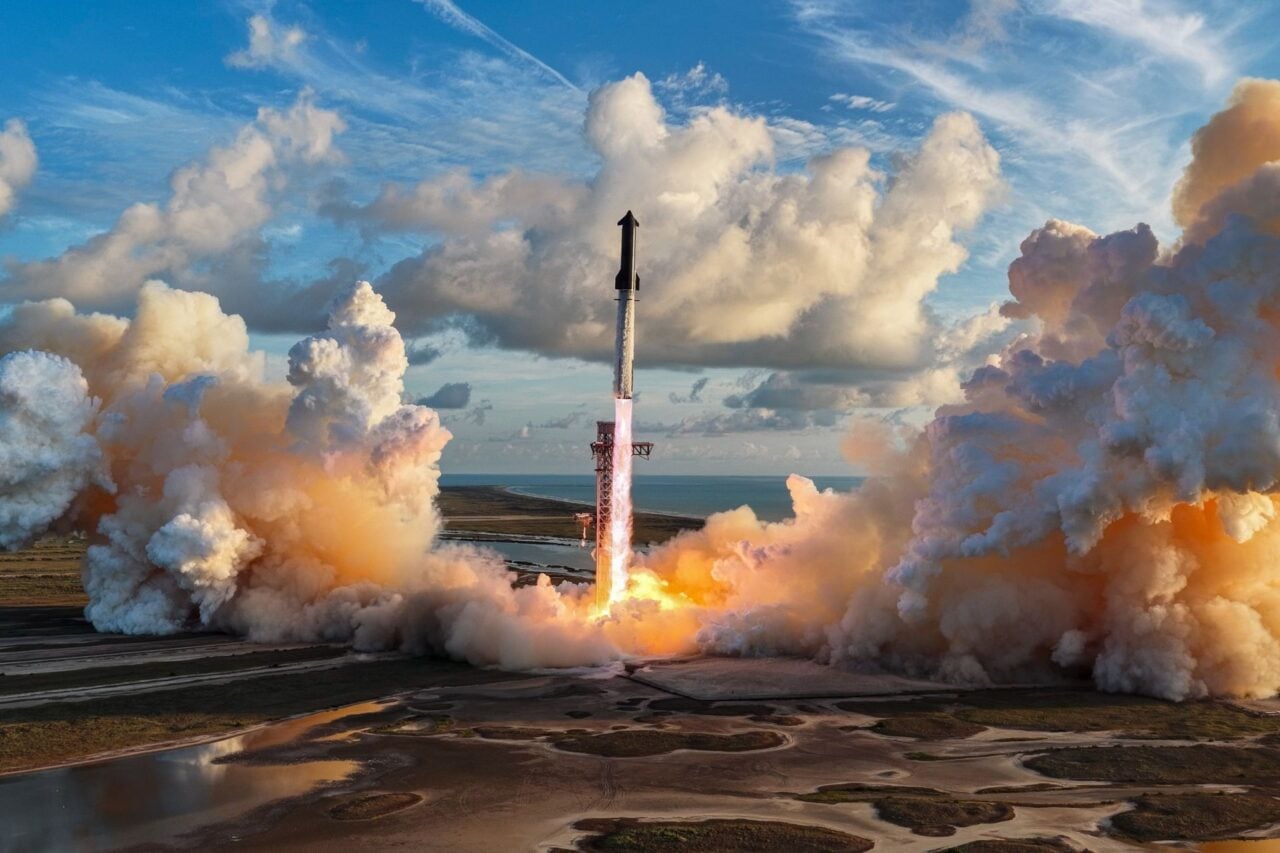
SpaceX компанийн Starship хөлөг сансарт анх удаа тойрог замд орсон нь томоохон амжилт болсон ч хөдөлгүүрийн доголдлоос үүдэн дараагийн сорилтууд тулгарч байна.
Техас дахь Starbase талбайгаас хөөрсөн Starship хөлгийн Super Heavy хурдасгуур хоёр хагас минутын дараа салж, Мексикийн буланд амжилттай газардсан байна. Хөлөг дэлхийн тойрог замд орохын тулд хөдөлгүүрээ асаах үед Raptor 3 хөдөлгүүрийн нэг нь гэнэт унтарчээ. Удирдлагын төв хүндрэлтэй шийдвэр гаргасны эцэст үлдсэн хөдөлгүүрийг ажиллуулж, хөлгийг тойрог замд оруулахад амжилттай хүрсэн байна.
Нийт 10 цаг үргэлжлэх ёстой байсан уг туршилтын нислэгээр 26 ширхэг Starlink V3 хиймэл дагуулыг тойрог замд байршуулсан юм. Гэсэн хэдий ч хөдөлгүүрт гарсан асуудлын улмаас нислэгийн удирдагчид болгоомжлох үүднээс төлөвлөгөөг өөрчилж, хөлгийг гурван цаг хүрэхгүй хугацааны дараа Номхон далайд буулгажээ. Starship хөлөг Raptor 3 хөдөлгүүрийг ашиглан гурван удаа ниссэн ч бүх удаад нь техникийн доголдол илэрсэн нь SpaceX-ийн хувьд шийдвэрлэх ёстой чухал асуудал болоод байна.
Одоо SpaceX инженерүүд хөдөлгүүрийн доголдлын шалтгааныг нарийвчлан тогтоож, засах шаардлагатай байгаа юм. Хэрэв энэ асуудлыг шийдвэрлэвэл дараагийн нислэгээр хөлгийн дээд хэсгийг хөөргөх цамхагийн механик “саваа” гар ашиглан барьж авах туршилтыг хийхээр төлөвлөж байна. Энэ нь бүрэн дахин ашиглах боломжтой сансрын хөлөг бүтээх зорилгын гол алхам болох юм.
Энэхүү бүтээн байгуулалт нь NASA-гийн Artemis 3 хөтөлбөрт шууд хамааралтай бөгөөд 2027 онд саран дээр хүн буулгах зорилттой холбоотой. Starship-ийн хөдөлгүүрийн найдвартай байдал нь зөвхөн SpaceX-ийн арилжааны зорилго төдийгүй NASA-гийн сарны даалгаврын хуваарьт нөлөөлөх хүчин зүйл болж байна. Иймээс хөдөлгүүрийн доголдол нь нэг удаагийн санамсаргүй алдаа эсвэл дизайны томоохон сул тал эсэхийг тогтоох нь төслийн цаашдын явцад нэн чухал байна.
Дэлгэрэнгүйг эх сурвалжаас харах
Эх сурвалжийг нээх ↓
For a moment, it looked like Starship’s first attempt at orbital flight would end in failure.
SpaceX’s megarocket launched from Starbase, Texas, Monday morning, ascending amid a blaze of fire. Roughly two and a half minutes into the flight, the Super Heavy booster separated from the upper stage and went on to make a controlled splashdown in the Gulf of Mexico. Starship then performed an initial engine burn to reach space, but during the burn, one of its Raptor 3 engines suddenly shut down.
Dan Huot, SpaceX communications manager and host of the company’s launch webcasts, did his best to stall while flight controllers frantically deliberated standing down from the single-engine burn that would put Starship into orbit. If they decided against the burn, Starship would splash down in the Indian Ocean as it had at the end of many previous test flights. But after several nail-biting minutes, SpaceX finally gave the “go.”
Starship reignited a Raptor sea-level engine and entered into orbit around Earth for the first time. Raucous cheers erupted from the Starbase mission control room. This was a huge moment for Starship, and the fact that SpaceX came so close to aborting the orbital insertion burn made the achievement all the more exciting.
It wasn’t all smooth sailing from there, however. This test mission, Flight 14, was supposed to last 10 hours, with Starship completing roughly six trips around the planet. The vehicle did manage to deploy all 26 of the Starlink V3 satellites it carried to space, marking the first operational deployment of these larger, upgraded satellites. But “out of an abundance of caution given the engine issue experienced during ascent,” flight controllers decided to end the mission early. Starship splashed down in the northern Pacific after less than three hours in orbit.
Now, SpaceX has work to do. Reaching orbit is a key achievement, but the company needs to prove it can do this without any anomalies and do so repeatedly.Starship has flown with SpaceX’s upgraded Raptor 3 engines three times now, and they have malfunctioned every time.Getting to the bottom of these issues will be critical if SpaceX hopes to deliver on its promises to NASA and its own ambitious timeline for ramping up Starship’s launch cadence and achieving commercial viability.
Starship is 2 to 3 years away from hourly flights
— Elon Musk (@elonmusk) September 27, 2026
Up next: orbital flight followed by catch
Assuming SpaceX engineers quickly get to the bottom of that engine failure and make the necessary fix, Starship’s next test mission, Flight 15, could theoretically lift off as early as October 19.
Take that date with a grain of salt. It is a highly provisional estimate provided by the Federal Aviation Administration’s Air Traffic Control System Command Center (ATCSCC), not SpaceX. Flight 15 will almost certainly launch later than that, but this date does suggest that SpaceX wants to keep the ball rolling.
During an appearance on the All-In Podcast earlier this month, SpaceX CEO Elon Musk said that if Flight 14 went well, the company would attempt to catch the Starship upper stage with the launch tower’s mechanical “chopstick” arms on Flight 15. This would mark another major first. SpaceX has caught and reflown a Super Heavy booster before, but not an upper stage.
“Once we can re-fly the Ship, we will have made the first fully reusable orbital rocket,” Musk said. He predicted that the chances of successfully catching the upper stage on the first try are at least 50% to 60%.
That’s not overly optimistic. SpaceX caught the Super Heavy booster on its first try back in 2024. The big question this time around is whether Starship will be able to complete the full planned duration of its orbital flight. Should another engine failure or some other anomaly force the vehicle to return to Earth early, SpaceX will not be able to attempt the tower catch.
According to ATCSCC, Flight 16 could launch as early as October 30, but again, that’s highly unlikely. That test mission will be the first to launch Starship from NASA’s Kennedy Space Center in Florida. SpaceX is expanding Starship operations beyond Starbase to increase the rocket’s launch rate, access higher-inclination orbits, and support upcoming NASA missions.
Artemis 3 deadline is looming
Speaking of NASA, the agency still plans to launch Artemis 3 in 2027. This mission will send test versions of NASA’s two commercial Moon landers—SpaceX’s Starship Human Landing System (HLS) and Blue Origin’s Blue Moon Mark 2 lander—to low-Earth orbit. There, they will attempt to demonstrate the systems and capabilities required to safely carry the Artemis 4 astronauts to the lunar surface.
Only one lander will earn the chance to return NASA astronauts to the Moon for the first time in more than 50 years, so SpaceX and Blue Origin are competing for that prize. Starship HLS will use the same engines that have malfunctioned on every test flight they’ve flown on thus far. Fixing these problems is therefore imperative to both SpaceX and NASA.
Whether the engine failure that occurred during Flight 14 was “a one-off failure of a single part” or a symptom of a larger design problem will determine the pace of Starship’s continued development, Accu Components aerospace engineer Dean Sladen told Reuters.
“Any engine fix that holds up the next flights, including the planned attempt to catch the ship with the launch tower’s arms [after re-entry], eats into that schedule,” he said.
So while it was exhilarating to finally see Starship enter Earth orbit for the first time, SpaceX has much work to do to secure the rocket’s commercial viability and its role in NASA’s Artemis program.

