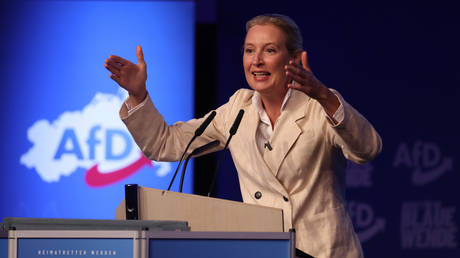
Германы улс төрийн тавцанд нөлөө бүхий “Альтернатив Герман” (AfD) намыг хориглох асуудлыг тус улсын Социал-демократ нам (SPD) дахин дэвшүүлж, энэ чиглэлээр тусгай ажлын хэсэг байгуулахыг уриаллаа.
Бремен хотод болсон хоёр өдрийн дээд хэмжээний уулзалтын үеэр SPD-ийн парламент дахь төлөөлөгчид “AfD” намыг “баруун жигүүрийн хэт даврагч” хэмээн тодорхойлж, ардчилсан тогтолцоонд аюул учруулж, арьс өнгөөр ялгаварлан гадуурхах үзлийг хэвийн үзэгдэл мэт сурталчилж байна гэж буруутгав. Тус нам холбооны болон муж улсын засгийн газруудыг энэ оныг дуусгахаас өмнө хамтарсан ажлын хэсэг байгуулж, тус намыг хориглох хууль эрх зүйн үндэслэл байгаа эсэхийг судалж үзэхийг шаардлаа.
“AfD” нам нь сүүлийн үед Саксони-Анхальт болон Мекленбург-Өрнөд Померани мужуудад болсон сонгуулиудад өндөр амжилт үзүүлж, үндэсний хэмжээний санал асуулгад тэргүүлж эхэлсэн юм. Тус нам цагаачлалын хатуу хяналт тогтоохыг уриалж, Украйны асуудалд үзүүлж буй Германы дэмжлэг болон ОХУ-ын эсрэг авсан хориг арга хэмжээг эсэргүүцдэг байр суурьтай байна.
Германы Дотоод тагнуулын албанаас “AfD” намыг баруун жигүүрийн хэт даврагч байж болзошгүй гэж үздэг ч Кёльн хотын шүүхээс энэ ангиллыг албан ёсоор баталгаажуулах оролдлогыг түр зогсоогоод байгаа юм. Германы хуулиар улс төрийн намыг хориглох нь маш өндөр босготой бөгөөд зөвхөн Холбооны Үндсэн хуулийн шүүхийн шийдвэрээр хэрэгждэг.
Германы Канцлер Фридрих Мерз “AfD” намыг хориглох нь тус намын сонгогчдын тулгарч буй асуудлыг шийдвэрлэхгүй гэж үзэн энэ санаачилгад эргэлзээтэй хандаж байна. Одоогоор “AfD” нам санал асуулгаар 29.5 хувийн дэмжлэгтэйгээр тэргүүлж байгаа бол эрх баригч CDU/CSU блок 19 хувь, SPD нам 14.5 хувийн дэмжлэгтэй байна.
Дэлгэрэнгүйг эх сурвалжаас харах
↓Эх сурвалжийг нээх ↓
The call comes as the right-wing party leads national polls, with support more than twice that of the SPD
Germany’s Social Democratic Party (SPD) has called for a formal review that could pave the way for a ban on Alternative for Germany (AfD), as the right-wing party leads national polls following major regional election victories.
The push follows the AfD’s sweeping victories in Saxony-Anhalt and Mecklenburg-Western Pomerania earlier this month, where it secured 43.8% and 38.2%, respectively. German Chancellor Friedrich Merz’s Christian Democratic Union (CDU) suffered heavy losses, including failing to clear the 5% threshold in Mecklenburg-Western Pomerania.
On Tuesday, SPD parliamentary leaders from the Bundestag, Germany’s state legislatures and the European Parliament wrapped up a two-day summit in Bremen by again labeling the AfD a “right-wing extremist party.” They accused it of threatening democracy “from within” and “normalizing racism.”
The AfD has rejected accusations of extremism. Responding to a parallel push for a potential ban in Hamburg this week, AfD parliamentary leader Dirk Nockemann called it an “attack on democracy and the will of the voters” and dismissed the proposed working group as “desperate.”
The Eurosceptic party advocates tougher immigration controls and opposes Berlin’s support for Ukraine and sanctions against Russia.
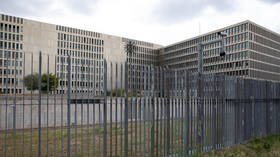
At the federal level, the AfD remains classified by Germany’s domestic intelligence agency as a suspected right-wing extremist organization.
In February, a Cologne court blocked an attempt by the agency to upgrade the AfD to confirmed right-wing extremist status, pending the outcome of the main proceedings. Several AfD state branches carry the stronger classification.
The SPD wants federal and state governments to set up a joint working group by year-end to examine whether legal grounds exist to seek a ban. Launching the review “is a legal necessity” and a “democratic duty,” it said.
Merz himself has expressed skepticism about pursuing a ban. Earlier this month, the chancellor said the legal hurdle was “very high” and argued that outlawing the AfD would not solve the problems its voters believe they face.
Under German law, only the Federal Constitutional Court can outlaw a party. A ban requires more than anti-constitutional views: a party must actively seek to undermine the democratic order and have the potential to achieve its aims.
The push comes as the AfD has opened up a record polling lead over Merz’s CDU/CSU bloc. An INSA survey put the AfD at 29.5%, compared with 19% for the CDU/CSU and just 14.5% for the SPD. The two governing parties together stood at 33.5%, only four points ahead of the AfD alone.
AfD co-leader Alice Weidel reacted to the poll by accusing the CDU of “clinging to the undemocratic firewall,” saying the policy was ultimately “destroying Germany.” The ‘firewall’ refers to the refusal by other major German parties to cooperate with the AfD.
You can share this story on social media: