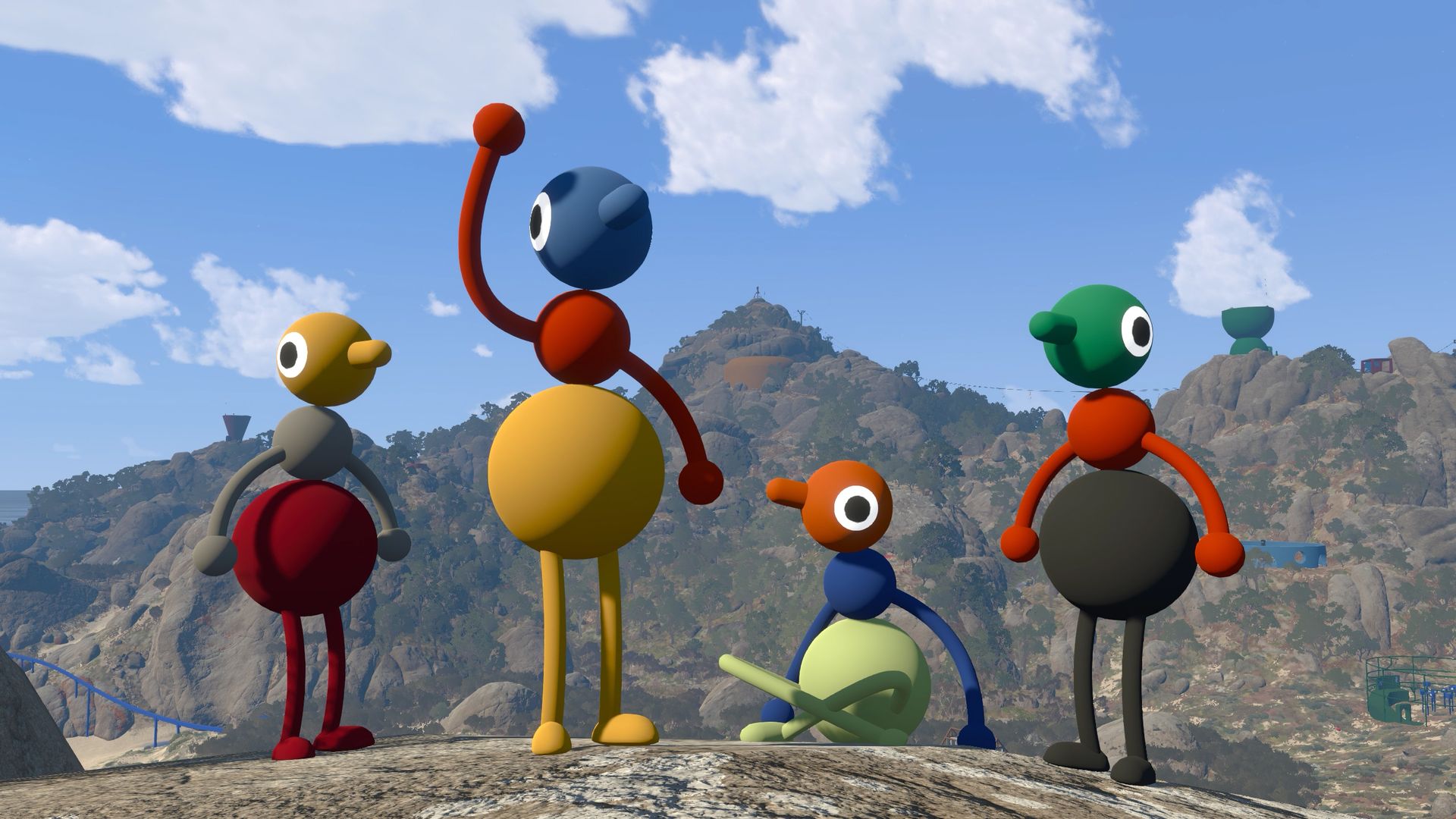
Сүүлийн үеийн тоглоомууд хялбарчилсан удирдлагаас татгалзаж, бодит амьдрал дээрх нарийн төвөгтэй хөдөлгөөнүүдийг тоглоомын гол цөм болгон хөгжүүлж байна.
Өнгөрсөн хугацаанд Mirror’s Edge, Titanfall 2, Doom Eternal зэрэг тоглоомууд тоглогчийн хөдөлгөөний чадварыг өндөр түвшинд хүргэсэн бол сүүлийн үед хөгжүүлэгчид илүү энгийн, бодит бөгөөд “хүнд” хөдөлгөөнүүдийг тоглоомын гол онцлог болгох хандлагатай байна. 2025 онд гарсан Baby Steps тоглоом нь зөвхөн алхах үйлдлийг физикийн нарийн тооцоололтой хослуулснаар энэхүү чиг хандлагыг тодорхойлсон юм. Хөгжүүлэгч Габэ Кузилло-гийн дурдсанаар, энэхүү санаа нь Mirror’s Edge тоглоомын тусгай мод болох Stratocubulus-аас эхтэй бөгөөд тоглогчийг орон зайг өөр өнцгөөс харж, шинээр шийдэл олоход түлхэц өгдөг байна.
Энэ онд гарсан Cairn, Control Resonant, Vholume, Big Walk зэрэг тоглоомууд нь хөдөлгөөний механикийг ашиглан навигацийн оньсого, нөөцийн удирдлага эсвэл хамтын ажиллагааны сорилтуудыг бий болгожээ. Түүнчлэн Doom: The Dark Ages-ийн Revelations DLC болон Cicadamata зэрэг тоглоомууд нь тулааны талбарт хөдөлгөөнийг илүү динамик болгосон. Эдгээр бүтээл нь өмнөх үеийн AAA зэрэглэлийн тоглоомуудын хэт хялбарчилсан, автоматаар авирах эсвэл харайх механикаас эрс ялгаатай юм.
Тоглоомын салбарт ийнхүү хөдөлгөөнийг илүү нарийн, хүндрэлтэй болгож байгаа нь 3D тоглоомуудын хөгжлийн жам ёсны үр дүн гэж үзэж байна. 2000-аад оны сүүл болон 2010-аад оны үеийн томоохон төслүүд нь олон тоглогчдыг татахын тулд удирдлагын үрэлтийг багасгаж, хялбарчилсан байсан бол өдгөө хөгжүүлэгчид болон тоглогчид хөдөлгөөний үйл явцыг өөрөө сонирхолтой, суралцах шаардлагатай ур чадвар болгон хувиргахыг эрмэлзэх болжээ.
Дэлгэрэнгүйг эх сурвалжаас харах
↓Эх сурвалжийг нээх ↓
A lot of the 3D games I consider touchstones of thoughtful player movement are a decade or more old: Mirror’s Edge, of course, Titanfall 2, Dishonored 2, Doom Eternal or ARMA 3. That’s by no means a comprehensive list, but these are the games that come to mind when I think about in-game movement that feels incredibly considered. And if ARMA 3 feels out of place in that list, its sim-style tactical physicality is memorable to anyone who plays it even briefly (me).
These each set the ceiling high for what you could achieve with their controls, if you were prepared to learn them. Each offered a power fantasy of some kind to be mastered, whether you’re wall-running onto a mech or peeking out across a field to line up a perfect shot.
In recent years, though, I feel like it’s increasingly common to find developers who want to capture granular, basic movements from real life that have no power fantasy element whatsoever. Things that would’ve sounded so boring if they were back-of-the-box features during the age of Quake 2 and Half-Life. I’m talking about walking slowly. Steadily moving up a cliff face. Mantling awkwardly over surfaces. Getting defeated by a slightly high rock and taking the long way around. Falling on your arse if you tumble down a small hill.
They’re about finding the fun in something as simple as balancing the packages you’re carrying in Death Stranding, or escaping the mud in Snowrunner. ‘Boring’ games with a simulation aspect are as old as PC gaming itself, but this newer crop are tapping into something more universal and compelling that strikes a chord with players. Some of these games have ended up being GOTY frontrunners.
It was 2025’s Baby Steps that got me thinking about this in more detail. The idea that just the act of walking without falling over into physics hell could be the entire game was maybe not revolutionary by itself, but the high-end execution was an important distinction. There’s something about Baby Steps that I find uniquely pure: it breaks down a fundamental and often just functional part of any other game—putting one foot in front of another, then slowly repeating it—into its constituent parts, then rebuilds it. Every step matters. Every part of every step.
It’s a beloved and award-winning game. I didn’t finish it, but did throw two expletive-filled afternoons at it, and I respect the heck out of what it tries to accomplish.
The irony is, even though Baby Steps is not a power fantasy by most people’s criteria, it was inspired by a game that clearly is one. Well, inspired by a particularly gruelling custom map for it, anyway: The Mirror’s Edge mod Stratocubulus got you to rethink everything about Faith’s moveset in the game and experiment with the level geometry in order to solve it. “It was the stuff that was ambiguous as to whether or not you could do it, stuff that you could puzzle over and push you into trying new ways of moving,” said designer Gabe Cuzillo at GDC 2026, as captured by Wes. “That was really the experience we’re interested in.”
Some of this year’s best games are distinguished because of how they use movement, too. There’s Cairn, which turns climbing a mountain into a series of precise navigation puzzles with a resource management layer. There’s Control Resonant, which marries a familiar superhero-style moveset to brain-bending switches in gravity. There’s Vholume, which initially seems like a more stripped back version of Mirror’s Edge parkour, except it’s hiding incredible depth in its level layouts and mechanics.
Doom: The Dark Ages’ Revelations DLC added the chain spear, giving it some of Eternal’s arena acrobatics, while Cicadamata‘s queasy FOV manipulation and towering triple jumps make it a singular proposition as a game about navigating a combat arena.
Then, of course, you have Big Walk, which is an entire game of trotting across a large map from A to B. The fantasy element is taking that journey with friends, but the actual walking part is not that easy. Just mantling over a knee-high surface can be challenging.
I don’t think these games are deliberately part of a trend, but I do have a couple of theories on why we’re seeing so much experimentation with movement. One is that this is the natural outcome of how long 3D games have been around now. There truly is a game for everything these days, whether it’s a man walking around in a babygrow or the nightmare fuel sitting in the bottom rungs of Steam.
My second theory is that it’s a reaction to control being taken from players with the rise of big-budget blockbusters in the late 2000s and 2010s. These things ebb and flow: Much like how action games have been curving towards hardcore combat inspired by FromSoftware games, players (and designers) are now drawn to a similar level of stimulation and craft in their character movement, whether they’re about boring old walking or turning the player into Spider-Man.
Stripped back
Years ago I listened to an episode of Irrational Games’ podcast where one of the developers pointed out that a reason Grand Theft Auto 3 was revolutionary was that it condensed what could’ve been a complex sequence of actions into a single button press: opening the door to a car, removing the driver, climbing into the car, turning the key and taking the steering wheel. GTA turned that into “Triangle.” I don’t know if I agreed with that theory—GTA 1 did it first in 1997—but I can see why a designer might think about it that way.
In general, the rise of big-budget multiplatform games started pushing PC games more towards console norms in terms of interface and how they played, in the name of offering an identical experience across all platforms. For movement, this marked a trend towards third-person games like Assassin’s Creed, a series where very little input is needed to make your character climb across a series of rooftops.
That influence still extends to games like Ghost of Tsushima or Wolverine, where movement is trivial because you’re only allowed to interact with certain parts of the game world. A jump doesn’t exactly feel like a jump. Likewise, Uncharted—a series I love—sanded all the sharp edges off Tomb Raider’s ’90s platforming. Friction was stripped back in order to get millions of people to play. It worked.
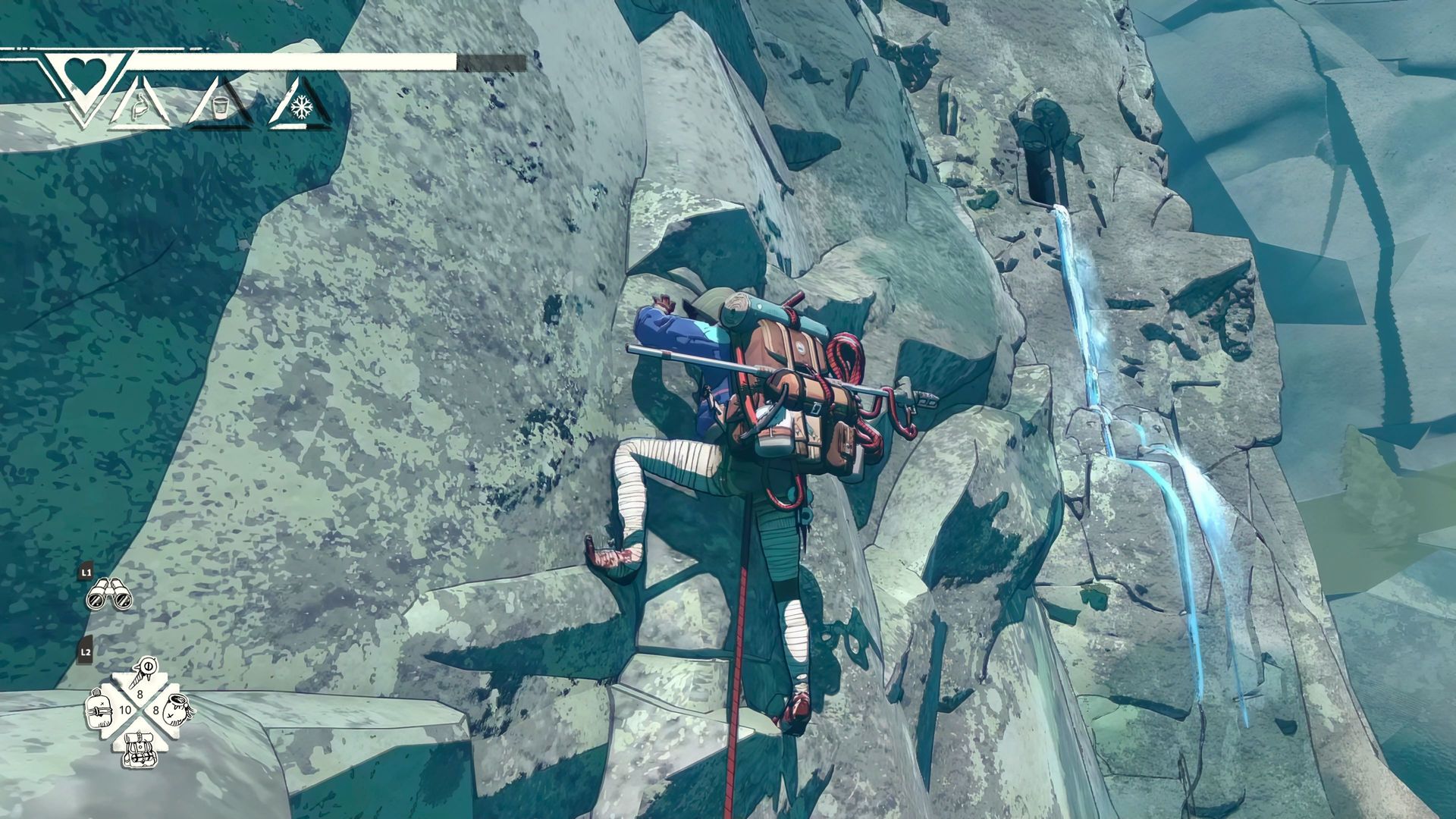
I personally feel that type of design is falling out of fashion. The reason games like Cairn, Baby Steps or Big Walk connect now is that they don’t trivialise movement in this way. This is why I think these games could only exist now, with a very long history of 3D movement behind us.
There’s something subversive about designers taking a step back and asking, ‘well, what is movement, actually?’ What do you have to accomplish to put one foot in front of the other? What happens to your body’s positioning when you place the weight behind your left arm against a cliff face? Those are more interesting questions to ask than I ever thought they could be. There may be a whole universe of games inside those limitations.
Next up: let’s take another step back and get even more granular about human movement. How about an incredibly hardcore 15-hour game just about the act of breathing, culminating with the objective to tie your shoelaces while holding in a gut? I’d find these motions even more relatable than Nate’s trials in Baby Steps. I can see the GOTY nominations already.

