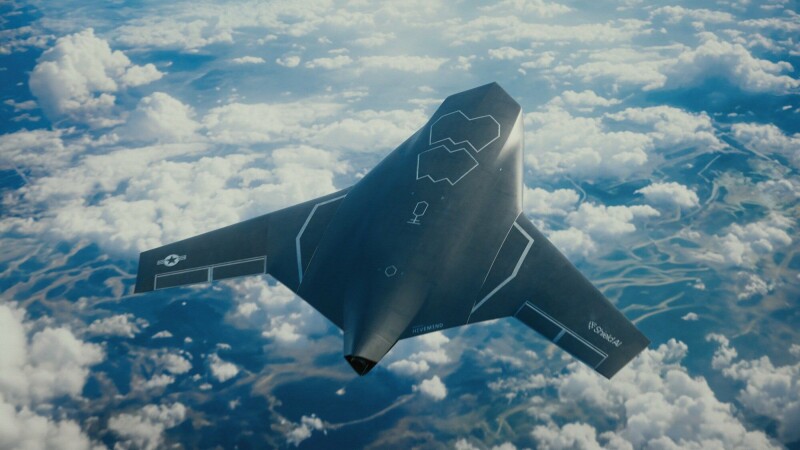
Shield AI компанийн хөгжүүлж буй X-BAT нисгэгчгүй онгоцны төсөлд АНУ-ын тэнгисийн цэргийн хүчин нэмэлт санхүүжилт олгож, бүтээн байгуулалтын ажлыг эрчимжүүлж байна
Америкийн батлан хамгаалах салбарын Shield AI компани өөрийн бүтээж буй босоо чиглэлд хөөрч, буудаг (VTOL) X-BAT байлдааны дрон төслийн санхүүжилтийг 400 сая долларт хүргэснээ зарлалаа. Үүнд АНУ-ын тэнгисийн цэргийн хүчин 150 сая долларын нэмэлт хөрөнгө оруулалт хийсэн бол Shield AI компани мөн ижил хэмжээний хөрөнгийг өөрийн зүгээс гаргажээ. Өмнө нь тус төсөл “Runway Independent Maritime Expeditionary Strike” (RIMES) хөтөлбөрийн хүрээнд 50 сая долларын дэмжлэг авч байсан юм.
X-BAT дрон нь нисэх зурвас шаардлагагүйгээр бараг бүх газраас хөөрч, газардах чадвартай байхаар зохион бүтээгдсэн. 7.92 метр урт, 11.9 метр далавчны өргөнтэй энэхүү төхөөрөмж нь 2,000 далайн мильээс хол зайд нислэг үйлдэх ба дуунаас хурдан нисэх хүчин чадалтай байх төлөвтэй байна. Энэхүү дрон нь сүүл хэсгээрээ газардаж, хөөрөх зориулалттай бөгөөд “Hivemind” хэмээх хиймэл оюун ухааны программ хангамжаар удирдагдах юм.
Тус компанийн төлөөлөгч Ж.Ж. “Янк” Каммингсийн мэдээлснээр, X-BAT нь тэнгисийн цэргийн нисэх хүчний байлдааны чадавхыг нэмэгдүүлэх зорилготой. Одоогоор хөдөлгүүрийн туршилт болон салхин хонгилын сорилтууд амжилттай хийгдсэн бөгөөд нислэгийн анхны туршилтуудыг энэ онд багтаан эхлүүлэхээр төлөвлөжээ. Бүрэн ажиллагааны бэлэн байдалд 2028 онд хүрэхээр зорьж байна.
Энэхүү технологи нь АНУ-ын тэнгисийн цэргийн хүчинд томоохон хөлөг онгоцноос гадна төрөл бүрийн хөлгүүдээс байлдааны ажиллагаа явуулах боломжийг олгох юм. Түүнчлэн Их Британийн тэнгисийн цэргийн хүчин “Project VANQUISH” хөтөлбөрийн хүрээнд өөрийн нисэх онгоц тээгч хөлгүүддээ ашиглах байлдааны дроныг эрэлхийлж байгаа нь X-BAT төслийг олон улсын зах зээлд гарах боломжтой болгож байна.
Дэлгэрэнгүйг эх сурвалжаас харах
↓Эх сурвалжийг нээх ↓
American defense biz Shield AI says combined US government funding and its own investment commitments have reached $400 million to advance its autonomous vertical take-off and landing (VTOL) fighter drone toward flight testing. The X-BAT aircraft was unveiled at an event in Washington DC last year for an audience of military leaders. According to Shield AI, the US Navy has committed an additional $150 million on top of earlier funding for the project. The company is stumping up a further $150 million of its own capital, and previously secured $50 million under the Runway Independent Maritime Expeditionary Strike (RIMES) program, which it had also matched. X-BAT is scheduled to begin flight testing later this year, with “mission capability” slated for 2028. It is intended to provide naval commanders with long-range strike assets capable of taking off and landing vertically from almost anywhere, doing away with the need for a runway. If it does come into service, the latter capability means that the US Navy would be able to operate combat aircraft from more than just its giant carriers like the USS Gerald R. Ford or the Navy’s amphibious assault ships that carry Marine Corps F-35B fighters. It could also operate them from vessels such as the Expeditionary Sea Base (ESB), as shown in the image. X-BAT is 26 ft (7.92 m) long and has a 39 ft (11.9 m) wingspan. Shield AI claims a range exceeding 2,000 nautical miles and expects it to be capable of supersonic flight. The aircraft is designed as a tail-sitter, taking off vertically before leveling off for normal flight, and landing vertically back on its launcher after the mission is over. It will be controlled by Shield AI’s Hivemind autonomy software, which has already been demonstrated in a modified F-16 fighter jet that took part in dogfights against human pilots a couple of years ago. “X-BAT is being built to enhance the lethality, survivability and combat power of US Naval Aviation,” says J.J. “Yank” Cummings, a former naval officer and Shield AI’s head of mission solutions for the US Navy. “We are designing it for safe, high-tempo manned-unmanned flight deck operations and integration with the missions and capabilities of the carrier air wing, so X-BAT can add combat power without compromising existing operations.” So far, Shield AI says its team has completed engine light-off and thrust-vectoring nozzle integration, and validated weapons bay aerodynamics in low- and high-speed wind-tunnel testing. The UK’s Royal Navy is also seeking combat drones that can be operated from its Queen Elizabeth-class aircraft carriers, under a program known as Project VANQUISH. Britain’s carriers lack the catapults and arrestor gear used to launch and recover high-speed jets, instead operating the F-35B fighter that is capable of landing vertically. This could make X-BAT a potential candidate for the program. According to the UK Defence Journal, the Royal Navy aims to conduct demonstration flights from a carrier by the end of next year. ®

