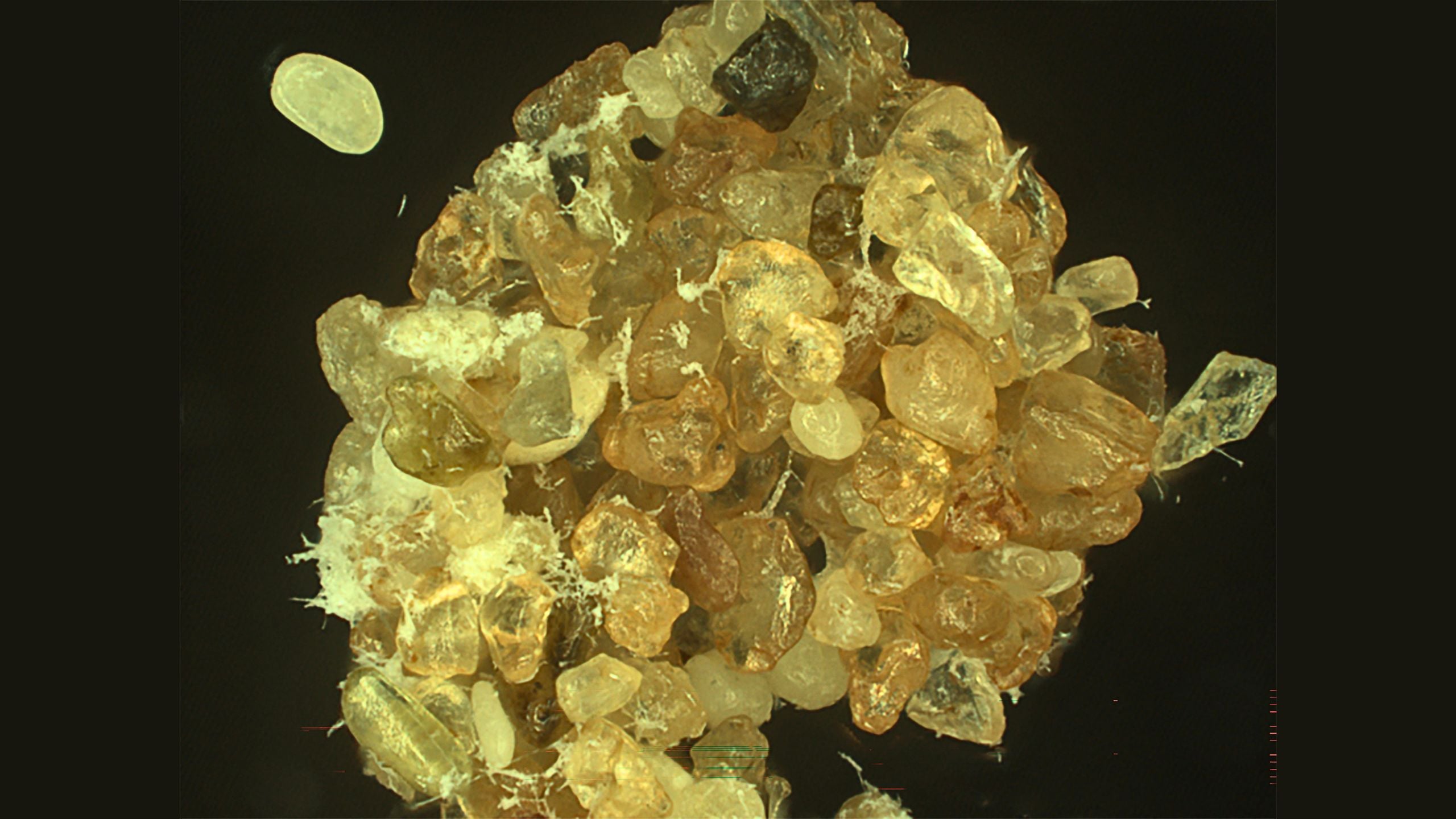
Бичил биетний ялгаруулдаг эслэг ашиглан элсийг бэхжүүлж, ус нэвтрүүлэх чадварыг нь эрс бууруулах боломжтойг судалгаагаар тогтоов.
Халифа их сургууль, Швейцарийн Empa судалгааны хүрээлэн болон ETH Zurich-ийн эрдэмтэд бактери, мөөгөнцрийн тусламжтайгаар элсийг бэхжүүлэх шинэ аргыг туршжээ. Komagataeibacter medellinensis бактери болон Schizophyllum commune мөөгөнцрийн ялгаруулсан эслэг нь элсний ширхгүүдийг хооронд нь холбож, байгалийн нийлмэл материал үүсгэдэг байна. Энэхүү “амьд элс” нь элсний ус хадгалах чадварыг нэмэгдүүлж, ус нэвтрүүлэх хурдыг зургаа дахин бууруулдаг болохыг туршилтаар нотолжээ.
Судлаачид хоёр өөр аргыг туршсан бөгөөд эхнийх нь бичил биетнийг элсэн дотор шууд өсгөх, хоёр дахь нь тусдаа ургуулсан эслэгийн нимгэн давхаргыг элсний завсар байрлуулах арга юм. Эслэгийн давхарга ашигласан тохиолдолд элсний ус нэвтрүүлэх чадвар 28 дахин буурч, ачаалал даах чадвар нь эрс нэмэгдсэн байна. Бактерийн гаралтай эслэг нь мөөгөнцрийнхөөс илүү бат бөх бүтэц үүсгэж, усанд тэсвэртэй байдлыг хангаж байв.
Энэхүү судалгаа нь элсэрхэг хөрс бүхий бүс нутагт тариалан эрхлэх, элсний эвдрэлийг багасгах, хөрсийг тогтворжуулахад биологийн задралд ордог байгалийн гаралтай шийдэл болж чадна гэж үзэж байна. Гэсэн хэдий ч туршилт нь лабораторийн нөхцөлд хийгдсэн тул цаашид цөлийн бодит нөхцөлд хэрхэн тэсвэртэй байх, ургамлын ургалтад хэрхэн нөлөөлөхийг судлах шаардлагатай юм. Судалгааны үр дүнг Carbohydrate Polymers сэтгүүлд нийтэлжээ.
Дэлгэрэнгүйг эх сурвалжаас харах
↓Эх сурвалжийг нээх ↓
For farmers working sandy ground, watering is only part of the job.
Water drains quickly through the gaps between grains, while wind can carry the loose sand away. Keeping plants alive means holding moisture around their roots and keeping the sand in place.
Scientists have now tested whether fibers produced by bacteria and fungi can bind those grains together.
Growing microbes directly in sand created a material they call “living sand,” which tests showed could cut water loss by six times.
In a separate approach, they grew thin sheets of bacterial cellulose and placed them between sand layers, reducing water permeability about 28-fold in laboratory tests.
Thestudy, published inCarbohydrate Polymers, involved researchers at Khalifa University in the United Arab Emirates, Switzerland’s Empa research institute, and ETH Zurich.
In soil, roots, fungal threads, and fibers produced by microbes help hold particles together. The researchers tested whether similarmicroscopic networkscould strengthen sand and change how water moves through it.
They used a cellulose-producing bacterium,Komagataeibacter medellinensis, and two strains of the fungusSchizophyllum commune. The fungal strains belong to the same species but have different growth characteristics.
Cellulose gives plant cell walls much of their strength. Some bacteria also produce it, releasing extremely fine fibers that can form a mesh around nearby particles.
The study included sand collected from dunes near Al Ain in the UAE, along with standardized laboratory sand for certain strength tests. Researchers sterilized the sand before adding the microbes and nutrient solutions.
Microscope images showed bacterial cellulose attached to grain surfaces and linking neighboring grains.
“This creates a kind of natural composite material,” Gustav Nyström, who heads Empa’s Cellulose and Wood Materials laboratory,said.
The bacterial treatment produced stronger samples than the fungi. Within seven days, a sand column about 6 centimeters tall held together well enough to be removed from its mold and cut into pieces. Those pieces stayed intact when placed in water.
The fungi also bound grains together, but their samples were more fragile. Some broke apart during removal from the molds or when cut after drying.
For the second approach, the researchers grew cellulose sheets separately and inserted them between layers of sand. The sheets acted as reinforcing fabric, helping distribute the force applied to the material.
In a demonstration using a 10-kilogram load, an untreated sand cube collapsed much more than a cube reinforced with cellulose sheets. Sheets grown for longer generally made the samples tougher. The sheets also produced the largest reduction in water permeability.
To test this, the researchers poured water into sand-filled tubes and timed how fast it drained out of the bottom. They compared untreated sand with sand containing fibers grown among the grains and sand containing a separately grown cellulose sheet. Each group had three replicate samples.
The inserted sheet cut permeability (or how fast the water passed through) to roughly one twenty-eighth of the untreated sand’s value, while fibers grown directly inside the sand reduced it about six-fold.
The researchers also measured how much water the samples could hold. For sand containing fibers grown directly among the grains, this measurement rose from about 20.2 percent to 25.5 percent. The scientists describe that increase as slight.
Theteamsuggests microbial fibers could provide biodegradable alternatives to some synthetic materials used to stabilize soil. Stronger connections between grains might also help limit wind erosion, although the experiments did not measure dust emissions.
“This approach allows us to introduce organic matter and water into the sand and stabilize it somewhat,” said Nyström.
Three researchers, Blaise Tardy, M-Haidar A. Dali, and Mohamed Hamid Salim, disclosed a pending patent application in the paper’s competing interests statement.
The work remains a laboratory study. The microbes received water and nutrients under controlled conditions, and their growth required oxygen. Growth was uneven along the bacterial sand column, and the top section was much weaker than the bottom.
The experiments did not test crop growth or establish how long the material would survive desert conditions.
The research has been published in Carbohydrate Polymers.
This article was fact-checked by Fiona MacDonald and edited by Fiona MacDonald. While we pride ourselves on our process, we are only human. If you spot a mistake, please let us know.

