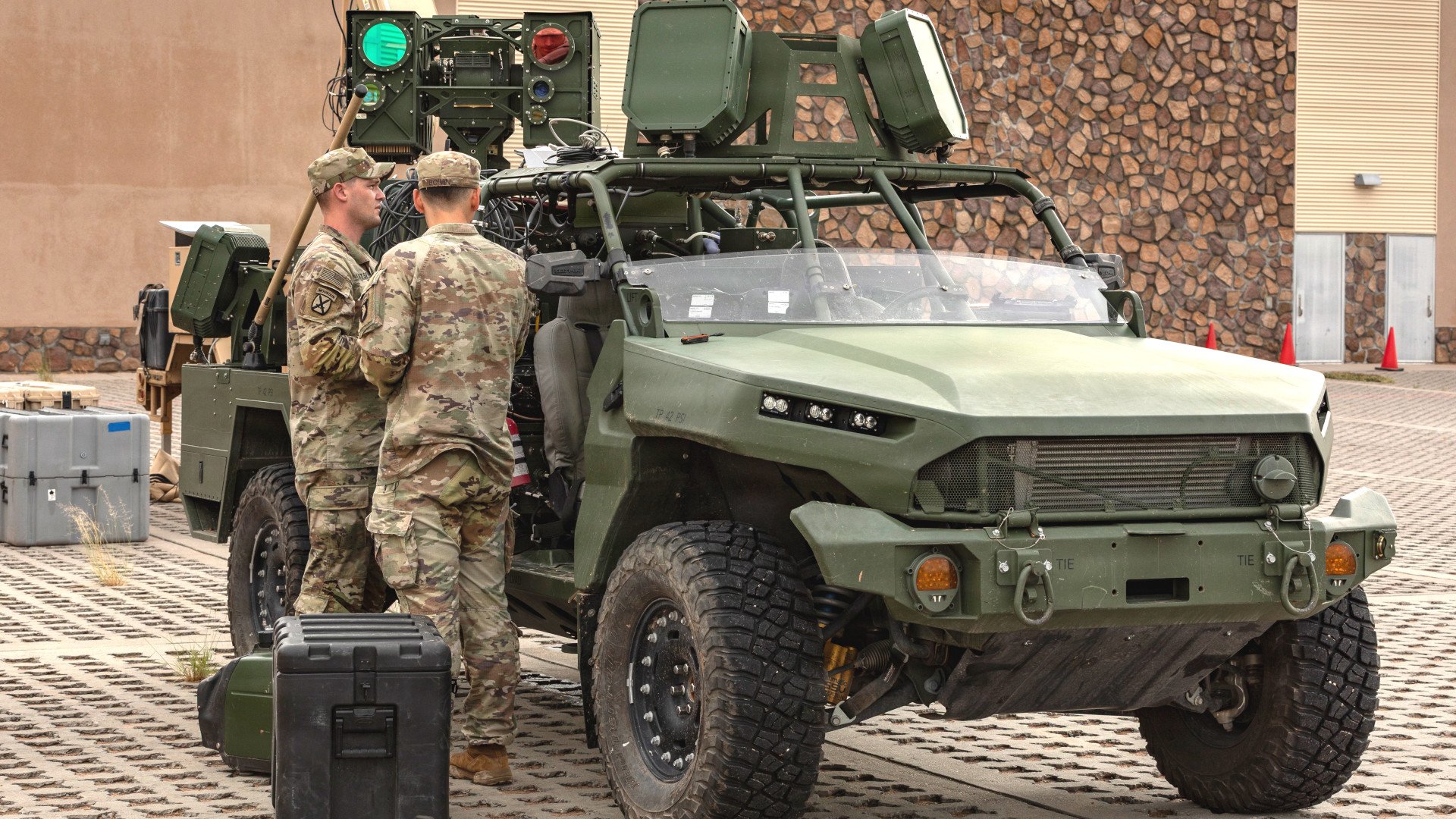
АНУ-ын арми нисгэгчгүй онгоцны аюул заналхийллийг эсэргүүцэх зорилгоор аль ч төрлийн тээврийн хэрэгсэлд хялбар суурилуулж болох модульчлагдсан, өндөр хүчин чадалтай лазер зэвсгийн системийг нэвтрүүлэхээр төлөвлөж байна.
АНУ-ын армийн зүгээс “Enduring-High Energy Laser” (E-HEL) хөтөлбөрийн хүрээнд 30 киловаттын хүчин чадалтай LOCUST X3 лазерын системийг үйлдвэрлэх гэрээг AeroVironment компанитай есдүгээр сард байгуулжээ. Уг систем нь тусгай анги салбаруудаас хамааралгүйгээр армийн ямар ч тээврийн хэрэгсэлд суурилуулах боломжтой байхаар хийгдсэн бөгөөд одоогоор Мексикийн хил дагуух бүсэд туршилтын журмаар ашиглагдаж байна. Армийн албаны хүмүүсийн мэдээлснээр, лазер зэвсэг нь нисгэгчгүй онгоцтой тэмцэхэд зардал багатай, сумны нөөцөд хязгаарлалтгүй давуу талтай юм.
Өмнө нь ашиглаж байсан “Stryker” хуягт тээвэрлэгчид суурилсан DE M-SHORAD систем нь найдвартай ажиллагааны доголдолтой байсан тул армийн зүгээс илүү уян хатан, засвар үйлчилгээ хийхэд хялбар, модульчлагдсан архитектуртай систем рүү шилжих бодлого баримталж байна. Ирээдүйд илүү өндөр хүчин чадалтай лазер зэвсгийг нэвтрүүлэхээр зорьж байгаа бөгөөд LOCUST X3 системийг 2028 оны эхээр үйл ажиллагаанд бүрэн нэвтрүүлэхээр төлөвлөж байна. Энэхүү технологи нь хиймэл оюун ухаантай хоршин ажиллах чадвартай бөгөөд АНУ-ын армийн агаарын болон пуужингийн эсэргүүцлийн олон давхаргат хамгаалалтын чухал хэсэг болох юм.
Дэлгэрэнгүйг эх сурвалжаас харах
Эх сурвалжийг нээх ↓
The U.S. Army is pursuing a family of modular and scalable laser directed energy weapons that can be fitted to any vehicle in its inventory. The service sees this as key to expanding the operational use of lasers, particularly to provide an extra layer of defense against drone threats, and outside of dedicated units. The Army is already fielding high-energy lasers operationally on a limited basis, including along the border wth Mexico, but the technology has faced continued hurdles to more widespread use in recent years.
Army officials and industry representatives discussed what is currently called the Enduring-High Energy Laser (E-HEL) program during a panel discussion this week at the Association of the U.S. Army’s (AUSA) main annual convention, at which TWZ was in attendance. In September, AeroVironment received the first production contract under E-HEL to supply examples of its 30-kilowatt-class LOCUST X3 laser directed energy weapon system. The Army has already acquired earlier LOCUST variants, including vehicle-mounted and palletized types, through more experimental programs, and these are the systems now deployed along the southern border. The U.S. Navy has also at least tested a containerized version of LOCUST for shipboard use as part of its own larger laser ambitions.
“We’re focused on any vehicle in the motorpool. I want to try to integrate future capability of high-energy lasers into it,” Army Brig. Gen. Guy Yelverton, the Capability Program Executive for Defensive Fires with the Portfolio Acquisition Executive Office for Fires, said during the panel on Monday. “And, so, our E-HEL is on a sled. With that, I can look at integrating it onto multiple different vehicles.”
“And then, as I think about vehicle agnosticness, if I open up my aperture to MOS [military occupation speciality] agnostic, and ensure that it’s easy to train, easy to operate, I can not just focus on air and missile defense organizations,” he continued. “I can now look at any formation type to be able to put a high-energy laser capability into it for the counter-UAS [uncrewed aerial systems] fight.”
“That gives me even more opportunities to share this capability across all Army formations, and give our senior leaders [the] maximum amount of thought process and input into where the system goes, who the soldier is that’s operating it, and I’ve given them quite a solution,” he added. “It’s a great dilemma to have of where do I put all this capability.”
In 2022, the Army reactivated the 4th Battalion, 60th Air Defense Artillery Regiment (4-60th ADA) at Fort Sill, Oklahoma, as part of plans to field new laser-armed Directed Energy Maneuver-Short Range Air Defense (DE M-SHORAD) systems based on the 8×8 Stryker light armored vehicle. Reliability and other issues with DE M-SHORAD vehicles led the Army to shift focus, and 4-60th ADA has since assumed a more traditional air defense role. The problems with the DE M-SHORAD system are indicative of struggles that have dogged laser-directed energy weapon developments across the U.S. military, and that have led to several other programs being severely truncated or outright cancelled in recent years.
The Army does now have the aforementioned LOCUST systems, including versions mounted on 4×4 Joint Light Tactical Vehicles (JLTV) and Infantry Squad Vehicles (ISV), as well as the palletized types. Those systems appear to be currently fielded on a more ad hoc level to units at forward locations.
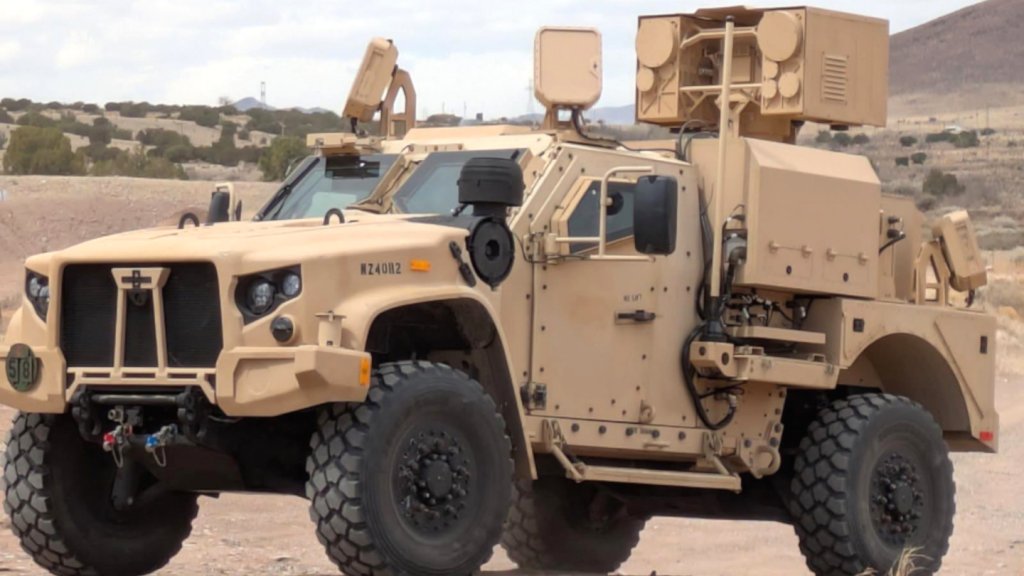
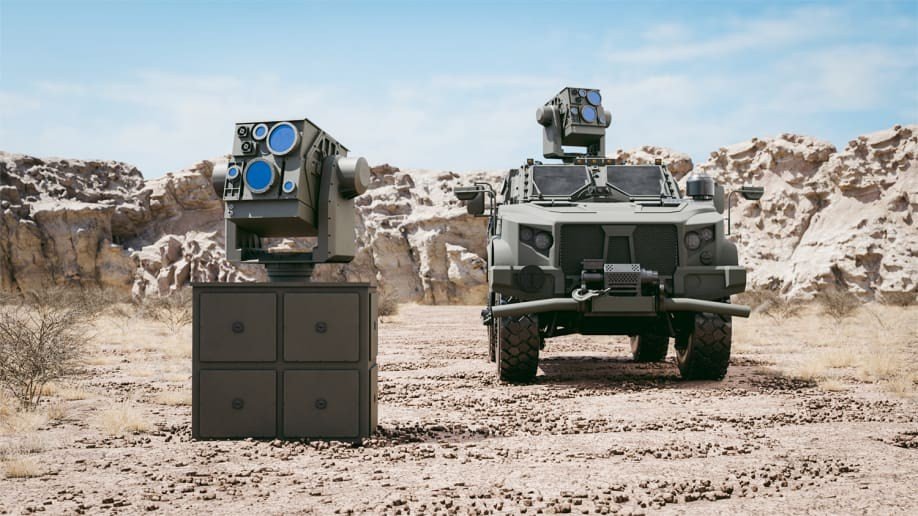
LOCUST is well suited to the Army’s current vision for fielding E-HEL without being tied to specific vehicles or unit types. At the core of the system is a turret with the laser beam projector, as well as built-in electro-optical and infrared video cameras for target acquisition and tracking. Other sensors, such as small-form-factor high-frequency radars and passive radio frequency signal detection systems on host vehicles, as well as off-board radars and other capabilities positioned elsewhere, can be used to cue the turret.
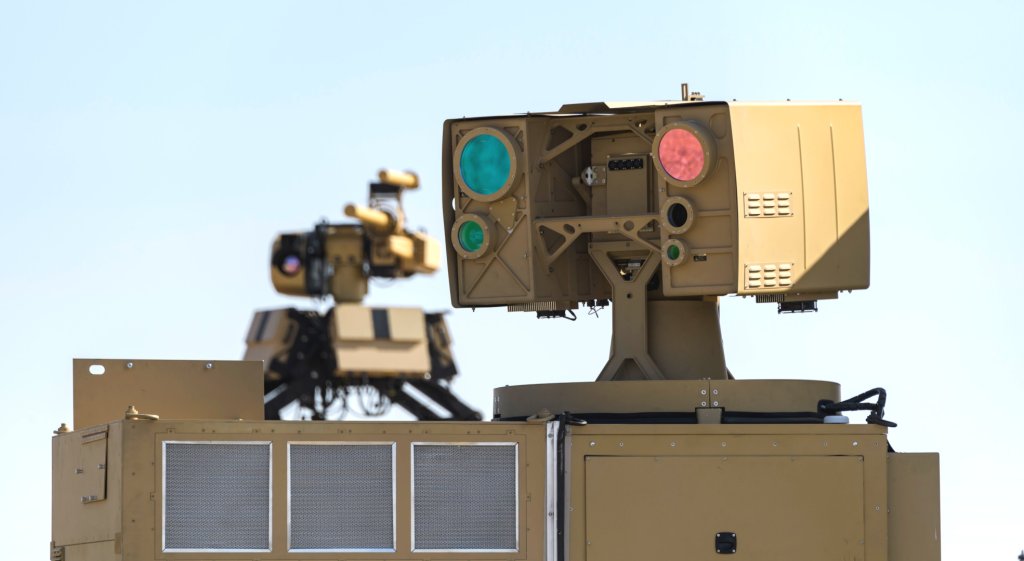
With the 30-kilowatt power rating, the new X3 versions of LOCUST the Army is acquiring now are still at the lower end of the power spectrum for laser directed energy weapons. All versions of LOCUST to date are geared explicitly toward countering small drones.
It is possible that the Army could field other types of laser directed energy weapon systems through E-HEL in the future. The service, in cooperation with other branches of the U.S. military, is also pursuing designs with far higher power ratings through separate programs.
Just being able to field LOCUST X3 more broadly would still offer valuable additional layers of defense against drones across different types of Army units. More broadly speaking, the central benefit that laser directed energy weapons offer is the promise of functionally unlimited magazine depth, though this is dependent on there being sufficient power and cooling capacity. This, in turn, translates to a substantial reduction in the cost-per-intercept equation compared to traditional anti-air interceptors. All of this is especially advantageous for tackling drone threats, which do not have to be large or expensive to present real dangers.
By miniaturizing and ruggedizing lower-power systems like LOCUST, the Army could distribute these capabilities across a broad area, or deploy them in a more concentrated fashion, depending on the fight. Even a convoy with a number of the vehicles sprinkled in with them could help defend it from pop-up attacks
In this context, mobility and flexibility are also important boons. LOCUST systems mounted on light vehicles can be readily positioned and repositioned to respond to changes on the battlefield, as well as be brought to forward locations slung under helicopters. Palletized and containerized versions offer additional kinds of flexibility for providing point defense at sites on land, as well as installation on ships.

At the panel on Monday, Brig. Gen. Yelverton stressed that when it comes to laser weapons systems, in general, the technology is no longer a matter of “science fiction” but has become “science reality.” The U.S. military says laser systems positioned along the border with Mexico have downed real targets, though many questions remain about those deployments. Regardless, challenges do clearly remain.
“Lasers are real. We can do it. We can go out. We can shoot things,” Kirk Williams, Chief Engineer at the Army’s Directed Energy Project Office, another one of the panelists, said. “But what we got to do now is make these systems reliable enough so that the soldiers have the faith in them when they need them, and that’s really the main point that we’re trying to go after right now.”
“We’re getting to the point where the systems are reliable enough, but we still have to make them maintainable and repairable because this is an Army system,” he continued. “It’s going to be on a battlefield. Things are going to break. We can break things in very creative ways, right? So if it’s not reliable, or if it’s not maintainable, if it’s not repairable, that’s a problem.”
“We’re also looking to reduce size, weight, and power,” he added. “JLTV has a lot better payload capacity than ISV. So we really need to be able to get something smaller if we want to have the same effectiveness on an ISV. So that same modular architecture will allow us to go in, take some of those components, make trade-offs.”
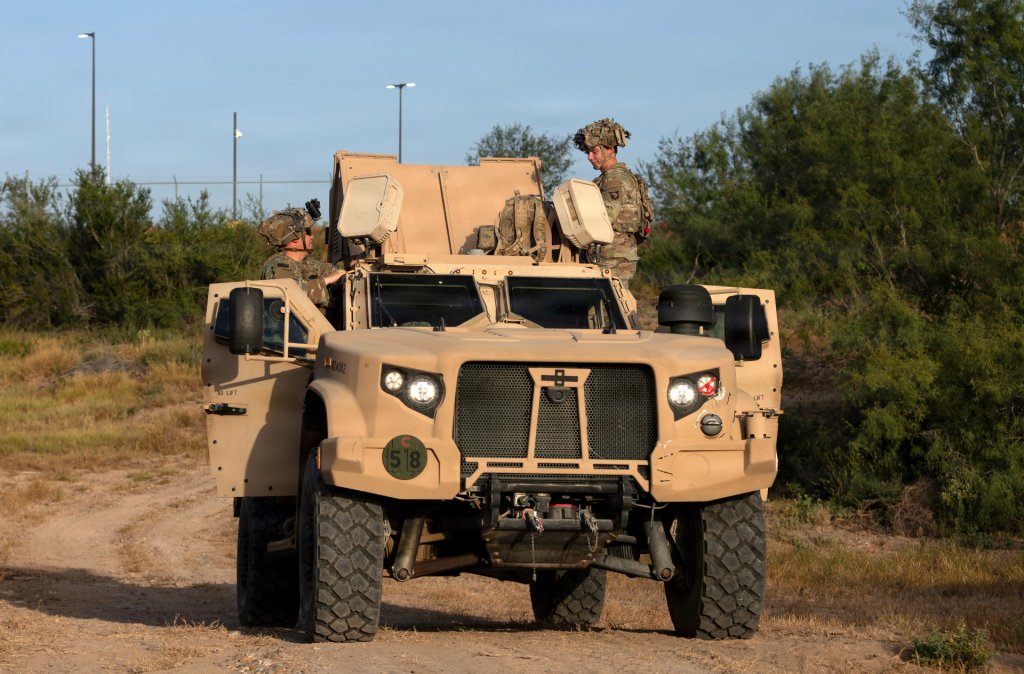
The focus on modular and open systems architectures will also help when it comes to integrating new and improved functionality down the line. It will also feed into the larger goal of having E-HEL options not tied to a particular vehicle or other platform.
“By going after the modular architecture, that gives us the flexibility to not only go after increases in reliability, but also increases in performance,” Williams further explained. “It gives us the way to inject new technology into existing systems, and then hopefully it also gives us a way of getting better prices out of some of our vendors.”
In addition, “one of the things we learned is you can have a really cool integrated system, and then when that truck needs an oil change, well, then your laser weapon system is down for the count,” he added. “So, trying to make it so that you can just pull it off of any vehicle, put it on any other vehicle is really one of the things that we’re trying to go after.”
The Army is also very cognizant of the basic fact that a single laser can only engage one target at once. The beam from any laser weapon system also drops in power as it gets further from the source, just because of the need to propagate through the atmosphere. Weather and other environmental conditions like smoke and dust then also become a factor. This has driven demand for more power (and cooling capacity) to improve effectiveness, especially at range. Developments in adaptive optics can also help overcome these issues to a degree, but lasers currently remain very short-range weapons overall.

“That’s why it’s important to us to get enough energy on the target to kill it as quickly as possible and move on to the next threat. Speaking about the magazine, you know I have battery power on there, so depending upon which system, around 80 seconds, 120 seconds, whatever that is, you know that’s the magazine depth I have,” Brig. Gen. Yelverton said on Monday. “The quicker I get on the target, kill it, and off the target, I start rebuilding, regenerating that magazine depth.”
“It’s the targeting system. It’s the optics system that lets you focus on the target,” Williams also chimed in at this point on the panel discussion. “I mentioned trying to make the trackers better and take some of the onus off of the operator. If we can do better aim point control and keep the laser in the same spot, it gives you a better and a quicker kill.”
Earlier on, Williams had highlighted how artificial intelligence-assisted targeting capabilities could be a particularly important addition to laser directed energy weapons. Networking multiple systems together could help with sorting and assigning targets as efficiently as possible.
When it comes to the actual operational employment of laser directed energy weapons, “as these systems get smaller, as they get more powerful, the quicker we could get them into our soldiers’ hands,” Army Col. Charles Kean, Deputy Commanding Officer for Support at the 7th Infantry Division at Joint Base Lewis-McChord in Washington state, another one of the panelists, said.
This, in turn, will open up important new opportunities to “operate with them forward, test them in the mud, the dirt, the humidity of the Pacific, test them down in the southern border where they’re different conditions, whether it’s in the Middle East and Europe, it’s applicable across the board,” Kean continued. “We have to understand it, get it in our hands as quickly as possible, so we could iterate it, iterate on it, and make it better and continue to iterate, because the adversaries continue to iterate in reverse against us.”
This last point is worth highlighting. The U.S. military’s chief global competitor, China, has been particularly active in the development and fielding of ground-based laser and other directed energy weapons, as well as designs for shipboard use. Chinese firms are selling laser weapon systems to foreign armed forces, as well. Other countries, including American allies and partners, are also very actively pursuing these capabilities.
Col. Kean also stressed that laser directed energy weapons would still only be one part of a larger layered air and missile defense ecosystem for the Army.
As it stands now, the Army hopes to have the first LOCUST X3 systems acquired through E-HEL in operational service by early 2028. A similar timeframe has been put forward for the separate Joint Laser Weapon System (JLWS) program, which the Army is also involved in. JLWS is aiming to produce a viable containerized 150-kilowatt-class laser directed energy weapon, with plans to work toward 300- and 500-kilowatt-class designs. At the panel on Monday, Scott Keeney, CEO of laser systems developer nLIGHT, which has been working together with AeroVironment on LOCUST, among other projects, said he saw further scaling up of capabilities to the one-megawatt-class as being on the horizon. This is a power rating the U.S. Navy has also talked about as a future goal.
The Army clearly sees E-HEL already as a path to truly operationalizing laser directed energy capabilities across the system, but the service itself acknowledges that there is still significant work to be done to make this goal a reality.
Contact the author: joe@twz.com
The post Army Wants High-Energy Laser Weapons It Can Put On “Any Vehicle In The Motorpool” appeared first on TWZ.

